
Farmer Voices
Real stories from fields across India, sharing challenges and solutions, highlight the diverse experiences and resilience of individuals tackling various issues in agriculture, education, and healthcare. These narratives inspire hope and drive change as communities come together to overcome obstacles and create sustainable solutions.
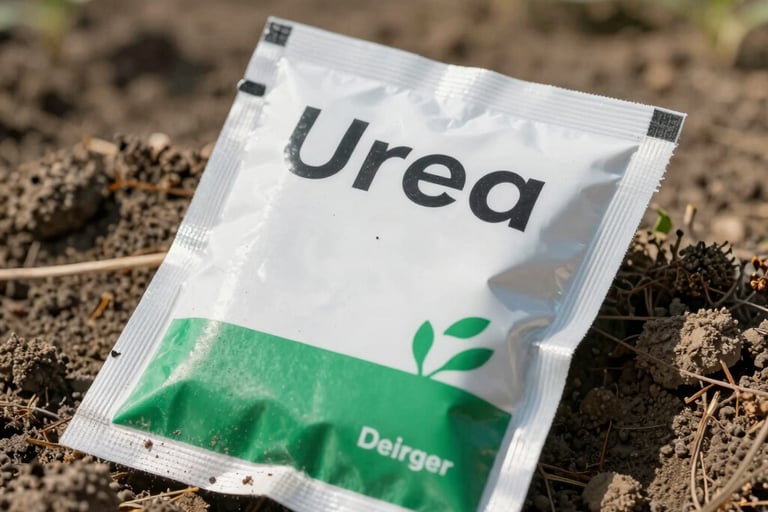
UREA: A Lifeline or a Hidden Burden for Farmer…?
During my interaction with farmers, most commonly and widely used farming input was urea. In modern methods of farming urea is widely used input by farmers as it increases the crop productivity and hence gives more income. But urea is good only when used in a calculated quantity...
Many daily wage farmers in outskirts of Thane District in Maharashtra, who work in the fields of rich landlords don’t which kind of urea is to be used and in what quantities. They are just told to use this urea in fields and they use it unjudiciously as much as they want. This is a very serious issue as it makes our food crops being grown more of chemicals and makes it harmful for our health and body.
Biomagnification is also a natural process seen in crops in which the concentration of harmful substance increases as the food is consumed by different level of animals in food chain this even works in case of urea.
As per my experience these farm labourers used this urea very much and as a result the land slowly-slowly lost its fertility. This is really concerning because if this trend continues, then in long term our country like India where majority population is in agriculture sector, would start lacking in fertile soil and our stomach would ultimately be in danger. The more concern thing is that they didn’t know that excess use of urea deteriorates the land and crop, they are just told to use it but are not enough aware how is it to be used.
In many areas urea is supplied from far places and are usually high priced so, they are forced to buy it at high price as, if they don’t make enough profit to satisfy the landlord, he might even cut down their wage at month end. The labours are made to buy these things from their minimal wage which is an extra burden on their shoulders.
So it is really very crucial to spread awareness about these by government of regional level or by some NGO initiatives.
At last it is up to you to make urea a helping hand in farming or a slow poison for future of agriculture…..
By ISHAAN SUNIL YADAV
“When Irrigation Becomes Contamination: The Reality of Gutter Water in Farming”
While my expeditions around Badlpaur gaon area we came across farm behind and in front of Badlapur high school. Why were we there? Me and my team was there for interviewing farmers and we found a very diabolical thing which farmers also didn’t care about much it was use of gutter water for irrigation. Yes, we asked every farmer who was interviewed by our team about water used for irrigation and they said the gutter (Nale ka paani) the one who make us think of its presence from 200 M sometimes which might have brain eating amoeba or chemicals that can take part to take us to death bed.
Gutter water which took factories, refinery, sewage, waste and other waste that is enough to make us think twice before standing near that gutter. But it was a slap on our governing bodies that the crops which are send in our great economic capital Mumbai is grown in Badlapur with the water that we flush and those might think its under small scale I want to tell there are 200 + labourers and land that is of hundreds of acres has this story. I want to tell that our great leaders will import vegies from foreign after seeing this but a common Indian can’t do this.
Dadar and Kalyan area gets these vegies polluted by this gutter water and these farmers they spend enormously on pesticides and insecticides that are caused by the pests and insect came and raised by contaminated gutter water may not rich in minerals but in bacteria, viruses, fungus, parasite, insect are raised in this water like children on mother’s milk.
I was fortunate to ask a farmer about this and he said that this water don’t affect crops or health of people water is used just to make soil wet. I was knowing he does not know its effects we sat to tell him.
But he was not ready to stop as his crops will die (though they are gonna be permanently in some years) he might handle the effects of bio magnification but not of cost to install a boring a person earning Rs 8000 a month it’s impossible for him to make uses of any modernisation came after Green revolution.
Some of those famers where proud enough because they were using Ulhas river water but I was said enough to make them remember that the gutter I was talking about opens in Ulhas river and nagarpalika sewage gutters, factory chems, refinery water and leather waste are dumped in that water hence it was gutter water not a river.
We are Indians we have cheat codes called Jugaad or midways to think and solve a problem easily and fastly we can form cooperative that can make a good water available to this kind of small famers and We have to raise questions about opening of gutters in Ulhas river it is a river whose water is drank by Mauryans, Kolis, Yadavas, Rastrakutas, Bijapuriyans, Mughals, Marathas, Britishers and now it is un drinkable because we can’t be part of above culture as we don’t want to lose our life. We can connect this farms with pipelines and starting a water treatment plant as near as we can and can we raise questions that can help changing path of gutters and sewage to Ulhas river and we can elevate our farmers’ income by this.
Share your Views on this
On our
Insta- info.agristories
Check Latest Interviews on YouTube- agristories
And visit our website – agristories.com
By ADITYA RAKESH MISHRA
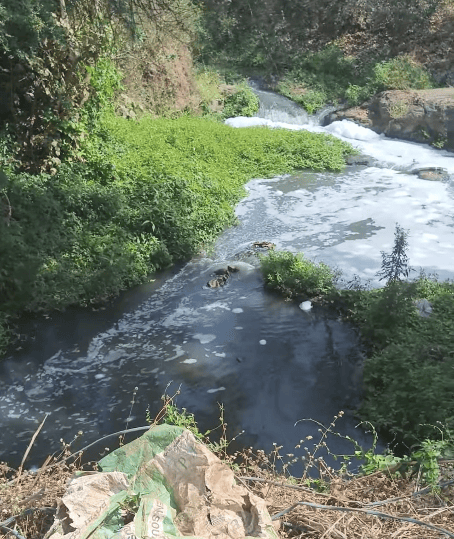
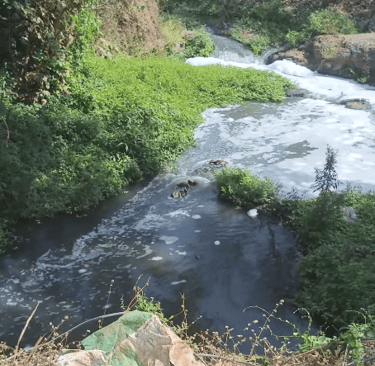
Real image of that gutter
Source - agristories.com
Applying for policies: - Important but not done by many.
We were again on our daily mission to interview as many farmers as we can and we had memories of those answers which was given by farmers when asked about if they are getting benefits of gov policies. And answer was a no most times and when asked did you apply for any same time answer was to be no.
Government cannot reach all the people hence, it created ways so, people can themselves reach and one of those is application forms which go unused unelated in millions each year. People than also has confidence to blame gov but they are the one who has not applied yet we came across many farmers who have got wealth mostly from farming was having solar panels, electric motors, generator, tractor, pumping sets, drip irrigation system etc got their expenses covered by gov subsidies. But to get them application is important.
Many people don’t apply thinking it’s hard to get and the amount will be less. Many of them who are not real owners of land and take land on rent think they are not legally suitable for this and sometimes they are not even confident to speak with the owner. These are those kind of farmers who end up using great amount of sewage waters to irrigate field turning crops into slow poison. A great amount of urea and NPK make land good for some time after 4 to 5 years it will be uncultivable and require more and more fertilizers. Govt subsidies are now something that those with current information can think of. Many old farmers don’t even know about the same they continue with old practices of twentieth. There crops can improve they can use ground water, they can use good fertilizers, they can give their fields a good harvest.
But gov has to take steps to reach these kind of people and also NGOs and helping groups are needed to give them infos about the Apps or websites where these kinds of policy information and details and application forms are released. A special kind of Kendra is required for every village or group of village where they can find these kind of information. Local government has also a big hand to play in it. And we have to give our self a special agency or a kind of policy to detect corrupt officers and delayers in the system.
“Agriculture is mother of all industries”
Jay Jawan, Jay kisan
Written by :- Aditya Mishra
Special credits to agristories.com
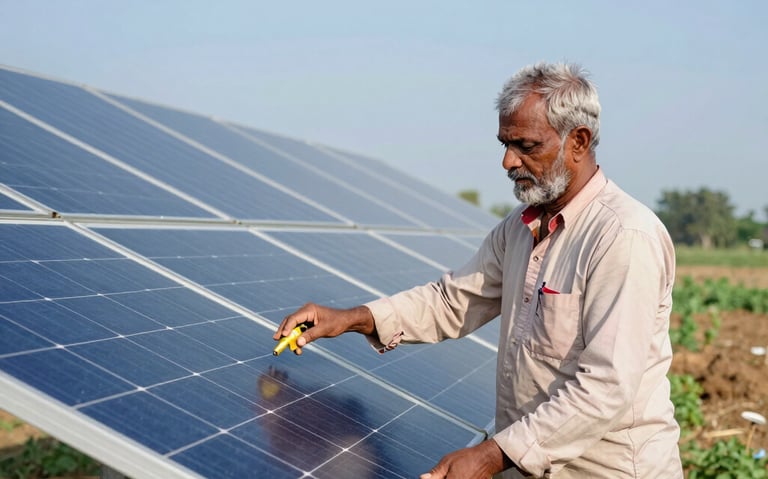
Global Warming: A silent warning to all farmers before it’s too late…
Climate is one of the most important factor which affects a farmer’s crop output. Whether it is about rain, sun rays, wind ,etc all are climate based. In recent years due to global warming farmers in India have experienced unscheduled rains, hails, and increased sunlight this has resulted in huge losses to farmer across India. Even cost of crop input has also increased due to this which is making profit of farmer much and much lesser year by year.
The increased sun rays lessens the germination of seeds in farm and this has also forced the farmers to put more amount of water in same land area which also gives rise to water wastage problem. The soil also becomes dry and infertile due to such sun rays and hence farmer has to use harmful chemical inputs like urea, NPK, etc. Even crop failure is another consicuence of this.
This makes farming an unpredictable business as climate my change any time and this more becomes a gambling game. Pests is also increased due to such unpredictable climatic conditions and hence pesticides also becomes a liability for a farmer to put it in his farm. This makes crop infected and unhealthy for consumption.
As per my interviewing experience with farmers, I have came to know that most farmers don’t have access to boring water ,they depend on river water but this river water gets dried up in summer seasons and hence, their field goes unused throughout a season and hence have to wait for rains so that kharif crops can be growned. This is waste of our land resource and makes the farmer go in debt as he has to get some money for next season.
This even makes farmers to use unsafe sources of water like gutter water which has pollutants like human waste, chemical waste, organic waste, pastic and what not that you may think of!! This makes the crops dirty and unhealthy to be eaten but it gets sold in the markets and as a result the normal public becomes more vulnerable to diseases. And as we can see life expectancy has dropped and the senior citizens with no vulnerable disease or medications are rare to be found in today’s time.
This makes the farmer think and shift to different sector to work and younger generation doesn’t want to work in this field at all for this reduced profitability due to global warming.
This situation is more serious than most us might think is. This will some or the other where would affect common peoples pocket as the food will become costlier and would even become in shortage.
Government should take initiatives to stop this thing and even people should start becoming more conscious about these changes and take appropriate steps to help mother nature stay the way God created her to be.
At last your question should be: IF THE FARMER STOPS FARMING WHAT HUMANS THINK WOULD EAT??
BY :- Ishaan Yadav
special thanks to:- agristories.com
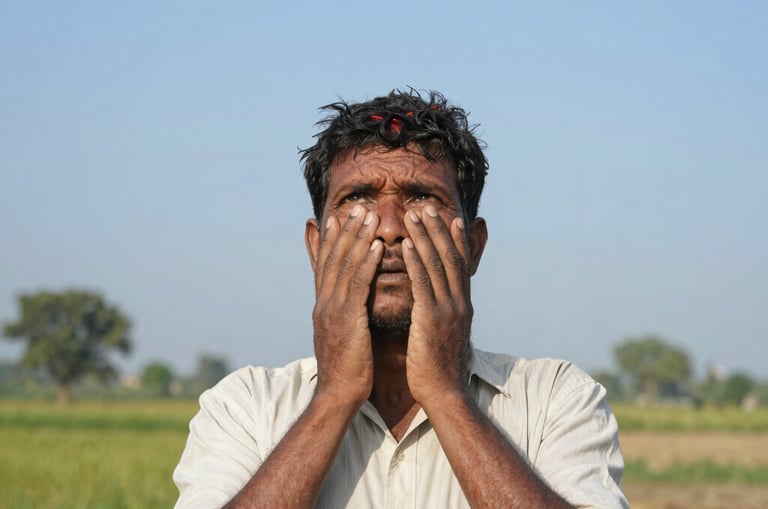
PROFIT OR FREEDOM : what drives a farmer to continue farming??
Farming or agriculture is a field which is evergreen. A Human may live without computers or AIs or mobile phones (not truly) but a human can’t live without food. So, the farmer is the real person who fulfills our stomach. But surprisingly, in a country like India where most of the population relies on farming as the only way to earn their living is amongst the poorest.
Some exceptions are still there in such case also like big landlords with generational land property employ cheap labour farmer and earn huge profits. Areas such as Punjab and Haryana where Green Revolution was prominently seen is also a place to rich farmers.
So, by such examples it’s pretty clear that profit is not the only reason for farmers doing farming, in fact this is the one of the rarest reason for doing this.
From my experience in interviewing farmers most people who had no education , no other option than farming did farming as daily wage workers on other landlord’s land who gave them a very marginal wage and even exploited them with making them to buy farming inputs like fertilizers , etc. from their wage itself. Such people’s motive of farming was just to somehow manage basic expense for living of their and their family’s needs. However due to various circumstances their crops even failed resulting in lesser wages and which just made their situations worse.
Then there was another kind of farmers who owned a very small to medium size of land but earned enough to stay happy and fulfill their family’s basic needs and some wants. These were kind of generational and experienced farmers who even aimed to send their children to complete their studies in agriculture and expand the business of farming. They even said that even if they got high paid jobs then also, they won’t do it. The only reason for their such decision was FREEDOM offered in farming. They said that in framing it’s all up to you whether you work whole day or even skip some day and just enjoy the breeze of nature it won’t matter. But in job one has to be in a constant pressure of completing a specific task which is assigned by their boss. This destroys ones mental peace as he is just illusioned to be free but is under the rule of his boss. This is what many farmers don’t like and want to continue farming as their proffesion.
Then there was also another type of farmer who did this as their passion, who didn’t worry for profit or loss but did this because it gave them satisfaction and pleasure to be the one who feeds the whole nation and the world.
So, at last by such examples we see that in India profit in agriculture is still very low but farmers are still in a hope that someday this will change and a revolution would take place and that is why profit is not the only reason of farming in India but there is a hope and passion hidden behind it or even compulsion some times…
BY ISHAAN YADAV
special thanks to agristories.com
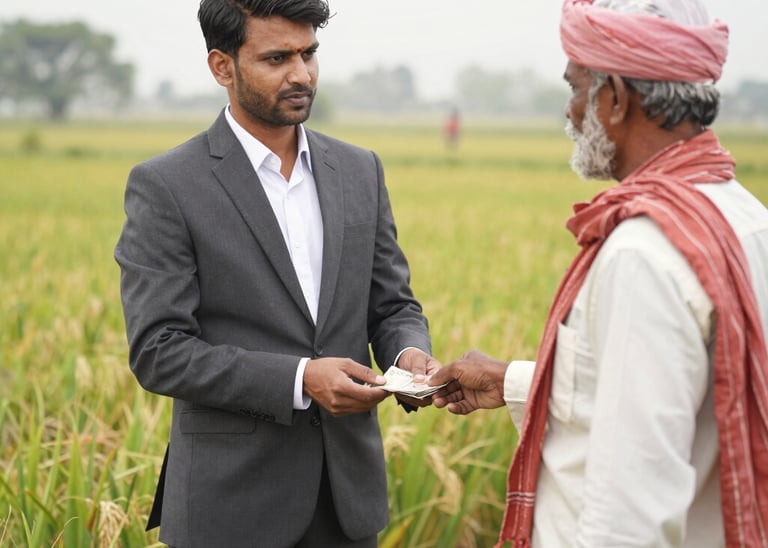
Schooled out of the soil: - when Degrees become a divorce from the land
We were again on the fields finding some of the new farmers in way to continues interviews that help the nation to think about primary. We came across a common view that we majorly find in most of the farm explorations that those educated will not farm.
Yes, people believe those educated will not farm and somewhere we can find it as true as it is not at some places. When we go to states like Punjab and Haryana educated prefer to farm most of them study agriculture to farm better. It is not a case that farming don’t pay good it pays better than many packages after TIER 1 MBA but only to those got birth in areas where green revolution and mechanisation was prevalent their Land are big enough, members are less, more for market. But the areas like village of kanhor in Maharashtra surrounded by beautiful plateaus and rich diversity temples and believes can’t produce even to satisfy own needs. Lack of irrigation, funding, small lands, too much people in family, dependence on weather etc cause them to suffer they think a job which can pay upto 10k or 15k is also good sometimes better. They want to run from what they have they don’t want to continue what their ancestors did. Their ancestors enjoyed and they suffer. Without any support they are forced to use the river water which is now a gutter because of sewage water and waste from MIDC factories.
I want to ask whether 5 to 6 states have potential to feed 142 crore people and to handle exports and if the answer is no than we have to focus on them who has potential to feed nation. Cooperatives and grameen banks have still not reached till every corner of the country. Irrigation, seeds, knowledge, pesticides, insecticides, fertilizers are still not proper. We have to give farmers orientations and workshops, we have to support business growing in agricultural and aggrotech fields.
Contribution of every being has significantly made us human and first of them was agriculture. People are finding education path to leave agriculture but we have to give education in such a way that helps agriculture to sustain.
We can’t depend on labs still as India is still far from reaching the goal of becoming a aggrotech enabled county so we have to help those who do farming on land and who live on hopes of a good harvest.
We have to ask our self a question are we giving education to educate people or make them work under those who give education?
BY- ADITYA MISHRA
Special thanks to agristories.com
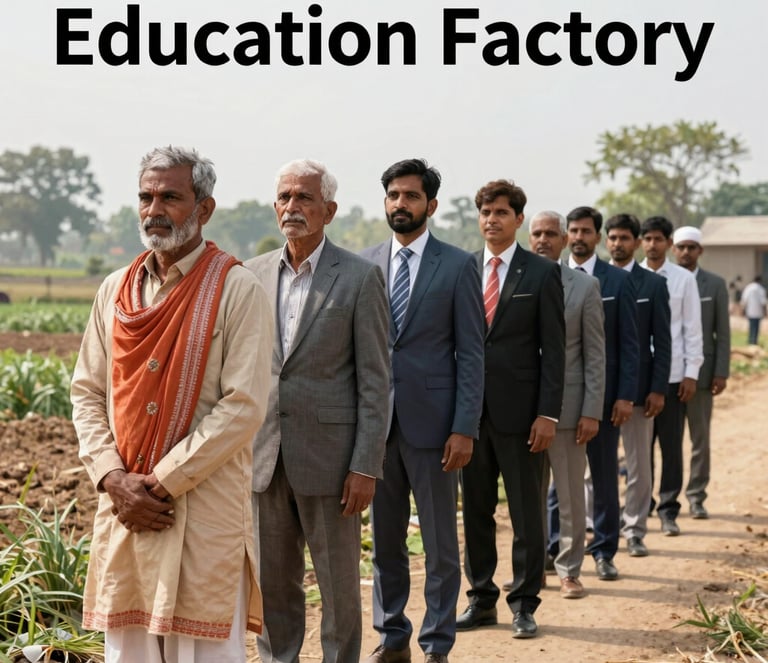
PROFIT OR FREEDOM : what drives a farmer to continue farming??
Farming or agriculture is a field which is evergreen. A Human may live without computers or AI or mobile phones (not truly) but a human can’t live without food. So, the farmer is the real person who fulfills our stomach. But surprisingly, in a country like India where most of the population relies on farming as the only way to earn their living is amongst the poorest.
Some exceptions are still there in such case also like big landlords with generational land property employ cheap labour farmer and earn huge profits. Areas such as Punjab and Haryana where Green Revolution was prominently seen is also a place to rich farmers.
So, by such examples it’s pretty clear that profit is not the only reason for farmers doing farming, in fact this is the one of the rarest reason for doing this.
From my experience in interviewing farmers most people who had no education , no other option than farming did farming as daily wage workers on other landlord’s land who gave them a very marginal wage and even exploited them with making them to buy farming inputs like fertilizers , etc. from their wage itself. Such people’s motive of farming was just to somehow manage basic expense for living of their and their family’s needs. However due to various circumstances their crops even failed resulting in lesser wages and which just made their situations worse.
Then there was another kind of farmers who owned a v small to medium size of land but earned enough to stay happy and fulfill their family’s basic needs and some wants. These were kind of generational and experienced farmers who even aimed to send their children to complete their studies in agriculture and expand the business of farming. They even said that even if they got high paid jobs then also, they won’t do it. The only reason for their such decision was FREEDOM offered in farming. They said that in framing it’s all up to you whether you work whole day or even skip some day and just enjoy the breeze of nature it won’t matter. But in job one has to be in a constant pressure of completing a specific task which is assigned by their boss. This destroys ones mental peace as he is just illusion to be free but is under the rule of his boss. This is what many farmers don’t like and want to continue farming as their profession.
Then there was also another type of farmer who did this as their passion, who didn’t worry for profit or loss but did this because it gave them satisfaction and pleasure to be the one who feeds the whole nation and the world.
So, at last by such examples we see that in India profit in agriculture is still very low but farmers are still in a hope that someday this will change and a revolution would take place and that is why profit is not the only reason of farming in India but there is a hope and passion hidden behind it or even compulsion sometimes…
By :- ISHAAN YADAV
special thanks to agristories.com
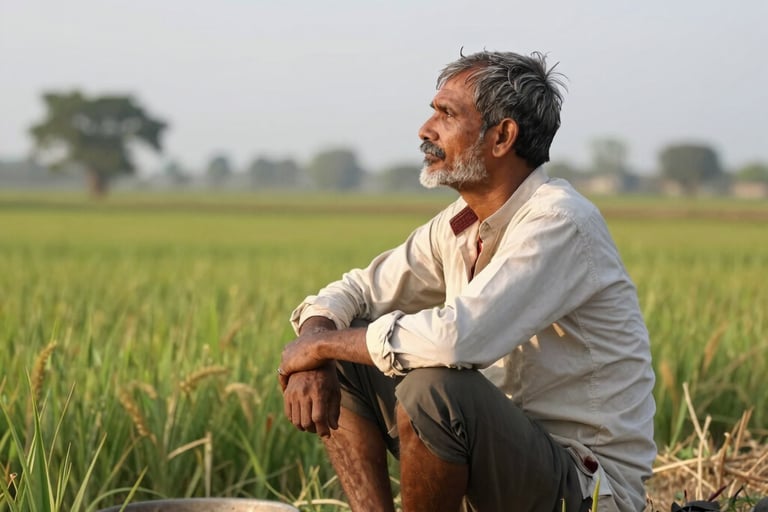
Natural Fertilizers VS Chemical fertilizers : Which one is better? Let’s Find out…
Gobar (cow dung) is the healthiest natural input made by farmers to make their farm healthy and increase crop yield. But, with introduction of modern method of farming chemical fertilizers such as NPK, Urea, etc. has also became to be commonly used by farmers.
As per my experience with different kinds of farmers, the farmers who used chemical fertilizers were mainly laborers who worked on someone else’s farm and just wanted fast crop and didn’t cared about long term impact of it on land or even on crop. They just wanted to make more profits.
But, the genuine farmers who really relied on their own land and had only a piece of land as their daily livelihood, rarely used urea or any chemical fertilizers and believed more on natural fertilizers like vermi-compost was one of them. The advantage of natural fertilizers is that it doesn’t harm our crops which we consume making it totally safe for consumption. Moreover, it also made the land more powerful and productive as it was naturally made.
With chemicals, as the time passes, the land slowly losses it’s capacity to grow any more crops. Even some amount of chemicals even enters our food which is not at advisable to consume for longer period of time. Many kinds of illness is related with use to too much chemical inputs in farm.
Sometimes, when farmers used chemicals by their own calculations, they ended up putting more chemicals in field then required. This ended up in completely burning of their crop and all their efforts became meaningless in a few moments.
Rarely in some cases, the chemical fertilizers were fake which was sold by some unauthorized people to poor and uneducated farmers who, are easy target for such kinds of people.
These fertilizers were also way more expensive then natural fertilizers which became another liability for the farmer and hence, resulted in decreased income. While, gobar can be easily obtained out of cow and is comparatively available at lower cost in market then chemical fertilizers.
I also saw a unique method done by a farmer where, he mixed gobar in his water channel and also go Muttra which acted as both fertilizer as well as irrigation for the field. This saved his huge amount of energy every day. Even, this helped him overcome his expenses in farming thus increasing their earning.
So, in short natural fertilizer is a blessing and proven way to use in fields but, a little amount of chemical fertilizers is too necessary for farms occasionally.
By ISHAAN YADAV
Special thanks to agristories.com
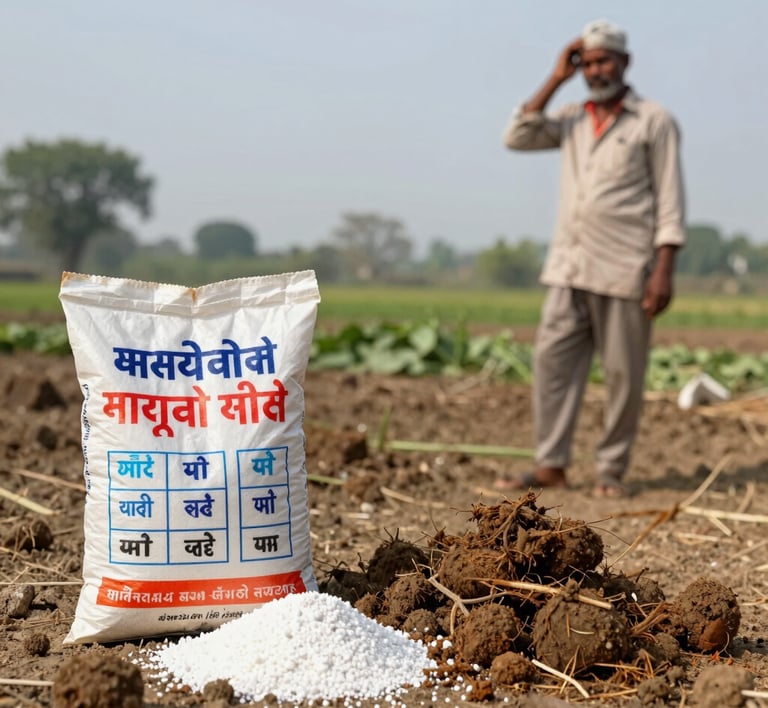
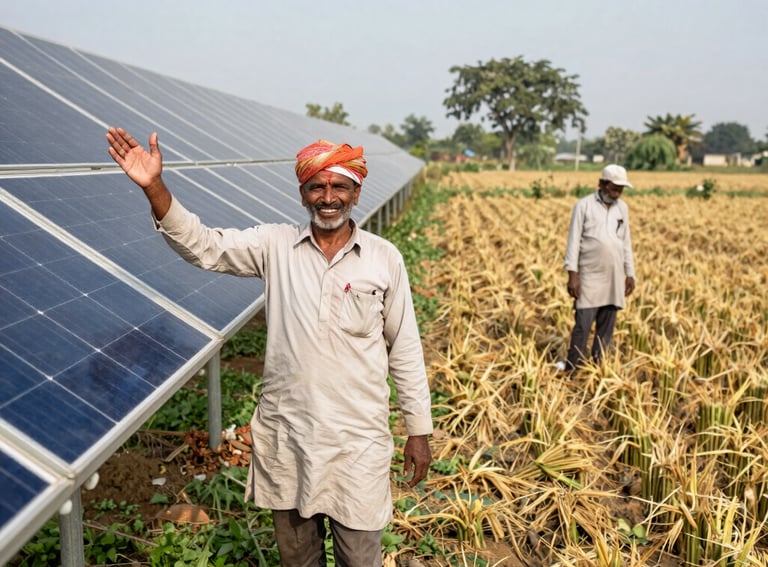
Solar Panels for irrigation he thought he got: - The truth of subsidies given by government
We were again set for interviews and some experiences that will take us to the one of the best what our country has the agriculture. Our team was tired of taking interviews of those who used gutter water for irrigation and chemicals to earn artificially we were tired to educate them not to do so but when we came across a farmer from whom we learnt a lot not a wealthy farmer with big land. He was though a small farmer but he was using such a thing which was I think first time in his whole village.
He was using solar panels to generate energy which was used to pull water from the ground and irrigate his fields. We asked him to show how it worked he started that it was noon so energy was generated from photovoltaic technology and water came from pipes and his field got irrigated. We were still doubt full after seeing his small land and understanding he is a marginal farmer that how he can afford this. I asked him how much you invested he said under Rupees 10000 means only 10% rest I got government of Maharashtra subsidy.
There are many farmers like Mr. Vishal who have improved their life due to government support. We live in a country were 60% of people depend on agriculture still we get very less share from this sector in our economy. It is not matter of anything but information about these things. Every year 35% to 40% subsidy money goes waste in India because no one claims it. If farmers will not apply for this things government officers will get chance to exploit it. So, first of all information is required about this schemes. This is responsibility of government especially local government to register the needy and tell them about all the available supports. Which is not done properly.
A proper survey should be done of these local governments whether they are doing these polices and subsidy things correctly, we can form a commission just to track where all the subsidy money going from each paisa and we can educate farmers by orientations, local govt, groups, NGOs, etc about the coming and existing policies.
There are billions of rupees going waste and corrupted. People are not facility of these policies. So then they will come with opposition to blame the government not knowing real criminals are local govt leaders and small farmers lack of information. Websites like Kisan suvidha, National portal of India, State agriculture mechanization scheme[AM1] , Department of Agriculture and farmers welfare, etc should be known to every farmers. Local governments, NGOs, groups, kisan morchas, krishi vigyaan kendra etc can help farmers to get information about the same.
BY ADITYA RAKESH MISHRA
Special Thanks To agristories.com
Why labourers are now burden not benefit?
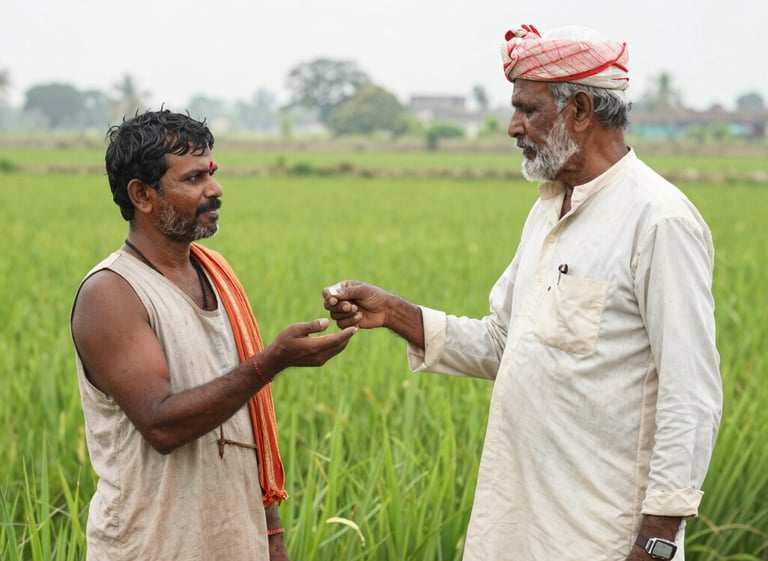
Different villages, different people and different experiences was reminding us about the trail we started. We were onto explore farming the heart and soul of India through our farmer interviews. Soon we came across a common problem which was high cost of labourers. The cost of one labour touched 700 rupees and along with that farmers have to arrange their meals, snacks, tea, tobacco etc.
The problem appears in the thought that a small farmer has near about same financial conditions as labours mostly. For a medium size of land farmers require at least 5 or more labourers or the work will be slower. A farmer faces hardships to do so because they are mostly unstable financially by their side itself. But small and medium farmers appoint labourers because they are unable to work for some reason like if they are old, if women alone than also, they live far from village, they are ill temporally, permanently or physically etc. sometimes farmers appoint labourers to show off or to prove they belong to high caste or community by not working in fields.
Let the reason be anything but this is a problem from both the sides. Yes, now thing from the perspective of labourer a note of 500 rupees in hand after a daylong hard work in open field under the sun makes 15000 rupees a month without a leave. That is very less in this kind of economy to survive and they mostly have a large family to serve. And this is high from farmer’s end but low from labourer’s. We can solve it by giving jobs more jobs less working as labourers. So and also a pension for farmers those who cannot cultivate now can also help. A fixed and state wise categorised rate for labours. Pension for them also and passing of beneficiary yojanas for them can help to secure labourers and farmers. And media, orientations, conferences, reach outs should be made to make farmers ad labourers know about yojanas and plans by government for them. University graduates can be made to work in fields as practical knowledge and experience. This might help poor farmers and documentation for both farmers and labourers as due to lack of documents they don’t get benefits of yojanas and plans.
By ADITYA RAKESH MISHRA
Special thanks to agristories.com
Visible effects of global warming on our crops and farmers.
We are going to complete benchmark of 100 interviews of real farmers soon. So, this is my own experience with these interviews and also what I am seeing in my native place that the use of water in farms has increased drastically and suddenly. The main cause is high heat and long summers yes, summers are long. We may not notice it but monsoons are arriving late than usual. Plants are feeling more heat as we are feeling. The biggest red flag that this heat carry is wastage of water. Due to increasing heat, we use more water in irrigation. By the way highest wastage of water is seen in farming in form of irrigational uses around 30 to 50 percent of fresh water is used in agriculture.
The second thing is pests and diseases. There are certain diseases that come due to heat. And increasing heat increases chance of getting those diseases in your crops. Another thing is health of the farmers- farmers have to work for hours they may not know about hydration management, ORS, sunscreen, serums and special diet. The direct contact with prolonged heat and sunlight can give various digestive diseases and malfunctions, it can cause heat stroke, skin cancer or various skin diseases etc.
Land is getting hotter, humus is becoming less, irrigational setups are drying, machines and life become slow and lazy. Setups that can handle it is use of sprinkler irrigation, drip irrigation and irrigational water management and control etc. Government has to guide farmers to make setups to deal with this heat like use of rainwater-by-rainwater harvesting. Government can also make certain decisions which ae stricter than early ones about reduction of plastics, use of rainwater, use and preparational training for preparation of green fertilizers like vermicompost. The pests and diseases should be tackled by village-to-village visits by government experts to tackle this or Agri-university students can be taken for this. Farmers should be educated to use skin safety products and to take precautions about health.
By Aditya Rakesh Mishra
Special thanks to agristories.com
A UNIQUE TECHNIQUE OF IRRIGATION IN FARMING:
Because small changes & innovations creates huge
differences…
Irrigation is one of the crucial input in farming. This fact is
known by each and every human of earth who knows even a
bit of farming. But, as climate and seasonal patterns are
changing, there is a need of some changes and improvisation
in way farmers irrigate their fields.
One more thing that has became important in farming is the
need to put some kind of chemical or natural fertilizer in
the land. Chemical fertilizers is seen more beneficial in
short term but, in long run it ruins the land and it’s
fertility and at the last it losses it’s ability to grow more
crops and hence, it becomes barren and wasteland.
So, as per our experience of interviews most of the genuine
farmers , who owned their own land, used gobar (cow
dung) and told that it was healthiest and cheapest
natural fertilizer for the farm. It gave fertility to the farm
in short run as well as power to the land in long term.
Many farmers are there who have faced loss due to
excess use of chemical fertilizers because it burnt down
their crops. But with gobar or any other natural fertilizer
like vermi-compost, this case cannot take place. Hence, it
is a much safer and cleaner alternative or option to use
such fertilizers in field.
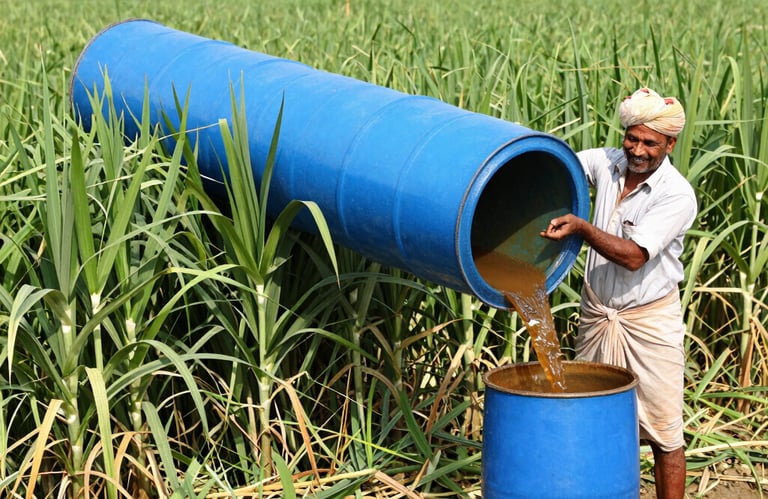
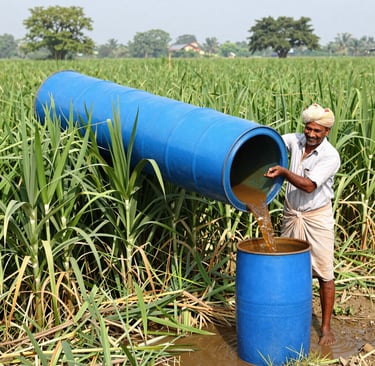
So, the real catch in this farmers field is not gobar or water
but a very unique fusion of both. What he really did is
that he pumped out water from his water source. Next,
he collected it in a tub like area where he mixed gobar to
the water. He had a cow stable , from where he collected
required amount of cow dung and mixed in water.
In this way he resolved many problems of the environment.
1. He solved problem of labor that is to hire manual dail-wage
working labor or he had to do self-labor to put evenly the
gobar to all parts of farm.
2. He turned just a simple water irrigation system into a very
modern solution for fertilizer. This gave him yield of his
crop all year round.
3. During summers, when water scarcity is common in many
farms and village area, he can lower the amount of water
from his mixture of water and gobar and thus continue
farming till the rain happens.
This is how new generation farmers are changing and evolving
their traditional methods of farming to fight new
challenges of farming because of global warming and
various other factors.
Here, one more thing t learn from him is that he didn,t have
any degree or PhD in farming but, his experience gave
him this idea from things he already had.
We see farmers ask and demand for modern machines and
equipments which is really important and it will soon
come and reach them. But, till then they can also do
something new in their farms like this guy did and
inspired our team and other farmers connected to us.
This also showcased how our Indian farmer are juggadu and
they make their best out of waste of cows…
THANK YOU
By Ishaan Sunil Yadav
Special Thanks to agristories.com
PESTS: WHAT ARE THE PRIMARY CAUSES OF PESTS IN FARMS..??
Farming, it is not simple as it might seem to you. It involves
planning what to grow when, what are the conditions required
for a good yield and also many other factors are to be
continuously monitored manually by a farmer in his field. One
such thing is pest.
Earlier, pests weren’t that common to farmers whom we have
interviewed. But, nowadays in past few years pests have
became a little bit concerning issue as they have started
attacking the crops more oftenly.
Earlier, the land was pure, the water used for irrigation from
rivers were fresh and had negligible amount of pollutants. But,
in todays time river are being polluted by various kinds of
waste. One might wonder that the waste dumped in the rivers
are treated ones and they don’t harm the river. But, we all
know the reality of rivers that they are no more pure. In many
villages that we visited, heard a common saying that ‘earlier
they used to drink water from the river but, now they even
doubted if it was enough pure to be used in farming.’ But, they
had no other option so they had to continue with that water as,
filteration units costed them more than their profits from
crops.
The problem here is that the farmers who used the river water
more commonly saw the problem of pest in their field. This
means that some or the other where the pollutants in the
water truly attracted the fungal infections, and disease causing
pests in the field.
The way to fight this problem is that one farmer can try for a
boring water pumping system with the help of some kind of
government subsidy or loan kind of thing. This will help them
fight their long term problem and can make larger profits in the
same land size.
Another change in way of farming is in the kind of manure or
fertilizer that is being used for crops. Traditionally, farmers only
had fewer options like, gobar (cow dung) which is considered
the best one, next is kitchen waste compost like dried banana
peel or coir, etc. But, in modern techniques of farming, many
chemical industries have launched their chemical fertilizers in
the market and advertised it enough that today ‘Urea’ goes in
shortage in many areas of farming due to excessive usage. As
we know this harms the land fertility and even the crop on
which this is being used. Besides this, there is also a risk of pest
in farm due to this thing.
Many farmers, with their own experience have insisted that
urea is worst for farming and also attracted the rubbish pests in
their farm. Instead gobar or poultry manure were more reliable
and healthier source of fertilizers in replacement of chemicals
being used.
Another unexpected reason for more pests is GLOBAL
WARMING. As the summers arrive with much more hweat than
any other part of time in history, the pests might get a
favourable shelter as crops and they lay eggs in the crops of
farmer. Now, as these crops grow with time these eggs hatch
and they cause disease or even they eat leaves of the plant.
Even monsoon arrival is not proper in past few years like in last
year (in 2025) rain hit the Mumbai sub-urban regions in mid
May itself, but in this year (in 2026) its expected in late junes or
early july.
This also hampers the pests as they get more breeding period
and they grow more and more rapidly in a farm. This leads to
many problems due to pests like decreased yield, unhealthy
crops and increasing pressure on pockets of the consumers.
But, some people might suggest pesticides to be used in the
farm to fight these pests. But, as we all know it for the fact that,
any chemical input just worsens the case in farming. In many
farms farmers had to use pesticide for 2-3 times in just a single
season throughout the field. This also causes a phenomenon of
BIO-MAGNIFICATION which is truly harmful for consumers at
higher levels like us the humans and even other animals like us.
Thus, these pests are indirectly affecting the whole ecological
balance of our mother nature and this has to be prevented and
stoped. Thus each and every farmer reading this article should
take preventive measures to stop this silent killer pests.
By Ishaan Yadav
Special Thanks to agristories.com
THANK YOU
WEEDS: A SLOW PARASITE FOR OUR CROPS!!!
One new day we went a little far off from our range of interviewing in search of some problem or challenge that our Indian farmers were facing to capture and show it to you. There we got to know about weeds and it’s growing numbers in farm.
Actually, weeds are unwanted grasses and bushes around required crops that a farmer grows. For example when a farmer cultivates a crop such as wheat, there are unwanted grasses which grow around it. This usually grows on walk ways between crops for movement of farmer from one part of land to another. This happens due to rain, humidity, fertile soil, etc types of favorable conditions in soil. These just grow there and start hampering the growing crops by competing with them for nutrition from soil.
Suppose, you have a situation where 10 liters of water is to be distributed within 5 people and in another situation, it has to be distributed between 10 people. So, it is a common sense that, 5 people with 10 litre of water will be more in benefit then situation 2 with 10 people on same amount of water. This is the same case with crops in field when unwanted weeds comes out around it competition increases for same amount of resources.
Another problem is that, that once they start to sprout in a farm, they start growing very rapidly. This is because they regenerate their population very rapidly by different reproduction modes once they get a favorable condition. They can even grow in a very large numbers overnight if conditions are too good for them and harm the crops.
These weeds are a major problem for farmers as they are to be prevented as well as if they grow they have to be eradicated. They start using all nutrition from the soil for themselves and hence crops get a deficient nutrition from soil and as a result, the farmers get less yield if they don’t bother to put weeds out. They also start using water from land which can eventually increase the water input in the farm which also gives rise to excess water depletion. In many cases of forest fires or such uncertain happenings, these weeds are a cause for spreading fire to more areas and also damages properties due to this. They can also give rise to bacterial or fungal infections in the crop and these can spread like a chain throughout the field and damage the crop and yield of hardworking farmer.
They also increase the labour work of the farmer as in many poor areas, where farming is done, these weeds are to be manually pulled out throughout the farm which is very time-consuming and tiring process.
These weeds have became more common in today’s time because to climate change in the environment. Increased sunlight during summers has also played a role in this. In many areas farmers are furious with this and seeking fast solution for this problem.
To cater this problem WEEDICIDES comes into the picture. This is a chemical which is sprayed by the farmer in his field to stop weeds from diving themselves, strops their amino acid production or photosynthesis. But these are also harmful for crops which are being cultivated as they may get damaged by it. Even the farmers themselves can get skin irritation or even respiratory problems while handling or spraying these chemicals in the farm. So to avoid this they try o remove it manually in most of the cases, and moreover it increases the pressure on their pocket decreases their profit margin in farming. I also show farmers complaining that some people gave them fake weedicides calming many things and money and at the last they had to face the trouble. Even in many cases they didn’t know how much amount of weedicides is to be used and hence they damaged their own yield and became helpless.
So, during my journey of interviewing, I saw a very new and modern way to cater this problem. What a farmer had done was that he had covered his soil bed under a plastic and planted seeds in it and made holes for plants to come out and sprout. While, the extra areas on land in farm didn’t get any sun exposure and neither it got any direct contact to humidity or moisture in the air or climate. This prevented the growth of weeds up to a very large extend and it had reduced the labour work of the farmer. This is popularly known as MULCHING.
But, here also there is a challenge that the covers which are used is way too expensive for a poor farmer and also, most of the farmers lack information that if any such thing exists for this problem. So, they are willingly or unwillingly still stuck with that traditional problem with traditional solutions. As per changing and uncertain rains and seasonal cycles this problem will increase with time and these farmers are still helpless and forced.
This is how the challenges in farming is increasing and evolving but solution is still the same and traditional...
THANK YOU
BY- Ishaan Yadav
Special thanks to agristories.com


INDUSTRIALIZATION: HOW IS THIS AFFECTING OUR FARMERS…??
Industrialization is an inseparable part of a developing nation like ours ‘India’. This lays a foundation for development of a country because of various reasons. Some reasons are like it creates employment for the unemployed youth in the country. Even logistics and transportation gets a boom as raw materials is required in almost every king of industries.
Moreover, major raw materials are derived directly or indirectly from agriculture only. Like textile industries and various other food industries which require food material as their raw material. Most farmers also try to sell their crops to these industrialists as they get better rates from them as they make huge profits through their raw material. Even chemical industry which is really a booming sector also depends on farming in many areas like for natural acids like citric acid and then it is treated as per requirement and profits are made out of it.
But, as we all know every coin has its two faces, likewise there are many problems too faced by farmers due to these industries. During our journey of interview, we also met farmers who had to face polluted dust particles in their field. Like from cement industries heavy amount of dust particles are released in environment and in surrounding areas. Many farmers land gets covered in these sediments of dust which makes it harder for the crops to grow properly. They don’t get enough contact with the soil and end up failing the required amount of yield to make profit for farmer.
This thing is really an alarming case to be looked upon, as for a country to work properly every sector and everything is to be developed with equal importance. India as a producer is a very crucial hub for whole world and if we only do only don’t bother for farming and its new innovations then who will?? It can act as a back bone for our economy if we give a push to this sector.
But, sadly the problem is that with development, farming has become like a very old-fashioned work to be done. Many farmers are just doing this so their children can study well and just go and do some other work. The new generation is also just passionate about AI, Technology, Computers, etc. but no one is looking towards our mother who feeds us ‘Framing’. This is really sad as farming or agriculture was the thing or factor which started civilization in humans. Before farming was discovered, the humans were also like nomads and wondered place to place in search of shelter, food, good climate and other things. But farming gave humans their identity of what they are recognized for today ‘development & inventions’.
We have started building roads but at what cost? Government on behalf of country takes over on many agricultural lands by paying them a huge amount of money and in rare cases not even that money is paid to them. I agree roads are equally important but, we should not even also neglect the importance of farm land as even we are paying the farmer with money but the farmer cannot grow crops on that stack of money. Thing should be looked upon and everyone not only government should see to it that the sector which feeds whole earth or in other words runs this planet should also develop and grow.
Many expensive projects are made on other sectors like petroleum, chemicals, etc. but after green revolution in India there is just nothing majorly done for the sector which provides energy to whole humanity weather directly or indirectly. Many areas should be made reserved for agricultural purposes and shouldn’t be touched or disturbed by any of surrounding activities.
Many industries just dump out sewage waste untreated in the rivers which are heavily used agricultural irrigation purposes but there is just no one who bothers about it and things are just working like that. This dirty chemical waste contaminated water enters our food crops and acts as slow poison for our body. These can also enter our body by food that we consume and just think how bad is it for our body and it’s proper functioning.
Even deforestation in an area makes that area less prone to rain which also again affects the farming sector. So, development is good, truly good but, only until it doesn’t affect our mother “agriculture”.
THANK YOU
BY- ISHAAN YADAV
SPECIAL THANKS TO agristories.com


YELLOW STICKY TRAPS: WHAT IS IT? WHY IS IT USED? LET’S KNOW….
As farming is a fully nature related activity therefore, it is also exposed to many hazards in it. One of the major and visible hazards in any kind of farming is pest and same kind of insects. During our interviews we also noticed one of a prominent reason behind farmers leaving agriculture was loss due to these pests.
Pests and insects can be reduced or tackled by pesticides and insecticides. But it also has harmful side effects too. In long run it demolishes the soil fertility and ability to bear new crops. Moreover, the chemicals may also enter the present crops on which these are sprayed. Many farmers, of whom we took interviews, didn’t have a proper measure of amount of chemical to be used in their field. This again leads to too many other problems.
Some farmers ended up burning their whole yield just because they didn’t have proper measure and understanding of chemical they had in their hands. Even worse? Many of uncertified and illegal sellers of pesticides or insecticides travelled from one village to another and did fake claims about their product. Then, when those innocent farmers trusted them and used it in their farm, they got to know that they got scammed by some fake people. This also lead to reduced trust of farmers on government as in many cases such scammers used name of authority and sold their fake items to them.
This is a very concerning issue as government can control registered and legal entity but private and un-registered entities are really challenging for government to track. As poor farmers of country still don’t have good standards of education so, they can be easily targeted by those shameless scammers. Government is also doing campaigns in many backward areas to aware farmers how to be safe from these scammers and their fake business. But, sad reality is that some areas are still affected by them.
These pesticides and insecticides can also enter in the crops and a phenomenon can be observed ‘bio-magnification’. This is seen when harmful toxins in food enters body of consumer and it multiplies inside it and creates worse effect on the body. This can be slow effect but can significantly be seen in old age people who have become more vulnerable to diseases than ever before. So, in short they also disbalance our ecology and way of living.
Even the water used is contaminated. Afterwards the same contaminated water seeps inside and reaches ground water bodies. As a result ground water also gets contaminated which also a really a problem for us to look upon. We have mostly ground water as our drinkable water supply. The hand pumps and bore-well sucks out this water and is very popularly used in villages on a large scale for drinking as well as water crops again. So in this way it can become a chain of contamination and hence, the crops in the farm gets more and more weak and poisonous. People majorly keep such things unseen but this is really a matter of discussion.
In our journey to one farm to another we came across a really strange yellow and sticky pads hung on a stick just a little higher than the crop height. When we interviewed the farm owner he told a really interesting application of it. He had a common issue in his area that was of insects and flies and even mosquitoes attacked his crops. Those yellow pads had glue on it, so when the insects came to his crop they got stuck on that glue pad. This saved his money for insecticide and even labor work to spray it all over the field. This way he didn’t only increased his profit margin but also is a great step towards nature as such small innovations and implementations create a very huge differences. These kinds of things should be used by more farmers and government should make more farmers aware of it.
This solved all the major issues by these insects and pests as I mentioned above with just one thing placed all over evenly throughout the farm.
THANK YOU
BY-ISHAAN YADAV
SOURCE- agristories.com


NATURAL DISASTER: A NIGHTMARE FOR A FARMER
Natural disasters are not wanted by anyone especially by the farmers. Weather rich or poor farmer no one wants such a destructive event to occur with their field which is like mother to them as she feeds them and also all of us.
In today’s time even without a natural disaster a common farmer is really worried and tensed for his upcoming yield due to various factors, like global warming which has significantly increased the sunlight coming to the Earth. Even the rains are a subject to vary as like you would have noticed in India in year 2025, rain started from mid-may in Maharashtra’s Mumbai region, while just the next year (current year 2026) it happened to commence in July month which is really a big time gap for a farmer’s crop.
This gave rise to a natural disaster ‘drought’ in many areas in India. This is not the first time we have experienced drought but its affect has become worse now. In a drought situation the land losses all water and moisture in the soil. This is due to intense rays of sunlight and also happens due to lack f rainfall like we experienced this year. Even many areas and housing societies in Mumbai and other Metro Politian cities experienced water shortage than, just think about the situation of a farmer. Many ground sources like wells, would have dried up due to which the farmer would have suffered really badly. Their profits would have gone in negatives or say just losses. This just shakes a farmer in all aspect financially, emotionally, physically and just demotivates a farmer for continuing farming. This forces them to get into some un-organized sector of jobs in order to keep their family alive in such a situation.
Even if rain happens after getting delayed, it happens in such a way that it just makes the case even worse. Like currently when I am writing this (July 2026) the whole Mumbai-Pune region is struggling with heavy rainfall. All the roads are underwater even railways is failing to tackle this rain. This results in a stoppage of transportation system and movement of logistical goods. Thus, in such situations the farmer will need to store the crops he grew for selling it in markets when the water level goes down in city area.
While, this is not the real problem, the major affect of rain is seen when the water bodies like rivers, lakes, ponds ,etc. over flows and reaches their farms in the form of flood. When flood fills in the farm his all the days of hardwork for loosening the soil, sowing the seeds and carefully growing whole yield like their own kids goes wasted for zero outcome. All their investments for buying seeds, fertilizers, buying or renting a tractor, wages for labor who worked goes in wasted for nothing. These are the situations where government helps them with subsidies and help but even after that it is just not enough for them. As the time for growing the crop and soil fertility for the season is already lost. Many kinds of debris, rocks and even waste materials get accumulated in the farm area which has to be removed and soil is required to be repaired again to be used.
Little bit flooding or clogging of water is needed for rice cultivation during monsoons but, that should be by direct rainfall from the sky, not by flooding due to dam waters or any other kind of reasons.
This simply suggests us that, even after so much development of humans and inventions, we still lack in technology and development of our mother sector of farming which directly or indirectly gives us food, shelter, housing and indirectly everything which one requires in order to stay alive and energetic to do all the work every day. We are even unable to predict the seasonal cycle so that our farmers can accordingly plan their yields. This is really a big problem and since whole ecosystem depends on it, we can’t even ignore it. So, this is how a natural disaster breaks a farmer in every way.
THANK Y0U
BY-ISHAAN YADAV
COURTESY- agristories.com

