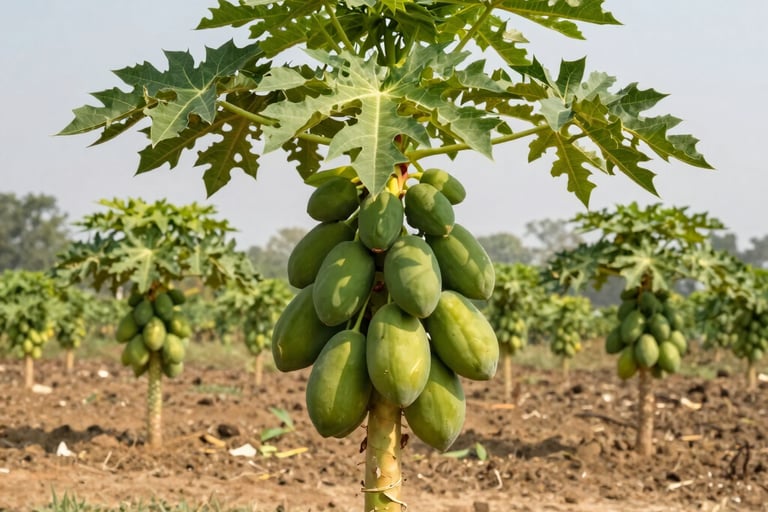
Papaya (Papita)
A fast-growing tropical fruit crop rich in vitamins, widely used for fresh consumption and papain extraction.
तेजी से बढ़ने वाली उष्णकटिबंधीय फल फसल, जो विटामिन से भरपूर है और ताजा फल व पपेन (एंजाइम) के लिए उपयोग होती है।
🌦️ Climate
Grows best in warm tropical climate (25–35°C); sensitive to frost.
यह गर्म उष्णकटिबंधीय जलवायु (25–35°C) में अच्छी उगती है; पाले से नुकसान होता है।
🌱 Soil
Prefers well-drained sandy loam soil with pH 6–7.5.
अच्छी जल निकासी वाली बलुई दोमट मिट्टी (pH 6–7.5) उपयुक्त होती है।
🌾 Varieties
Popular varieties include Red Lady 786, Pusa Nanha, and Taiwan-786.
लोकप्रिय किस्मों में रेड लेडी 786, पूसा नन्हा और ताइवान-786 शामिल हैं।
📅 Planting Time
Feb–March | June–July.
फरवरी–मार्च | जून–जुलाई।
🍈 Harvesting
Starts after 8–10 months; continuous harvesting for 1–2 years.
8–10 महीने बाद उत्पादन शुरू; 1–2 साल तक लगातार फल।
💧 Irrigation
Regular irrigation needed; avoid waterlogging.
नियमित सिंचाई आवश्यक; जलभराव से बचें।
🧪 Fertilizers
Heavy feeder; use organic manure with high NPK.
अधिक पोषक तत्व की जरूरत; जैविक खाद और उच्च एनपीके का उपयोग करें।
🐛 Pest & Disease Control
Common pests: Aphids, fruit flies. Diseases: Papaya mosaic virus, root rot.
मुख्य कीट: माहू, फल मक्खी। रोग: पपाया मोज़ेक वायरस, रूट रॉट।
Recommended pesticides:
Imidacloprid 17.8% SL – for aphids
Spinosad 45% SC – for fruit flies
Carbendazim 50% WP – for root rot
उपयोगी दवाइयाँ:
इमिडाक्लोप्रिड – माहू नियंत्रण
स्पिनोसैड – फल मक्खी नियंत्रण
कार्बेन्डाजिम – जड़ सड़न नियंत्रण
💰 Investment
₹60,000–₹1,50,000 per acre.
₹60,000–₹1,50,000 प्रति एकड़।
📊 Yield
200–350 quintals per acre.
200–350 क्विंटल प्रति एकड़।
💵 Profit
₹1,00,000–₹4,00,000 per acre.
₹1,00,000–₹4,00,000 प्रति एकड़ लाभ।
🏷️ Market
Very high demand in fruit markets, juice industry, and export.
फल बाजार, जूस उद्योग और निर्यात में बहुत अधिक मांग।
⚠️ Risks
Viral diseases, waterlogging, and temperature sensitivity.
वायरल रोग, जलभराव और तापमान पर निर्भरता।
🌍 Best Papaya Varieties by Region (India)
🌍 क्षेत्र के अनुसार पपीता की बेहतर किस्में
🟡 Central India (MP, Maharashtra)
Main production region.
मुख्य उत्पादन क्षेत्र।
Red Lady 786 ⭐
Taiwan-786
Pusa Delicious
🟢 North India (UP, Bihar)
Suitable for seasonal cultivation.
मौसमी खेती के लिए उपयुक्त।
Pusa Nanha ⭐
Red Lady 786
Honey Dew
🔵 South India (Karnataka, Tamil Nadu, AP)
Suitable for year-round cultivation.
सालभर खेती के लिए उपयुक्त।
Red Lady 786 ⭐
CO-2
CO-7
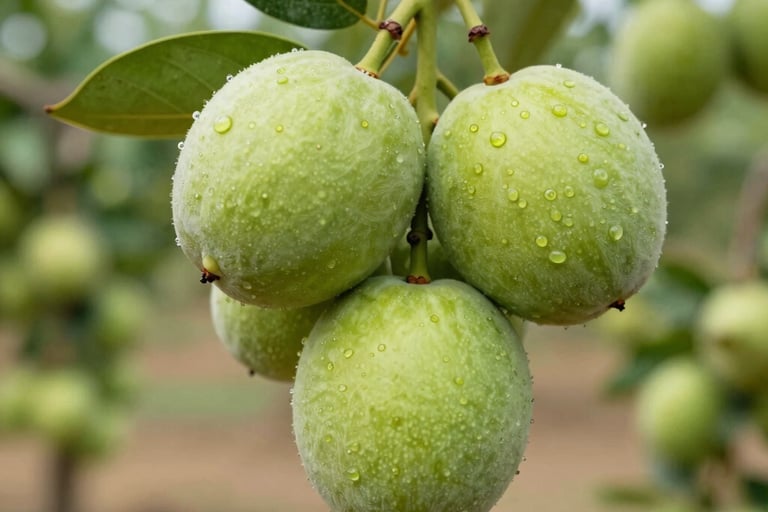
🍐 Guava (Amrud)
A highly nutritious tropical fruit rich in vitamin C, widely consumed fresh and used in juice and processing.
विटामिन C से भरपूर पौष्टिक उष्णकटिबंधीय फल, जिसे ताजा, जूस और प्रोसेसिंग में उपयोग किया जाता है।
🌦️ Climate
Grows best in tropical and subtropical climate (20–35°C).
यह उष्णकटिबंधीय और उपोष्णकटिबंधीय जलवायु (20–35°C) में अच्छी उगती है।
🌱 Soil
Prefers well-drained loamy soil; tolerant to different soil types.
अच्छी जल निकासी वाली दोमट मिट्टी उपयुक्त; विभिन्न मिट्टियों में उग सकती है।
🌾 Varieties
Popular varieties include Allahabad Safeda, Lucknow-49 (Sardar), and Lalit.
लोकप्रिय किस्मों में इलाहाबाद सफेदा, लखनऊ-49 (सरदार) और ललित शामिल हैं।
📅 Planting Time
Feb–March | Aug–Sept.
फरवरी–मार्च | अगस्त–सितंबर।
🍐 Harvesting
Starts after 2–3 years; multiple harvests per year.
2–3 साल बाद उत्पादन शुरू; साल में कई बार फल।
💧 Irrigation
Moderate irrigation; drought-tolerant.
मध्यम सिंचाई; सूखा सहनशील।
🧪 Fertilizers
Use organic manure with balanced NPK.
जैविक खाद और संतुलित एनपीके का उपयोग करें।
🐛 Pest & Disease Control
Common pests: Fruit fly, aphids. Diseases: Wilt, anthracnose.
मुख्य कीट: फल मक्खी, माहू। रोग: विल्ट, एन्थ्रेक्नोज।
Recommended pesticides:
Spinosad 45% SC – for fruit fly
Imidacloprid 17.8% SL – for aphids
Mancozeb 75% WP – for fungal diseases
उपयोगी दवाइयाँ:
स्पिनोसैड – फल मक्खी नियंत्रण
इमिडाक्लोप्रिड – माहू नियंत्रण
मैनकोजेब – फंगल रोग नियंत्रण
💰 Investment
₹50,000–₹1,50,000 per acre.
₹50,000–₹1,50,000 प्रति एकड़।
📊 Yield
150–300 quintals per acre.
150–300 क्विंटल प्रति एकड़।
💵 Profit
₹1,00,000–₹4,00,000 per acre annually.
₹1,00,000–₹4,00,000 प्रति एकड़ वार्षिक लाभ।
🏷️ Market
Very high demand in fresh fruit markets and processing industry.
ताजा फल बाजार और प्रोसेसिंग उद्योग में बहुत अधिक मांग।
⚠️ Risks
Fruit fly attack, disease, and improper pruning.
फल मक्खी का आक्रमण, रोग और गलत छंटाई का खतरा।
🌍 Best Guava Varieties by Region (India)
🌍 क्षेत्र के अनुसार अमरूद की बेहतर किस्में
🟢 North India (UP, Bihar, Punjab)
Famous for high-quality guava.
उच्च गुणवत्ता वाले अमरूद के लिए प्रसिद्ध।
Allahabad Safeda ⭐
Lucknow-49 (Sardar)
Lalit
🟡 Central India (MP, Maharashtra)
Main commercial cultivation region.
मुख्य व्यावसायिक खेती क्षेत्र।
Lucknow-49 ⭐
Allahabad Safeda
Shweta
🔵 South India (Karnataka, Tamil Nadu)
Suitable for year-round production.
सालभर उत्पादन के लिए उपयुक्त।
Lalit ⭐
Allahabad Safeda
Arka Mridula
🍍 Pineapple (Ananas)
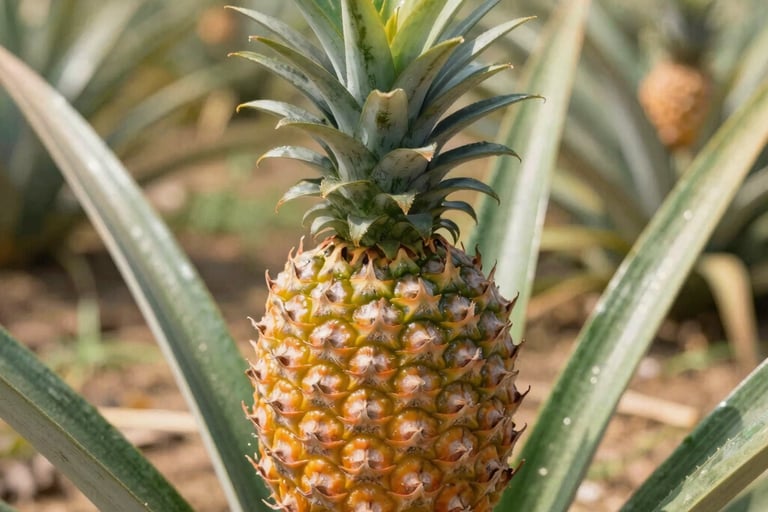
A tropical fruit crop known for its sweet and tangy taste, widely used fresh, in juices, and processed products.
मीठे और खट्टे स्वाद वाला उष्णकटिबंधीय फल, जिसका उपयोग ताजा, जूस और प्रोसेस्ड उत्पादों में होता है।
🌦️ Climate
Grows best in warm and humid climate (20–35°C).
यह गर्म और आर्द्र जलवायु (20–35°C) में अच्छी उगता है।
🌱 Soil
Prefers well-drained sandy loam soil with slightly acidic pH (4.5–6.5).
अच्छी जल निकासी वाली बलुई दोमट मिट्टी (pH 4.5–6.5) उपयुक्त होती है।
🌾 Varieties
Popular varieties include Kew (Giant Kew), Queen, and Mauritius.
लोकप्रिय किस्मों में क्यू (जायंट क्यू), क्वीन और मॉरीशस शामिल हैं।
📅 Planting Time
May–July (monsoon) | Can be grown year-round in some regions.
मई–जुलाई (मानसून) | कुछ क्षेत्रों में सालभर उगाया जा सकता है।
🍍 Harvesting
Ready in 18–24 months after planting.
रोपण के 18–24 महीनों में तैयार होता है।
💧 Irrigation
Moderate irrigation; drought-tolerant but needs moisture.
मध्यम सिंचाई; सूखा सहनशील लेकिन नमी आवश्यक।
🧪 Fertilizers
Heavy feeder; use organic manure with high nitrogen and potassium.
अधिक पोषक तत्व की जरूरत; जैविक खाद और नाइट्रोजन व पोटाश का उपयोग करें।
🐛 Pest & Disease Control
Common pests: Mealybugs, mites. Diseases: Heart rot, leaf spot.
मुख्य कीट: मिलीबग, माइट्स। रोग: हार्ट रॉट, लीफ स्पॉट।
Recommended pesticides:
Chlorpyrifos 20% EC – for mealybugs
Spiromesifen 22.9% SC – for mites
Mancozeb 75% WP – for fungal diseases
उपयोगी दवाइयाँ:
क्लोरपाइरीफॉस – मिलीबग नियंत्रण
स्पायरोमेसिफेन – माइट नियंत्रण
मैनकोजेब – फंगल रोग नियंत्रण
💰 Investment
₹60,000–₹1,50,000 per acre.
₹60,000–₹1,50,000 प्रति एकड़।
📊 Yield
200–300 quintals per acre.
200–300 क्विंटल प्रति एकड़।
💵 Profit
₹1,00,000–₹3,00,000 per acre.
₹1,00,000–₹3,00,000 प्रति एकड़ लाभ।
🏷️ Market
High demand in fresh fruit markets, juice, and processing industries.
ताजा फल बाजार, जूस और प्रोसेसिंग उद्योग में उच्च मांग।
⚠️ Risks
Pest attack, waterlogging, and disease spread.
कीट आक्रमण, जलभराव और रोग फैलने का खतरा।
🌍 Best Pineapple Growing Regions in India
🌍 भारत में अनानास के प्रमुख क्षेत्र
🟢 East & Northeast India (Assam, West Bengal, Meghalaya)
Main production region.
मुख्य उत्पादन क्षेत्र।
Kew ⭐
Queen
Mauritius
🟡 South India (Kerala, Karnataka, Tamil Nadu)
Suitable for commercial farming.
व्यावसायिक खेती के लिए उपयुक्त।
Mauritius ⭐
Kew
Amritha
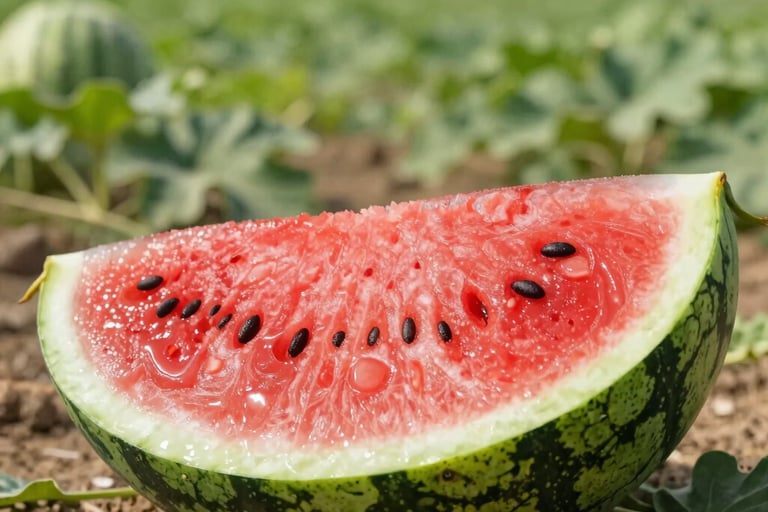
🍉 Watermelon (Tarbooj)
A refreshing summer fruit crop rich in water and nutrients, widely consumed fresh and in juices.
पानी और पोषक तत्वों से भरपूर गर्मियों का ताज़गी भरा फल, जिसे ताजा और जूस के रूप में उपयोग किया जाता है।
🌦️ Climate
Grows best in warm climate (25–35°C); requires plenty of sunlight.
यह गर्म जलवायु (25–35°C) और धूप में अच्छी उगती है।
🌱 Soil
Prefers well-drained sandy loam soil with pH 6–7.5.
अच्छी जल निकासी वाली बलुई दोमट मिट्टी (pH 6–7.5) उपयुक्त होती है।
🌾 Varieties
Popular varieties include Sugar Baby, Crimson Sweet, and Arka Manik.
लोकप्रिय किस्मों में शुगर बेबी, क्रिमसन स्वीट और अर्का मानिक शामिल हैं।
📅 Sowing Time
Jan–March (summer crop) | Nov–Dec (in South India).
जनवरी–मार्च (ग्रीष्म फसल) | नवंबर–दिसंबर (दक्षिण भारत)।
🍉 Harvesting
Ready in 75–100 days after sowing.
बुवाई के 75–100 दिनों में तैयार होता है।
💧 Irrigation
Moderate irrigation; avoid excess water near harvest.
मध्यम सिंचाई; कटाई के समय अधिक पानी से बचें।
🧪 Fertilizers
Use organic manure with nitrogen, phosphorus, and potassium.
जैविक खाद और नाइट्रोजन, फास्फोरस, पोटाश का उपयोग करें।
🐛 Pest & Disease Control
Common pests: Aphids, fruit flies. Diseases: Downy mildew, fusarium wilt.
मुख्य कीट: माहू, फल मक्खी। रोग: डाउनy मिल्ड्यू, फ्यूजेरियम विल्ट।
Recommended pesticides:
Imidacloprid 17.8% SL – for aphids
Spinosad 45% SC – for fruit flies
Mancozeb 75% WP – for fungal diseases
उपयोगी दवाइयाँ:
इमिडाक्लोप्रिड – माहू नियंत्रण
स्पिनोसैड – फल मक्खी नियंत्रण
मैनकोजेब – फंगल रोग नियंत्रण
💰 Investment
₹20,000–₹50,000 per acre.
₹20,000–₹50,000 प्रति एकड़।
📊 Yield
100–200 quintals per acre.
100–200 क्विंटल प्रति एकड़।
💵 Profit
₹50,000–₹2,00,000 per acre.
₹50,000–₹2,00,000 प्रति एकड़ लाभ।
🏷️ Market
Very high demand in summer season; good market price.
गर्मियों में बहुत अधिक मांग; अच्छा बाजार मूल्य।
⚠️ Risks
Pest attack, irregular irrigation, and weather fluctuations.
कीट आक्रमण, अनियमित सिंचाई और मौसम परिवर्तन का खतरा।
🌍 Best Watermelon Varieties by Region (India)
🌍 क्षेत्र के अनुसार तरबूज की बेहतर किस्में
🟢 North India (UP, Punjab, Haryana)
Best for summer cultivation.
गर्मियों की खेती के लिए उपयुक्त।
Sugar Baby ⭐
Crimson Sweet
Asahi Yamato
🟡 Central India (MP, Maharashtra)
Main commercial production region.
मुख्य व्यावसायिक उत्पादन क्षेत्र।
Crimson Sweet ⭐
Arka Manik
Sugar Baby
🔵 South India (Karnataka, Tamil Nadu, AP)
Suitable for off-season production.
ऑफ-सीजन उत्पादन के लिए उपयुक्त।
Arka Manik ⭐
Sugar Baby
Durga
🍈 Muskmelon (Kharbuja)
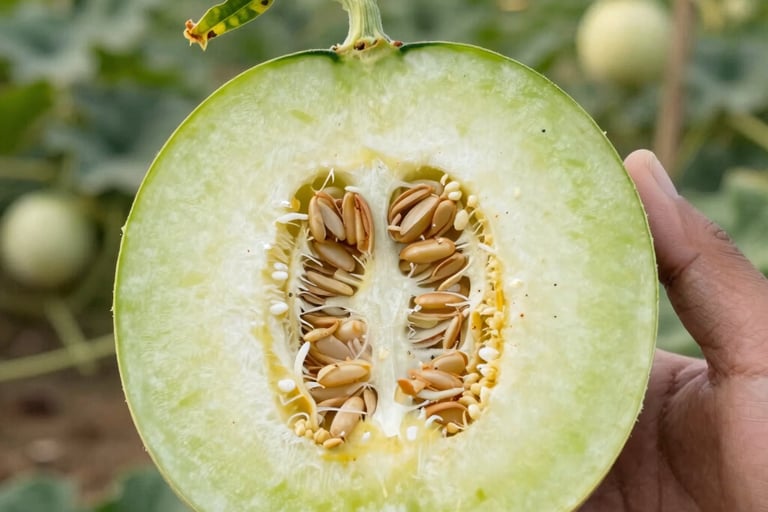
A sweet and aromatic summer fruit rich in vitamins, widely consumed fresh and in juices.
मीठा और सुगंधित गर्मियों का फल, जो विटामिन से भरपूर है और ताजा व जूस में उपयोग होता है।
🌦️ Climate
Grows best in warm climate (25–35°C) with plenty of sunlight.
यह गर्म जलवायु (25–35°C) और अच्छी धूप में अच्छी उगती है।
🌱 Soil
Prefers well-drained sandy loam soil with pH 6–7.5.
अच्छी जल निकासी वाली बलुई दोमट मिट्टी (pH 6–7.5) उपयुक्त होती है।
🌾 Varieties
Popular varieties include Hara Madhu, Punjab Sunehri, and Arka Rajhans.
लोकप्रिय किस्मों में हरा मधु, पंजाब सुनेहरी और अर्का राजहंस शामिल हैं।
📅 Sowing Time
Jan–March (summer crop).
जनवरी–मार्च (ग्रीष्म फसल)।
🍈 Harvesting
Ready in 70–90 days after sowing.
बुवाई के 70–90 दिनों में तैयार होता है।
💧 Irrigation
Moderate irrigation; avoid excess moisture near harvest.
मध्यम सिंचाई; कटाई के समय अधिक नमी से बचें।
🧪 Fertilizers
Use organic manure with nitrogen, phosphorus, and potassium.
जैविक खाद और नाइट्रोजन, फास्फोरस, पोटाश का उपयोग करें।
🐛 Pest & Disease Control
Common pests: Aphids, fruit flies. Diseases: Powdery mildew, wilt.
मुख्य कीट: माहू, फल मक्खी। रोग: पाउडरी मिल्ड्यू, विल्ट।
Recommended pesticides:
Imidacloprid 17.8% SL – for aphids
Spinosad 45% SC – for fruit flies
Sulphur 80% WP – for powdery mildew
उपयोगी दवाइयाँ:
इमिडाक्लोप्रिड – माहू नियंत्रण
स्पिनोसैड – फल मक्खी नियंत्रण
सल्फर – फंगल रोग नियंत्रण
💰 Investment
₹20,000–₹50,000 per acre.
₹20,000–₹50,000 प्रति एकड़।
📊 Yield
80–150 quintals per acre.
80–150 क्विंटल प्रति एकड़।
💵 Profit
₹40,000–₹1,50,000 per acre.
₹40,000–₹1,50,000 प्रति एकड़ लाभ।
🏷️ Market
High demand in summer markets and juice industry.
गर्मियों के बाजार और जूस उद्योग में उच्च मांग।
⚠️ Risks
Pest attack, over-irrigation, and weather changes.
कीट आक्रमण, अधिक सिंचाई और मौसम परिवर्तन का खतरा।
🌍 Best Muskmelon Varieties by Region (India)
🌍 क्षेत्र के अनुसार खरबूजा की बेहतर किस्में
🟢 North India (UP, Punjab, Haryana)
Best for summer cultivation.
गर्मियों की खेती के लिए उपयुक्त।
Punjab Sunehri ⭐
Hara Madhu
Durgapura Madhu
🟡 Central India (MP, Maharashtra)
Main commercial cultivation region.
मुख्य व्यावसायिक खेती क्षेत्र।
Hara Madhu ⭐
Arka Rajhans
Punjab Sunehri
🔵 South India (Karnataka, Tamil Nadu, AP)
Suitable for off-season production.
ऑफ-सीजन उत्पादन के लिए उपयुक्त।
Arka Rajhans ⭐
Hara Madhu
Local Varieties
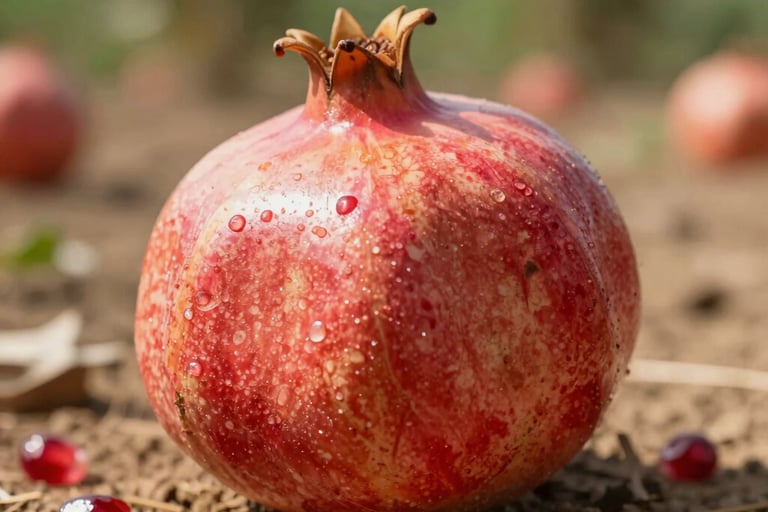
Pomegranate (Anar)
A high-value fruit crop known for its juicy seeds, rich in antioxidants, widely used fresh and in juice industry.
रसीले दानों वाला उच्च मूल्य का फल, एंटीऑक्सीडेंट से भरपूर, जिसे ताजा और जूस उद्योग में उपयोग किया जाता है।
🌦️ Climate
Grows best in tropical and subtropical climate (20–35°C); drought-tolerant.
यह उष्णकटिबंधीय और उपोष्णकटिबंधीय जलवायु (20–35°C) में अच्छी उगता है; सूखा सहनशील है।
🌱 Soil
Prefers well-drained sandy loam soil; tolerates slightly alkaline soil.
अच्छी जल निकासी वाली बलुई दोमट मिट्टी उपयुक्त; हल्की क्षारीय मिट्टी में भी उग सकता है।
🌾 Varieties
Popular varieties include Bhagwa, Ganesh, and Arakta.
लोकप्रिय किस्मों में भगवा, गणेश और अर्कता शामिल हैं।
📅 Planting Time
June–July | Feb–March.
जून–जुलाई | फरवरी–मार्च।
🍎 Harvesting
Starts after 2–3 years; multiple harvest cycles (bahar system).
2–3 साल बाद उत्पादन शुरू; बहार प्रणाली से कई बार उत्पादन।
💧 Irrigation
Low to moderate irrigation; avoid waterlogging.
कम से मध्यम सिंचाई; जलभराव से बचें।
🧪 Fertilizers
Use organic manure with balanced NPK and micronutrients.
जैविक खाद, संतुलित एनपीके और सूक्ष्म पोषक तत्वों का उपयोग करें।
🐛 Pest & Disease Control
Common pests: Fruit borer, aphids. Diseases: Bacterial blight, wilt.
मुख्य कीट: फल छेदक, माहू। रोग: बैक्टीरियल ब्लाइट, विल्ट।
Recommended pesticides:
Emamectin Benzoate 5% SG – for fruit borer
Imidacloprid 17.8% SL – for aphids
Copper Oxychloride 50% WP – for bacterial diseases
उपयोगी दवाइयाँ:
इमामेक्टिन बेंजोएट – फल छेदक नियंत्रण
इमिडाक्लोप्रिड – माहू नियंत्रण
कॉपर ऑक्सी क्लोराइड – बैक्टीरियल रोग नियंत्रण
💰 Investment
₹80,000–₹2,00,000 per acre.
₹80,000–₹2,00,000 प्रति एकड़।
📊 Yield
80–150 quintals per acre.
80–150 क्विंटल प्रति एकड़।
💵 Profit
₹1,50,000–₹5,00,000 per acre.
₹1,50,000–₹5,00,000 प्रति एकड़ लाभ।
🏷️ Market
Very high demand in fresh fruit markets, juice, and export.
ताजा फल बाजार, जूस और निर्यात में बहुत अधिक मांग।
⚠️ Risks
Bacterial blight, pest attack, and improper irrigation.
बैक्टीरियल रोग, कीट आक्रमण और गलत सिंचाई का खतरा।
🌍 Best Pomegranate Varieties by Region (India)
🌍 क्षेत्र के अनुसार अनार की बेहतर किस्में
🟡 Central India (Maharashtra, MP)
Main production region.
मुख्य उत्पादन क्षेत्र।
Bhagwa ⭐
Ganesh
Arakta
🟢 North India (UP, Rajasthan)
Suitable for dry climate farming.
सूखा क्षेत्र की खेती के लिए उपयुक्त।
Ganesh ⭐
Bhagwa
Mridula
🔵 South India (Karnataka, Andhra Pradesh)
Suitable for commercial farming.
व्यावसायिक खेती के लिए उपयुक्त।
Bhagwa ⭐
Arakta
Phule Bhagwa Super
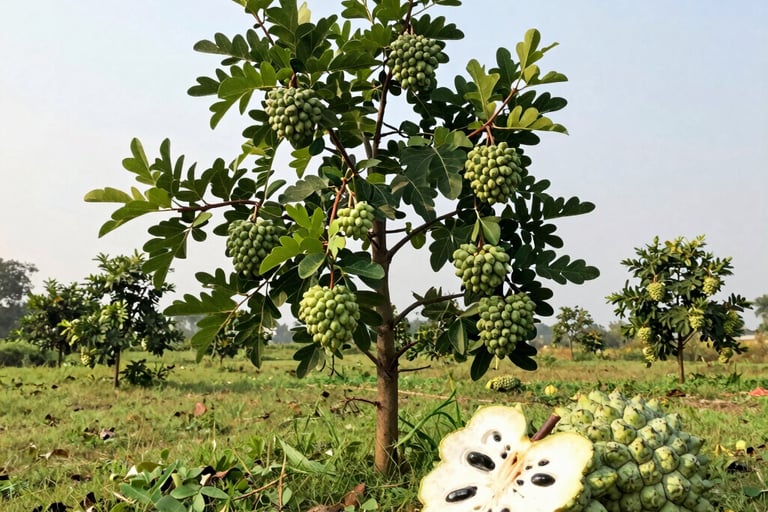
🍏 Custard Apple (Sitaphal)
A sweet tropical fruit with creamy pulp, widely consumed fresh and used in desserts.
मीठा और क्रीमी गूदा वाला उष्णकटिबंधीय फल, जिसे ताजा और मिठाइयों में उपयोग किया जाता है।
🌦️ Climate
Grows best in warm tropical climate (20–35°C); drought-tolerant.
यह गर्म उष्णकटिबंधीय जलवायु (20–35°C) में अच्छी उगता है; सूखा सहनशील है।
🌱 Soil
Prefers well-drained sandy or loamy soil; tolerates poor soils.
अच्छी जल निकासी वाली बलुई या दोमट मिट्टी उपयुक्त; कम उपजाऊ मिट्टी में भी उग सकता है।
🌾 Varieties
Popular varieties include Balanagar, Arka Sahan, and Mammoth.
लोकप्रिय किस्मों में बालानगर, अर्का सहन और मैमथ शामिल हैं।
📅 Planting Time
June–July (monsoon season).
जून–जुलाई (मानसून)।
🍏 Harvesting
Starts after 3–4 years; fruits mature in 4–5 months after flowering.
3–4 साल बाद उत्पादन शुरू; फूल आने के 4–5 महीने बाद फल तैयार।
💧 Irrigation
Low to moderate irrigation; drought-tolerant.
कम से मध्यम सिंचाई; सूखा सहनशील।
🧪 Fertilizers
Use organic manure with balanced NPK.
जैविक खाद और संतुलित एनपीके का उपयोग करें।
🐛 Pest & Disease Control
Common pests: Mealybugs, fruit borers. Diseases: Leaf spot, root rot.
मुख्य कीट: मिलीबग, फल छेदक। रोग: लीफ स्पॉट, रूट रॉट।
Recommended pesticides:
Chlorpyrifos 20% EC – for mealybugs
Emamectin Benzoate 5% SG – for fruit borer
Mancozeb 75% WP – for fungal diseases
उपयोगी दवाइयाँ:
क्लोरपाइरीफॉस – मिलीबग नियंत्रण
इमामेक्टिन बेंजोएट – फल छेदक नियंत्रण
मैनकोजेब – फंगल रोग नियंत्रण
💰 Investment
₹40,000–₹1,00,000 per acre.
₹40,000–₹1,00,000 प्रति एकड़।
📊 Yield
50–100 quintals per acre.
50–100 क्विंटल प्रति एकड़।
💵 Profit
₹80,000–₹3,00,000 per acre.
₹80,000–₹3,00,000 प्रति एकड़ लाभ।
🏷️ Market
Good demand in fresh fruit markets and dessert industry.
ताजा फल बाजार और मिठाई उद्योग में अच्छी मांग।
⚠️ Risks
Pest attack, irregular fruiting, and market fluctuations.
कीट आक्रमण, अनियमित फलन और बाजार उतार-चढ़ाव का खतरा।
🌍 Best Custard Apple Varieties by Region (India)
🌍 क्षेत्र के अनुसार सीताफल की बेहतर किस्में
🟡 Central India (Maharashtra, MP)
Main production region.
मुख्य उत्पादन क्षेत्र।
Balanagar ⭐
Arka Sahan
Local Varieties
🟢 North India (UP, Rajasthan)
Suitable for dry regions.
सूखा क्षेत्रों के लिए उपयुक्त।
Arka Sahan ⭐
Mammoth
Balanagar
🔵 South India (Karnataka, Andhra Pradesh)
Suitable for commercial farming.
व्यावसायिक खेती के लिए उपयुक्त।
Arka Sahan ⭐
Balanagar
Red Sitaphal
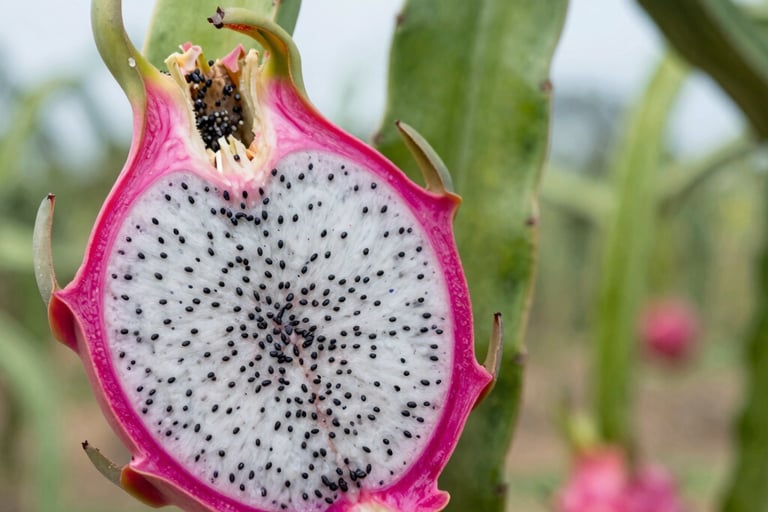
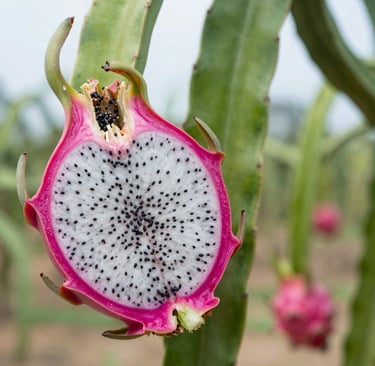
🐉 Dragon Fruit (Pitaya)
A high-value exotic fruit crop known for its attractive appearance and health benefits, widely grown for premium markets.
एक उच्च मूल्य का विदेशी फल, जो अपने आकर्षक रूप और स्वास्थ्य लाभों के लिए जाना जाता है, प्रीमियम बाजार के लिए उगाया जाता है।
🌦️ Climate
Grows best in warm and dry tropical climate (20–35°C); tolerant to drought.
यह गर्म और शुष्क उष्णकटिबंधीय जलवायु (20–35°C) में अच्छी उगता है; सूखा सहनशील है।
🌱 Soil
Prefers well-drained sandy loam soil; slightly acidic to neutral pH.
अच्छी जल निकासी वाली बलुई दोमट मिट्टी; हल्की अम्लीय से सामान्य pH उपयुक्त।
🌾 Varieties
Popular varieties include White Flesh, Red Flesh, and Yellow Dragon Fruit.
लोकप्रिय किस्मों में सफेद गूदा, लाल गूदा और पीला ड्रैगन फ्रूट शामिल हैं।
📅 Planting Time
June–July | Feb–March.
जून–जुलाई | फरवरी–मार्च।
🐉 Harvesting
Starts after 12–18 months; multiple harvests per year.
12–18 महीने बाद उत्पादन शुरू; साल में कई बार फल।
💧 Irrigation
Low water requirement; avoid waterlogging.
कम पानी की आवश्यकता; जलभराव से बचें।
🧪 Fertilizers
Use organic manure with balanced NPK; requires support system (trellis).
जैविक खाद और संतुलित एनपीके; सहारा (ट्रेलिस) की जरूरत होती है।
🐛 Pest & Disease Control
Common pests: Mealybugs, ants. Diseases: Stem rot, fruit rot.
मुख्य कीट: मिलीबग, चींटियां। रोग: तना सड़न, फल सड़न।
Recommended pesticides:
Chlorpyrifos 20% EC – for mealybugs
Neem Oil 1500 ppm – for organic pest control
Carbendazim 50% WP – for fungal diseases
उपयोगी दवाइयाँ:
क्लोरपाइरीफॉस – मिलीबग नियंत्रण
नीम ऑयल – जैविक कीट नियंत्रण
कार्बेन्डाजिम – फंगल रोग नियंत्रण
💰 Investment
₹2,00,000–₹4,00,000 per acre (including support system).
₹2,00,000–₹4,00,000 प्रति एकड़ (सपोर्ट सिस्टम सहित)।
📊 Yield
50–100 quintals per acre.
50–100 क्विंटल प्रति एकड़।
💵 Profit
₹2,00,000–₹8,00,000 per acre.
₹2,00,000–₹8,00,000 प्रति एकड़ लाभ।
🏷️ Market
Very high demand in premium fruit markets, hotels, and export.
प्रीमियम बाजार, होटल और निर्यात में बहुत अधिक मांग।
⚠️ Risks
High initial cost, pest attack, and improper support system.
उच्च प्रारंभिक लागत, कीट आक्रमण और गलत सपोर्ट सिस्टम का खतरा।
🌍 Best Dragon Fruit Growing Regions in India
🌍 भारत में ड्रैगन फ्रूट के प्रमुख क्षेत्र
🟡 Central India (Maharashtra, Gujarat)
Best for commercial farming.
व्यावसायिक खेती के लिए सबसे उपयुक्त।
Red Flesh ⭐
White Flesh
Hybrid Varieties
🔵 South India (Karnataka, Tamil Nadu, Telangana)
Suitable for large-scale farming.
बड़े स्तर की खेती के लिए उपयुक्त।
White Flesh ⭐
Red Flesh
Yellow Variety
🟢 North India (UP, Rajasthan)
Possible with proper care and irrigation.
उचित देखभाल और सिंचाई के साथ संभव।
Red Flesh ⭐
White Flesh
Local Adapted Varieties
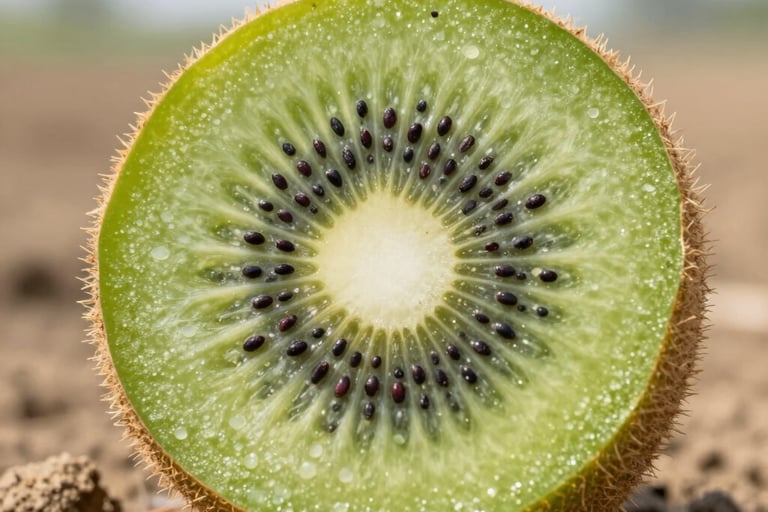
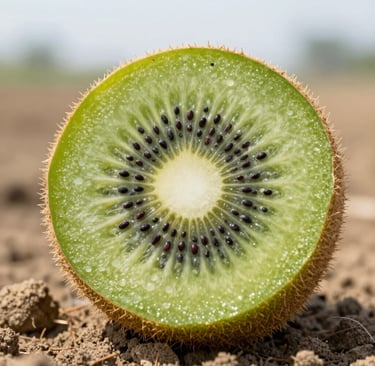
🥝 Kiwi (Kiwi Fruit)
A high-value temperate fruit rich in vitamin C, grown for fresh consumption and premium markets.
विटामिन C से भरपूर उच्च मूल्य का समशीतोष्ण फल, जिसे ताजा और प्रीमियम बाजार के लिए उगाया जाता है।
🌦️ Climate
Grows best in cool temperate climate (10–25°C); requires chilling hours and frost protection.
यह ठंडी समशीतोष्ण जलवायु (10–25°C) में अच्छी उगती है; ठंडे घंटे और पाले से सुरक्षा जरूरी है।
🌱 Soil
Prefers deep, well-drained fertile loamy soil with pH 5–6.5.
गहरी, उपजाऊ और अच्छी जल निकासी वाली दोमट मिट्टी (pH 5–6.5) उपयुक्त होती है।
🌾 Varieties
Popular varieties include Hayward, Allison, and Bruno.
लोकप्रिय किस्मों में हेवर्ड, एलिसन और ब्रूनो शामिल हैं।
📅 Planting Time
Dec–Feb (dormant season).
दिसंबर–फरवरी (निष्क्रिय अवस्था)।
🥝 Harvesting
Starts after 3–4 years; full production after 6–7 years.
3–4 साल बाद उत्पादन शुरू; 6–7 साल में पूरा उत्पादन।
💧 Irrigation
Regular irrigation required; avoid waterlogging.
नियमित सिंचाई आवश्यक; जलभराव से बचें।
🧪 Fertilizers
Use organic manure with balanced NPK and micronutrients.
जैविक खाद, संतुलित एनपीके और सूक्ष्म पोषक तत्वों का उपयोग करें।
🐛 Pest & Disease Control
Common pests: Scale insects, mites. Diseases: Root rot, leaf spot.
मुख्य कीट: स्केल कीट, माइट्स। रोग: जड़ सड़न, लीफ स्पॉट।
Recommended pesticides:
Neem Oil 1500 ppm – for organic control
Spiromesifen 22.9% SC – for mites
Carbendazim 50% WP – for fungal diseases
उपयोगी दवाइयाँ:
नीम ऑयल – जैविक कीट नियंत्रण
स्पायरोमेसिफेन – माइट नियंत्रण
कार्बेन्डाजिम – फंगल रोग नियंत्रण
💰 Investment
₹2,00,000–₹4,00,000 per hectare.
₹2,00,000–₹4,00,000 प्रति हेक्टेयर।
📊 Yield
8–15 tons per hectare.
8–15 टन प्रति हेक्टेयर।
💵 Profit
₹2,00,000–₹6,00,000 per hectare annually.
₹2,00,000–₹6,00,000 प्रति हेक्टेयर वार्षिक लाभ।
🏷️ Market
Very high demand in premium fruit markets and hotels.
प्रीमियम बाजार और होटल में बहुत अधिक मांग।
⚠️ Risks
Climate dependency, frost damage, and high initial investment.
जलवायु पर निर्भरता, पाला नुकसान और उच्च प्रारंभिक लागत।
🌍 Best Kiwi Growing Regions in India
🌍 भारत में कीवी के प्रमुख क्षेत्र
🟢 North India (Himachal Pradesh, Uttarakhand, Arunachal Pradesh)
Best for kiwi cultivation.
कीवी खेती के लिए सबसे उपयुक्त।
Hayward ⭐
Allison
Bruno
🔵 Northeast India (Nagaland, Sikkim, Meghalaya)
Emerging kiwi production region.
उभरता हुआ कीवी उत्पादन क्षेत्र।
Allison ⭐
Hayward
Local Varieties
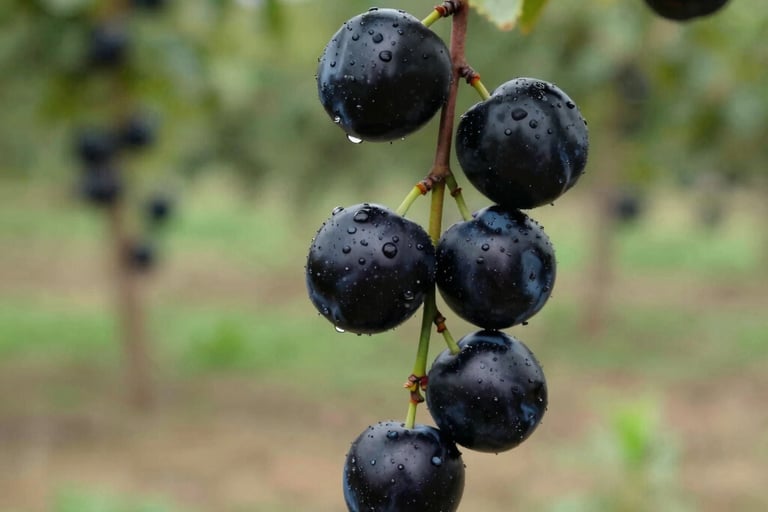
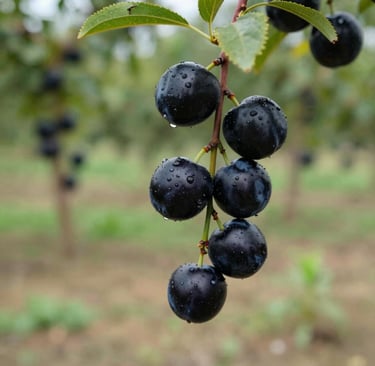
Jamun (Black Plum)
A nutritious tropical fruit known for its medicinal properties, especially beneficial for diabetes management.
औषधीय गुणों से भरपूर उष्णकटिबंधीय फल, विशेषकर मधुमेह नियंत्रण में लाभकारी।
🌦️ Climate
Grows best in tropical and subtropical climate (20–35°C); highly tolerant to heat and drought.
यह उष्णकटिबंधीय और उपोष्णकटिबंधीय जलवायु (20–35°C) में अच्छी उगता है; गर्मी और सूखा सहनशील।
🌱 Soil
Prefers well-drained loamy soil but can grow in poor and saline soils.
अच्छी जल निकासी वाली दोमट मिट्टी उपयुक्त; खराब और लवणीय मिट्टी में भी उग सकता है।
🌾 Varieties
Popular varieties include Rajamun, Narendra Jamun, and Seedless Jamun.
लोकप्रिय किस्मों में राजामुन, नरेंद्र जामुन और बीजरहित जामुन शामिल हैं।
📅 Planting Time
July–August (monsoon season).
जुलाई–अगस्त (मानसून)।
🌿 Harvesting
Starts after 5–6 years; full production after 8–10 years.
5–6 साल बाद उत्पादन शुरू; 8–10 साल में पूरा उत्पादन।
💧 Irrigation
Low irrigation requirement; drought-tolerant.
कम सिंचाई की जरूरत; सूखा सहनशील।
🧪 Fertilizers
Use organic manure with minimal fertilizers.
जैविक खाद का उपयोग करें; उर्वरक की कम आवश्यकता।
🐛 Pest & Disease Control
Common pests: Fruit fly, leaf-eating caterpillars. Diseases: Leaf spot.
मुख्य कीट: फल मक्खी, पत्ती खाने वाले कीट। रोग: लीफ स्पॉट।
Recommended pesticides:
Spinosad 45% SC – for fruit fly
Neem Oil 1500 ppm – for organic control
Mancozeb 75% WP – for fungal diseases
उपयोगी दवाइयाँ:
स्पिनोसैड – फल मक्खी नियंत्रण
नीम ऑयल – जैविक कीट नियंत्रण
मैनकोजेब – फंगल रोग नियंत्रण
💰 Investment
₹30,000–₹80,000 per acre.
₹30,000–₹80,000 प्रति एकड़।
📊 Yield
50–100 quintals per acre.
50–100 क्विंटल प्रति एकड़।
💵 Profit
₹50,000–₹2,00,000 per acre.
₹50,000–₹2,00,000 प्रति एकड़ लाभ।
🏷️ Market
Good demand in fresh fruit markets and medicinal product industry.
ताजा फल बाजार और औषधीय उत्पादों में अच्छी मांग।
⚠️ Risks
Long gestation period, pest attack, and market fluctuation.
लंबा समय (फल आने में), कीट आक्रमण और बाजार उतार-चढ़ाव का खतरा।
🌍 Best Jamun Growing Regions in India
🌍 भारत में जामुन के प्रमुख क्षेत्र
🟢 North India (UP, Bihar)
Commonly grown in rural areas.
ग्रामीण क्षेत्रों में आमतौर पर उगाया जाता है।
Narendra Jamun ⭐
Rajamun
Seedless Jamun
🟡 Central India (MP, Maharashtra)
Suitable for dry regions.
सूखा क्षेत्रों के लिए उपयुक्त।
Rajamun ⭐
Narendra Jamun
Local Varieties
🔵 South India (Karnataka, Tamil Nadu)
Grows well in warm climates.
गर्म जलवायु में अच्छी वृद्धि।
Seedless Jamun ⭐
Rajamun
Local Varieties
🎋 Bamboo (Bans)
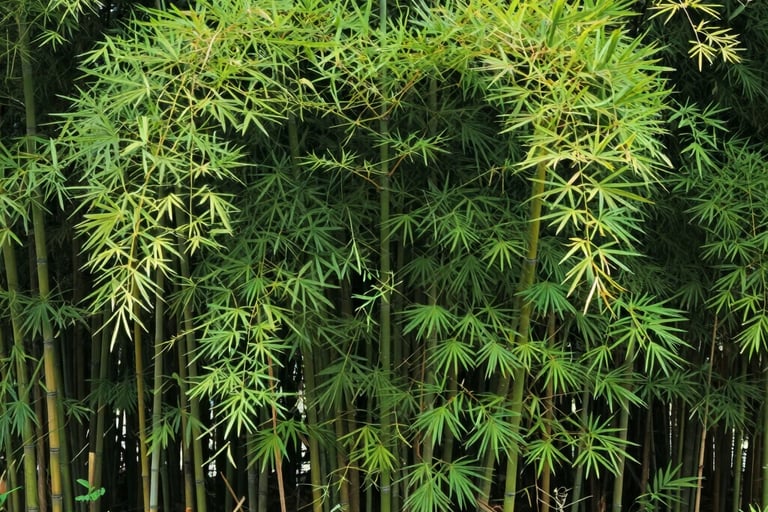
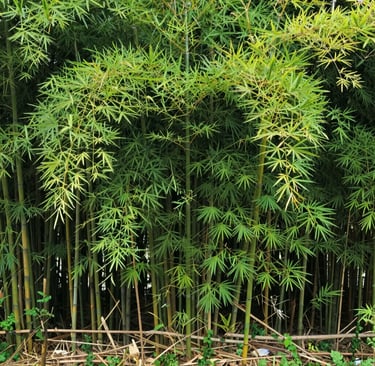
A fast-growing woody grass used in construction, furniture, paper, and handicrafts; highly profitable long-term crop.
तेजी से बढ़ने वाली घास, जिसका उपयोग निर्माण, फर्नीचर, कागज और हस्तशिल्प में होता है; लंबी अवधि का लाभदायक फसल।
🌦️ Climate
Grows best in tropical and subtropical climate (20–35°C); tolerates a wide range of conditions.
यह उष्णकटिबंधीय और उपोष्णकटिबंधीय जलवायु (20–35°C) में अच्छी उगता है; विभिन्न परिस्थितियों में उग सकता है।
🌱 Soil
Prefers well-drained loamy soil rich in organic matter.
जैविक पदार्थ युक्त अच्छी जल निकासी वाली दोमट मिट्टी उपयुक्त होती है।
🌾 Varieties
Popular varieties include Bambusa balcooa, Dendrocalamus strictus, and Bambusa tulda.
लोकप्रिय किस्मों में बंबूसा बाल्कोआ, डेंड्रोकेलमस स्ट्रिक्टस और बंबूसा टुल्डा शामिल हैं।
📅 Planting Time
June–July (monsoon season).
जून–जुलाई (मानसून)।
🎋 Harvesting
Starts after 3–4 years; full harvesting from 5th year onwards.
3–4 साल बाद कटाई शुरू; 5वें साल से पूरी कटाई।
💧 Irrigation
Moderate irrigation; young plants need more water.
मध्यम सिंचाई; शुरुआती पौधों को अधिक पानी की जरूरत।
🧪 Fertilizers
Use organic manure with nitrogen-rich fertilizers.
जैविक खाद और नाइट्रोजन युक्त उर्वरकों का उपयोग करें।
🐛 Pest & Disease Control
Common pests: Termites, borers. Diseases: Leaf spot, root rot.
मुख्य कीट: दीमक, तना छेदक। रोग: लीफ स्पॉट, जड़ सड़न।
Recommended pesticides:
Chlorpyrifos 20% EC – for termites
Imidacloprid 17.8% SL – for borers
Mancozeb 75% WP – for fungal diseases
उपयोगी दवाइयाँ:
क्लोरपाइरीफॉस – दीमक नियंत्रण
इमिडाक्लोप्रिड – तना छेदक नियंत्रण
मैनकोजेब – फंगल रोग नियंत्रण
💰 Investment
₹50,000–₹1,50,000 per acre (initial).
₹50,000–₹1,50,000 प्रति एकड़ (प्रारंभिक)।
📊 Yield
20–40 tons per acre (after maturity).
20–40 टन प्रति एकड़ (परिपक्व होने के बाद)।
💵 Profit
₹1,00,000–₹5,00,000 per acre annually (after establishment).
₹1,00,000–₹5,00,000 प्रति एकड़ वार्षिक लाभ (स्थापना के बाद)।
🏷️ Market
High demand in construction, furniture, paper, and handicrafts industry.
निर्माण, फर्नीचर, कागज और हस्तशिल्प उद्योग में उच्च मांग।
⚠️ Risks
Long initial period, pest attack, and market linkage issues.
शुरुआती लंबा समय, कीट आक्रमण और बाजार कनेक्शन की समस्या।
🌍 Best Bamboo Growing Regions in India
🌍 भारत में बांस के प्रमुख क्षेत्र
🟢 Northeast India (Assam, Meghalaya, Tripura)
Largest bamboo producing region.
सबसे बड़ा उत्पादन क्षेत्र।
Bambusa tulda ⭐
Bambusa balcooa
Local Varieties
🟡 Central India (MP, Maharashtra, Chhattisgarh)
Suitable for commercial plantation.
व्यावसायिक रोपण के लिए उपयुक्त।
Dendrocalamus strictus ⭐
Bambusa balcooa
Hybrid Varieties
🔵 South India (Karnataka, Kerala, Tamil Nadu)
Good for industrial use.
औद्योगिक उपयोग के लिए उपयुक्त।
Bambusa balcooa ⭐
Dendrocalamus strictus
Bambusa vulgaris
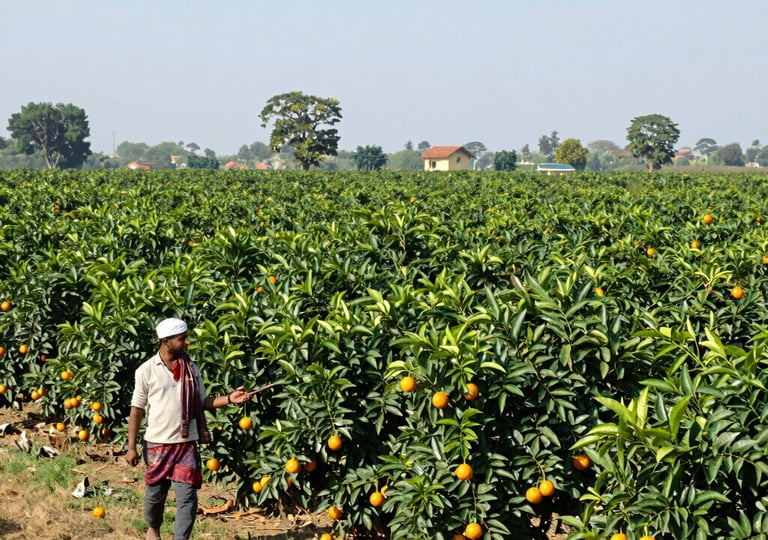
🍊 Orange (Santra)
A popular citrus fruit rich in vitamin C, widely consumed fresh and used in juice and processing industries.
विटामिन C से भरपूर लोकप्रिय खट्टा फल, जिसे ताजा, जूस और प्रोसेसिंग में उपयोग किया जाता है।
🌦️ Climate
Grows best in tropical and subtropical climate (15–30°C).
यह उष्णकटिबंधीय और उपोष्णकटिबंधीय जलवायु (15–30°C) में अच्छी उगता है।
🌱 Soil
Prefers well-drained sandy loam soil with pH 5.5–7.5.
अच्छी जल निकासी वाली बलुई दोमट मिट्टी (pH 5.5–7.5) उपयुक्त होती है।
🌾 Varieties
Popular varieties include Nagpur Santra, Kinnow, and Valencia.
लोकप्रिय किस्मों में नागपुर संत्रा, किनो और वेलेंसिया शामिल हैं।
📅 Planting Time
July–August | Feb–March.
जुलाई–अगस्त | फरवरी–मार्च।
🍊 Harvesting
Starts after 3–4 years; full production after 6–7 years.
3–4 साल बाद उत्पादन शुरू; 6–7 साल में पूरा उत्पादन।
💧 Irrigation
Moderate irrigation; avoid waterlogging.
मध्यम सिंचाई; जलभराव से बचें।
🧪 Fertilizers
Use organic manure with balanced NPK and micronutrients (especially zinc).
जैविक खाद, संतुलित एनपीके और सूक्ष्म पोषक तत्व (विशेषकर जिंक) का उपयोग करें।
🐛 Pest & Disease Control
Common pests: Citrus psylla, aphids. Diseases: Citrus canker, greening.
मुख्य कीट: साइट्रस सिल्ला, माहू। रोग: कैंकर, ग्रीनिंग।
Recommended pesticides:
Imidacloprid 17.8% SL – for psylla & aphids
Thiamethoxam 25% WG – for sucking pests
Copper Oxychloride 50% WP – for bacterial diseases
उपयोगी दवाइयाँ:
इमिडाक्लोप्रिड – सिल्ला व माहू नियंत्रण
थायमेथोक्साम – चूसक कीट नियंत्रण
कॉपर ऑक्सी क्लोराइड – बैक्टीरियल रोग नियंत्रण
💰 Investment
₹80,000–₹2,00,000 per acre.
₹80,000–₹2,00,000 प्रति एकड़।
📊 Yield
100–250 quintals per acre.
100–250 क्विंटल प्रति एकड़।
💵 Profit
₹1,00,000–₹4,00,000 per acre annually.
₹1,00,000–₹4,00,000 प्रति एकड़ वार्षिक लाभ।
🏷️ Market
Very high demand in fresh fruit markets, juice industry, and export.
ताजा फल बाजार, जूस उद्योग और निर्यात में बहुत अधिक मांग।
⚠️ Risks
Disease (canker, greening), pest attack, and water management issues.
रोग (कैंकर, ग्रीनिंग), कीट आक्रमण और सिंचाई प्रबंधन की समस्या।
🌍 Best Orange Varieties by Region (India)
🌍 क्षेत्र के अनुसार संतरे की बेहतर किस्में
🟡 Central India (Maharashtra, MP)
Famous for Nagpur oranges.
नागपुर संतरे के लिए प्रसिद्ध।
Nagpur Santra ⭐
Valencia
Local Varieties
🟢 North India (Punjab, Haryana, Rajasthan)
Best for kinnow production.
किनो उत्पादन के लिए उपयुक्त।
Kinnow ⭐
Valencia
Jaffa
🔵 South India (Karnataka, Tamil Nadu, AP)
Suitable for commercial citrus farming.
व्यावसायिक साइट्रस खेती के लिए उपयुक्त।
Valencia ⭐
Sathgudi
Blood Orange
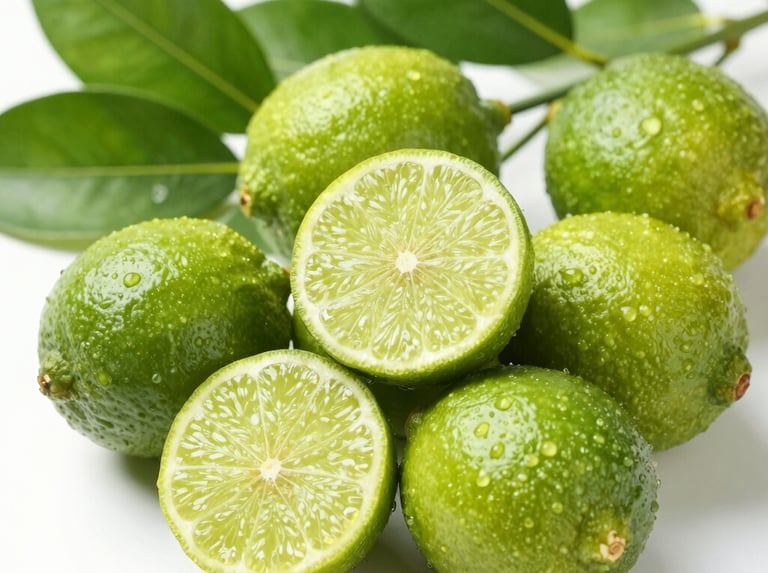
🍈 Sweet Lime (Mosambi)
A popular citrus fruit known for its mild sweet taste, widely used for fresh consumption and juice.
हल्के मीठे स्वाद वाला लोकप्रिय साइट्रस फल, जिसे ताजा और जूस के लिए उपयोग किया जाता है।
🌦️ Climate
Grows best in tropical and subtropical climate (20–35°C).
यह उष्णकटिबंधीय और उपोष्णकटिबंधीय जलवायु (20–35°C) में अच्छी उगता है।
🌱 Soil
Prefers well-drained sandy loam soil with pH 5.5–7.5.
अच्छी जल निकासी वाली बलुई दोमट मिट्टी (pH 5.5–7.5) उपयुक्त होती है।
🌾 Varieties
Popular varieties include Sathgudi, Phule Mosambi, and Punjab Sweet Lime.
लोकप्रिय किस्मों में साठगुड़ी, फुले मौसंबी और पंजाब स्वीट लाइम शामिल हैं।
📅 Planting Time
July–August | Feb–March.
जुलाई–अगस्त | फरवरी–मार्च।
🍈 Harvesting
Starts after 3–4 years; full production after 5–6 years.
3–4 साल बाद उत्पादन शुरू; 5–6 साल में पूरा उत्पादन।
💧 Irrigation
Moderate irrigation; avoid waterlogging.
मध्यम सिंचाई; जलभराव से बचें।
🧪 Fertilizers
Use organic manure with balanced NPK and micronutrients.
जैविक खाद, संतुलित एनपीके और सूक्ष्म पोषक तत्वों का उपयोग करें।
🐛 Pest & Disease Control
Common pests: Citrus psylla, aphids. Diseases: Citrus canker, greening.
मुख्य कीट: साइट्रस सिल्ला, माहू। रोग: कैंकर, ग्रीनिंग।
Recommended pesticides:
Imidacloprid 17.8% SL – for psylla & aphids
Thiamethoxam 25% WG – for sucking pests
Copper Oxychloride 50% WP – for bacterial diseases
उपयोगी दवाइयाँ:
इमिडाक्लोप्रिड – सिल्ला व माहू नियंत्रण
थायमेथोक्साम – चूसक कीट नियंत्रण
कॉपर ऑक्सी क्लोराइड – बैक्टीरियल रोग नियंत्रण
💰 Investment
₹70,000–₹1,80,000 per acre.
₹70,000–₹1,80,000 प्रति एकड़।
📊 Yield
100–200 quintals per acre.
100–200 क्विंटल प्रति एकड़।
💵 Profit
₹1,00,000–₹3,50,000 per acre annually.
₹1,00,000–₹3,50,000 प्रति एकड़ वार्षिक लाभ।
🏷️ Market
High demand in juice industry and local markets.
जूस उद्योग और स्थानीय बाजार में उच्च मांग।
⚠️ Risks
Disease (canker, greening), pest attack, and improper irrigation.
रोग (कैंकर, ग्रीनिंग), कीट आक्रमण और गलत सिंचाई का खतरा।
🌍 Best Sweet Lime Varieties by Region (India)
🌍 क्षेत्र के अनुसार मौसंबी की बेहतर किस्में
🟡 Central India (Maharashtra, MP)
Main production region.
मुख्य उत्पादन क्षेत्र।
Phule Mosambi ⭐
Sathgudi
Local Varieties
🟢 North India (Punjab, Haryana, UP)
Suitable for citrus farming.
साइट्रस खेती के लिए उपयुक्त।
Punjab Sweet Lime ⭐
Sathgudi
Mosambi
🔵 South India (Karnataka, Andhra Pradesh, Tamil Nadu)
Best for commercial production.
व्यावसायिक उत्पादन के लिए उपयुक्त।
Sathgudi ⭐
Phule Mosambi
PKM-1
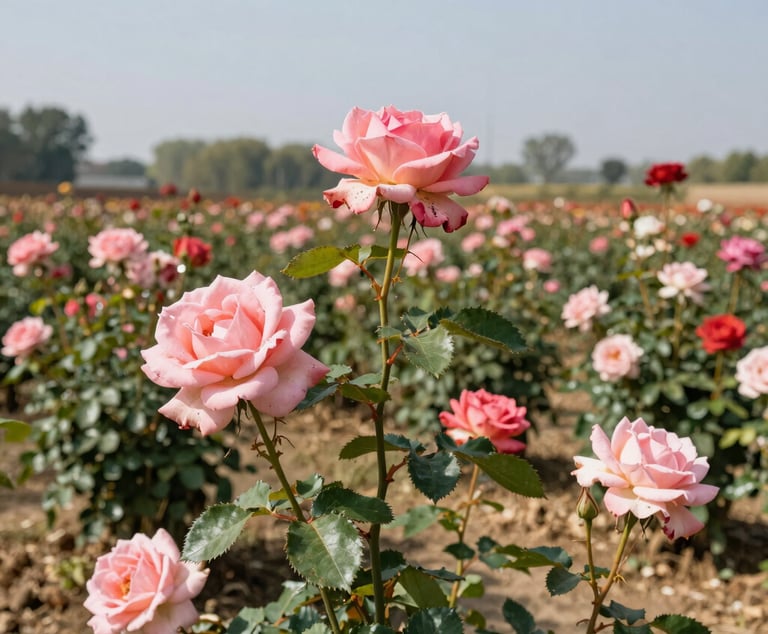
🌹 Rose (Gulab)
A high-value flower crop widely used for decoration, perfumes, cosmetics, and religious purposes.
उच्च मूल्य की फूल फसल, जिसका उपयोग सजावट, इत्र, कॉस्मेटिक्स और धार्मिक कार्यों में होता है।
🌦️ Climate
Grows best in mild climate (15–30°C); needs good sunlight.
यह हल्की जलवायु (15–30°C) में अच्छी उगती है; अच्छी धूप जरूरी है।
🌱 Soil
Prefers well-drained loamy soil rich in organic matter (pH 6–7.5).
जैविक पदार्थ युक्त अच्छी जल निकासी वाली दोमट मिट्टी (pH 6–7.5) उपयुक्त होती है।
🌾 Varieties
Popular varieties include Hybrid Tea, Floribunda, and Damask Rose.
लोकप्रिय किस्मों में हाइब्रिड टी, फ्लोरिबुंडा और डैमास्क गुलाब शामिल हैं।
📅 Planting Time
Oct–Nov | Feb–March.
अक्टूबर–नवंबर | फरवरी–मार्च।
🌹 Harvesting
Starts after 3–4 months; continuous flowering throughout the year.
3–4 महीने बाद फूल आना शुरू; सालभर फूल मिलते हैं।
💧 Irrigation
Regular irrigation needed; avoid waterlogging.
नियमित सिंचाई आवश्यक; जलभराव से बचें।
🧪 Fertilizers
Use organic manure with nitrogen-rich fertilizers.
जैविक खाद और नाइट्रोजन युक्त उर्वरकों का उपयोग करें।
🐛 Pest & Disease Control
Common pests: Aphids, mites, thrips. Diseases: Powdery mildew, black spot.
मुख्य कीट: माहू, माइट्स, थ्रिप्स। रोग: पाउडरी मिल्ड्यू, ब्लैक स्पॉट।
Recommended pesticides:
Imidacloprid 17.8% SL – for aphids
Spiromesifen 22.9% SC – for mites
Hexaconazole 5% EC – for fungal diseases
उपयोगी दवाइयाँ:
इमिडाक्लोप्रिड – माहू नियंत्रण
स्पायरोमेसिफेन – माइट नियंत्रण
हेक्साकोनाजोल – फंगल रोग नियंत्रण
💰 Investment
₹1,00,000–₹3,00,000 per acre.
₹1,00,000–₹3,00,000 प्रति एकड़।
📊 Yield
2–5 lakh flowers per acre per year.
2–5 लाख फूल प्रति एकड़ प्रति वर्ष।
💵 Profit
₹1,50,000–₹5,00,000 per acre annually.
₹1,50,000–₹5,00,000 प्रति एकड़ वार्षिक लाभ।
🏷️ Market
Very high demand in flower markets, weddings, temples, and perfume industry.
फूल बाजार, शादी, मंदिर और इत्र उद्योग में बहुत अधिक मांग।
⚠️ Risks
Pest attack, disease, and high maintenance.
कीट आक्रमण, रोग और अधिक देखभाल की जरूरत।
🌍 Best Rose Growing Regions in India
🌍 भारत में गुलाब के प्रमुख क्षेत्र
🟡 North India (UP, Punjab, Delhi)
Best for flower markets.
फूल बाजार के लिए उपयुक्त।
Hybrid Tea ⭐
Floribunda
Desi Rose
🟢 Central India (Maharashtra, MP)
Main commercial production region.
मुख्य व्यावसायिक उत्पादन क्षेत्र।
Damask Rose ⭐ (perfume use)
Hybrid Tea
Floribunda
🔵 South India (Karnataka, Tamil Nadu)
Best for export and large-scale farming.
निर्यात और बड़े स्तर की खेती के लिए उपयुक्त।
Hybrid Tea ⭐
Floribunda
Dutch Roses
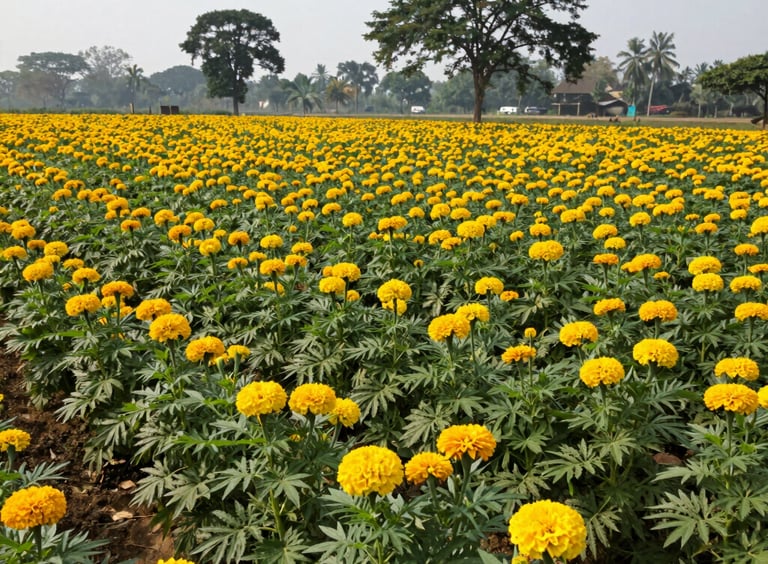
🌼 Marigold (Genda)
A popular flower crop widely used in garlands, decoration, religious functions, and festivals.
लोकप्रिय फूल फसल, जिसका उपयोग माला, सजावट, धार्मिक कार्यों और त्योहारों में होता है।
🌦️ Climate
Grows best in mild to warm climate (18–30°C).
यह हल्की से गर्म जलवायु (18–30°C) में अच्छी उगती है।
🌱 Soil
Prefers well-drained loamy soil with pH 6–7.5.
अच्छी जल निकासी वाली दोमट मिट्टी (pH 6–7.5) उपयुक्त होती है।
🌾 Varieties
Popular varieties include African Marigold, French Marigold, and Pusa Narangi.
लोकप्रिय किस्मों में अफ्रीकन गेंदा, फ्रेंच गेंदा और पूसा नारंगी शामिल हैं।
📅 Planting Time
June–July | Sept–Oct | Jan–Feb (multiple seasons).
जून–जुलाई | सितंबर–अक्टूबर | जनवरी–फरवरी (कई मौसम)।
🌼 Harvesting
Starts after 2–3 months; continuous flowering.
2–3 महीने बाद फूल आना शुरू; लगातार उत्पादन।
💧 Irrigation
Moderate irrigation; avoid waterlogging.
मध्यम सिंचाई; जलभराव से बचें।
🧪 Fertilizers
Use organic manure with nitrogen and phosphorus.
जैविक खाद और नाइट्रोजन व फास्फोरस का उपयोग करें।
🐛 Pest & Disease Control
Common pests: Aphids, mites, caterpillars. Diseases: Leaf spot, powdery mildew.
मुख्य कीट: माहू, माइट्स, इल्ली। रोग: लीफ स्पॉट, पाउडरी मिल्ड्यू।
Recommended pesticides:
Imidacloprid 17.8% SL – for aphids
Emamectin Benzoate 5% SG – for caterpillars
Sulphur 80% WP – for fungal diseases
उपयोगी दवाइयाँ:
इमिडाक्लोप्रिड – माहू नियंत्रण
इमामेक्टिन बेंजोएट – इल्ली नियंत्रण
सल्फर – फंगल रोग नियंत्रण
💰 Investment
₹30,000–₹80,000 per acre.
₹30,000–₹80,000 प्रति एकड़।
📊 Yield
80–120 quintals per acre.
80–120 क्विंटल प्रति एकड़।
💵 Profit
₹60,000–₹2,00,000 per acre.
₹60,000–₹2,00,000 प्रति एकड़ लाभ।
🏷️ Market
Very high demand during festivals, weddings, and daily flower markets.
त्योहार, शादी और रोज़ाना फूल बाजार में बहुत अधिक मांग।
⚠️ Risks
Pest attack, weather changes, and price fluctuation.
कीट आक्रमण, मौसम परिवर्तन और कीमतों में उतार-चढ़ाव।
🌍 Best Marigold Growing Regions in India
🌍 भारत में गेंदा के प्रमुख क्षेत्र
🟢 North India (UP, Punjab, Haryana)
Best for seasonal flower demand.
मौसमी मांग के लिए उपयुक्त।
African Marigold ⭐
French Marigold
Pusa Narangi
🟡 Central India (Maharashtra, MP)
Main commercial production region.
मुख्य व्यावसायिक उत्पादन क्षेत्र।
African Marigold ⭐
Pusa Narangi
Local Varieties
🔵 South India (Karnataka, Tamil Nadu, AP)
Best for year-round production.
सालभर उत्पादन के लिए उपयुक्त।
French Marigold ⭐
African Marigold
Arka Bangara
🌼 Jasmine (Mogra / Chameli)
A fragrant flower crop widely used for perfumes, garlands, religious purposes, and export.
सुगंधित फूल फसल, जिसका उपयोग इत्र, माला, धार्मिक कार्य और निर्यात में होता है।
🌦️ Climate
Grows best in warm climate (20–35°C) with good sunlight.
यह गर्म जलवायु (20–35°C) और अच्छी धूप में अच्छी उगती है।
🌱 Soil
Prefers well-drained loamy soil rich in organic matter (pH 6–7.5).
जैविक पदार्थ युक्त अच्छी जल निकासी वाली दोमट मिट्टी (pH 6–7.5) उपयुक्त होती है।
🌾 Varieties
Popular varieties include Mogra (Jasminum sambac), Co-1, and Co-2.
लोकप्रिय किस्मों में मोगरा (जैस्मिनम सैम्बक), Co-1 और Co-2 शामिल हैं।
📅 Planting Time
June–July | Jan–Feb.
जून–जुलाई | जनवरी–फरवरी।
🌼 Harvesting
Starts after 6–8 months; continuous flowering for years.
6–8 महीने बाद फूल आना शुरू; कई सालों तक उत्पादन।
💧 Irrigation
Regular irrigation needed; avoid waterlogging.
नियमित सिंचाई आवश्यक; जलभराव से बचें।
🧪 Fertilizers
Use organic manure with nitrogen and potassium.
जैविक खाद और नाइट्रोजन व पोटाश का उपयोग करें।
🐛 Pest & Disease Control
Common pests: Bud worm, mites, aphids. Diseases: Leaf spot, rust.
मुख्य कीट: बड वर्म, माइट्स, माहू। रोग: लीफ स्पॉट, रस्ट।
Recommended pesticides:
Emamectin Benzoate 5% SG – for bud worm
Spiromesifen 22.9% SC – for mites
Mancozeb 75% WP – for fungal diseases
उपयोगी दवाइयाँ:
इमामेक्टिन बेंजोएट – बड वर्म नियंत्रण
स्पायरोमेसिफेन – माइट नियंत्रण
मैनकोजेब – फंगल रोग नियंत्रण
💰 Investment
₹80,000–₹2,00,000 per acre.
₹80,000–₹2,00,000 प्रति एकड़।
📊 Yield
2–4 tons flowers per acre annually.
2–4 टन फूल प्रति एकड़ प्रति वर्ष।
💵 Profit
₹1,50,000–₹5,00,000 per acre annually.
₹1,50,000–₹5,00,000 प्रति एकड़ वार्षिक लाभ।
🏷️ Market
Very high demand in perfume industry, temples, weddings, and export markets.
इत्र उद्योग, मंदिर, शादी और निर्यात बाजार में बहुत अधिक मांग।
⚠️ Risks
Pest attack, weather changes, and labor-intensive harvesting.
कीट आक्रमण, मौसम परिवर्तन और श्रम की अधिक आवश्यकता।
🌍 Best Jasmine Growing Regions in India
🌍 भारत में चमेली के प्रमुख क्षेत्र
🔵 South India (Tamil Nadu, Karnataka, Andhra Pradesh)
Largest production region.
सबसे बड़ा उत्पादन क्षेत्र।
Mogra (Jasminum sambac) ⭐
Co-1
Co-2
🟡 Central India (Maharashtra, MP)
Suitable for commercial farming.
व्यावसायिक खेती के लिए उपयुक्त।
Mogra ⭐
Local Varieties
Co-1
🟢 North India (UP, Rajasthan)
Grown in limited areas.
सीमित क्षेत्रों में उगाया जाता है।
Chameli ⭐
Mogra
Local Varieties
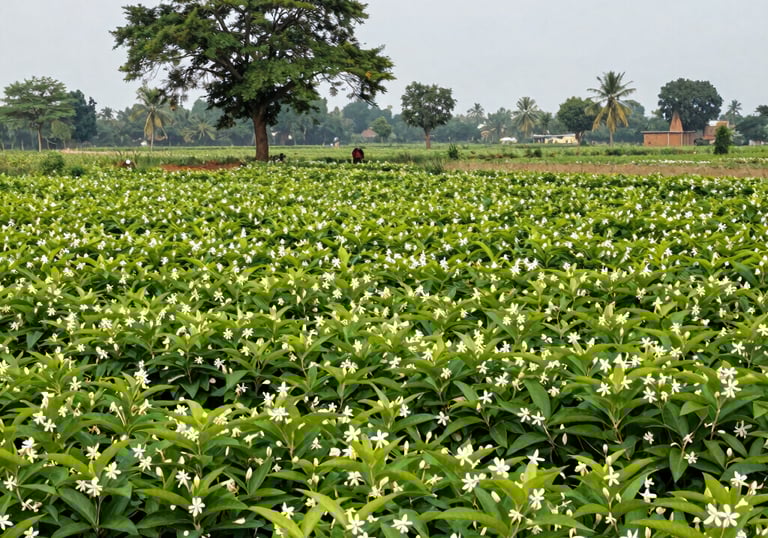
🌷 Tulip (Tulip Flower)
A premium ornamental flower known for its vibrant colors, mainly grown for decoration, tourism, and export markets.
रंग-बिरंगे प्रीमियम सजावटी फूल, जो सजावट, पर्यटन और निर्यात के लिए उगाए जाते हैं।
🌦️ Climate
Grows best in cool temperate climate (10–20°C); requires chilling period.
यह ठंडी समशीतोष्ण जलवायु (10–20°C) में अच्छी उगती है; ठंडे तापमान की जरूरत होती है।
🌱 Soil
Prefers well-drained sandy loam soil rich in organic matter (pH 6–7).
जैविक पदार्थ युक्त अच्छी जल निकासी वाली बलुई दोमट मिट्टी (pH 6–7) उपयुक्त होती है।
🌾 Varieties
Popular varieties include Apeldoorn, Golden Parade, and Oxford.
लोकप्रिय किस्मों में एपेलडोर्न, गोल्डन परेड और ऑक्सफोर्ड शामिल हैं।
📅 Planting Time
Oct–Dec (winter planting).
अक्टूबर–दिसंबर (सर्दियों में रोपण)।
🌷 Harvesting
Ready in 3–4 months; flowering in spring.
3–4 महीने में तैयार; वसंत में फूल आते हैं।
💧 Irrigation
Moderate irrigation; avoid waterlogging.
मध्यम सिंचाई; जलभराव से बचें।
🧪 Fertilizers
Use organic manure with phosphorus and potassium.
जैविक खाद और फास्फोरस व पोटाश का उपयोग करें।
🐛 Pest & Disease Control
Common pests: Aphids, thrips. Diseases: Botrytis, bulb rot.
मुख्य कीट: माहू, थ्रिप्स। रोग: बोट्राइटिस, बल्ब सड़न।
Recommended pesticides:
Imidacloprid 17.8% SL – for aphids
Spinosad 45% SC – for thrips
Carbendazim 50% WP – for fungal diseases
उपयोगी दवाइयाँ:
इमिडाक्लोप्रिड – माहू नियंत्रण
स्पिनोसैड – थ्रिप्स नियंत्रण
कार्बेन्डाजिम – फंगल रोग नियंत्रण
💰 Investment
₹2,00,000–₹5,00,000 per acre (high cost due to bulbs).
₹2,00,000–₹5,00,000 प्रति एकड़ (बल्ब के कारण अधिक लागत)।
📊 Yield
1–2 lakh flowers per acre.
1–2 लाख फूल प्रति एकड़।
💵 Profit
₹2,00,000–₹6,00,000 per acre.
₹2,00,000–₹6,00,000 प्रति एकड़ लाभ।
🏷️ Market
High demand in premium flower markets, weddings, and tourism (flower shows).
प्रीमियम बाजार, शादी और पर्यटन (फूल प्रदर्शन) में उच्च मांग।
⚠️ Risks
Climate dependency, high investment, and bulb storage issues.
जलवायु पर निर्भरता, अधिक लागत और बल्ब भंडारण समस्या।
🌍 Best Tulip Growing Regions in India
🌍 भारत में ट्यूलिप के प्रमुख क्षेत्र
🟢 North India (Jammu & Kashmir, Himachal Pradesh)
Best suitable climate for tulips.
ट्यूलिप के लिए सबसे उपयुक्त जलवायु।
Apeldoorn ⭐
Golden Parade
Oxford
🔵 Hill Regions (Uttarakhand)
Possible with proper cold conditions.
उचित ठंड के साथ संभव।
Apeldoorn ⭐
Oxford
Hybrid Varieties
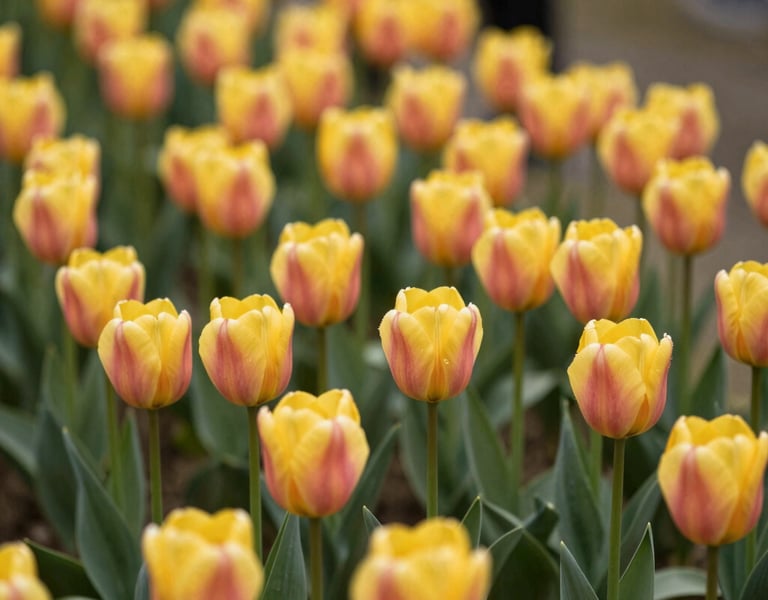
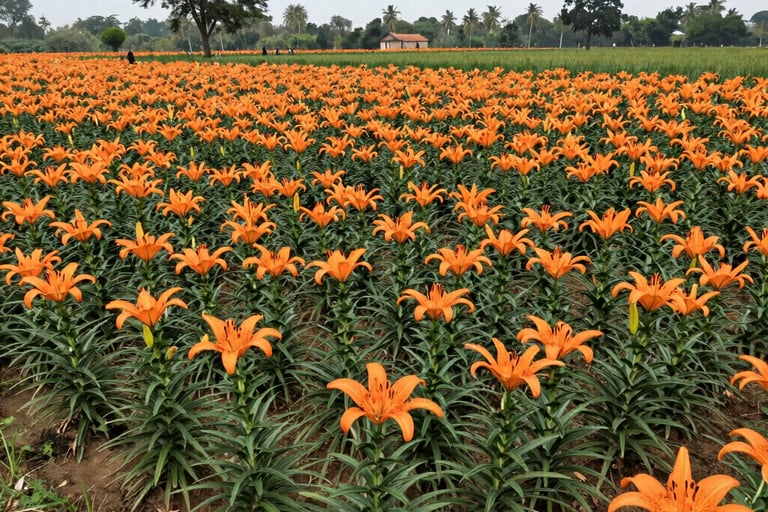
🌼 Lily (Lilium)
A premium ornamental flower known for its large, fragrant blooms, widely used in bouquets, decoration, and export markets.
बड़े और सुगंधित फूलों वाला प्रीमियम सजावटी पौधा, जिसे बुके, सजावट और निर्यात में उपयोग किया जाता है।
🌦️ Climate
Grows best in cool to moderate climate (15–25°C); sensitive to extreme heat.
यह ठंडी से मध्यम जलवायु (15–25°C) में अच्छी उगती है; अधिक गर्मी से नुकसान होता है।
🌱 Soil
Prefers well-drained sandy loam soil rich in organic matter (pH 6–7).
जैविक पदार्थ युक्त अच्छी जल निकासी वाली बलुई दोमट मिट्टी (pH 6–7) उपयुक्त होती है।
🌾 Varieties
Popular varieties include Asiatic Lily, Oriental Lily, and LA Hybrid Lily.
लोकप्रिय किस्मों में एशियाटिक लिली, ओरिएंटल लिली और LA हाइब्रिड लिली शामिल हैं।
📅 Planting Time
Oct–Nov | Feb–March.
अक्टूबर–नवंबर | फरवरी–मार्च।
🌼 Harvesting
Ready in 3–4 months after planting.
रोपण के 3–4 महीने बाद तैयार।
💧 Irrigation
Regular but controlled irrigation; avoid waterlogging.
नियमित लेकिन नियंत्रित सिंचाई; जलभराव से बचें।
🧪 Fertilizers
Use organic manure with phosphorus and potassium.
जैविक खाद और फास्फोरस व पोटाश का उपयोग करें।
🐛 Pest & Disease Control
Common pests: Aphids, thrips, mites. Diseases: Botrytis, bulb rot.
मुख्य कीट: माहू, थ्रिप्स, माइट्स। रोग: बोट्राइटिस, बल्ब सड़न।
Recommended pesticides:
Imidacloprid 17.8% SL – for aphids
Spinosad 45% SC – for thrips
Carbendazim 50% WP – for fungal diseases
उपयोगी दवाइयाँ:
इमिडाक्लोप्रिड – माहू नियंत्रण
स्पिनोसैड – थ्रिप्स नियंत्रण
कार्बेन्डाजिम – फंगल रोग नियंत्रण
💰 Investment
₹1,50,000–₹4,00,000 per acre (bulb cost high).
₹1,50,000–₹4,00,000 प्रति एकड़ (बल्ब महंगे होते हैं)।
📊 Yield
1–2 lakh flowers per acre.
1–2 लाख फूल प्रति एकड़।
💵 Profit
₹2,00,000–₹6,00,000 per acre.
₹2,00,000–₹6,00,000 प्रति एकड़ लाभ।
🏷️ Market
Very high demand in bouquets, weddings, hotels, and export markets.
बुके, शादी, होटल और निर्यात बाजार में बहुत अधिक मांग।
⚠️ Risks
Heat sensitivity, high investment, and bulb storage issues.
गर्मी से नुकसान, अधिक लागत और बल्ब भंडारण समस्या।
🌍 Best Lily Growing Regions in India
🌍 भारत में लिली के प्रमुख क्षेत्र
🟢 North India (Himachal Pradesh, Uttarakhand)
Best climate for lily farming.
लिली खेती के लिए सबसे उपयुक्त जलवायु।
Asiatic Lily ⭐
Oriental Lily
LA Hybrid
🔵 South India (Karnataka, Tamil Nadu – polyhouse)
Grown commercially under protected cultivation.
संरक्षित खेती (पॉलीहाउस) में उगाया जाता है।
Oriental Lily ⭐
Asiatic Lily
Hybrid Varieties
🟡 Central India (Maharashtra – polyhouse)
Possible with controlled conditions.
नियंत्रित परिस्थितियों में संभव।
Asiatic Lily ⭐
LA Hybrid
Imported Bulbs
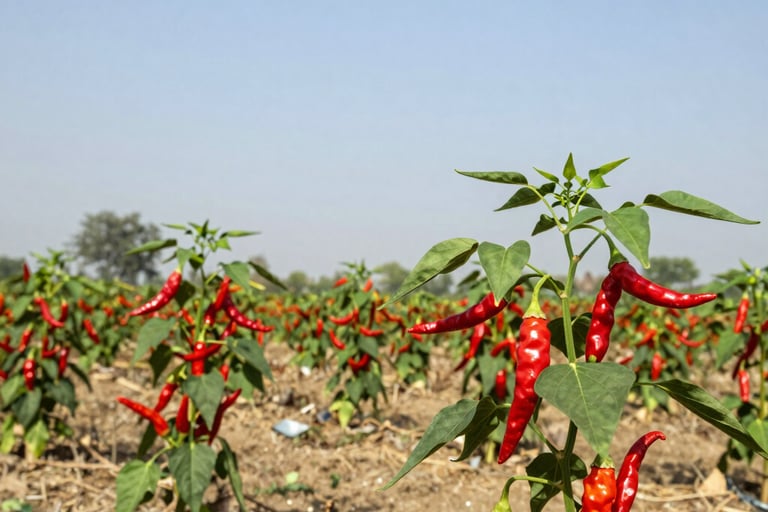
🌶️ Kashmiri Mirch (Kashmiri Chilli)
A famous spice crop known for its bright red color and mild pungency, widely used in Indian cuisine and food processing.
चमकीले लाल रंग और हल्की तीखापन वाली प्रसिद्ध मसाला फसल, जिसका उपयोग भारतीय भोजन और प्रोसेसिंग में होता है।
🌦️ Climate
Grows best in cool to moderate climate (15–30°C).
यह ठंडी से मध्यम जलवायु (15–30°C) में अच्छी उगती है।
🌱 Soil
Prefers well-drained sandy loam soil with pH 6–7.
अच्छी जल निकासी वाली बलुई दोमट मिट्टी (pH 6–7) उपयुक्त होती है।
🌾 Varieties
Popular varieties include Kashmiri Local, Byadgi (similar color), and Degi Mirch.
लोकप्रिय किस्मों में कश्मीरी लोकल, ब्यादगी (समान रंग) और देगी मिर्च शामिल हैं।
📅 Sowing Time
Feb–March | June–July (depending on region).
फरवरी–मार्च | जून–जुलाई (क्षेत्र अनुसार)।
🌶️ Harvesting
Ready in 150–180 days after sowing.
बुवाई के 150–180 दिनों में तैयार।
💧 Irrigation
Moderate irrigation; avoid excess moisture.
मध्यम सिंचाई; अधिक नमी से बचें।
🧪 Fertilizers
Use organic manure with nitrogen, phosphorus, and potassium.
जैविक खाद और नाइट्रोजन, फास्फोरस, पोटाश का उपयोग करें।
🐛 Pest & Disease Control
Common pests: Thrips, mites, aphids. Diseases: Leaf curl, powdery mildew.
मुख्य कीट: थ्रिप्स, माइट्स, माहू। रोग: लीफ कर्ल, पाउडरी मिल्ड्यू।
Recommended pesticides:
Spinosad 45% SC – for thrips
Imidacloprid 17.8% SL – for aphids
Sulphur 80% WP – for fungal diseases
उपयोगी दवाइयाँ:
स्पिनोसैड – थ्रिप्स नियंत्रण
इमिडाक्लोप्रिड – माहू नियंत्रण
सल्फर – फंगल रोग नियंत्रण
💰 Investment
₹40,000–₹1,00,000 per acre.
₹40,000–₹1,00,000 प्रति एकड़।
📊 Yield
8–15 quintals (dry chilli) per acre.
8–15 क्विंटल (सूखी मिर्च) प्रति एकड़।
💵 Profit
₹80,000–₹3,00,000 per acre.
₹80,000–₹3,00,000 प्रति एकड़ लाभ।
🏷️ Market
Very high demand in spice market, hotels, and food processing industry.
मसाला बाजार, होटल और फूड प्रोसेसिंग में बहुत अधिक मांग।
⚠️ Risks
Pest attack, disease, and weather fluctuations.
कीट आक्रमण, रोग और मौसम परिवर्तन का खतरा।
🌍 Best Kashmiri Chilli Growing Regions in India
🌍 भारत में कश्मीरी मिर्च के प्रमुख क्षेत्र
🟢 North India (Jammu & Kashmir, Himachal Pradesh)
Original and best quality production.
मूल और सर्वोत्तम गुणवत्ता उत्पादन।
Kashmiri Local ⭐
Degi Mirch
Local Varieties
🟡 Central & South India (Karnataka, Andhra Pradesh)
Commercial cultivation (color similar varieties).
व्यावसायिक खेती (समान रंग वाली किस्में)।
Byadgi ⭐
Degi Mirch
Hybrid Varieties
🌳 Mahua (Madhuca longifolia)
A multipurpose tree crop valued for its flowers, seeds, oil, and traditional uses; important for rural economy and tribal livelihoods.
बहुउद्देश्यीय पेड़ फसल, जिसके फूल, बीज और तेल का उपयोग होता है; ग्रामीण और आदिवासी अर्थव्यवस्था में महत्वपूर्ण।
🌦️ Climate
Grows best in tropical climate (25–40°C); highly drought-tolerant.
यह उष्णकटिबंधीय जलवायु (25–40°C) में अच्छी उगता है; सूखा सहनशील।
🌱 Soil
Can grow in poor, rocky, and dry soils; prefers well-drained soil.
खराब, पथरीली और सूखी मिट्टी में भी उग सकता है; अच्छी जल निकासी वाली मिट्टी बेहतर।
🌾 Varieties
Popular types include Local Mahua and improved selections.
लोकप्रिय प्रकारों में लोकल महुआ और उन्नत चयन शामिल हैं।
📅 Planting Time
June–July (monsoon).
जून–जुलाई (मानसून)।
🌳 Harvesting
Starts after 7–8 years; full production after 10–12 years.
7–8 साल बाद उत्पादन शुरू; 10–12 साल में पूरा उत्पादन।
💧 Irrigation
Minimal irrigation required; survives in dry conditions.
कम सिंचाई की जरूरत; सूखे में भी जीवित रहता है।
🧪 Fertilizers
Mostly grown organically; minimal fertilizer requirement.
अधिकतर जैविक रूप से उगाया जाता है; उर्वरक की कम जरूरत।
🐛 Pest & Disease Control
Generally hardy; minor pests and leaf diseases.
मजबूत पौधा; कम कीट और रोग समस्या।
Recommended pesticides (if needed):
Neem Oil 1500 ppm – for general pest control
Mancozeb 75% WP – for fungal diseases
उपयोगी दवाइयाँ:
नीम ऑयल – सामान्य कीट नियंत्रण
मैनकोजेब – फंगल रोग नियंत्रण
💰 Investment
₹20,000–₹60,000 per acre (low cost).
₹20,000–₹60,000 प्रति एकड़ (कम लागत)।
📊 Yield
50–100 kg flowers per tree annually.
50–100 किलोग्राम फूल प्रति पेड़ प्रति वर्ष।
💵 Profit
₹50,000–₹2,00,000 per acre annually (after maturity).
₹50,000–₹2,00,000 प्रति एकड़ वार्षिक लाभ (परिपक्व होने के बाद)।
🏷️ Market
Used in food, oil extraction, traditional beverages, and medicine.
खाद्य, तेल उत्पादन, पारंपरिक पेय और औषधि में उपयोग।
⚠️ Risks
Long gestation period and market linkage challenges.
लंबा उत्पादन समय और बाजार कनेक्शन की समस्या।
🌍 Best Mahua Growing Regions in India
🌍 भारत में महुआ के प्रमुख क्षेत्र
🟡 Central India (MP, Chhattisgarh, Maharashtra)
Main production region.
मुख्य उत्पादन क्षेत्र।
Local Mahua ⭐
Improved Selections
🟢 North India (UP, Bihar, Jharkhand)
Widely grown in rural areas.
ग्रामीण क्षेत्रों में व्यापक रूप से उगाया जाता है।
Local Mahua ⭐
Desi Varieties
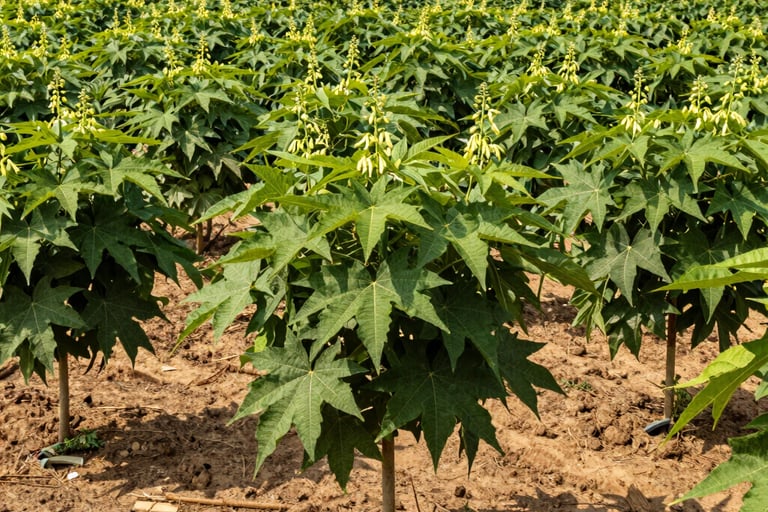
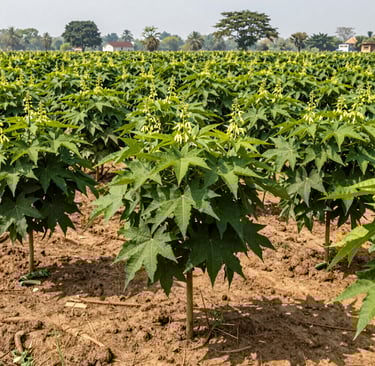
🌲 Sandalwood (Chandan)
A premium aromatic tree crop known for its valuable heartwood and oil, widely used in perfumes, cosmetics, and medicine.
उच्च मूल्य का सुगंधित पेड़, जिसकी लकड़ी और तेल का उपयोग इत्र, कॉस्मेटिक्स और औषधि में होता है।
🌦️ Climate
Grows best in tropical to subtropical climate (20–35°C).
यह उष्णकटिबंधीय से उपोष्णकटिबंधीय जलवायु (20–35°C) में अच्छी उगता है।
🌱 Soil
Prefers well-drained sandy or loamy soil; tolerates poor soils.
अच्छी जल निकासी वाली बलुई या दोमट मिट्टी उपयुक्त; खराब मिट्टी में भी उग सकता है।
🌾 Varieties
Popular types include Indian Sandalwood (Santalum album) and Australian Sandalwood.
लोकप्रिय प्रकारों में भारतीय चंदन (Santalum album) और ऑस्ट्रेलियन चंदन शामिल हैं।
📅 Planting Time
June–July (monsoon).
जून–जुलाई (मानसून)।
🌲 Harvesting
Ready after 12–15 years (heartwood formation).
12–15 साल बाद कटाई (हृदय लकड़ी बनने के बाद)।
💧 Irrigation
Low to moderate irrigation; drought-tolerant after establishment.
कम से मध्यम सिंचाई; स्थापित होने के बाद सूखा सहनशील।
🧪 Fertilizers
Minimal fertilizers required; needs host plants (semi-parasitic).
कम उर्वरक की जरूरत; सहायक पौधों (होस्ट प्लांट) की आवश्यकता होती है।
🐛 Pest & Disease Control
Common pests: Spike disease, borers.
मुख्य रोग/कीट: स्पाइक रोग, तना छेदक।
Recommended pesticides:
Imidacloprid 17.8% SL – for borers
Chlorpyrifos 20% EC – for soil pests
उपयोगी दवाइयाँ:
इमिडाक्लोप्रिड – तना छेदक नियंत्रण
क्लोरपाइरीफॉस – मिट्टी के कीट नियंत्रण
💰 Investment
₹1,00,000–₹3,00,000 per acre (long-term).
₹1,00,000–₹3,00,000 प्रति एकड़ (लंबी अवधि निवेश)।
📊 Yield
15–20 kg heartwood per tree (after maturity).
15–20 किलोग्राम हृदय लकड़ी प्रति पेड़ (परिपक्व होने पर)।
💵 Profit
₹10,00,000+ per acre (long-term high value).
₹10,00,000+ प्रति एकड़ (लंबी अवधि में उच्च लाभ)।
🏷️ Market
Extremely high demand in perfume, cosmetics, and export markets.
इत्र, कॉस्मेटिक्स और निर्यात बाजार में अत्यधिक मांग।
⚠️ Risks
Long gestation period, theft risk, and legal regulations.
लंबा उत्पादन समय, चोरी का खतरा और कानूनी नियम।
🌍 Best Sandalwood Growing Regions in India
🌍 भारत में चंदन के प्रमुख क्षेत्र
🔵 South India (Karnataka, Tamil Nadu)
Traditional and best region.
पारंपरिक और सबसे उपयुक्त क्षेत्र।
Santalum album ⭐
Local Varieties
🟡 Central India (Maharashtra, MP)
Emerging cultivation area.
उभरता हुआ खेती क्षेत्र।
Santalum album ⭐
Hybrid Varieties
🟢 North India (UP, Rajasthan)
Possible with proper care.
उचित देखभाल के साथ संभव।
Santalum album ⭐
Trial Varieties
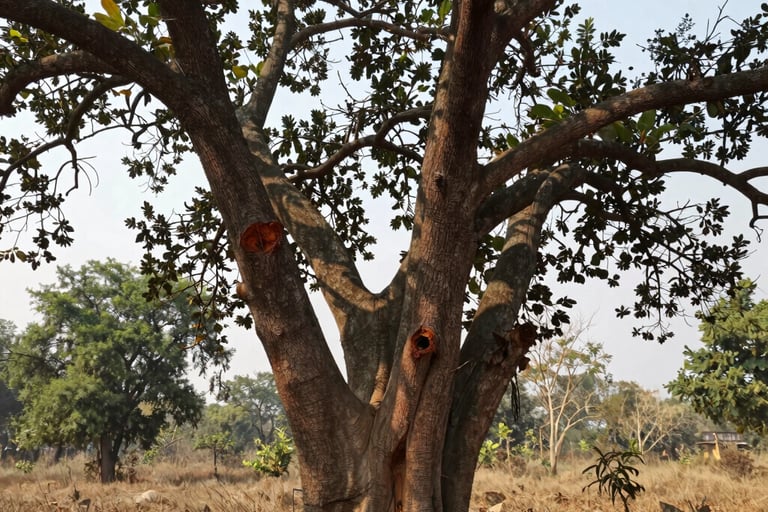
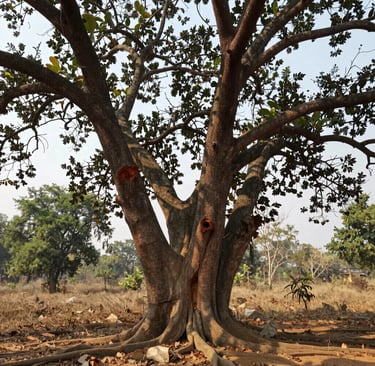
🌿 Giloy (Guduchi)
A medicinal climbing plant widely used in Ayurveda for immunity boosting and disease control.
आयुर्वेद में उपयोग होने वाली औषधीय बेल, जो इम्यूनिटी बढ़ाने और रोग नियंत्रण में मदद करती है।
🌦️ Climate
Grows best in tropical and subtropical climate (20–35°C).
यह उष्णकटिबंधीय और उपोष्णकटिबंधीय जलवायु (20–35°C) में अच्छी उगती है।
🌱 Soil
Prefers well-drained sandy loam soil but can grow in poor soils.
अच्छी जल निकासी वाली बलुई दोमट मिट्टी उपयुक्त; खराब मिट्टी में भी उग सकती है।
🌾 Varieties
Mostly grown as local varieties; no major hybrids.
अधिकतर लोकल किस्मों के रूप में उगाई जाती है; विशेष हाइब्रिड नहीं।
📅 Planting Time
June–July | Feb–March.
जून–जुलाई | फरवरी–मार्च।
🌿 Harvesting
Ready in 8–12 months after planting.
रोपण के 8–12 महीने बाद तैयार।
💧 Irrigation
Low to moderate irrigation; drought-tolerant.
कम से मध्यम सिंचाई; सूखा सहनशील।
🧪 Fertilizers
Use organic manure; minimal chemical fertilizers.
जैविक खाद का उपयोग करें; रासायनिक उर्वरक कम।
🐛 Pest & Disease Control
Generally pest-resistant; minor issues only.
अधिकतर कीट-प्रतिरोधी; बहुत कम समस्या।
Recommended (if needed):
Neem Oil 1500 ppm – for general pest control
उपयोगी दवाइयाँ:
नीम ऑयल – सामान्य कीट नियंत्रण
💰 Investment
₹20,000–₹60,000 per acre.
₹20,000–₹60,000 प्रति एकड़।
📊 Yield
10–15 tons stems per acre.
10–15 टन तने प्रति एकड़।
💵 Profit
₹80,000–₹2,50,000 per acre.
₹80,000–₹2,50,000 प्रति एकड़ लाभ।
🏷️ Market
High demand in Ayurvedic medicine, herbal products, and health industry.
आयुर्वेदिक दवाइयों, हर्बल उत्पादों और स्वास्थ्य उद्योग में उच्च मांग।
⚠️ Risks
Market fluctuations and low awareness in some regions.
बाजार उतार-चढ़ाव और कुछ क्षेत्रों में कम जागरूकता।
🌍 Best Giloy Growing Regions in India
🌍 भारत में गिलोय के प्रमुख क्षेत्र
🟡 Central India (MP, Maharashtra)
Best suitable region.
सबसे उपयुक्त क्षेत्र।
Local Giloy ⭐
🟢 North India (UP, Bihar)
Commonly grown in rural areas.
ग्रामीण क्षेत्रों में आमतौर पर उगाया जाता है।
Local Giloy ⭐
🔵 South India (Karnataka, Tamil Nadu)
Possible in warm climates.
गर्म जलवायु में संभव।
Local Giloy ⭐
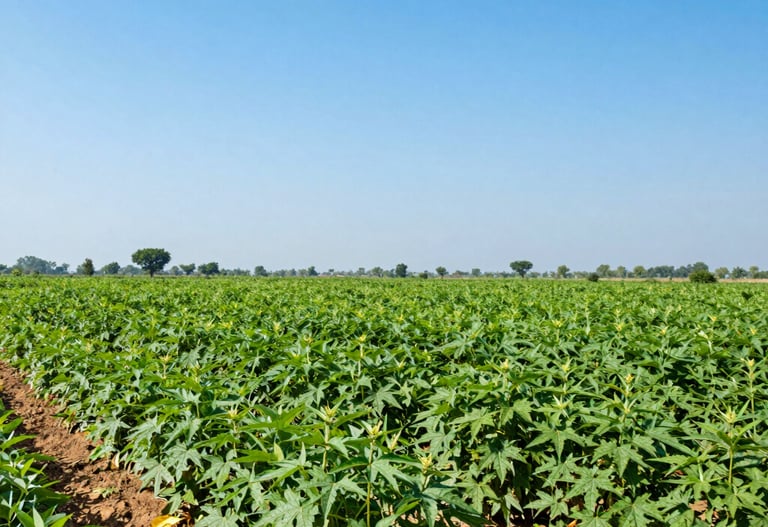
🌿 Ashwagandha (Withania somnifera)
A high-value medicinal crop used in Ayurveda for stress relief, immunity, and strength enhancement.
आयुर्वेद में उपयोग होने वाली उच्च मूल्य की औषधीय फसल, जो तनाव कम करने, इम्यूनिटी बढ़ाने और ताकत बढ़ाने में सहायक है।
🌦️ Climate
Grows best in dry tropical and subtropical climate (20–35°C).
यह शुष्क उष्णकटिबंधीय और उपोष्णकटिबंधीय जलवायु (20–35°C) में अच्छी उगती है।
🌱 Soil
Prefers well-drained sandy loam soil; thrives in poor soils.
अच्छी जल निकासी वाली बलुई दोमट मिट्टी उपयुक्त; खराब मिट्टी में भी अच्छी उगती है।
🌾 Varieties
Popular varieties include Jawahar Ashwagandha-20 (JA-20), Poshita, and Rakshita.
लोकप्रिय किस्मों में जवाहर अश्वगंधा-20 (JA-20), पोषिता और रक्षिता शामिल हैं।
📅 Sowing Time
June–July (rainfed) | Sept–Oct (irrigated).
जून–जुलाई (बरसाती) | सितंबर–अक्टूबर (सिंचित)।
🌿 Harvesting
Ready in 150–180 days (roots harvested).
150–180 दिनों में तैयार (जड़ की कटाई)।
💧 Irrigation
Very low irrigation required; avoid excess water.
बहुत कम सिंचाई; अधिक पानी से बचें।
🧪 Fertilizers
Minimal fertilizers; mostly organic farming preferred.
कम उर्वरक; जैविक खेती बेहतर।
🐛 Pest & Disease Control
Common issues: Leaf spot, root rot.
मुख्य समस्या: लीफ स्पॉट, जड़ सड़न।
Recommended pesticides:
Neem Oil 1500 ppm – for pest control
Mancozeb 75% WP – for fungal diseases
उपयोगी दवाइयाँ:
नीम ऑयल – कीट नियंत्रण
मैनकोजेब – फंगल रोग नियंत्रण
💰 Investment
₹20,000–₹60,000 per acre.
₹20,000–₹60,000 प्रति एकड़।
📊 Yield
4–6 quintals roots per acre.
4–6 क्विंटल जड़ प्रति एकड़।
💵 Profit
₹80,000–₹3,00,000 per acre.
₹80,000–₹3,00,000 प्रति एकड़ लाभ।
🏷️ Market
Very high demand in Ayurvedic medicine, herbal supplements, and export.
आयुर्वेदिक दवाइयों, हर्बल सप्लीमेंट और निर्यात में बहुत अधिक मांग।
⚠️ Risks
Market price fluctuation and quality standards.
बाजार कीमत में उतार-चढ़ाव और गुणवत्ता मानक।
🌍 Best Ashwagandha Growing Regions in India
🌍 भारत में अश्वगंधा के प्रमुख क्षेत्र
🟡 Central India (MP, Rajasthan, Maharashtra)
Best suitable region.
सबसे उपयुक्त क्षेत्र।
JA-20 ⭐
Poshita
Rakshita
🟢 North India (UP, Haryana)
Suitable for medicinal farming.
औषधीय खेती के लिए उपयुक्त।
JA-20 ⭐
Local Varieties
🔵 South India (Karnataka, Telangana)
Possible in dry regions.
शुष्क क्षेत्रों में संभव।
Poshita ⭐
Rakshita
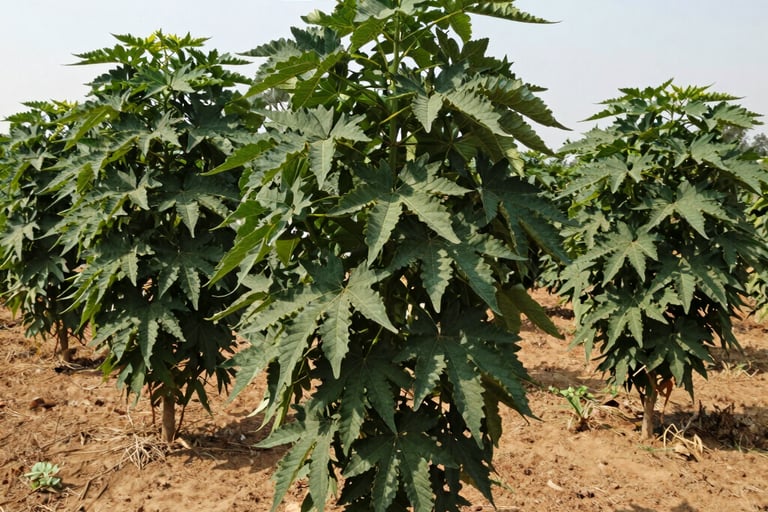
🌿 Shatavari (Asparagus racemosus)
A high-value medicinal crop used in Ayurveda for women’s health, immunity, and hormonal balance.
आयुर्वेद में उपयोग होने वाली उच्च मूल्य की औषधीय फसल, जो महिलाओं के स्वास्थ्य, इम्यूनिटी और हार्मोन संतुलन के लिए उपयोगी है।
🌦️ Climate
Grows best in tropical and subtropical climate (20–35°C).
यह उष्णकटिबंधीय और उपोष्णकटिबंधीय जलवायु (20–35°C) में अच्छी उगती है।
🌱 Soil
Prefers well-drained sandy loam soil rich in organic matter.
जैविक पदार्थ युक्त अच्छी जल निकासी वाली बलुई दोमट मिट्टी उपयुक्त होती है।
🌾 Varieties
Popular varieties include Pusa Shatavari-1 and local types.
लोकप्रिय किस्मों में पूसा शतावरी-1 और स्थानीय किस्में शामिल हैं।
📅 Planting Time
June–July (monsoon).
जून–जुलाई (मानसून)।
🌿 Harvesting
Ready in 18–24 months (roots harvested).
18–24 महीने में तैयार (जड़ की कटाई)।
💧 Irrigation
Moderate irrigation; avoid waterlogging.
मध्यम सिंचाई; जलभराव से बचें।
🧪 Fertilizers
Use organic manure; minimal chemical fertilizers.
जैविक खाद का उपयोग करें; रासायनिक उर्वरक कम।
🐛 Pest & Disease Control
Common issues: Root rot, leaf diseases.
मुख्य समस्या: जड़ सड़न, पत्ती रोग।
Recommended pesticides:
Neem Oil 1500 ppm – for pest control
Carbendazim 50% WP – for fungal diseases
उपयोगी दवाइयाँ:
नीम ऑयल – कीट नियंत्रण
कार्बेन्डाजिम – फंगल रोग नियंत्रण
💰 Investment
₹40,000–₹1,00,000 per acre.
₹40,000–₹1,00,000 प्रति एकड़।
📊 Yield
5–8 quintals roots per acre.
5–8 क्विंटल जड़ प्रति एकड़।
💵 Profit
₹1,00,000–₹4,00,000 per acre.
₹1,00,000–₹4,00,000 प्रति एकड़ लाभ।
🏷️ Market
High demand in Ayurvedic medicine, health supplements, and export markets.
आयुर्वेदिक दवाइयों, हेल्थ सप्लीमेंट और निर्यात बाजार में उच्च मांग।
⚠️ Risks
Long duration crop and market price fluctuations.
लंबी अवधि की फसल और बाजार कीमत में उतार-चढ़ाव।
🌍 Best Shatavari Growing Regions in India
🌍 भारत में शतावरी के प्रमुख क्षेत्र
🟡 Central India (MP, Maharashtra)
Best suitable region.
सबसे उपयुक्त क्षेत्र।
Pusa Shatavari-1 ⭐
Local Varieties
🟢 North India (UP, Rajasthan)
Suitable for medicinal farming.
औषधीय खेती के लिए उपयुक्त।
Pusa Shatavari-1 ⭐
Local Types
🔵 South India (Karnataka, Tamil Nadu)
Possible in warm climates.
गर्म जलवायु में संभव।
Local Varieties ⭐
Pusa Types
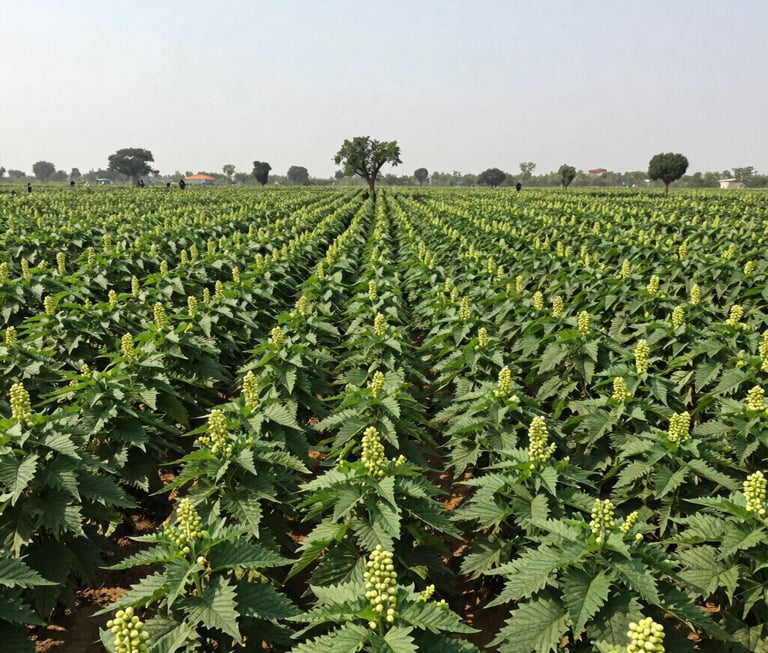
🌸Orchids
Exotic and highly valued flowering plants grown for their ornamental beauty and commercial floriculture.
विशिष्ट और उच्च मूल्य वाले फूलदार पौधे, जो सजावटी सुंदरता और वाणिज्यिक फूल उत्पादन के लिए उगाए जाते हैं।
🌦️ Climate
Grows best in humid tropical and subtropical climate (18–30°C).
यह नमी वाले उष्णकटिबंधीय और उपोष्णकटिबंधीय जलवायु (18–30°C) में अच्छी उगती है।
🌱 Soil / Medium
Prefers well-drained orchid mix, moss, or bark-based media; does not grow in heavy soil.
अच्छी जल निकासी वाली ऑर्किड मिक्स, मॉस या छाल आधारित माध्यम उपयुक्त; भारी मिट्टी में नहीं उगती।
🌾 Varieties
Popular varieties: Phalaenopsis, Dendrobium, Cattleya, Vanda, and Cymbidium.
लोकप्रिय किस्में: फालेनॉप्सिस, डेंड्रोबियम, कैटीलया, वांडा और सिम्बिडियम।
📅 Planting / Potting Time
All year round in controlled environments; best in spring and monsoon.
सभी मौसमों में नियंत्रित वातावरण में; वसंत और मानसून में सबसे अच्छा।
🌸 Flowering
Takes 1–3 years to flower depending on species and care.
प्रजाति और देखभाल के अनुसार 1–3 साल में फूल खिलते हैं।
💧 Irrigation
Moderate misting and regular watering; avoid waterlogging.
मध्यम झरना और नियमित पानी; जलभराव से बचें।
🧪 Fertilizers
Use balanced orchid fertilizer (NPK 20:20:20) every 2–3 weeks.
संतुलित ऑर्किड उर्वरक (NPK 20:20:20) हर 2–3 सप्ताह में दें।
🐛 Pest & Disease Control
Common pests: Aphids, mealybugs, spider mites. Diseases: Root rot, fungal infections.
मुख्य कीट: एफिड्स, मिलीबग्स, स्पाइडर माइट्स। रोग: जड़ सड़न, फंगल संक्रमण।
Recommended pesticides / fungicides:
Neem Oil 1500 ppm – for pests
Bordeaux Mixture – for fungal diseases
उपयोगी दवाइयाँ:
नीम ऑयल – कीट नियंत्रण
बोर्डो मिश्रण – फंगल रोग नियंत्रण
💰 Investment
₹50,000–₹1,50,000 per 100 pots (depends on variety).
₹50,000–₹1,50,000 प्रति 100 गमले (किस्म पर निर्भर)।
📊 Yield / Flowers
30–50 flowers per pot per year (Phalaenopsis) on average.
औसतन प्रति गमले 30–50 फूल प्रति वर्ष (फालेनॉप्सिस)।
💵 Profit
₹1,00,000–₹5,00,000 per 100 pots per year (export & local markets).
₹1,00,000–₹5,00,000 प्रति 100 गमले प्रति वर्ष (निर्यात और स्थानीय बाजार)।
🏷️ Market
High demand in ornamental, gifting, and export markets.
सजावटी, उपहार और निर्यात बाजार में उच्च मांग।
⚠️ Risks
Sensitive to climate, pests, and mishandling during transport.
जलवायु, कीट और परिवहन के दौरान गलत हैंडलिंग के प्रति संवेदनशील।
🌍 Best Orchid Growing Regions in India
🌍 भारत में ऑर्किड के प्रमुख क्षेत्र
🟢 North-East India (Sikkim, Arunachal Pradesh, Assam)
Ideal for temperate orchids.
समशीतोष्ण ऑर्किड के लिए आदर्श।
Dendrobium ⭐
Cymbidium
🟡 South India (Kerala, Karnataka, Tamil Nadu)
Ideal for tropical orchids.
उष्णकटिबंधीय ऑर्किड के लिए आदर्श।
Vanda ⭐
Phalaenopsis
Cattleya
🔵 Himalayan foothills (Himachal Pradesh, Uttarakhand)
Suitable for high-altitude varieties.
उच्च ऊंचाई वाली किस्मों के लिए उपयुक्त।
Cymbidium ⭐
Dendrobium
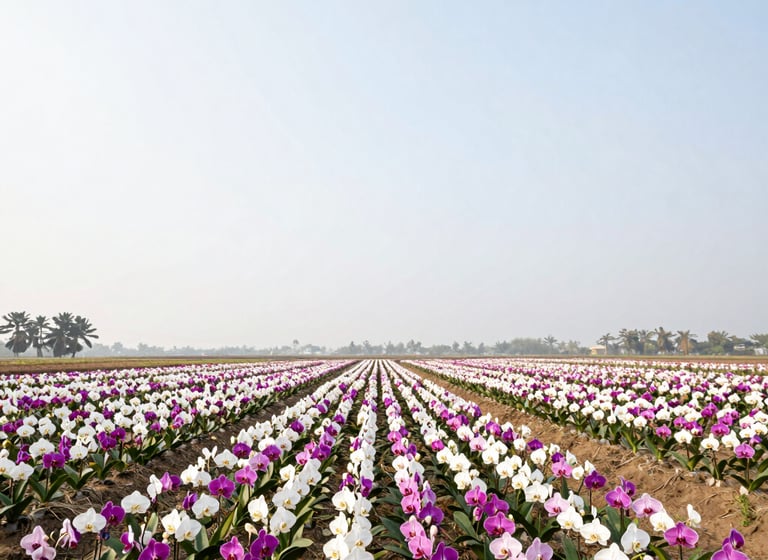
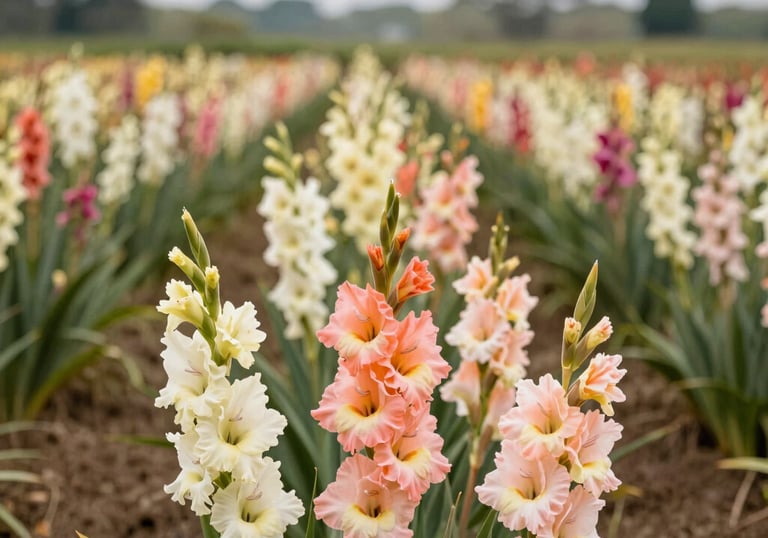
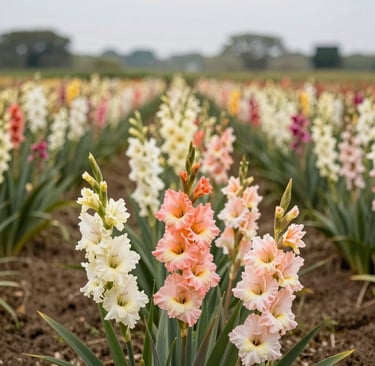
🌸 Gladiolus
A popular ornamental flower grown for decorative purposes, floristry, and gifting.
सजावट, फ्लोरिस्ट्री और उपहार के लिए उगाया जाने वाला एक लोकप्रिय सजावटी फूल।
🌦️ Climate
Grows best in cool and moderate climates (15–30°C).
ठंडी और मध्यम जलवायु (15–30°C) में अच्छी उगती है।
🌱 Soil
Prefers well-drained sandy loam soil rich in organic matter.
जैविक पदार्थ युक्त अच्छी जल निकासी वाली दोमट मिट्टी उपयुक्त।
🌾 Varieties
Popular varieties include White Prosperity, Friendship, Peter Pears, and Novan.
लोकप्रिय किस्में: व्हाइट प्रॉस्पेरिटी, फ्रेंडशिप, पीटर पियर्स और नोवन।
📅 Planting Time
February–April (summer planting) | August–September (monsoon planting).
फरवरी–अप्रैल (ग्रीष्म रोपण) | अगस्त–सितंबर (मानसून रोपण)।
🌸 Flowering
Blooms in 70–90 days after planting depending on variety.
किस्म के अनुसार रोपण के 70–90 दिनों में फूल खिलते हैं।
💧 Irrigation
Moderate watering; avoid waterlogging to prevent corm rot.
मध्यम सिंचाई; कंद सड़न से बचने के लिए जलभराव से बचें।
🧪 Fertilizers
Use balanced NPK fertilizers (20:20:20) every 2–3 weeks.
संतुलित NPK उर्वरक (20:20:20) हर 2–3 सप्ताह में दें।
🐛 Pest & Disease Control
Common pests: Thrips, aphids. Diseases: Fusarium wilt, leaf blight.
मुख्य कीट: थ्रिप्स, एफिड्स। रोग: फ्यूजेरियम विल्ट, पत्ती ब्लाइट।
Recommended pesticides / fungicides:
Neem Oil 1500 ppm – for pests
Carbendazim 50% WP – for fungal diseases
उपयोगी दवाइयाँ:
नीम ऑयल – कीट नियंत्रण
कार्बेन्डाजिम – फंगल रोग नियंत्रण
💰 Investment
₹30,000–₹80,000 per 1000 corms.
₹30,000–₹80,000 प्रति 1000 कंद।
📊 Yield / Flowers
20–25 spikes per 100 corms per season on average.
औसतन प्रति 100 कंद प्रति मौसम 20–25 फूल के स्पाइक।
💵 Profit
₹50,000–₹2,00,000 per 1000 corms per season (local + export markets).
₹50,000–₹2,00,000 प्रति 1000 कंद प्रति मौसम (स्थानीय + निर्यात बाजार)।
🏷️ Market
High demand in floristry, gifting, and decorative markets.
फ्लोरिस्ट्री, उपहार और सजावटी बाजार में उच्च मांग।
⚠️ Risks
Sensitive to waterlogging and pest attack; require proper handling of corms.
जलभराव और कीट आक्रमण के प्रति संवेदनशील; कंद का सही हैंडलिंग जरूरी।
🌍 Best Gladiolus Growing Regions in India
🌍 भारत में ग्लैडियोलस के प्रमुख क्षेत्र
🟢 North India (Uttarakhand, Himachal Pradesh, Uttar Pradesh)
Ideal for temperate conditions.
समशीतोष्ण परिस्थितियों के लिए आदर्श।
White Prosperity ⭐
Friendship
Peter Pears
🟡 South India (Karnataka, Tamil Nadu, Kerala)
Suitable for tropical gladiolus varieties.
उष्णकटिबंधीय ग्लैडियोलस किस्मों के लिए उपयुक्त।
Novan ⭐
Local Varieties
🔵 Central India (Madhya Pradesh, Maharashtra)
Possible with careful irrigation and shade management.
सावधानीपूर्वक सिंचाई और छाया प्रबंधन के साथ संभव।
Friendship ⭐
White Prosperity
🌰 Cashew (Anacardium occidentale)
A tropical nut crop grown for cashew nuts and cashew apple, widely used in food and beverage industries.
एक उष्णकटिबंधीय नट फसल, जिसका उपयोग काजू और काजू के फलों (काजू सेब) के लिए किया जाता है; खाद्य और पेय उद्योग में व्यापक रूप से इस्तेमाल।
🌦️ Climate
Thrives in tropical climate with 25–35°C temperature and moderate rainfall.
उष्णकटिबंधीय जलवायु में 25–35°C तापमान और मध्यम वर्षा में अच्छी उगती है।
🌱 Soil
Prefers well-drained sandy loam soil; tolerant to laterite soils.
अच्छी जल निकासी वाली बलुई दोमट मिट्टी उपयुक्त; लेटराइट मिट्टी सहन कर सकती है।
🌾 Varieties
Popular varieties include Vengurla-4, Anacardium-1, BPP-8, and Dhana.
लोकप्रिय किस्मों में वेंगुरला-4, अनाकार्डियम-1, BPP-8 और धन शामिल हैं।
📅 Planting Time
June–July (monsoon).
जून–जुलाई (मानसून)।
🌰 Harvesting
Cashew nuts harvested after 3–5 years; peak yield at 8–10 years.
काजू की कटाई 3–5 साल में; चरम उत्पादन 8–10 साल में।
💧 Irrigation
Requires moderate irrigation in dry periods; drought-tolerant once established.
शुष्क अवधि में मध्यम सिंचाई; स्थापित होने के बाद सूखा सहनशील।
🧪 Fertilizers
Use NPK + organic manure; micronutrients (Zn, B) recommended.
NPK + जैविक खाद का उपयोग; सूक्ष्म पोषक (Zn, B) अनुशंसित।
🐛 Pest & Disease Control
Common pests: Tea mosquito bug, stem borer. Diseases: Powdery mildew, anthracnose.
मुख्य कीट: टी मच्छर कीट, तना बोरर। रोग: पाउडरी मिल्ड्यू, एंथ्रैक्नोज।
Recommended pesticides / fungicides:
Neem Oil 1500 ppm – for pests
Copper Oxychloride 50% WP – for fungal diseases
उपयोगी दवाइयाँ:
नीम ऑयल – कीट नियंत्रण
कॉपर ऑक्सी क्लोराइड – फंगल रोग नियंत्रण
💰 Investment
₹40,000–₹1,50,000 per acre (initial years).
₹40,000–₹1,50,000 प्रति एकड़ (प्रारंभिक वर्षों में)।
📊 Yield
500–800 kg nuts per hectare (mature trees).
500–800 किलोग्राम काजू प्रति हेक्टेयर (परिपक्व पेड़)।
💵 Profit
₹1,50,000–₹6,00,000 per hectare per year (mature orchard).
₹1,50,000–₹6,00,000 प्रति हेक्टेयर प्रति वर्ष (परिपक्व बाग)।
🏷️ Market
High demand in domestic and export markets for nuts and processed products.
घरेलू और निर्यात बाजार में नट और प्रसंस्कृत उत्पादों के लिए उच्च मांग।
⚠️ Risks
Slow initial growth, pest attacks, and climate sensitivity.
धीमी शुरुआती वृद्धि, कीट आक्रमण और जलवायु संवेदनशीलता।
🌍 Best Cashew Growing Regions in India
🌍 भारत में काजू के प्रमुख क्षेत्र
🟢 South India (Karnataka, Kerala, Tamil Nadu)
Major production area; suitable for all varieties.
मुख्य उत्पादन क्षेत्र; सभी किस्मों के लिए उपयुक्त।
Vengurla-4 ⭐
BPP-8
Dhana
🟡 West India (Goa, Maharashtra)
Good for coastal climates.
सहज तटीय जलवायु के लिए उपयुक्त।
Anacardium-1 ⭐
Local Varieties
🔵 East India (Odisha, Andhra Pradesh)
Emerging cashew cultivation region.
उभरता हुआ काजू उत्पादन क्षेत्र।
Local Varieties ⭐
BPP-8
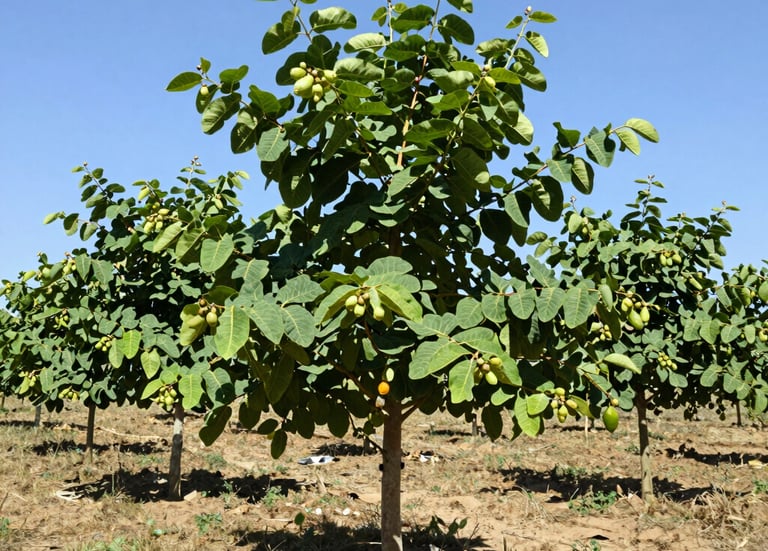
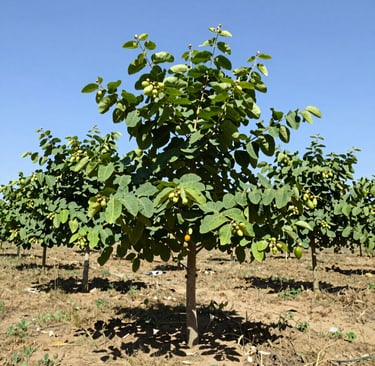
🌰 Walnut (Juglans regia)
A temperate nut crop grown for its edible nuts and timber; highly valued in domestic and export markets.
एक समशीतोष्ण नट फसल, जिसका उपयोग खाने योग्य नट और लकड़ी के लिए किया जाता है; घरेलू और निर्यात बाजार में उच्च मूल्य वाली।
🌦️ Climate
Thrives in temperate regions with cold winters (0–7°C) and mild summers (20–30°C).
ठंडी सर्दियों (0–7°C) और हल्की गर्मियों (20–30°C) वाले समशीतोष्ण क्षेत्रों में अच्छी उगती है।
🌱 Soil
Prefers deep, well-drained loamy or sandy loam soils with pH 6–7.5.
गहरी, अच्छी जल निकासी वाली दोमट या बलुई दोमट मिट्टी (pH 6–7.5) उपयुक्त।
🌾 Varieties
Popular varieties include Chandler, Hartley, Payne, and Franquette.
लोकप्रिय किस्में: चैंडलर, हार्टले, पेयने और फ्रैंक्वेट।
📅 Planting Time
November–March (winter dormancy period).
नवंबर–मार्च (सर्दियों में निष्क्रियता अवधि)।
🌰 Harvesting
Harvest after 6–7 years; full yield at 10–12 years.
6–7 साल में कटाई; पूरा उत्पादन 10–12 साल में।
💧 Irrigation
Moderate irrigation required; drought-tolerant once established.
मध्यम सिंचाई आवश्यक; स्थापित होने के बाद सूखा सहनशील।
🧪 Fertilizers
Use NPK + organic manure; apply micronutrients like B and Zn as needed.
NPK + जैविक खाद का उपयोग; आवश्यकतानुसार B और Zn जैसे सूक्ष्म पोषक डालें।
🐛 Pest & Disease Control
Common pests: Aphids, codling moth. Diseases: Blight, root rot.
मुख्य कीट: एफिड्स, कॉडलिंग मथ। रोग: ब्लाइट, जड़ सड़न।
Recommended pesticides / fungicides:
Neem Oil 1500 ppm – for pests
Carbendazim 50% WP – for fungal diseases
उपयोगी दवाइयाँ:
नीम ऑयल – कीट नियंत्रण
कार्बेन्डाजिम – फंगल रोग नियंत्रण
💰 Investment
₹1,00,000–₹2,50,000 per acre (initial years).
₹1,00,000–₹2,50,000 प्रति एकड़ (प्रारंभिक वर्षों में)।
📊 Yield
1–2 tons nuts per hectare after maturity (10–12 years).
परिपक्व होने के बाद प्रति हेक्टेयर 1–2 टन नट्स (10–12 साल में)।
💵 Profit
₹3,00,000–₹10,00,000 per hectare per year (mature orchard).
₹3,00,000–₹10,00,000 प्रति हेक्टेयर प्रति वर्ष (परिपक्व बाग)।
🏷️ Market
High demand in domestic and export nut markets; walnut kernels are premium product.
घरेलू और निर्यात नट बाजार में उच्च मांग; अखरोट का अंदरूनी हिस्सा प्रीमियम उत्पाद।
⚠️ Risks
Slow growth, cold injury, pest attack, and late frost sensitivity.
धीमी वृद्धि, ठंड से नुकसान, कीट आक्रमण, और देर से पाले के प्रति संवेदनशील।
🌍 Best Walnut Growing Regions in India
🌍 भारत में अखरोट के प्रमुख क्षेत्र
🟢 North India (Jammu & Kashmir, Himachal Pradesh, Uttarakhand)
Ideal for temperate walnut cultivation.
समशीतोष्ण अखरोट की खेती के लिए आदर्श।
Chandler ⭐
Hartley
Payne
🟡 North-East India (Arunachal Pradesh, Sikkim)
Suitable for temperate conditions in higher altitudes.
उच्च ऊंचाई वाले समशीतोष्ण क्षेत्रों के लिए उपयुक्त।
Franquette ⭐
Local Varieties
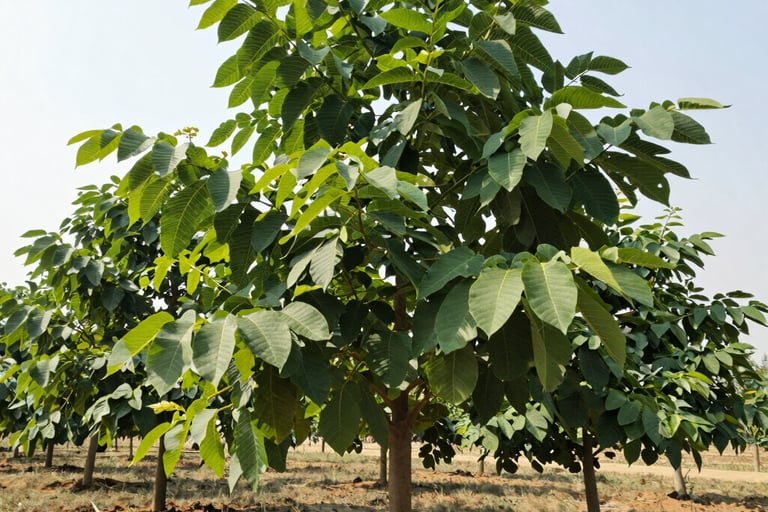
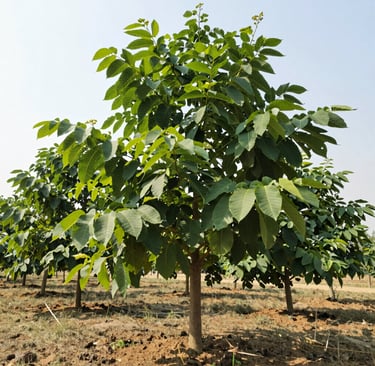
Almond (Prunus dulcis)
A temperate nut crop grown for edible nuts; widely used in snacks, confectionery, and health products.
एक समशीतोष्ण नट फसल, जिसका उपयोग खाने योग्य नट के लिए किया जाता है; स्नैक्स, मिठाई और स्वास्थ्य उत्पादों में व्यापक रूप से उपयोग।
🌦️ Climate
Thrives in temperate regions with cold winters (0–7°C) and warm dry summers (25–35°C).
ठंडी सर्दियों (0–7°C) और गर्म शुष्क गर्मियों (25–35°C) वाले समशीतोष्ण क्षेत्रों में अच्छी उगती है।
🌱 Soil
Prefers deep, well-drained sandy loam soils with pH 6–8.
गहरी, अच्छी जल निकासी वाली बलुई दोमट मिट्टी (pH 6–8) उपयुक्त।
🌾 Varieties
Popular varieties include Nonpareil, Desi Badam, California Mission, and Texas.
लोकप्रिय किस्में: नॉनपरेइल, देसी बादाम, कैलिफ़ोर्निया मिशन और टेक्सास।
📅 Planting Time
November–February (during winter dormancy).
नवंबर–फरवरी (सर्दियों में निष्क्रियता अवधि)।
🌰 Harvesting
Harvest begins after 5–6 years; peak yield at 10–12 years.
5–6 साल में कटाई शुरू; चरम उत्पादन 10–12 साल में।
💧 Irrigation
Moderate irrigation required; drought-tolerant once established.
मध्यम सिंचाई आवश्यक; स्थापित होने के बाद सूखा सहनशील।
🧪 Fertilizers
Use NPK + organic manure; apply micronutrients like B and Zn as needed.
NPK + जैविक खाद का उपयोग; आवश्यकतानुसार B और Zn जैसे सूक्ष्म पोषक डालें।
🐛 Pest & Disease Control
Common pests: Aphids, mite, caterpillar. Diseases: Leaf curl, root rot.
मुख्य कीट: एफिड्स, माइट, कैटरपिलर। रोग: पत्ती कर्ल, जड़ सड़न।
Recommended pesticides / fungicides:
Neem Oil 1500 ppm – for pests
Copper Oxychloride 50% WP – for fungal diseases
उपयोगी दवाइयाँ:
नीम ऑयल – कीट नियंत्रण
कॉपर ऑक्सी क्लोराइड – फंगल रोग नियंत्रण
💰 Investment
₹80,000–₹2,50,000 per acre (initial years).
₹80,000–₹2,50,000 प्रति एकड़ (प्रारंभिक वर्षों में)।
📊 Yield
600–1200 kg nuts per hectare after maturity (10–12 years).
परिपक्व होने के बाद प्रति हेक्टेयर 600–1200 किलोग्राम नट्स (10–12 साल में)।
💵 Profit
₹3,00,000–₹12,00,000 per hectare per year (mature orchard).
₹3,00,000–₹12,00,000 प्रति हेक्टेयर प्रति वर्ष (परिपक्व बाग)।
🏷️ Market
High demand in domestic and export markets; premium health nut.
घरेलू और निर्यात बाजार में उच्च मांग; प्रीमियम स्वास्थ्य नट।
⚠️ Risks
Sensitive to frost, pest attacks, and waterlogging.
पाले, कीट आक्रमण और जलभराव के प्रति संवेदनशील।
🌍 Best Almond Growing Regions in India
🌍 भारत में बादाम के प्रमुख क्षेत्र
🟢 North India (Jammu & Kashmir, Himachal Pradesh, Uttarakhand)
Ideal for temperate almond cultivation.
समशीतोष्ण बादाम की खेती के लिए आदर्श।
Nonpareil ⭐
Desi Badam
California Mission
🟡 North-East India (Sikkim, Arunachal Pradesh)
Suitable for higher altitude temperate conditions.
उच्च ऊंचाई वाले समशीतोष्ण क्षेत्रों के लिए उपयुक्त।
Texas ⭐
Local Varieties
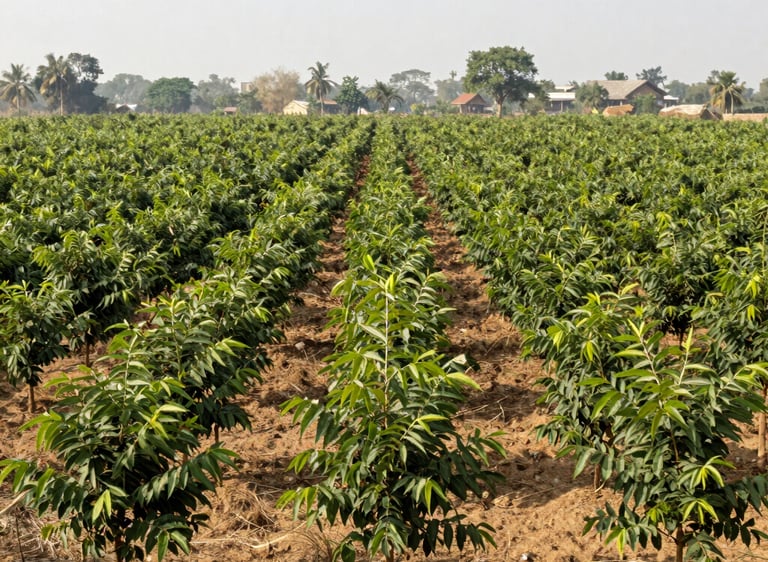
Anjeer (Ficus carica)
A subtropical/temperate fruit crop grown for sweet edible figs; widely used fresh, dried, and in health products.
एक उपउष्णकटिबंधीय/समशीतोष्ण फल फसल, जिसका उपयोग मीठे अंजीर के लिए किया जाता है; ताजा, सूखा और स्वास्थ्य उत्पादों में व्यापक रूप से उपयोग।
🌦️ Climate
Thrives in warm subtropical regions with mild winters (10–15°C) and hot dry summers (25–35°C).
हल्की सर्दियों (10–15°C) और गर्म शुष्क गर्मियों (25–35°C) वाले क्षेत्रों में अच्छी उगती है।
🌱 Soil
Prefers deep, well-drained loamy soils with pH 6–8.
गहरी, अच्छी जल निकासी वाली दोमट मिट्टी (pH 6–8) उपयुक्त।
🌾 Varieties
Popular varieties include Brown Turkey, Black Mission, Poona Fig, and Kadota.
लोकप्रिय किस्में: ब्राउन टर्की, ब्लैक मिशन, पूना फिग और कदोता।
📅 Planting Time
June–July (rainy season) and October–February (irrigated conditions).
जून–जुलाई (वर्षा ऋतु) और अक्टूबर–फरवरी (सिंचित क्षेत्रों में)।
🌰 Harvesting
Harvest begins after 2–3 years; peak yield at 5–7 years.
2–3 साल में कटाई शुरू; चरम उत्पादन 5–7 साल में।
💧 Irrigation
Moderate irrigation required; drought-tolerant once established.
मध्यम सिंचाई आवश्यक; स्थापित होने के बाद सूखा सहनशील।
🧪 Fertilizers
Use NPK + organic manure; apply micronutrients like B and Zn as needed.
NPK + जैविक खाद का उपयोग; आवश्यकतानुसार B और Zn जैसे सूक्ष्म पोषक डालें।
🐛 Pest & Disease Control
Common pests: Mealybugs, aphids, stem borers. Diseases: Rust, leaf spot, root rot.
मुख्य कीट: मीलीबग, एफिड्स, स्टेम बोरर। रोग: रस्ट, पत्ती धब्बा, जड़ सड़न।
Recommended pesticides / fungicides:
Neem Oil 1500 ppm – for pests
Copper Oxychloride 50% WP – for fungal diseases
उपयोगी दवाइयाँ:
नीम ऑयल – कीट नियंत्रण
कॉपर ऑक्सी क्लोराइड – फंगल रोग नियंत्रण
💰 Investment
₹80,000–₹2,00,000 per acre (initial years).
₹80,000–₹2,00,000 प्रति एकड़ (प्रारंभिक वर्षों में)।
📊 Yield
8000–12000 kg fruits per hectare after maturity (5–7 years).
परिपक्व होने के बाद प्रति हेक्टेयर 8000–12000 किलोग्राम फल (5–7 साल में)।
💵 Profit
₹3,00,000–₹8,00,000 per hectare per year (mature orchard).
₹3,00,000–₹8,00,000 प्रति हेक्टेयर प्रति वर्ष (परिपक्व बाग)।
🏷️ Market
High demand in domestic and export markets; premium fruit crop.
घरेलू और निर्यात बाजार में उच्च मांग; प्रीमियम फल फसल।
⚠️ Risks
Sensitive to frost, fruit cracking, pest attacks, and waterlogging.
पाले, फल फटना, कीट आक्रमण और जलभराव के प्रति संवेदनशील।
🌍 Best Anjeer Growing Regions in India
🌍 भारत में अंजीर के प्रमुख क्षेत्र
🟢 West India (Maharashtra, Gujarat)
Ideal for commercial fig cultivation.
व्यावसायिक अंजीर की खेती के लिए आदर्श।
Poona Fig ⭐
Brown Turkey
Black Mission
🟡 South India (Karnataka, Tamil Nadu)
Suitable for warm subtropical conditions.
गर्म उपउष्णकटिबंधीय क्षेत्रों के लिए उपयुक्त।
Kadota ⭐
Local Varieties
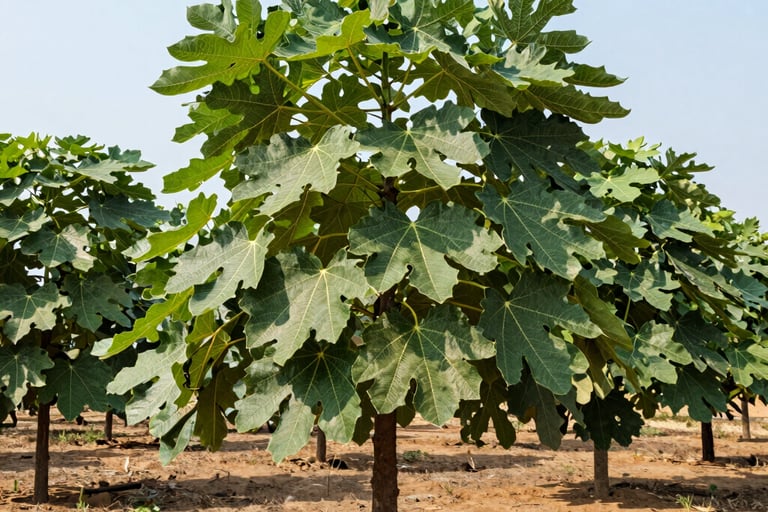
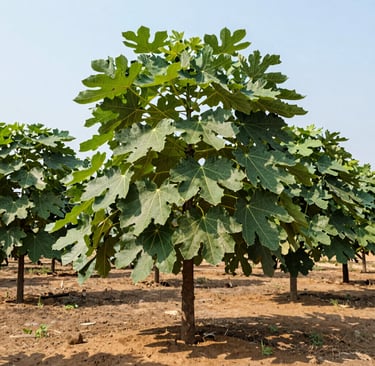
Kishmish (Vitis vinifera)
A subtropical fruit crop processed into raisins (dried grapes); widely used in sweets, snacks, and health foods.
एक उपउष्णकटिबंधीय फल फसल जिसे किशमिश (सूखे अंगूर) के रूप में उपयोग किया जाता है; मिठाई, स्नैक्स और स्वास्थ्य उत्पादों में व्यापक उपयोग।
🌦️ Climate
Thrives in warm dry climates with temperatures between 20–35°C; dry weather required during drying stage.
20–35°C तापमान वाले गर्म और शुष्क क्षेत्रों में अच्छी उगती है; सुखाने के समय शुष्क मौसम आवश्यक।
🌱 Soil
Prefers well-drained sandy loam soils with pH 6.5–7.5.
अच्छी जल निकासी वाली बलुई दोमट मिट्टी (pH 6.5–7.5) उपयुक्त।
🌾 Varieties
Popular varieties include Thompson Seedless, Sonaka, Manik Chaman, and Black Corinth.
लोकप्रिय किस्में: थॉम्पसन सीडलैस, सोनाका, माणिक चमन और ब्लैक कोरिंथ।
📅 Planting Time
December–January (main planting season).
दिसंबर–जनवरी (मुख्य रोपण समय)।
🌰 Harvesting
Harvest begins after 2–3 years; grapes are dried to produce raisins.
2–3 साल में कटाई शुरू; अंगूर को सुखाकर किशमिश बनाई जाती है।
💧 Irrigation
Regular irrigation required; avoid excess water during ripening.
नियमित सिंचाई आवश्यक; पकने के समय अधिक पानी से बचें।
🧪 Fertilizers
Use NPK + organic manure; apply micronutrients like Zn, B, and Mg.
NPK + जैविक खाद का उपयोग; Zn, B और Mg जैसे सूक्ष्म पोषक डालें।
🐛 Pest & Disease Control
Common pests: Thrips, mealybugs, mites. Diseases: Powdery mildew, downy mildew.
मुख्य कीट: थ्रिप्स, मीलीबग, माइट। रोग: पाउडरी मिल्ड्यू, डाउनी मिल्ड्यू।
Recommended pesticides / fungicides:
Neem Oil 1500 ppm – for pests
Sulphur 80% WP – for fungal diseases
उपयोगी दवाइयाँ:
नीम ऑयल – कीट नियंत्रण
सल्फर – फंगल रोग नियंत्रण
💰 Investment
₹1,50,000–₹3,00,000 per acre (including drying setup).
₹1,50,000–₹3,00,000 प्रति एकड़ (सुखाने की व्यवस्था सहित)।
📊 Yield
10–20 tons grapes per hectare; 3–5 tons raisins after drying.
10–20 टन अंगूर प्रति हेक्टेयर; सुखाने के बाद 3–5 टन किशमिश।
💵 Profit
₹4,00,000–₹10,00,000 per hectare per year.
₹4,00,000–₹10,00,000 प्रति हेक्टेयर प्रति वर्ष।
🏷️ Market
High demand in domestic and export markets; strong processing value.
घरेलू और निर्यात बाजार में उच्च मांग; प्रोसेसिंग के कारण अधिक मूल्य।
⚠️ Risks
Sensitive to rainfall during drying, pest attacks, and fungal diseases.
सुखाने के समय बारिश, कीट आक्रमण और फंगल रोगों के प्रति संवेदनशील।
🌍 Best Kishmish (Grapes) Growing Regions in India
🌍 भारत में किशमिश (अंगूर) के प्रमुख क्षेत्र
🟢 West India (Maharashtra – Nashik, Sangli) ⭐
Ideal for raisin production due to dry climate.
शुष्क जलवायु के कारण किशमिश उत्पादन के लिए आदर्श।
Thompson Seedless ⭐
Sonaka
Manik Chaman
🟡 South India (Karnataka, Andhra Pradesh)
Suitable for grape cultivation and drying.
अंगूर की खेती और सुखाने के लिए उपयुक्त।
Black Corinth ⭐
Local Varieties
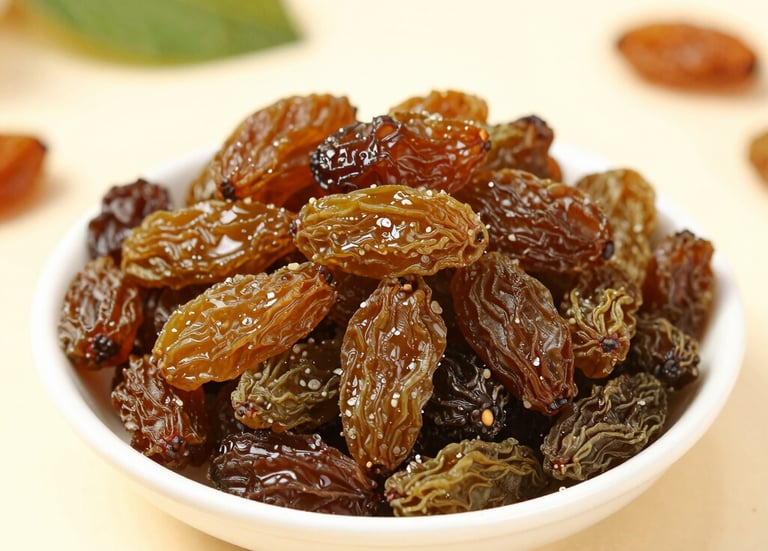
Pistachio (Pistacia vera)
A temperate nut crop grown for edible pistachio nuts; widely used in snacks, confectionery, and health products.
एक समशीतोष्ण नट फसल, जिसका उपयोग खाने योग्य पिस्ता के लिए किया जाता है; स्नैक्स, मिठाई और स्वास्थ्य उत्पादों में व्यापक उपयोग।
🌦️ Climate
Thrives in hot dry climates with cold winters (0–7°C) and long hot summers (25–40°C).
ठंडी सर्दियों (0–7°C) और लंबी गर्म शुष्क गर्मियों (25–40°C) वाले क्षेत्रों में अच्छी उगती है।
🌱 Soil
Prefers deep, well-drained sandy loam soils with pH 7–8; tolerant to saline soils.
गहरी, अच्छी जल निकासी वाली बलुई दोमट मिट्टी (pH 7–8) उपयुक्त; लवणीय मिट्टी सहनशील।
🌾 Varieties
Popular varieties include Kerman, Peters (pollinator), Red Aleppo, and Sirora.
लोकप्रिय किस्में: केरमन, पीटर्स (परागण के लिए), रेड अलेप्पो और सिरोरा।
📅 Planting Time
December–February (during dormancy).
दिसंबर–फरवरी (निष्क्रियता अवधि के दौरान)।
🌰 Harvesting
Harvest begins after 5–7 years; peak yield at 10–12 years.
5–7 साल में कटाई शुरू; चरम उत्पादन 10–12 साल में।
💧 Irrigation
Low to moderate irrigation; highly drought-tolerant once established.
कम से मध्यम सिंचाई; स्थापित होने के बाद अत्यधिक सूखा सहनशील।
🧪 Fertilizers
Use NPK + organic manure; apply micronutrients like Zn and B as needed.
NPK + जैविक खाद का उपयोग; आवश्यकता अनुसार Zn और B डालें।
🐛 Pest & Disease Control
Common pests: Aphids, mites, borers. Diseases: Verticillium wilt, root rot.
मुख्य कीट: एफिड्स, माइट, बोरर। रोग: वर्टिसिलियम विल्ट, जड़ सड़न।
Recommended pesticides / fungicides:
Neem Oil 1500 ppm – for pests
Copper Oxychloride 50% WP – for fungal diseases
उपयोगी दवाइयाँ:
नीम ऑयल – कीट नियंत्रण
कॉपर ऑक्सी क्लोराइड – फंगल रोग नियंत्रण
💰 Investment
₹1,50,000–₹3,50,000 per acre (initial years).
₹1,50,000–₹3,50,000 प्रति एकड़ (प्रारंभिक वर्षों में)।
📊 Yield
1000–2000 kg nuts per hectare after maturity (10–12 years).
परिपक्व होने के बाद प्रति हेक्टेयर 1000–2000 किलोग्राम नट्स (10–12 साल में)।
💵 Profit
₹4,00,000–₹12,00,000 per hectare per year (mature orchard).
₹4,00,000–₹12,00,000 प्रति हेक्टेयर प्रति वर्ष (परिपक्व बाग)।
🏷️ Market
Very high demand in domestic and export markets; premium dry fruit.
घरेलू और निर्यात बाजार में बहुत उच्च मांग; प्रीमियम ड्राई फ्रूट।
⚠️ Risks
Sensitive to humidity, waterlogging, and improper pollination.
नमी, जलभराव और खराब परागण के प्रति संवेदनशील।
🌍 Best Pistachio Growing Regions in India
🌍 भारत में पिस्ता के प्रमुख क्षेत्र
🟢 North India (Jammu & Kashmir, Himachal Pradesh) ⭐
Suitable for temperate pistachio cultivation.
समशीतोष्ण पिस्ता खेती के लिए उपयुक्त।
Kerman ⭐
Peters (Pollinator)
Red Aleppo
🟡 Dry Regions (Rajasthan – limited potential)
Possible in arid, well-managed conditions.
शुष्क और अच्छे प्रबंधन वाले क्षेत्रों में संभव।
Sirora ⭐
Local Varieties
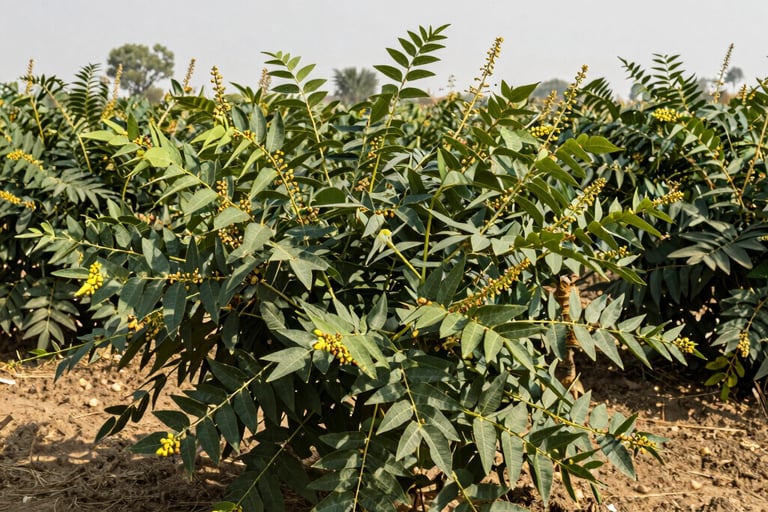
Dates (Phoenix dactylifera)
A tropical fruit crop grown for sweet edible dates; widely consumed fresh and dried in snacks and health products.
एक उष्णकटिबंधीय फल फसल, जिसका उपयोग मीठे खजूर के लिए किया जाता है; ताजा और सूखे रूप में स्नैक्स और स्वास्थ्य उत्पादों में व्यापक उपयोग।
🌦️ Climate
Thrives in hot arid climates with long summers (25–45°C) and very low humidity.
लंबी गर्मियों (25–45°C) और कम आर्द्रता वाले गर्म शुष्क क्षेत्रों में अच्छी उगती है।
🌱 Soil
Prefers deep, well-drained sandy loam soils with pH 7–8; highly tolerant to salinity.
गहरी, अच्छी जल निकासी वाली बलुई दोमट मिट्टी (pH 7–8) उपयुक्त; लवणीय मिट्टी सहनशील।
🌾 Varieties
Popular varieties include Medjool, Barhee, Zahidi, and Khuneizi.
लोकप्रिय किस्में: मेजूल, बरही, ज़ाहिदी और खुनेज़ी।
📅 Planting Time
February–March (best planting season).
फरवरी–मार्च (सबसे उपयुक्त रोपण समय)।
🌰 Harvesting
Harvest begins after 4–5 years; peak yield at 8–10 years.
4–5 साल में कटाई शुरू; चरम उत्पादन 8–10 साल में।
💧 Irrigation
Requires regular irrigation; drip irrigation recommended in arid regions.
नियमित सिंचाई आवश्यक; शुष्क क्षेत्रों में ड्रिप सिंचाई उपयुक्त।
🧪 Fertilizers
Use NPK + organic manure; apply micronutrients like Zn and B as needed.
NPK + जैविक खाद का उपयोग; आवश्यकता अनुसार Zn और B डालें।
🐛 Pest & Disease Control
Common pests: Red palm weevil, scale insects, mites. Diseases: Bayoud disease, leaf spot.
मुख्य कीट: रेड पाम वीविल, स्केल कीट, माइट। रोग: बेयोड रोग, पत्ती धब्बा।
Recommended pesticides / fungicides:
Neem Oil 1500 ppm – for pests
Copper Oxychloride 50% WP – for fungal diseases
उपयोगी दवाइयाँ:
नीम ऑयल – कीट नियंत्रण
कॉपर ऑक्सी क्लोराइड – फंगल रोग नियंत्रण
💰 Investment
₹1,50,000–₹4,00,000 per acre (initial years).
₹1,50,000–₹4,00,000 प्रति एकड़ (प्रारंभिक वर्षों में)।
📊 Yield
5000–10000 kg fruits per hectare after maturity (8–10 years).
परिपक्व होने के बाद प्रति हेक्टेयर 5000–10000 किलोग्राम फल (8–10 साल में)।
💵 Profit
₹3,00,000–₹10,00,000 per hectare per year (mature orchard).
₹3,00,000–₹10,00,000 प्रति हेक्टेयर प्रति वर्ष (परिपक्व बाग)।
🏷️ Market
Very high demand in domestic and export markets; premium dry fruit.
घरेलू और निर्यात बाजार में बहुत उच्च मांग; प्रीमियम ड्राई फ्रूट।
⚠️ Risks
Sensitive to high humidity, pest attacks, and poor pollination.
अधिक आर्द्रता, कीट आक्रमण और खराब परागण के प्रति संवेदनशील।
🌍 Best Date Growing Regions in India
🌍 भारत में खजूर के प्रमुख क्षेत्र
🟢 West India (Rajasthan, Gujarat – Kutch) ⭐
Ideal for commercial date cultivation due to arid climate.
शुष्क जलवायु के कारण व्यावसायिक खजूर खेती के लिए आदर्श।
Medjool ⭐
Barhee
Zahidi
🟡 South India (Tamil Nadu – limited areas)
Suitable in controlled irrigated conditions.
सिंचित और नियंत्रित परिस्थितियों में उपयुक्त।
Khuneizi ⭐
Local Varieties
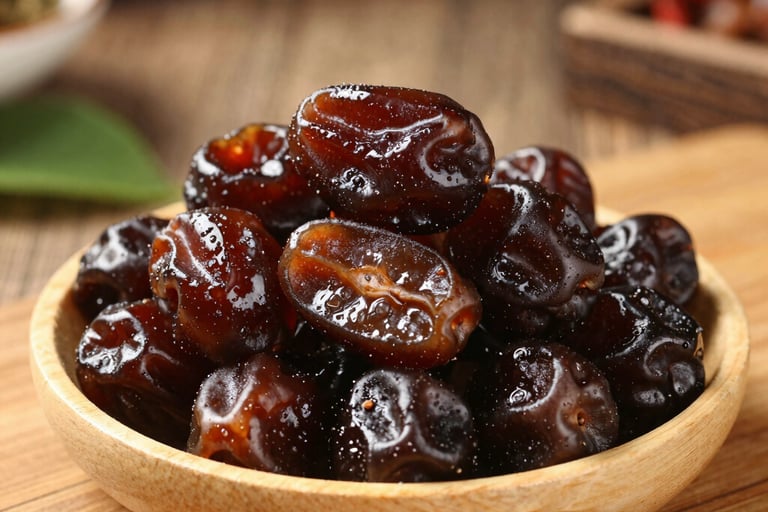
Makhana (Euryale ferox)
An aquatic crop grown for edible fox nuts (makhana); widely used in snacks, sweets, and health products.
एक जलीय फसल, जिसका उपयोग खाने योग्य मखाना के लिए किया जाता है; स्नैक्स, मिठाई और स्वास्थ्य उत्पादों में व्यापक उपयोग।
🌦️ Climate
Thrives in warm humid climates with temperatures between 20–35°C.
20–35°C तापमान वाले गर्म और आर्द्र क्षेत्रों में अच्छी उगती है।
🌱 Soil
Grows best in clayey and loamy soils with high water retention; requires standing water.
अधिक जल धारण क्षमता वाली चिकनी और दोमट मिट्टी में अच्छी उगती है; स्थिर पानी आवश्यक।
🌾 Varieties
Popular varieties include Swarna Vaidehi, Sabour Makhana-1, and Local Bihar types.
लोकप्रिय किस्में: स्वर्णा वैदेही, सबौर मखाना-1 और स्थानीय बिहार प्रकार।
📅 Planting Time
February–March (seed sowing in ponds/fields).
फरवरी–मार्च (तालाब/खेत में बुवाई)।
🌰 Harvesting
Harvest begins after 4–5 months; seeds collected from water and processed.
4–5 महीनों में कटाई शुरू; बीज पानी से निकालकर प्रोसेस किए जाते हैं।
💧 Irrigation
Requires continuous water level (1–1.5 meters); no traditional irrigation needed.
लगातार पानी (1–1.5 मीटर) आवश्यक; पारंपरिक सिंचाई की जरूरत नहीं।
🧪 Fertilizers
Use organic manure; limited use of NPK fertilizers.
जैविक खाद का उपयोग; NPK का सीमित उपयोग।
🐛 Pest & Disease Control
Common pests: Leaf-eating insects, beetles. Diseases: Leaf blight, root rot.
मुख्य कीट: पत्ती खाने वाले कीट, बीटल। रोग: पत्ती झुलसा, जड़ सड़न।
Recommended pesticides / fungicides:
Neem Oil 1500 ppm – for pests
Copper Oxychloride – for fungal diseases
उपयोगी दवाइयाँ:
नीम ऑयल – कीट नियंत्रण
कॉपर ऑक्सी क्लोराइड – फंगल रोग नियंत्रण
💰 Investment
₹60,000–₹1,50,000 per acre (including pond preparation).
₹60,000–₹1,50,000 प्रति एकड़ (तालाब तैयारी सहित)।
📊 Yield
1500–2500 kg raw seeds per hectare; 300–500 kg popped makhana.
प्रति हेक्टेयर 1500–2500 किलोग्राम कच्चे बीज; 300–500 किलोग्राम मखाना।
💵 Profit
₹2,00,000–₹6,00,000 per hectare per year.
₹2,00,000–₹6,00,000 प्रति हेक्टेयर प्रति वर्ष।
🏷️ Market
High demand in domestic and export markets; premium health snack.
घरेलू और निर्यात बाजार में उच्च मांग; प्रीमियम हेल्थ स्नैक।
⚠️ Risks
Dependent on water availability, labor-intensive processing, pest attacks.
पानी पर निर्भर, श्रम-गहन प्रोसेसिंग, कीट आक्रमण।
🌍 Best Makhana Growing Regions in India
🌍 भारत में मखाना के प्रमुख क्षेत्र
🟢 East India (Bihar – Mithilanchal region) ⭐
Ideal for commercial makhana cultivation.
व्यावसायिक मखाना खेती के लिए आदर्श।
Swarna Vaidehi ⭐
Sabour Makhana-1
Local Varieties
🟡 East & North-East India (West Bengal, Assam)
Suitable in wetland and pond-based systems.
आर्द्रभूमि और तालाब आधारित क्षेत्रों के लिए उपयुक्त।
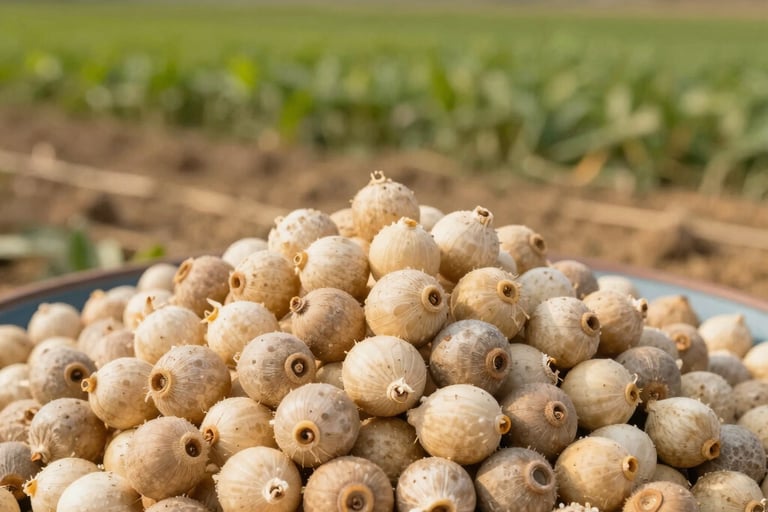
Chironji (Buchanania lanzan)
A tropical dry fruit crop grown for edible seeds (chironji/charoli); widely used in sweets, desserts, and health products.
एक उष्णकटिबंधीय ड्राई फ्रूट फसल, जिसका उपयोग खाने योग्य बीज (चिरौंजी/चारोली) के लिए किया जाता है; मिठाई, डेज़र्ट और स्वास्थ्य उत्पादों में व्यापक उपयोग।
🌦️ Climate
Thrives in tropical climates with temperatures between 20–35°C; tolerates dry conditions.
20–35°C तापमान वाले उष्णकटिबंधीय क्षेत्रों में अच्छी उगती है; शुष्क परिस्थितियाँ सहनशील।
🌱 Soil
Prefers well-drained sandy loam to light soils with pH 5–7.5.
अच्छी जल निकासी वाली बलुई दोमट से हल्की मिट्टी (pH 5–7.5) उपयुक्त।
🌾 Varieties
Mostly wild and local varieties; improved selections under development.
अधिकतर जंगली और स्थानीय किस्में; उन्नत किस्मों का विकास जारी।
📅 Planting Time
June–July (monsoon season).
जून–जुलाई (वर्षा ऋतु)।
🌰 Harvesting
Harvest begins after 4–5 years; full yield at 8–10 years.
4–5 साल में कटाई शुरू; 8–10 साल में पूर्ण उत्पादन।
💧 Irrigation
Low irrigation required; drought-tolerant tree.
कम सिंचाई आवश्यक; सूखा सहनशील पेड़।
🧪 Fertilizers
Use organic manure; minimal NPK required.
जैविक खाद का उपयोग; NPK की कम आवश्यकता।
🐛 Pest & Disease Control
Common pests: Borers, leaf-eating insects. Diseases: Leaf spot, root rot.
मुख्य कीट: बोरर, पत्ती खाने वाले कीट। रोग: पत्ती धब्बा, जड़ सड़न।
Recommended pesticides / fungicides:
Neem Oil 1500 ppm – for pests
Copper Oxychloride – for fungal diseases
उपयोगी दवाइयाँ:
नीम ऑयल – कीट नियंत्रण
कॉपर ऑक्सी क्लोराइड – फंगल रोग नियंत्रण
💰 Investment
₹50,000–₹1,50,000 per acre (initial years).
₹50,000–₹1,50,000 प्रति एकड़ (प्रारंभिक वर्षों में)।
📊 Yield
500–1000 kg seeds per hectare after maturity (8–10 years).
परिपक्व होने के बाद प्रति हेक्टेयर 500–1000 किलोग्राम बीज (8–10 साल में)।
💵 Profit
₹2,00,000–₹5,00,000 per hectare per year.
₹2,00,000–₹5,00,000 प्रति हेक्टेयर प्रति वर्ष।
🏷️ Market
High demand in sweet industry and dry fruit markets; premium priced product.
मिठाई उद्योग और ड्राई फ्रूट बाजार में उच्च मांग; प्रीमियम मूल्य उत्पाद।
⚠️ Risks
Slow growth, dependence on wild collection, pest attacks.
धीमी वृद्धि, जंगली संग्रह पर निर्भरता, कीट आक्रमण।
🌍 Best Chironji Growing Regions in India
🌍 भारत में चिरौंजी के प्रमुख क्षेत्र
🟢 Central India (Madhya Pradesh, Chhattisgarh) ⭐
Ideal for natural and commercial cultivation.
प्राकृतिक और व्यावसायिक खेती के लिए आदर्श।
Local Wild Varieties ⭐
🟡 West India (Maharashtra, Rajasthan)
Suitable under dryland conditions.
शुष्क क्षेत्रों में उपयुक्त।
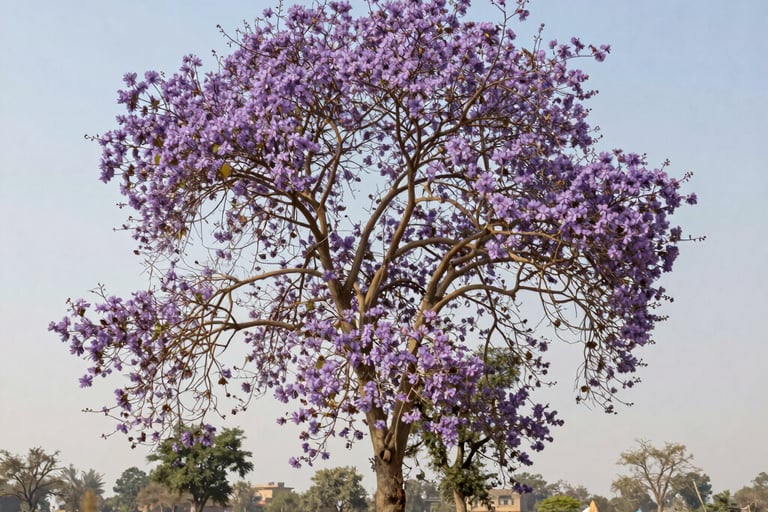
Vanilla (Vanilla planifolia)
A high-value tropical spice crop grown for aromatic vanilla beans; widely used in food, beverages, cosmetics, and pharmaceuticals.
एक उच्च मूल्य वाली उष्णकटिबंधीय मसाला फसल, जिसका उपयोग सुगंधित वनीला बीन्स के लिए किया जाता है; खाद्य, पेय, कॉस्मेटिक और औषधीय उत्पादों में व्यापक उपयोग।
🌦️ Climate
Thrives in warm humid climates with temperatures between 20–30°C and high humidity (70–80%).
20–30°C तापमान और 70–80% आर्द्रता वाले गर्म और नम क्षेत्रों में अच्छी उगती है।
🌱 Soil
Prefers well-drained, organic-rich loamy soils with pH 6–7.
अच्छी जल निकासी वाली, जैविक पदार्थों से समृद्ध दोमट मिट्टी (pH 6–7) उपयुक्त।
🌾 Varieties
Major variety: Bourbon Vanilla (commercial type).
मुख्य किस्म: बोरबॉन वनीला (व्यावसायिक प्रकार)।
📅 Planting Time
June–September (monsoon season with shade support).
जून–सितंबर (छाया के साथ वर्षा ऋतु में)।
🌰 Harvesting
Harvest begins after 2–3 years; beans are hand-pollinated and cured for processing.
2–3 साल में कटाई शुरू; बीन्स का हाथ से परागण और प्रोसेसिंग (क्योरिंग) की जाती है।
💧 Irrigation
Requires regular moisture; avoid waterlogging; drip irrigation preferred.
नियमित नमी आवश्यक; जलभराव से बचें; ड्रिप सिंचाई उपयुक्त।
🧪 Fertilizers
Use organic manure (FYM, compost); minimal chemical fertilizers required.
जैविक खाद (गोबर, कम्पोस्ट) का उपयोग; रासायनिक उर्वरक कम आवश्यक।
🐛 Pest & Disease Control
Common pests: Beetles, caterpillars. Diseases: Root rot, stem rot, leaf spot.
मुख्य कीट: बीटल, कैटरपिलर। रोग: जड़ सड़न, तना सड़न, पत्ती धब्बा।
Recommended pesticides / fungicides:
Neem Oil 1500 ppm – for pests
Copper Oxychloride – for fungal diseases
उपयोगी दवाइयाँ:
नीम ऑयल – कीट नियंत्रण
कॉपर ऑक्सी क्लोराइड – फंगल रोग नियंत्रण
💰 Investment
₹3,00,000–₹6,00,000 per acre (including shade and support system).
₹3,00,000–₹6,00,000 प्रति एकड़ (छाया और सहारा प्रणाली सहित)।
📊 Yield
200–500 kg cured beans per hectare (high value crop).
प्रति हेक्टेयर 200–500 किलोग्राम क्योर की हुई बीन्स (उच्च मूल्य फसल)।
💵 Profit
₹5,00,000–₹15,00,000 per hectare per year (depending on market price).
प्रति हेक्टेयर ₹5,00,000–₹15,00,000 प्रति वर्ष (बाजार मूल्य पर निर्भर)।
🏷️ Market
Extremely high demand in global markets; one of the most expensive spices.
वैश्विक बाजार में अत्यधिक मांग; सबसे महंगे मसालों में से एक।
⚠️ Risks
Labor-intensive (hand pollination), sensitive to climate changes, price fluctuations.
श्रम-गहन (हाथ से परागण), जलवायु परिवर्तन के प्रति संवेदनशील, मूल्य में उतार-चढ़ाव।
🌍 Best Vanilla Growing Regions in India
🌍 भारत में वनीला के प्रमुख क्षेत्र
🟢 South India (Kerala, Karnataka, Tamil Nadu) ⭐
Ideal for vanilla cultivation due to humid climate.
नम जलवायु के कारण वनीला खेती के लिए आदर्श।
Bourbon Vanilla ⭐
🟡 North-East India (Assam, Meghalaya)
Suitable under shaded and humid conditions.
छायादार और आर्द्र परिस्थितियों में उपयुक्त।
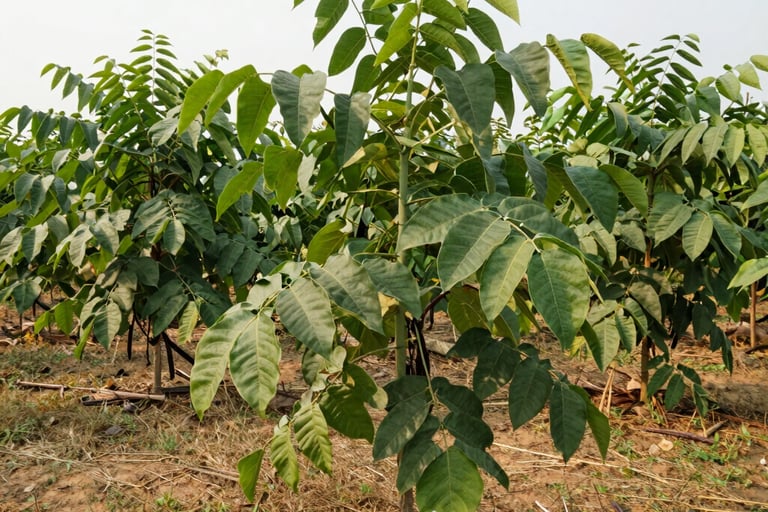
Tulsi (Ocimum sanctum / Ocimum tenuiflorum)
A medicinal and aromatic herb widely grown for its leaves; used in Ayurveda, herbal medicines, teas, and health products.
एक औषधीय और सुगंधित पौधा, जिसका उपयोग पत्तियों के लिए किया जाता है; आयुर्वेद, हर्बल दवाइयों, चाय और स्वास्थ्य उत्पादों में उपयोग।
🌦️ Climate
Thrives in warm tropical climates with temperatures between 20–35°C.
20–35°C तापमान वाले गर्म उष्णकटिबंधीय क्षेत्रों में अच्छी उगती है।
🌱 Soil
Prefers well-drained loamy soils with pH 5.5–7.5.
अच्छी जल निकासी वाली दोमट मिट्टी (pH 5.5–7.5) उपयुक्त।
🌾 Varieties
Popular varieties include Rama Tulsi, Krishna Tulsi, and Vana Tulsi.
लोकप्रिय किस्में: राम तुलसी, कृष्ण तुलसी और वन तुलसी।
📅 Planting Time
June–July (monsoon season) and February–March (irrigated areas).
जून–जुलाई (वर्षा ऋतु) और फरवरी–मार्च (सिंचित क्षेत्रों में)।
🌰 Harvesting
First harvest after 60–90 days; multiple cuttings possible in a year.
पहली कटाई 60–90 दिनों में; साल में कई बार कटाई संभव।
💧 Irrigation
Moderate irrigation required; avoid waterlogging.
मध्यम सिंचाई आवश्यक; जलभराव से बचें।
🧪 Fertilizers
Use organic manure (FYM, compost); limited NPK required.
जैविक खाद (गोबर, कम्पोस्ट) का उपयोग; NPK की कम आवश्यकता।
🐛 Pest & Disease Control
Common pests: Aphids, whiteflies. Diseases: Leaf spot, powdery mildew.
मुख्य कीट: एफिड्स, व्हाइटफ्लाई। रोग: पत्ती धब्बा, पाउडरी मिल्ड्यू।
Recommended pesticides / fungicides:
Neem Oil 1500 ppm – for pests
Sulphur 80% WP – for fungal diseases
उपयोगी दवाइयाँ:
नीम ऑयल – कीट नियंत्रण
सल्फर – फंगल रोग नियंत्रण
💰 Investment
₹20,000–₹50,000 per acre.
₹20,000–₹50,000 प्रति एकड़।
📊 Yield
10–15 tons green leaves per hectare annually.
प्रति हेक्टेयर 10–15 टन हरी पत्तियां (वार्षिक)।
💵 Profit
₹1,00,000–₹3,00,000 per hectare per year.
₹1,00,000–₹3,00,000 प्रति हेक्टेयर प्रति वर्ष।
🏷️ Market
High demand in herbal, Ayurvedic, and pharmaceutical industries.
हर्बल, आयुर्वेद और औषधीय उद्योगों में उच्च मांग।
⚠️ Risks
Sensitive to frost, excessive moisture, and pest attacks.
पाले, अधिक नमी और कीट आक्रमण के प्रति संवेदनशील।
🌍 Best Tulsi Growing Regions in India
🌍 भारत में तुलसी के प्रमुख क्षेत्र
🟢 North & Central India (Uttar Pradesh, Madhya Pradesh) ⭐
Ideal for medicinal cultivation.
औषधीय खेती के लिए आदर्श।
Rama Tulsi ⭐
Krishna Tulsi
🟡 South India (Karnataka, Tamil Nadu)
Suitable under warm tropical conditions.
गर्म उष्णकटिबंधीय परिस्थितियों में उपयुक्त।
Vana Tulsi ⭐
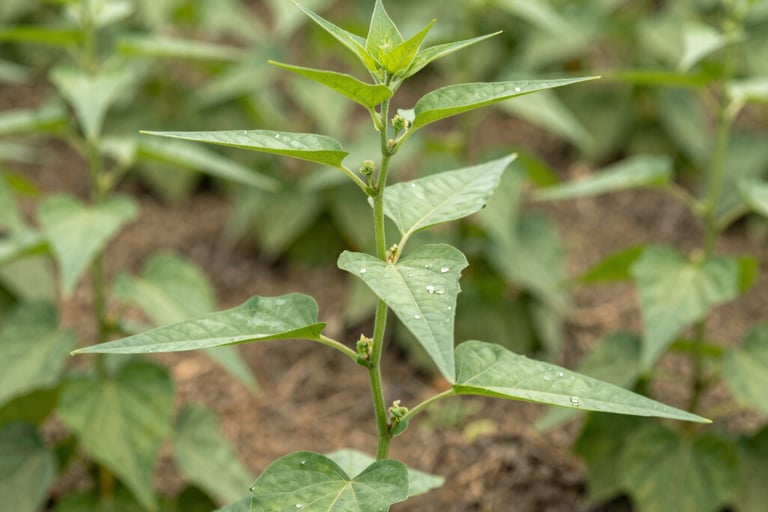
Hibiscus (Hibiscus rosa-sinensis / Hibiscus sabdariffa)
A flowering and medicinal crop grown for its flowers; widely used in herbal teas, cosmetics, medicines, and food products.
एक पुष्पीय और औषधीय फसल, जिसका उपयोग फूलों के लिए किया जाता है; हर्बल चाय, कॉस्मेटिक, दवाइयों और खाद्य उत्पादों में उपयोग।
🌦️ Climate
Thrives in warm tropical and subtropical climates with temperatures between 20–35°C.
20–35°C तापमान वाले उष्णकटिबंधीय और उपउष्णकटिबंधीय क्षेत्रों में अच्छी उगती है।
🌱 Soil
Prefers well-drained loamy soils rich in organic matter with pH 6–7.5.
जैविक पदार्थों से समृद्ध, अच्छी जल निकासी वाली दोमट मिट्टी (pH 6–7.5) उपयुक्त।
🌾 Varieties
Popular varieties include Red Hibiscus, White Hibiscus, and Roselle (for tea).
लोकप्रिय किस्में: लाल गुड़हल, सफेद गुड़हल और रोज़ेल (चाय के लिए)।
📅 Planting Time
June–July (monsoon season) and February–March (irrigated areas).
जून–जुलाई (वर्षा ऋतु) और फरवरी–मार्च (सिंचित क्षेत्रों में)।
🌰 Harvesting
Harvest begins after 4–6 months; continuous flowering allows multiple harvests.
4–6 महीनों में कटाई शुरू; लगातार फूल आने से कई बार कटाई संभव।
💧 Irrigation
Moderate irrigation required; avoid waterlogging.
मध्यम सिंचाई आवश्यक; जलभराव से बचें।
🧪 Fertilizers
Use organic manure (FYM, compost) + NPK for better flowering.
जैविक खाद (गोबर, कम्पोस्ट) + NPK का उपयोग बेहतर फूलों के लिए।
🐛 Pest & Disease Control
Common pests: Aphids, whiteflies, mites. Diseases: Leaf spot, powdery mildew.
मुख्य कीट: एफिड्स, व्हाइटफ्लाई, माइट। रोग: पत्ती धब्बा, पाउडरी मिल्ड्यू।
Recommended pesticides / fungicides:
Neem Oil 1500 ppm – for pests
Sulphur 80% WP – for fungal diseases
उपयोगी दवाइयाँ:
नीम ऑयल – कीट नियंत्रण
सल्फर – फंगल रोग नियंत्रण
💰 Investment
₹30,000–₹80,000 per acre.
₹30,000–₹80,000 प्रति एकड़।
📊 Yield
5–10 tons flowers per hectare annually.
प्रति हेक्टेयर 5–10 टन फूल (वार्षिक)।
💵 Profit
₹1,50,000–₹4,00,000 per hectare per year.
₹1,50,000–₹4,00,000 प्रति हेक्टेयर प्रति वर्ष।
🏷️ Market
High demand in herbal tea, cosmetic, and Ayurvedic industries.
हर्बल चाय, कॉस्मेटिक और आयुर्वेद उद्योग में उच्च मांग।
⚠️ Risks
Sensitive to frost, pest attacks, and excessive moisture.
पाले, कीट आक्रमण और अधिक नमी के प्रति संवेदनशील।
🌍 Best Hibiscus Growing Regions in India
🌍 भारत में गुड़हल के प्रमुख क्षेत्र
🟢 South India (Tamil Nadu, Kerala, Karnataka) ⭐
Ideal for commercial flower and medicinal use.
फूल और औषधीय उपयोग के लिए आदर्श।
Red Hibiscus ⭐
Roselle
🟡 North & Central India (Uttar Pradesh, Madhya Pradesh)
Suitable under warm conditions.
गर्म परिस्थितियों में उपयुक्त।
White Hibiscus ⭐