
Crop Details
Find practical information on various crops that are well-suited to your land and climate. Understanding the specific needs and characteristics of different crop varieties can help you optimize your agricultural practices and increase productivity.
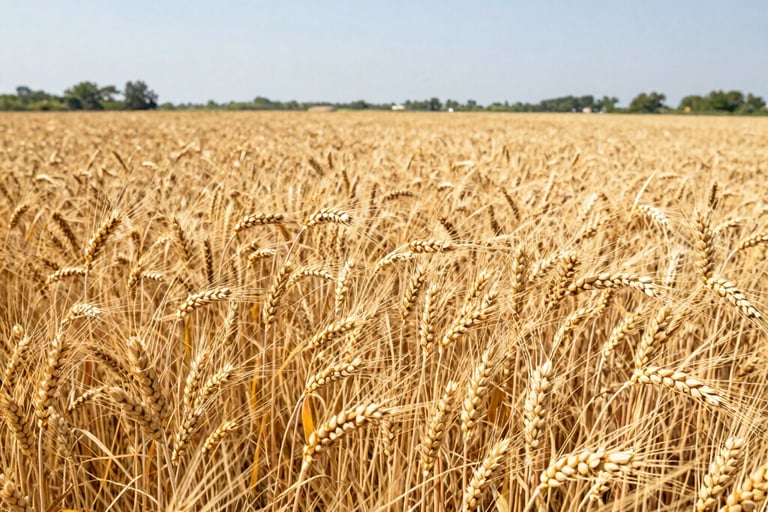
🌾 Wheat (Gehu)
A major rabi cereal crop widely grown in India, known for stable yield and strong government support.
भारत में उगाई जाने वाली एक प्रमुख रबी फसल, जो स्थिर उत्पादन और सरकारी समर्थन के लिए जानी जाती है।
🌦️ Climate
Grows best in cool weather with moderate rainfall.
यह ठंडे मौसम और मध्यम वर्षा में अच्छी तरह उगती है।
🌱 Soil
Prefers well-drained loamy or clay loam soil.
अच्छी जल निकासी वाली दोमट या चिकनी दोमट मिट्टी उपयुक्त होती है।
🌾 Seeds
Common varieties include HD-2967 and PBW-343.
सामान्य किस्मों में HD-2967 और PBW-343 शामिल हैं।
📅 Sowing Time
Sown between October and December.
अक्टूबर से दिसंबर के बीच बोई जाती है।
🌾 Harvesting
Ready from March to April.
मार्च से अप्रैल के बीच कटाई होती है।
💧 Irrigation
Requires 4–6 irrigations at key stages.
मुख्य चरणों पर 4–6 बार सिंचाई जरूरी है।
🧪 Fertilizers
Use NPK fertilizers and organic manure.
एनपीके उर्वरक और जैविक खाद का उपयोग करें।
🐛 Pest & Disease Control
Common pests: Aphids, termites. Diseases: Rust.
मुख्य कीट: माहू (Aphids), दीमक। रोग: रतुआ।
Recommended pesticides:
Imidacloprid 17.8% SL – for aphids
Chlorpyrifos 20% EC – for termites
Propiconazole 25% EC – for rust disease
उपयोगी दवाइयाँ:
इमिडाक्लोप्रिड – माहू नियंत्रण के लिए
क्लोरपाइरीफॉस – दीमक नियंत्रण के लिए
प्रोपिकोनाजोल – रतुआ रोग के लिए
💰 Investment
₹20,000–₹30,000 per acre.
₹20,000–₹30,000 प्रति एकड़।
📊 Yield
15–25 quintals per acre.
15–25 क्विंटल प्रति एकड़।
💵 Profit
₹15,000–₹40,000 per acre.
₹15,000–₹40,000 प्रति एकड़।
🏷️ MSP
Around ₹2200+ per quintal.
लगभग ₹2200+ प्रति क्विंटल।
⚠️ Risks
Heat stress, pests, unseasonal rain.
गर्मी का असर, कीट और असमय बारिश।
Best Wheat Seeds by Region (India)
🌾 क्षेत्र के अनुसार गेहूं की बेहतर किस्में
🟢 North India (Punjab, Haryana, UP)
Best for high yield and irrigated conditions.
सिंचित क्षेत्रों में अधिक उत्पादन के लिए उपयुक्त।
HD-2967
PBW-343
WH-1105
🟡 Central India (MP, Rajasthan)
Suitable for moderate rainfall and slightly dry conditions.
मध्यम वर्षा और हल्की शुष्क परिस्थितियों के लिए उपयुक्त।
Lok-1
HI-1544
GW-366
🔵 East India (Bihar, West Bengal)
Best for humid climate and fertile soil.
आर्द्र जलवायु और उपजाऊ मिट्टी के लिए उपयुक्त।
HD-2733
K-0307
DBW-39
🔴 South India (Maharashtra, Karnataka)
Suitable for warm regions and limited wheat farming.
गर्म क्षेत्रों और सीमित खेती के लिए उपयुक्त।
MACS-6222
UAS-304
NIAW-34
🟣 Hill Regions (Himachal, Uttarakhand)
Best for cooler climates and shorter growing season.
ठंडे क्षेत्रों और कम अवधि वाली फसल के लिए उपयुक्त।
VL-829
HS-375
HPW-42
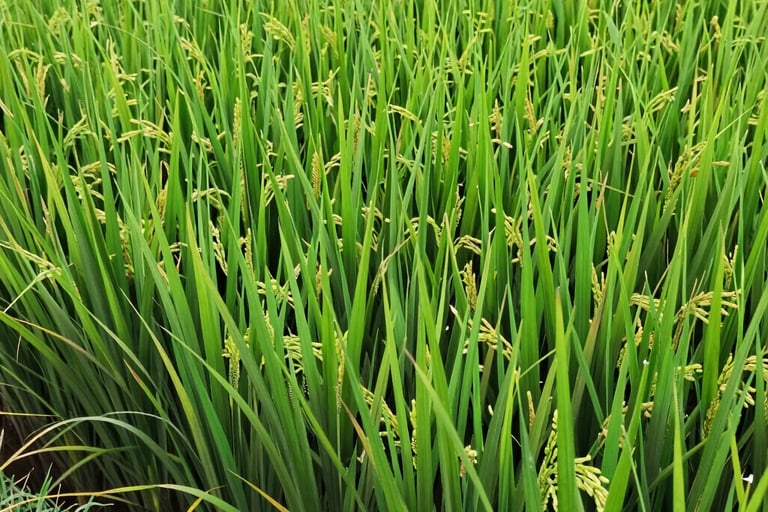
🌾 Rice (Paddy / Dhaan)
A major kharif crop grown widely in India, requiring high water and warm climate.
भारत की प्रमुख खरीफ फसल, जिसे अधिक पानी और गर्म जलवायु की आवश्यकता होती है।
🌦️ Climate
Grows best in hot and humid conditions (20–35°C).
यह गर्म और आर्द्र जलवायु (20–35°C) में अच्छी तरह उगती है।
🌱 Soil
Prefers clayey or loamy soil with good water retention.
अच्छी जल धारण क्षमता वाली चिकनी या दोमट मिट्टी उपयुक्त होती है।
🌾 Seeds
Popular varieties include IR-36, MTU-1010, and BPT-5204.
लोकप्रिय किस्मों में IR-36, MTU-1010 और BPT-5204 शामिल हैं।
📅 Sowing Time
Sown during June–July (monsoon season).
जून–जुलाई (मानसून) में बोई जाती है।
🌾 Harvesting
Ready for harvest in October–November.
अक्टूबर–नवंबर में कटाई होती है।
💧 Irrigation
Requires continuous water supply or flooded conditions.
लगातार पानी या भरी हुई खेत की आवश्यकता होती है।
🧪 Fertilizers
Nitrogen-rich fertilizers with NPK mix are used.
नाइट्रोजन युक्त उर्वरक और एनपीके का उपयोग किया जाता है।
🐛 Pest & Disease Control
Common pests: Stem borer, leaf folder. Diseases: Blast.
मुख्य कीट: तना छेदक, पत्ती मोड़क। रोग: ब्लास्ट।
Recommended pesticides:
Chlorantraniliprole 18.5% SC – for stem borer
Cartap Hydrochloride 50% SP – for leaf folder
Tricyclazole 75% WP – for blast disease
उपयोगी दवाइयाँ:
क्लोरान्ट्रानिलिप्रोल – तना छेदक नियंत्रण
कारटैप – पत्ती मोड़क नियंत्रण
ट्राइसाइक्लाजोल – ब्लास्ट रोग नियंत्रण
💰 Investment
₹25,000–₹40,000 per acre.
₹25,000–₹40,000 प्रति एकड़।
📊 Yield
20–30 quintals per acre.
20–30 क्विंटल प्रति एकड़।
💵 Profit
₹20,000–₹50,000 per acre.
₹20,000–₹50,000 प्रति एकड़।
🏷️ MSP
Around ₹2100+ per quintal (varies yearly).
लगभग ₹2100+ प्रति क्विंटल (हर साल बदलता है)।
⚠️ Risks
Flooding, pests, and disease outbreaks.
बाढ़, कीट और रोग का खतरा।
Best Rice Seeds by Region (India)
🌾 क्षेत्र के अनुसार धान की बेहतर किस्में
🟢 North India (Punjab, Haryana, Western UP)
Best for high-yield irrigated farming and hybrid cultivation.
सिंचित खेती और अधिक उत्पादन के लिए उपयुक्त।
Pusa Basmati 1121
PR-126
Pusa-44
🟡 Central India (MP, Chhattisgarh)
Suitable for both irrigated and rainfed conditions.
सिंचित और वर्षा आधारित दोनों परिस्थितियों के लिए उपयुक्त।
MTU-1010
IR-36
Mahamaya
🔵 East India (Bihar, West Bengal, Odisha)
Best for humid climate and flood-prone areas.
आर्द्र जलवायु और बाढ़ प्रभावित क्षेत्रों के लिए उपयुक्त।
Swarna
Sahbhagi Dhan
IR-64
🔴 South India (Tamil Nadu, Andhra Pradesh, Karnataka)
Suitable for multiple cropping seasons and warm climate.
गर्म जलवायु और कई फसल चक्रों के लिए उपयुक्त।
Ponni
BPT-5204 (Sona Masuri)
CO-51
🟣 Hill Regions (Uttarakhand, North-East India)
Best for short duration and cooler climates.
ठंडे क्षेत्रों और कम अवधि वाली खेती के लिए उपयुक्त।
VL Dhan-221
RCPL-1
Kalinga-3
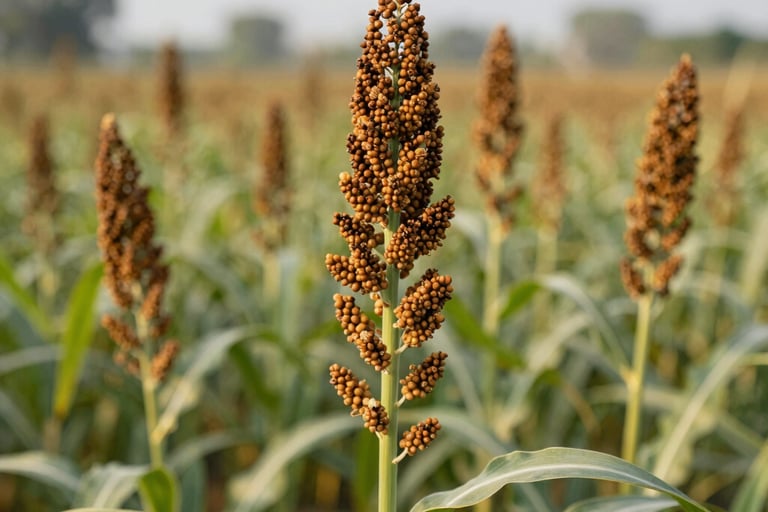
🌾 Jowar (Sorghum / Jwar)
A drought-resistant cereal crop widely grown in dry regions, used for food and fodder.
सूखा सहन करने वाली प्रमुख अनाज फसल, जिसे भोजन और पशु चारे दोनों के लिए उगाया जाता है।
🌦️ Climate
Grows well in warm climate (25–32°C) with low to moderate rainfall.
यह गर्म जलवायु (25–32°C) और कम से मध्यम वर्षा में अच्छी उगती है।
🌱 Soil
Suitable for well-drained sandy loam to black soil.
अच्छी जल निकासी वाली बलुई दोमट से काली मिट्टी उपयुक्त होती है।
🌾 Seeds
Popular varieties include CSV-15, CSV-23, and CSH-14 (hybrid).
लोकप्रिय किस्मों में CSV-15, CSV-23 और CSH-14 (हाइब्रिड) शामिल हैं।
📅 Sowing Time
Kharif: June–July | Rabi: September–October.
खरीफ: जून–जुलाई | रबी: सितंबर–अक्टूबर।
🌾 Harvesting
Ready in 100–120 days after sowing.
बुवाई के 100–120 दिनों में तैयार हो जाती है।
💧 Irrigation
Low water requirement; 2–3 irrigations if needed.
कम पानी की जरूरत; आवश्यकता अनुसार 2–3 सिंचाई।
🧪 Fertilizers
Moderate use of NPK fertilizers and organic manure.
मध्यम मात्रा में एनपीके उर्वरक और जैविक खाद का उपयोग करें।
🐛 Pest & Disease Control
Common pests: Shoot fly, stem borer. Diseases: Grain mold.
मुख्य कीट: शूट फ्लाई, तना छेदक। रोग: ग्रेन मोल्ड।
Recommended pesticides:
Cypermethrin 25% EC – for shoot fly
Chlorpyrifos 20% EC – for stem borer
Carbendazim 50% WP – for fungal diseases
उपयोगी दवाइयाँ:
साइपरमेथ्रिन – शूट फ्लाई नियंत्रण
क्लोरपाइरीफॉस – तना छेदक नियंत्रण
कार्बेन्डाजिम – फंगल रोग नियंत्रण
💰 Investment
₹15,000–₹25,000 per acre.
₹15,000–₹25,000 प्रति एकड़।
📊 Yield
8–15 quintals per acre.
8–15 क्विंटल प्रति एकड़।
💵 Profit
₹10,000–₹30,000 per acre.
₹10,000–₹30,000 प्रति एकड़।
🏷️ Market Price
₹2500–₹3000 per quintal (varies by region).
₹2500–₹3000 प्रति क्विंटल (क्षेत्र अनुसार बदलता है)।
⚠️ Risks
Drought stress, pest attack, and fungal diseases.
सूखा, कीट आक्रमण और फंगल रोग का खतरा।
Best Jowar Seeds by Region (India)
🌾 क्षेत्र के अनुसार ज्वार की बेहतर किस्में
🟢 North India (UP, Haryana, Rajasthan)
Best for dryland farming and dual-purpose (grain + fodder).
शुष्क क्षेत्रों और अनाज + चारा दोनों के लिए उपयुक्त।
CSV-15 ⭐
CSH-16
Pusa Chari-1
🟡 Central India (MP, Chhattisgarh)
Suitable for moderate rainfall and stable yield.
मध्यम वर्षा और स्थिर उत्पादन के लिए उपयुक्त।
CSV-20
CSV-29
SPV-462
🔵 West India (Maharashtra, Gujarat)
Best for drought-prone areas and black soil regions.
सूखा प्रभावित और काली मिट्टी वाले क्षेत्रों के लिए उपयुक्त।
M-35-1 (traditional strong variety)
CSV-29R
BGV-44 ⭐
🔴 South India (Karnataka, Tamil Nadu, Telangana)
Suitable for warm climate and hybrid cultivation.
गर्म जलवायु और हाइब्रिड खेती के लिए उपयुक्त।
CSH-14
K-11
CSH-16
🟣 Fodder Purpose (All India)
Best for high green fodder yield and livestock use.
अधिक हरे चारे और पशुपालन के लिए उपयुक्त।
CSH-20-MF
Pant Chari-5
Safed Moti
🌾 Bajra (Pearl Millet / Bajra)
A hardy, drought-resistant cereal crop ideal for dry and semi-arid regions, widely used for food and fodder.
सूखा सहन करने वाली मजबूत अनाज फसल, जो शुष्क और अर्ध-शुष्क क्षेत्रों में उगाई जाती है और भोजन व चारे दोनों के लिए उपयोगी है।
🌦️ Climate
Grows best in hot climate (25–35°C) with low rainfall.
यह गर्म जलवायु (25–35°C) और कम वर्षा में अच्छी उगती है।
🌱 Soil
Suitable for sandy to sandy loam soils with good drainage.
अच्छी जल निकासी वाली रेतीली या बलुई दोमट मिट्टी उपयुक्त होती है।
🌾 Seeds
Popular varieties include HHB-67, ICTP-8203, and RHB-121.
लोकप्रिय किस्मों में HHB-67, ICTP-8203 और RHB-121 शामिल हैं।
📅 Sowing Time
Sown during June–July (Kharif season).
जून–जुलाई (खरीफ) में बोई जाती है।
🌾 Harvesting
Ready in 75–90 days after sowing.
बुवाई के 75–90 दिनों में तैयार हो जाती है।
💧 Irrigation
Very low water requirement; mostly rainfed crop.
पानी की बहुत कम जरूरत; मुख्यतः वर्षा पर निर्भर।
🧪 Fertilizers
Light use of NPK fertilizers and organic manure.
कम मात्रा में एनपीके उर्वरक और जैविक खाद का उपयोग करें।
🐛 Pest & Disease Control
Common pests: Shoot fly, stem borer. Diseases: Downy mildew.
मुख्य कीट: शूट फ्लाई, तना छेदक। रोग: डाउनy मिल्ड्यू।
Recommended pesticides:
Imidacloprid 17.8% SL – for shoot fly
Chlorpyrifos 20% EC – for stem borer
Metalaxyl 35% WS – for downy mildew
उपयोगी दवाइयाँ:
इमिडाक्लोप्रिड – शूट फ्लाई नियंत्रण
क्लोरपाइरीफॉस – तना छेदक नियंत्रण
मेटालेक्सिल – डाउनy मिल्ड्यू रोग नियंत्रण
💰 Investment
₹12,000–₹20,000 per acre.
₹12,000–₹20,000 प्रति एकड़।
📊 Yield
8–12 quintals per acre.
8–12 क्विंटल प्रति एकड़।
💵 Profit
₹10,000–₹25,000 per acre.
₹10,000–₹25,000 प्रति एकड़।
🏷️ Market Price
₹2000–₹2500 per quintal (varies by region).
₹2000–₹2500 प्रति क्विंटल (क्षेत्र अनुसार बदलता है)।
⚠️ Risks
Drought, pest attack, and fungal diseases.
सूखा, कीट आक्रमण और फंगल रोग का खतरा।
Best Bajra Seeds by Region (India)
🌾 क्षेत्र के अनुसार बाजरा की बेहतर किस्में
🟢 North India (Rajasthan, Haryana, Western UP)
Best for dry and semi-arid regions with high heat tolerance.
शुष्क और अर्ध-शुष्क क्षेत्रों के लिए उपयुक्त।
HHB-67 ⭐ (early, drought resistant)
RHB-177
ICTP-8203
🟡 Central India (MP, Gujarat)
Suitable for moderate rainfall and stable production.
मध्यम वर्षा और स्थिर उत्पादन के लिए उपयुक्त।
ICTP-8203 ⭐
GFB-1
Raj Bajra Chari-2
🔵 West India (Rajasthan, Gujarat – Dry Zones)
Best for drought-prone areas and sandy soils.
सूखा प्रभावित और रेतीली मिट्टी के लिए उपयुक्त।
HHB-67
Sulkhaniya Bajra (traditional drought-tolerant)
RHB-121
🔴 South India (Karnataka, Tamil Nadu, Telangana)
Suitable for warm climate and hybrid farming.
गर्म जलवायु और हाइब्रिड खेती के लिए उपयुक्त।
CO-8
TNSC-1
APFB-2
🟣 Fodder Purpose (All India)
Best for high green fodder yield and livestock feeding.
अधिक हरे चारे और पशुपालन के लिए उपयुक्त।
Giant Bajra
Proagro Hybrid (FMH-3)
FBC-16
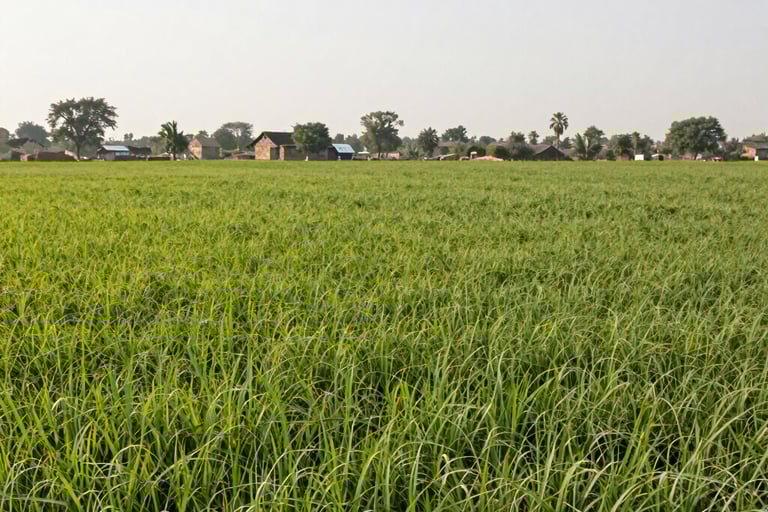
🍃 Tea (Chai)
A major plantation crop grown in hilly and high rainfall regions, widely used for beverage production.
उच्च वर्षा और पहाड़ी क्षेत्रों में उगाई जाने वाली प्रमुख बागान फसल, जिसका उपयोग पेय बनाने में होता है।
🌦️ Climate
Grows best in warm, humid climate (20–30°C) with high rainfall.
यह गर्म और आर्द्र जलवायु (20–30°C) तथा अधिक वर्षा में अच्छी उगती है।
🌱 Soil
Prefers acidic, well-drained soil rich in organic matter (pH 4.5–5.5).
अम्लीय, अच्छी जल निकासी वाली जैविक पदार्थ युक्त मिट्टी उपयुक्त होती है।
🌿 Planting Material (Clones)
Common tea clones include TV-1, TV-26, UPASI-9.
सामान्य चाय क्लोन में TV-1, TV-26, UPASI-9 शामिल हैं।
📅 Planting Time
Best planted during monsoon (June–September).
जून–सितंबर (मानसून) में रोपण उपयुक्त होता है।
🍃 Harvesting
Leaves are plucked multiple times in a year after maturity.
परिपक्व होने के बाद साल में कई बार पत्तियां तोड़ी जाती हैं।
💧 Irrigation
Requires regular moisture; irrigation needed in dry periods.
नियमित नमी आवश्यक; सूखे में सिंचाई जरूरी।
🧪 Fertilizers
High use of nitrogen fertilizers with organic compost.
नाइट्रोजन युक्त उर्वरक और जैविक खाद का उपयोग अधिक होता है।
🐛 Pest & Disease Control
Common pests: Tea mosquito bug, red spider mite. Diseases: Blister blight.
मुख्य कीट: टी मच्छर बग, रेड स्पाइडर माइट। रोग: ब्लिस्टर ब्लाइट।
Recommended pesticides:
Thiamethoxam 25% WG – for mosquito bug
Dicofol 18.5% EC – for mites
Copper Oxychloride 50% WP – for fungal diseases
उपयोगी दवाइयाँ:
थायमेथोक्साम – कीट नियंत्रण
डाइकोफोल – माइट नियंत्रण
कॉपर ऑक्सी क्लोराइड – फंगल रोग नियंत्रण
💰 Investment
₹1,00,000–₹2,00,000 per acre (initial high cost).
₹1,00,000–₹2,00,000 प्रति एकड़ (शुरुआती लागत अधिक)।
📊 Yield
1500–3000 kg made tea per acre annually (after maturity).
1500–3000 किग्रा चाय प्रति एकड़ (परिपक्व होने के बाद)।
💵 Profit
₹50,000–₹2,00,000 per acre (depends on quality & market).
₹50,000–₹2,00,000 प्रति एकड़ (गुणवत्ता और बाजार पर निर्भर)।
🏷️ Market
Market price varies widely based on quality and type.
कीमत गुणवत्ता और प्रकार के अनुसार बदलती है।
⚠️ Risks
Pests, heavy rainfall damage, labor cost.
कीट, अधिक वर्षा से नुकसान और श्रम लागत।
🌍 Best Tea Clones by Region (India)
🌍 क्षेत्र के अनुसार चाय के बेहतर क्लोन
🟢 North-East India (Assam, West Bengal – Darjeeling)
Best for high rainfall and premium tea production.
अधिक वर्षा और उच्च गुणवत्ता चाय के लिए उपयुक्त।
TV-1 ⭐
TV-26
TV-30
🟡 South India (Tamil Nadu, Kerala)
Suitable for year-round production and stable yield.
सालभर उत्पादन और स्थिर उपज के लिए उपयुक्त।
UPASI-9 ⭐
UPASI-3
UPASI-17
🔵 Hill Regions (Darjeeling, Nilgiris)
Best for high-quality aromatic tea.
उच्च गुणवत्ता और सुगंधित चाय के लिए उपयुक्त।
AV-2 ⭐
T-78
B-157
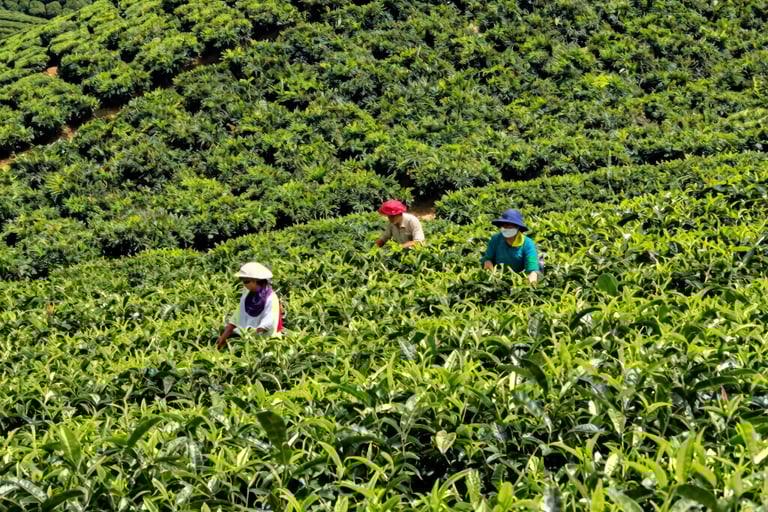
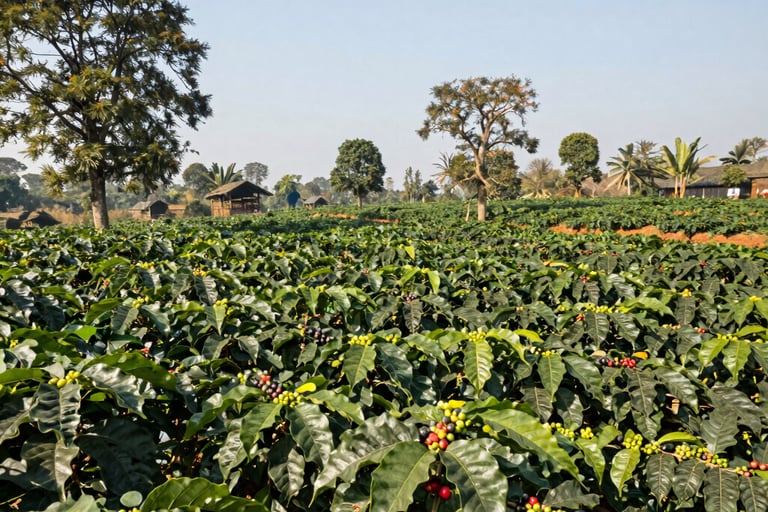
☕ Coffee (Kofi)
A major plantation crop grown in hilly regions, valued for its global demand and high market value.
पहाड़ी क्षेत्रों में उगाई जाने वाली प्रमुख बागान फसल, जिसकी वैश्विक मांग और बाजार मूल्य अधिक होता है।
🌦️ Climate
Grows best in cool to warm climate (15–28°C) with moderate rainfall and shade.
यह ठंडी से गर्म जलवायु (15–28°C) और मध्यम वर्षा व छाया में अच्छी उगती है।
🌱 Soil
Prefers well-drained, rich loamy soil with high organic matter.
अच्छी जल निकासी वाली जैविक पदार्थ युक्त दोमट मिट्टी उपयुक्त होती है।
🌿 Varieties
Main types: Arabica and Robusta coffee.
मुख्य प्रकार: अरेबिका और रोबस्टा कॉफी।
📅 Planting Time
Planted during monsoon (June–September).
जून–सितंबर (मानसून) में रोपण किया जाता है।
☕ Harvesting
Berries are harvested once a year after ripening.
फल पकने के बाद साल में एक बार तोड़े जाते हैं।
💧 Irrigation
Requires moderate irrigation during dry periods.
सूखे में मध्यम सिंचाई की आवश्यकता होती है।
🧪 Fertilizers
Uses organic manure and balanced NPK fertilizers.
जैविक खाद और संतुलित एनपीके उर्वरक का उपयोग होता है।
🐛 Pest & Disease Control
Common pests: Coffee berry borer, white stem borer. Diseases: Leaf rust.
मुख्य कीट: कॉफी बेरी बोरर, स्टेम बोरर। रोग: लीफ रस्ट।
Recommended pesticides:
Chlorpyrifos 20% EC – for stem borer
Imidacloprid 17.8% SL – for berry borer
Copper Oxychloride 50% WP – for leaf rust
उपयोगी दवाइयाँ:
क्लोरपाइरीफॉस – स्टेम बोरर नियंत्रण
इमिडाक्लोप्रिड – बेरी बोरर नियंत्रण
कॉपर ऑक्सी क्लोराइड – लीफ रस्ट नियंत्रण
💰 Investment
₹80,000–₹1,50,000 per acre (initial cost high).
₹80,000–₹1,50,000 प्रति एकड़ (शुरुआती लागत अधिक)।
📊 Yield
500–1000 kg beans per acre (varies by type).
500–1000 किग्रा प्रति एकड़ उत्पादन (प्रकार पर निर्भर)।
💵 Profit
₹40,000–₹1,50,000 per acre (depends on quality & price).
₹40,000–₹1,50,000 प्रति एकड़ (गुणवत्ता और कीमत पर निर्भर)।
🏷️ Market
Price depends on quality and global demand.
कीमत गुणवत्ता और वैश्विक मांग पर निर्भर करती है।
⚠️ Risks
Pests, climate sensitivity, price fluctuation.
कीट, जलवायु प्रभाव और कीमत में उतार-चढ़ाव।
🌍 Best Coffee Varieties by Region (India)
🌍 क्षेत्र के अनुसार कॉफी की बेहतर किस्में
🟢 South India (Karnataka, Kerala, Tamil Nadu)
Main coffee-growing region with ideal climate.
मुख्य कॉफी उत्पादन क्षेत्र, जहां जलवायु अनुकूल है।
Sln-795 (Arabica) ⭐
Cauvery (Catimor hybrid)
Robusta CxR
🟡 Hill Regions (Western Ghats)
Best for high-quality Arabica coffee.
उच्च गुणवत्ता अरेबिका कॉफी के लिए उपयुक्त।
Sln-9 ⭐
Sln-5B
Chandragiri
🔵 Robusta Growing Areas
Suitable for strong coffee and disease resistance.
मजबूत कॉफी और रोग प्रतिरोध के लिए उपयुक्त।
S.274
CxR Hybrid ⭐
Peridenia
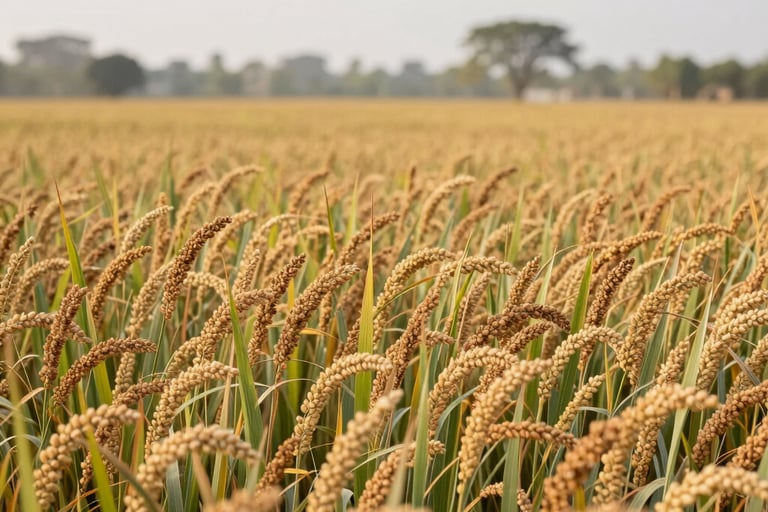
🌾 Ragi (Finger Millet / Nachni)
A nutritious millet crop known for high calcium content, widely grown in dry and hilly regions.
पोषक तत्वों से भरपूर मिलेट फसल, जो सूखे और पहाड़ी क्षेत्रों में उगाई जाती है।
🌦️ Climate
Grows well in warm climate (20–30°C) with moderate rainfall.
यह गर्म जलवायु (20–30°C) और मध्यम वर्षा में अच्छी उगती है।
🌱 Soil
Suitable for red loamy and well-drained soils.
लाल दोमट और अच्छी जल निकासी वाली मिट्टी उपयुक्त होती है।
🌾 Seeds
Popular varieties include GPU-28, GPU-67, and CO-15.
लोकप्रिय किस्मों में GPU-28, GPU-67 और CO-15 शामिल हैं।
📅 Sowing Time
Kharif: June–July | Rabi: September–October (region-based).
खरीफ: जून–जुलाई | रबी: सितंबर–अक्टूबर (क्षेत्र अनुसार)।
🌾 Harvesting
Ready in 100–120 days after sowing.
बुवाई के 100–120 दिनों में तैयार होती है।
💧 Irrigation
Low water requirement; mostly rainfed crop.
कम पानी की जरूरत; मुख्यतः वर्षा आधारित।
🧪 Fertilizers
Moderate NPK use with organic manure.
मध्यम मात्रा में एनपीके और जैविक खाद का उपयोग।
🐛 Pest & Disease Control
Common pests: Stem borer, aphids. Diseases: Blast.
मुख्य कीट: तना छेदक, माहू। रोग: ब्लास्ट।
Recommended pesticides:
Chlorpyrifos 20% EC – for stem borer
Imidacloprid 17.8% SL – for aphids
Tricyclazole 75% WP – for blast disease
उपयोगी दवाइयाँ:
क्लोरपाइरीफॉस – तना छेदक नियंत्रण
इमिडाक्लोप्रिड – माहू नियंत्रण
ट्राइसाइक्लाजोल – ब्लास्ट रोग नियंत्रण
💰 Investment
₹12,000–₹20,000 per acre.
₹12,000–₹20,000 प्रति एकड़।
📊 Yield
8–15 quintals per acre.
8–15 क्विंटल प्रति एकड़।
💵 Profit
₹10,000–₹30,000 per acre.
₹10,000–₹30,000 प्रति एकड़।
🏷️ Market Price
₹2500–₹3500 per quintal (varies).
₹2500–₹3500 प्रति क्विंटल (बदलता है)।
⚠️ Risks
Drought, pest attack, fungal diseases.
सूखा, कीट आक्रमण और फंगल रोग का खतरा।
🌍 Best Ragi Seeds by Region (India)
🌍 क्षेत्र के अनुसार रागी की बेहतर किस्में
🟢 South India (Karnataka, Tamil Nadu)
Main growing region with best yield potential.
मुख्य उत्पादन क्षेत्र, जहां उपज अधिक होती है।
GPU-28 ⭐
GPU-67
CO-15
🟡 Central India (Maharashtra, Chhattisgarh)
Suitable for moderate rainfall and dry areas.
मध्यम वर्षा और शुष्क क्षेत्रों के लिए उपयुक्त।
HR-911
VL Mandua-149
GPU-45
🔵 Hill Regions (Uttarakhand, Himachal)
Best for cooler climates and traditional farming.
ठंडे क्षेत्रों और पारंपरिक खेती के लिए उपयुक्त।
VL Mandua-352 ⭐
VL Mandua-315
PRM-1
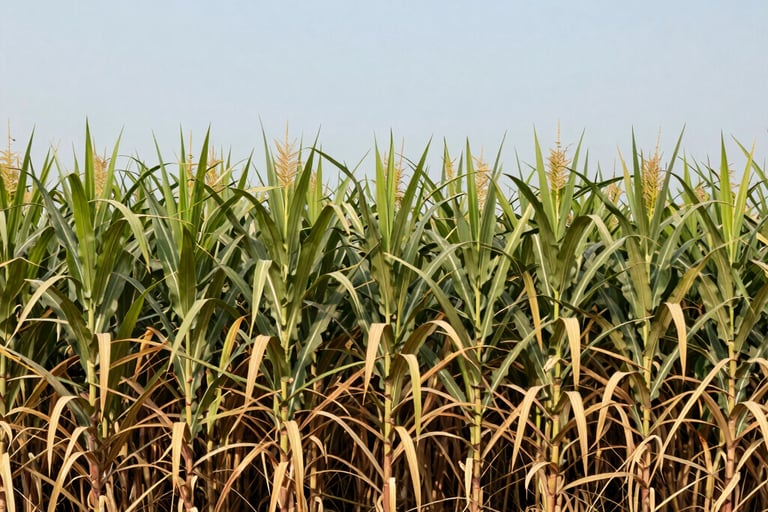
🌱 Sugarcane (Ganna)
A major cash crop used for sugar, jaggery, and ethanol production, requiring high water and long duration.
चीनी, गुड़ और एथेनॉल उत्पादन के लिए उगाई जाने वाली प्रमुख नकदी फसल, जिसे अधिक पानी और लंबी अवधि की आवश्यकता होती है।
🌦️ Climate
Grows best in warm climate (20–35°C) with good sunlight.
यह गर्म जलवायु (20–35°C) और अच्छी धूप में अच्छी उगती है।
🌱 Soil
Prefers deep, fertile, well-drained loamy soil.
गहरी, उपजाऊ और अच्छी जल निकासी वाली दोमट मिट्टी उपयुक्त होती है।
🌾 Varieties
Popular varieties include Co-86032, Co-0238, and Co-05011.
लोकप्रिय किस्मों में Co-86032, Co-0238 और Co-05011 शामिल हैं।
📅 Planting Time
Spring: Feb–March | Autumn: Sept–Oct.
बसंत: फरवरी–मार्च | शरद: सितंबर–अक्टूबर।
🌱 Harvesting
Ready in 10–12 months after planting.
रोपण के 10–12 महीनों में तैयार होती है।
💧 Irrigation
High water requirement; regular irrigation needed.
पानी की अधिक आवश्यकता; नियमित सिंचाई जरूरी।
🧪 Fertilizers
Heavy use of nitrogen, phosphorus, and potassium.
नाइट्रोजन, फॉस्फोरस और पोटाश का अधिक उपयोग।
🐛 Pest & Disease Control
Common pests: Early shoot borer, top borer. Diseases: Red rot.
मुख्य कीट: शूट बोरर, टॉप बोरर। रोग: रेड रॉट।
Recommended pesticides:
Chlorantraniliprole 18.5% SC – for borers
Carbofuran 3G – soil pest control
Carbendazim 50% WP – for red rot
उपयोगी दवाइयाँ:
क्लोरान्ट्रानिलिप्रोल – बोरर नियंत्रण
कार्बोफ्यूरान – मिट्टी के कीट नियंत्रण
कार्बेन्डाजिम – रेड रॉट रोग नियंत्रण
💰 Investment
₹50,000–₹80,000 per acre.
₹50,000–₹80,000 प्रति एकड़।
📊 Yield
30–40 tons per acre.
30–40 टन प्रति एकड़ उत्पादन।
💵 Profit
₹40,000–₹1,00,000 per acre.
₹40,000–₹1,00,000 प्रति एकड़ लाभ।
🏷️ Price
Based on State Advised Price (SAP).
राज्य निर्धारित मूल्य (SAP) पर निर्भर।
⚠️ Risks
Water shortage, pests, and disease.
पानी की कमी, कीट और रोग का खतरा।
🌍 Best Sugarcane Varieties by Region (India)
🌍 क्षेत्र के अनुसार गन्ने की बेहतर किस्में
🟢 North India (UP, Punjab, Haryana)
Best for high yield and early maturity.
अधिक उत्पादन और जल्दी पकने के लिए उपयुक्त।
Co-0238 ⭐
Co-0118
Co-05011
🟡 Central India (MP, Chhattisgarh)
Suitable for moderate climate and stable production.
मध्यम जलवायु और स्थिर उत्पादन के लिए उपयुक्त।
Co-86032 ⭐
Co-7219
Co-94012
🔵 West India (Maharashtra, Gujarat)
Best for high sugar recovery and drought tolerance.
उच्च शुगर रिकवरी और सूखा सहनशीलता के लिए उपयुक्त।
CoM-0265 ⭐
Co-86032
VSI-434
🔴 South India (Tamil Nadu, Karnataka, AP)
Suitable for long duration and high productivity.
लंबी अवधि और अधिक उत्पादन के लिए उपयुक्त।
Co-86032 ⭐
Co-62175
Co-740
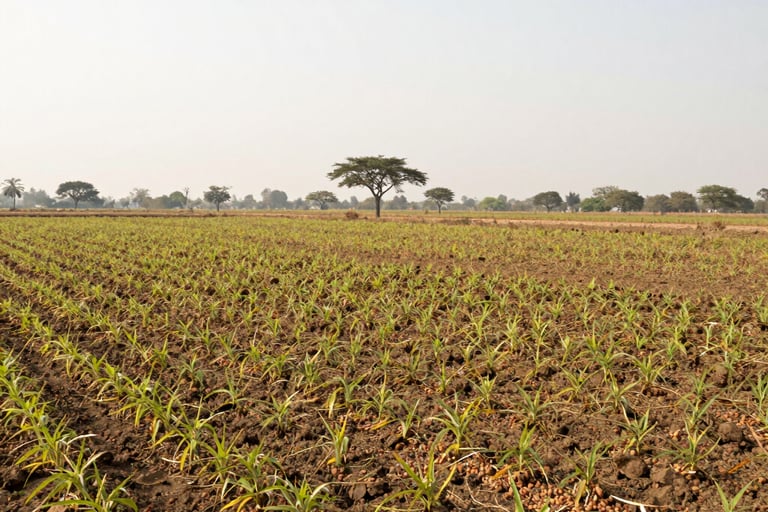
🥜Groundnut (Peanut / Moongfali)
An important oilseed crop widely grown for edible oil and protein-rich kernels.
खाद्य तेल और प्रोटीन युक्त दानों के लिए उगाई जाने वाली प्रमुख तिलहन फसल।
🌦️ Climate
Grows best in warm climate (25–35°C) with moderate rainfall.
यह गर्म जलवायु (25–35°C) और मध्यम वर्षा में अच्छी उगती है।
🌱 Soil
Prefers well-drained sandy loam soil.
अच्छी जल निकासी वाली बलुई दोमट मिट्टी उपयुक्त होती है।
🌾 Varieties
Popular varieties include JL-24, GG-20, and TAG-24.
लोकप्रिय किस्मों में JL-24, GG-20 और TAG-24 शामिल हैं।
📅 Sowing Time
Kharif: June–July | Rabi: Oct–Nov (region-based).
खरीफ: जून–जुलाई | रबी: अक्टूबर–नवंबर (क्षेत्र अनुसार)।
🌱 Harvesting
Ready in 100–120 days after sowing.
बुवाई के 100–120 दिनों में तैयार होती है।
💧 Irrigation
Moderate water requirement; avoid waterlogging.
मध्यम पानी की जरूरत; जलभराव से बचें।
🧪 Fertilizers
Use gypsum, calcium, and NPK fertilizers.
जिप्सम, कैल्शियम और एनपीके उर्वरक का उपयोग करें।
🐛 Pest & Disease Control
Common pests: Leaf miner, aphids. Diseases: Tikka disease.
मुख्य कीट: लीफ माइनर, माहू। रोग: टिक्का रोग।
Recommended pesticides:
Chlorpyrifos 20% EC – for soil pests
Imidacloprid 17.8% SL – for aphids
Mancozeb 75% WP – for fungal disease
उपयोगी दवाइयाँ:
क्लोरपाइरीफॉस – मिट्टी के कीट नियंत्रण
इमिडाक्लोप्रिड – माहू नियंत्रण
मैनकोजेब – टिक्का रोग नियंत्रण
💰 Investment
₹20,000–₹35,000 per acre.
₹20,000–₹35,000 प्रति एकड़।
📊 Yield
10–20 quintals per acre.
10–20 क्विंटल प्रति एकड़।
💵 Profit
₹20,000–₹50,000 per acre.
₹20,000–₹50,000 प्रति एकड़ लाभ।
🏷️ MSP
Around ₹5500+ per quintal (varies yearly).
लगभग ₹5500+ प्रति क्विंटल (हर साल बदलता है)।
⚠️ Risks
Waterlogging, pests, and fungal diseases.
जलभराव, कीट और फंगल रोग का खतरा।
🌍 Best Groundnut Varieties by Region (India)
🌍 क्षेत्र के अनुसार मूंगफली की बेहतर किस्में
🟢 West India (Gujarat, Maharashtra)
Main groundnut belt with high productivity.
मुख्य उत्पादन क्षेत्र, जहां उपज अधिक होती है।
GG-20 ⭐
GG-7
TG-37A
🟡 South India (AP, Tamil Nadu, Karnataka)
Suitable for both kharif and rabi seasons.
खरीफ और रबी दोनों मौसमों के लिए उपयुक्त।
TMV-2 ⭐
VRI-2
JL-24
🔵 Central India (MP, Rajasthan)
Best for moderate rainfall regions.
मध्यम वर्षा वाले क्षेत्रों के लिए उपयुक्त।
JL-24 ⭐
TAG-24
R-8808
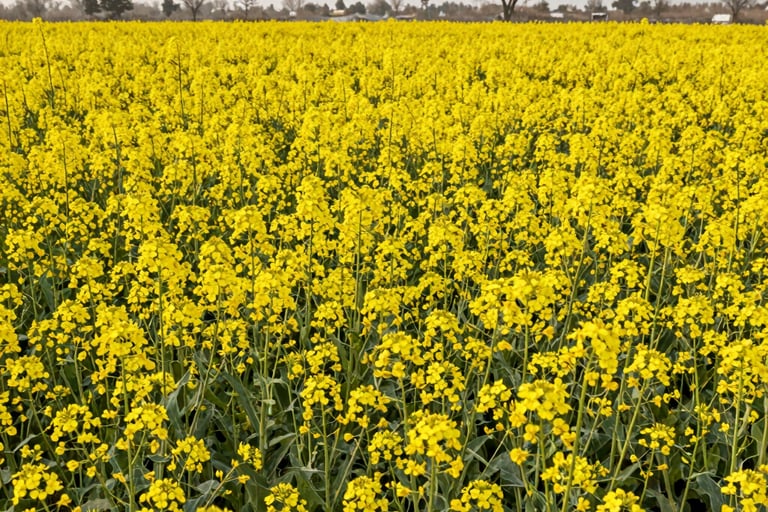
🌼 Mustard (Sarson / Rai)
An important rabi oilseed crop widely grown for edible oil and high market demand.
खाद्य तेल और उच्च बाजार मांग के लिए उगाई जाने वाली प्रमुख रबी तिलहन फसल।
🌦️ Climate
Grows best in cool climate (10–25°C) with low to moderate rainfall.
यह ठंडी जलवायु (10–25°C) और कम से मध्यम वर्षा में अच्छी उगती है।
🌱 Soil
Prefers well-drained loamy soil.
अच्छी जल निकासी वाली दोमट मिट्टी उपयुक्त होती है।
🌾 Varieties
Popular varieties include Pusa Bold, Varuna, and RH-30.
लोकप्रिय किस्मों में पूसा बोल्ड, वरुणा और RH-30 शामिल हैं।
📅 Sowing Time
Sown during October–November (Rabi season).
अक्टूबर–नवंबर (रबी) में बोई जाती है।
🌼 Harvesting
Ready in 110–140 days after sowing.
बुवाई के 110–140 दिनों में तैयार होती है।
💧 Irrigation
Requires 2–3 irrigations; avoid waterlogging.
2–3 बार सिंचाई आवश्यक; जलभराव से बचें।
🧪 Fertilizers
Use NPK along with sulfur for better oil content.
एनपीके के साथ सल्फर का उपयोग करें, जिससे तेल की मात्रा बढ़ती है।
🐛 Pest & Disease Control
Common pests: Aphids, sawfly. Diseases: White rust.
मुख्य कीट: माहू, सॉफलाइ। रोग: व्हाइट रस्ट।
Recommended pesticides:
Imidacloprid 17.8% SL – for aphids
Chlorpyrifos 20% EC – for soil pests
Mancozeb 75% WP – for fungal diseases
उपयोगी दवाइयाँ:
इमिडाक्लोप्रिड – माहू नियंत्रण
क्लोरपाइरीफॉस – मिट्टी के कीट नियंत्रण
मैनकोजेब – फंगल रोग नियंत्रण
💰 Investment
₹15,000–₹25,000 per acre.
₹15,000–₹25,000 प्रति एकड़।
📊 Yield
8–15 quintals per acre.
8–15 क्विंटल प्रति एकड़।
💵 Profit
₹15,000–₹40,000 per acre.
₹15,000–₹40,000 प्रति एकड़ लाभ।
🏷️ MSP
Around ₹5500+ per quintal (varies yearly).
लगभग ₹5500+ प्रति क्विंटल (हर साल बदलता है)।
⚠️ Risks
Frost damage, pest attack, and disease.
पाला, कीट आक्रमण और रोग का खतरा।
🌍 Best Mustard Varieties by Region (India)
🌍 क्षेत्र के अनुसार सरसों की बेहतर किस्में
🟢 North India (Punjab, Haryana, UP)
Best for high yield and irrigated farming.
सिंचित खेती और अधिक उत्पादन के लिए उपयुक्त।
Pusa Bold ⭐
Varuna
RH-30
🟡 Central India (MP, Rajasthan)
Suitable for dry and semi-arid conditions.
शुष्क और अर्ध-शुष्क क्षेत्रों के लिए उपयुक्त।
Pusa Jai Kisan ⭐
Rohini
NRCHB-101
🔵 East India (Bihar, West Bengal)
Best for humid conditions and early maturity.
आर्द्र जलवायु और जल्दी पकने के लिए उपयुक्त।
Rajendra Sufalam ⭐
Pusa Mustard-21
B-9
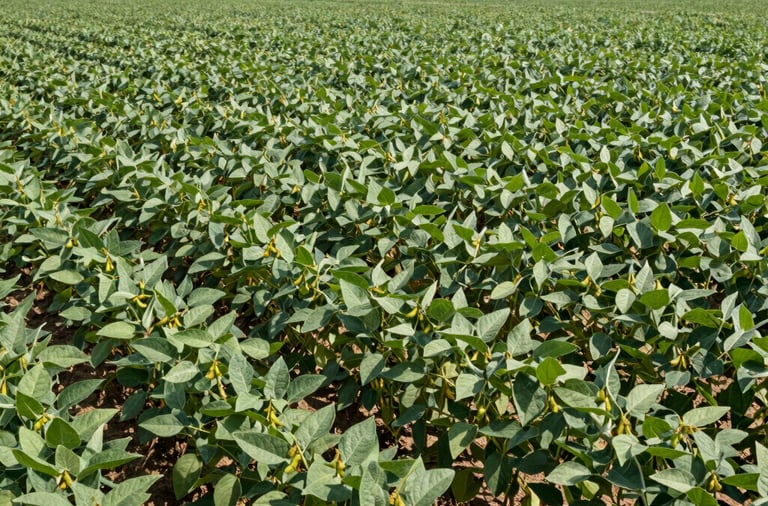
🌱 Soybean (Soyabean)
A major kharif oilseed crop rich in protein and oil, widely used in food and industry.
प्रोटीन और तेल से भरपूर प्रमुख खरीफ तिलहन फसल, जिसका उपयोग भोजन और उद्योग दोनों में होता है।
🌦️ Climate
Grows best in warm climate (20–30°C) with moderate rainfall.
यह गर्म जलवायु (20–30°C) और मध्यम वर्षा में अच्छी उगती है।
🌱 Soil
Prefers well-drained loamy soil with good fertility.
अच्छी उर्वरता वाली और जल निकासी वाली दोमट मिट्टी उपयुक्त होती है।
🌾 Varieties
Popular varieties include JS-335, JS-9305, and NRC-37.
लोकप्रिय किस्मों में JS-335, JS-9305 और NRC-37 शामिल हैं।
📅 Sowing Time
Sown during June–July (Kharif season).
जून–जुलाई (खरीफ) में बोई जाती है।
🌱 Harvesting
Ready in 90–110 days after sowing.
बुवाई के 90–110 दिनों में तैयार होती है।
💧 Irrigation
Mostly rainfed; needs 1–2 irrigations if rainfall is low.
मुख्यतः वर्षा आधारित; कम वर्षा होने पर 1–2 सिंचाई।
🧪 Fertilizers
Use NPK along with Rhizobium culture for better yield.
एनपीके के साथ राइजोबियम कल्चर का उपयोग करें।
🐛 Pest & Disease Control
Common pests: Girdle beetle, stem fly. Diseases: Rust, yellow mosaic.
मुख्य कीट: गर्डल बीटल, स्टेम फ्लाई। रोग: रस्ट, येलो मोज़ेक।
Recommended pesticides:
Thiamethoxam 25% WG – for sucking pests
Chlorpyrifos 20% EC – for soil pests
Hexaconazole 5% EC – for fungal diseases
उपयोगी दवाइयाँ:
थायमेथोक्साम – कीट नियंत्रण
क्लोरपाइरीफॉस – मिट्टी के कीट नियंत्रण
हेक्साकोनाजोल – फंगल रोग नियंत्रण
💰 Investment
₹20,000–₹30,000 per acre.
₹20,000–₹30,000 प्रति एकड़।
📊 Yield
10–20 quintals per acre.
10–20 क्विंटल प्रति एकड़।
💵 Profit
₹20,000–₹50,000 per acre.
₹20,000–₹50,000 प्रति एकड़ लाभ।
🏷️ MSP
Around ₹4600+ per quintal (varies yearly).
लगभग ₹4600+ प्रति क्विंटल (हर साल बदलता है)।
⚠️ Risks
Heavy rainfall damage, pests, and disease.
अधिक वर्षा, कीट और रोग का खतरा।
🌍 Best Soybean Varieties by Region (India)
🌍 क्षेत्र के अनुसार सोयाबीन की बेहतर किस्में
🟢 Central India (MP, Maharashtra)
Main soybean belt with highest production.
मुख्य उत्पादन क्षेत्र, जहां सबसे अधिक उत्पादन होता है।
JS-335 ⭐
JS-9305
NRC-37
🟡 North India (Rajasthan, UP)
Suitable for moderate rainfall and stable yield.
मध्यम वर्षा और स्थिर उत्पादन के लिए उपयुक्त।
RVS-2001 ⭐
JS-9560
PK-472
🔵 East India (Chhattisgarh, parts of Bihar)
Suitable for emerging soybean cultivation.
उभरते हुए सोयाबीन उत्पादन क्षेत्रों के लिए उपयुक्त।
JS-20-29 ⭐
NRC-86
MAUS-71
🌱 Sesamum (Til / Sesame)
An important oilseed crop known for high oil content and drought tolerance.
उच्च तेल सामग्री और सूखा सहनशीलता के लिए जानी जाने वाली प्रमुख तिलहन फसल।
🌦️ Climate
Grows best in warm climate (25–35°C) with low to moderate rainfall.
यह गर्म जलवायु (25–35°C) और कम से मध्यम वर्षा में अच्छी उगती है।
🌱 Soil
Prefers well-drained sandy loam soil.
अच्छी जल निकासी वाली बलुई दोमट मिट्टी उपयुक्त होती है।
🌾 Varieties
Popular varieties include T-65, RT-46, and GT-3.
लोकप्रिय किस्मों में T-65, RT-46 और GT-3 शामिल हैं।
📅 Sowing Time
Kharif: June–July | Summer: Jan–Feb (region-based).
खरीफ: जून–जुलाई | ग्रीष्म: जनवरी–फरवरी (क्षेत्र अनुसार)।
🌱 Harvesting
Ready in 80–100 days after sowing.
बुवाई के 80–100 दिनों में तैयार होती है।
💧 Irrigation
Low water requirement; avoid excess water.
कम पानी की जरूरत; अधिक पानी से बचें।
🧪 Fertilizers
Light use of NPK and organic manure.
कम मात्रा में एनपीके और जैविक खाद का उपयोग करें।
🐛 Pest & Disease Control
Common pests: Leaf roller, aphids. Diseases: Leaf spot, wilt.
मुख्य कीट: लीफ रोलर, माहू। रोग: लीफ स्पॉट, विल्ट।
Recommended pesticides:
Imidacloprid 17.8% SL – for aphids
Cypermethrin 25% EC – for leaf pests
Mancozeb 75% WP – for fungal diseases
उपयोगी दवाइयाँ:
इमिडाक्लोप्रिड – माहू नियंत्रण
साइपरमेथ्रिन – कीट नियंत्रण
मैनकोजेब – फंगल रोग नियंत्रण
💰 Investment
₹10,000–₹20,000 per acre.
₹10,000–₹20,000 प्रति एकड़।
📊 Yield
4–8 quintals per acre.
4–8 क्विंटल प्रति एकड़।
💵 Profit
₹15,000–₹40,000 per acre.
₹15,000–₹40,000 प्रति एकड़ लाभ।
🏷️ Market Price
₹7000–₹9000 per quintal (varies).
₹7000–₹9000 प्रति क्विंटल (बदलता है)।
⚠️ Risks
Excess rain damage, pests, and diseases.
अधिक वर्षा, कीट और रोग का खतरा।
🌍 Best Sesamum Varieties by Region (India)
🌍 क्षेत्र के अनुसार तिल की बेहतर किस्में
🟢 North India (UP, Rajasthan)
Suitable for dry and semi-arid conditions.
शुष्क और अर्ध-शुष्क क्षेत्रों के लिए उपयुक्त।
T-65 ⭐
RT-46
Pragati
🟡 Central India (MP, Gujarat)
Best for moderate rainfall regions.
मध्यम वर्षा वाले क्षेत्रों के लिए उपयुक्त।
GT-3 ⭐
GT-10
JTS-8
🔵 South India (Tamil Nadu, Karnataka, AP)
Suitable for multiple seasons and stable yield.
कई मौसमों और स्थिर उत्पादन के लिए उपयुक्त।
TMV-7 ⭐
CO-1
SVPR-1
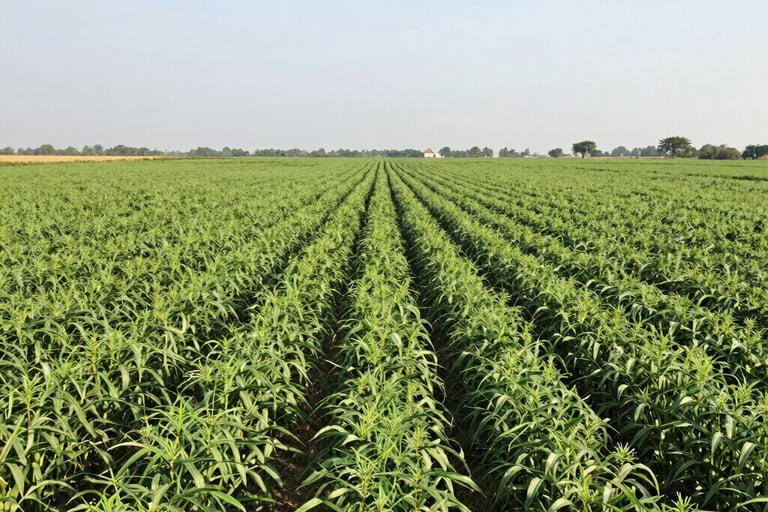
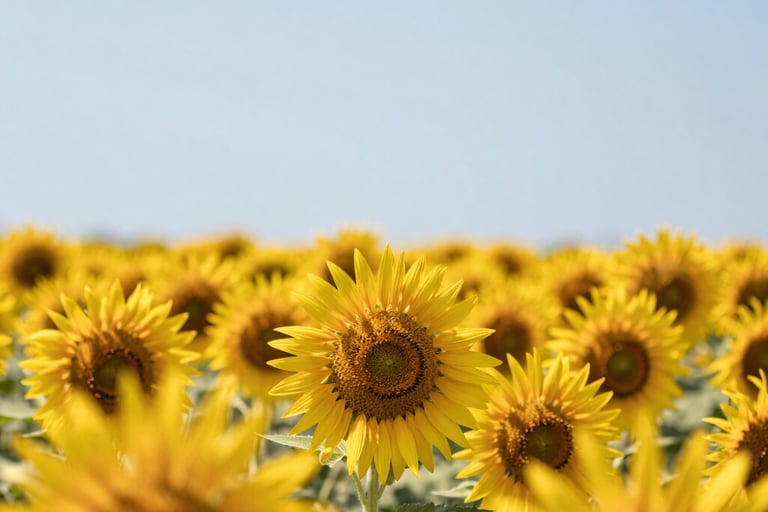
🌻 Sunflower (Surajmukhi)
An important oilseed crop known for high-quality edible oil and short duration.
उच्च गुणवत्ता वाले खाद्य तेल और कम अवधि के लिए जानी जाने वाली प्रमुख तिलहन फसल।
🌦️ Climate
Grows best in warm climate (20–30°C) with moderate rainfall.
यह गर्म जलवायु (20–30°C) और मध्यम वर्षा में अच्छी उगती है।
🌱 Soil
Prefers well-drained loamy to sandy loam soil.
अच्छी जल निकासी वाली दोमट या बलुई दोमट मिट्टी उपयुक्त होती है।
🌾 Varieties
Popular varieties include KBSH-44, KBSH-53, and Morden.
लोकप्रिय किस्मों में KBSH-44, KBSH-53 और Morden शामिल हैं।
📅 Sowing Time
Kharif: June–July | Rabi: Oct–Nov | Summer: Jan–Feb.
खरीफ: जून–जुलाई | रबी: अक्टूबर–नवंबर | ग्रीष्म: जनवरी–फरवरी।
🌻 Harvesting
Ready in 80–100 days after sowing.
बुवाई के 80–100 दिनों में तैयार होती है।
💧 Irrigation
Moderate water requirement; avoid waterlogging.
मध्यम पानी की जरूरत; जलभराव से बचें।
🧪 Fertilizers
Use balanced NPK with sulfur for better oil content.
एनपीके के साथ सल्फर का उपयोग करें, जिससे तेल की मात्रा बढ़ती है।
🐛 Pest & Disease Control
Common pests: Head borer, aphids. Diseases: Alternaria blight.
मुख्य कीट: हेड बोरर, माहू। रोग: अल्टरनेरिया ब्लाइट।
Recommended pesticides:
Spinosad 45% SC – for head borer
Imidacloprid 17.8% SL – for aphids
Mancozeb 75% WP – for fungal diseases
उपयोगी दवाइयाँ:
स्पिनोसैड – हेड बोरर नियंत्रण
इमिडाक्लोप्रिड – माहू नियंत्रण
मैनकोजेब – फंगल रोग नियंत्रण
💰 Investment
₹15,000–₹30,000 per acre.
₹15,000–₹30,000 प्रति एकड़।
📊 Yield
8–15 quintals per acre.
8–15 क्विंटल प्रति एकड़।
💵 Profit
₹15,000–₹45,000 per acre.
₹15,000–₹45,000 प्रति एकड़ लाभ।
🏷️ Market Price
₹5000–₹7000 per quintal (varies).
₹5000–₹7000 प्रति क्विंटल (बदलता है)।
⚠️ Risks
Pest attack, rainfall issues, and disease.
कीट आक्रमण, वर्षा समस्या और रोग का खतरा।
🌍 Best Sunflower Varieties by Region (India)
🌍 क्षेत्र के अनुसार सूरजमुखी की बेहतर किस्में
🟢 South India (Karnataka, AP, Tamil Nadu)
Main sunflower growing region.
मुख्य उत्पादन क्षेत्र।
KBSH-44 ⭐
KBSH-53
RSFH-1
🟡 Central India (MP, Maharashtra)
Suitable for moderate climate and good yield.
मध्यम जलवायु और अच्छी उपज के लिए उपयुक्त।
Morden ⭐
MSFH-17
KBSH-1
🔵 North India (Punjab, Haryana)
Suitable for irrigated conditions.
सिंचित क्षेत्रों के लिए उपयुक्त।
PSH-996 ⭐
Surya
EC-68415

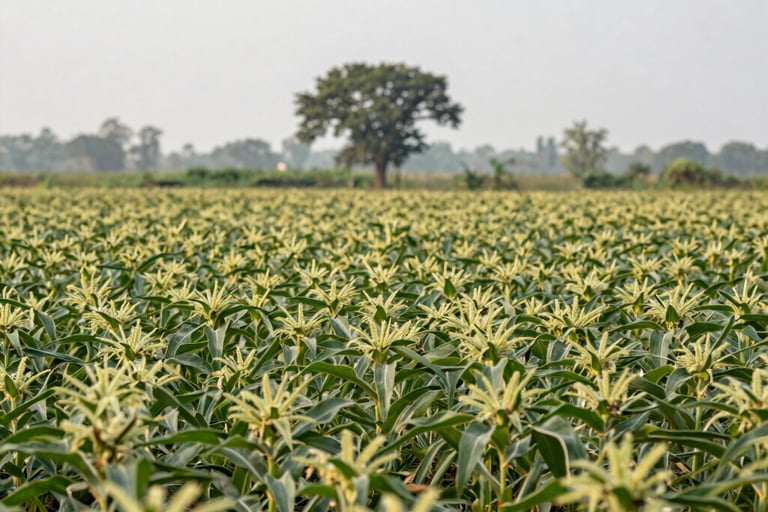
🌱 Castor (Arandi / Erandi)
An important oilseed crop grown for industrial oil used in medicines, cosmetics, and lubricants.
औषधि, कॉस्मेटिक्स और उद्योगों में उपयोग होने वाले तेल के लिए उगाई जाने वाली महत्वपूर्ण तिलहन फसल।
🌦️ Climate
Grows best in warm climate (20–30°C) with low to moderate rainfall.
यह गर्म जलवायु (20–30°C) और कम से मध्यम वर्षा में अच्छी उगती है।
🌱 Soil
Prefers well-drained sandy loam to black soil.
अच्छी जल निकासी वाली बलुई दोमट से काली मिट्टी उपयुक्त होती है।
🌾 Varieties
Popular varieties include GCH-7, GCH-5, and DCH-32.
लोकप्रिय किस्मों में GCH-7, GCH-5 और DCH-32 शामिल हैं।
📅 Sowing Time
Kharif: June–July | Some regions: Sept–Oct.
खरीफ: जून–जुलाई | कुछ क्षेत्रों में: सितंबर–अक्टूबर।
🌱 Harvesting
Ready in 120–180 days after sowing.
बुवाई के 120–180 दिनों में तैयार होती है।
💧 Irrigation
Low to moderate water requirement; drought tolerant.
कम से मध्यम पानी की आवश्यकता; सूखा सहनशील।
🧪 Fertilizers
Use NPK fertilizers with organic manure.
एनपीके उर्वरक और जैविक खाद का उपयोग करें।
🐛 Pest & Disease Control
Common pests: Capsule borer, semilooper. Diseases: Wilt.
मुख्य कीट: कैप्सूल बोरर, सेमीलूपर। रोग: विल्ट।
Recommended pesticides:
Spinosad 45% SC – for capsule borer
Chlorpyrifos 20% EC – for soil pests
Carbendazim 50% WP – for fungal diseases
उपयोगी दवाइयाँ:
स्पिनोसैड – कैप्सूल बोरर नियंत्रण
क्लोरपाइरीफॉस – मिट्टी के कीट नियंत्रण
कार्बेन्डाजिम – फंगल रोग नियंत्रण
💰 Investment
₹15,000–₹30,000 per acre.
₹15,000–₹30,000 प्रति एकड़।
📊 Yield
6–12 quintals per acre.
6–12 क्विंटल प्रति एकड़।
💵 Profit
₹20,000–₹60,000 per acre.
₹20,000–₹60,000 प्रति एकड़ लाभ।
🏷️ Market Price
₹6000–₹8000 per quintal (varies).
₹6000–₹8000 प्रति क्विंटल (बदलता है)।
⚠️ Risks
Pest attack, excess rain, and disease.
कीट आक्रमण, अधिक वर्षा और रोग का खतरा।
🌍 Best Castor Varieties by Region (India)
🌍 क्षेत्र के अनुसार अरंडी की बेहतर किस्में
🟢 West India (Gujarat, Rajasthan)
Main castor growing region with highest production.
मुख्य उत्पादन क्षेत्र, जहां सबसे अधिक उत्पादन होता है।
GCH-7 ⭐
GCH-5
GAUCH-1
🟡 South India (Karnataka, AP, Telangana)
Suitable for warm climate and hybrid cultivation.
गर्म जलवायु और हाइब्रिड खेती के लिए उपयुक्त।
DCH-32 ⭐
Kranthi
Jyothi
🔵 Central India (MP, Maharashtra)
Suitable for moderate rainfall areas.
मध्यम वर्षा वाले क्षेत्रों के लिए उपयुक्त।
Aruna ⭐
GCH-4
AKC-1
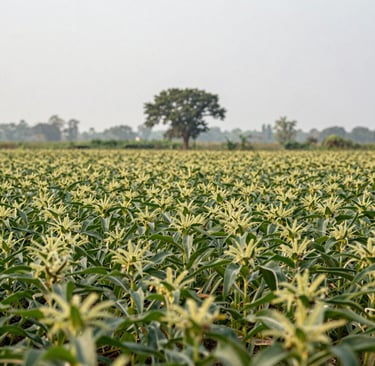
🌱 Linseed (Flaxseed / Alsi)
An important rabi oilseed crop grown for oil and fiber, rich in omega-3 fatty acids.
तेल और रेशा दोनों के लिए उगाई जाने वाली प्रमुख रबी तिलहन फसल, जिसमें ओमेगा-3 प्रचुर मात्रा में होता है।
🌦️ Climate
Grows best in cool climate (10–25°C) with low to moderate rainfall.
यह ठंडी जलवायु (10–25°C) और कम से मध्यम वर्षा में अच्छी उगती है।
🌱 Soil
Prefers well-drained loamy to clay loam soil.
अच्छी जल निकासी वाली दोमट से चिकनी दोमट मिट्टी उपयुक्त होती है।
🌾 Varieties
Popular varieties include T-397, JLS-66, and RLC-92.
लोकप्रिय किस्मों में T-397, JLS-66 और RLC-92 शामिल हैं।
📅 Sowing Time
Sown during October–November (Rabi season).
अक्टूबर–नवंबर (रबी) में बोई जाती है।
🌱 Harvesting
Ready in 120–140 days after sowing.
बुवाई के 120–140 दिनों में तैयार होती है।
💧 Irrigation
Low water requirement; 1–2 irrigations if needed.
कम पानी की जरूरत; आवश्यकता अनुसार 1–2 सिंचाई।
🧪 Fertilizers
Use balanced NPK with organic manure.
एनपीके और जैविक खाद का संतुलित उपयोग करें।
🐛 Pest & Disease Control
Common pests: Aphids, cutworms. Diseases: Rust, wilt.
मुख्य कीट: माहू, कटवर्म। रोग: रस्ट, विल्ट।
Recommended pesticides:
Imidacloprid 17.8% SL – for aphids
Chlorpyrifos 20% EC – for soil pests
Mancozeb 75% WP – for fungal diseases
उपयोगी दवाइयाँ:
इमिडाक्लोप्रिड – माहू नियंत्रण
क्लोरपाइरीफॉस – मिट्टी के कीट नियंत्रण
मैनकोजेब – फंगल रोग नियंत्रण
💰 Investment
₹12,000–₹20,000 per acre.
₹12,000–₹20,000 प्रति एकड़।
📊 Yield
6–10 quintals per acre.
6–10 क्विंटल प्रति एकड़।
💵 Profit
₹15,000–₹35,000 per acre.
₹15,000–₹35,000 प्रति एकड़ लाभ।
🏷️ Market Price
₹5000–₹7000 per quintal (varies).
₹5000–₹7000 प्रति क्विंटल (बदलता है)।
⚠️ Risks
Frost damage, pests, and disease.
पाला, कीट और रोग का खतरा।
🌍 Best Linseed Varieties by Region (India)
🌍 क्षेत्र के अनुसार अलसी की बेहतर किस्में
🟢 Central India (MP, Chhattisgarh)
Main linseed growing region with good yield.
मुख्य उत्पादन क्षेत्र, जहां अच्छी उपज होती है।
JLS-66 ⭐
T-397
Indira Alsi-32
🟡 North India (UP, Bihar)
Suitable for cool climate and rabi farming.
ठंडी जलवायु और रबी खेती के लिए उपयुक्त।
RLC-92 ⭐
Shekhar
Neelam
🔵 East India (Jharkhand, West Bengal)
Suitable for moderate climate regions.
मध्यम जलवायु वाले क्षेत्रों के लिए उपयुक्त।
Deepika ⭐
Shubhra
Hira
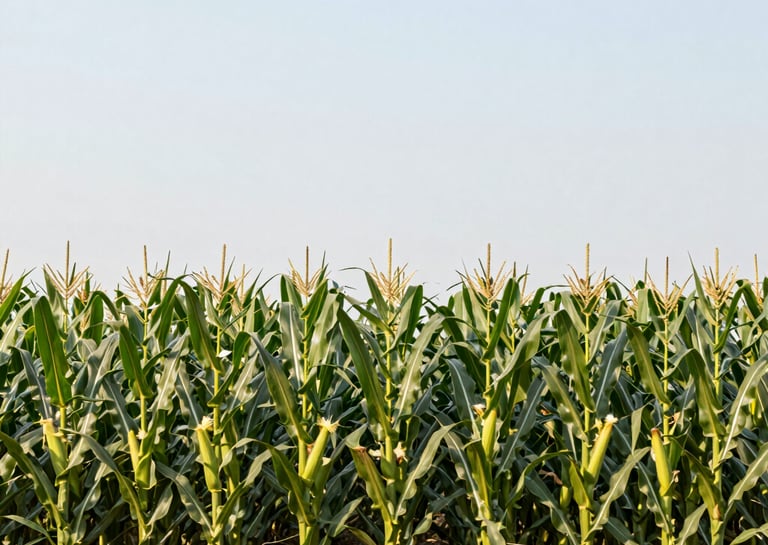
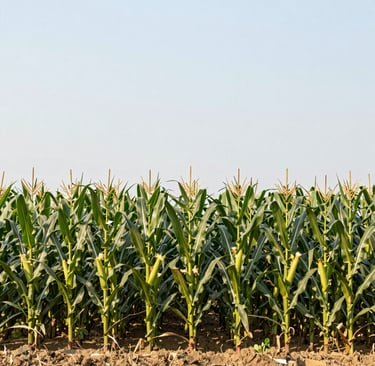
🌽 Maize (Makka / Corn)
A major cereal crop used for food, fodder, and industrial purposes with high yield potential.
भोजन, चारा और उद्योग में उपयोग होने वाली प्रमुख अनाज फसल, जिसकी उत्पादन क्षमता अधिक होती है।
🌦️ Climate
Grows best in warm climate (18–30°C) with moderate rainfall.
यह गर्म जलवायु (18–30°C) और मध्यम वर्षा में अच्छी उगती है।
🌱 Soil
Prefers well-drained loamy soil rich in organic matter.
जैविक पदार्थ युक्त और अच्छी जल निकासी वाली दोमट मिट्टी उपयुक्त होती है।
🌾 Varieties
Popular varieties include HQPM-1, DHM-117, and Ganga-5.
लोकप्रिय किस्मों में HQPM-1, DHM-117 और गंगा-5 शामिल हैं।
📅 Sowing Time
Kharif: June–July | Rabi: Oct–Nov | Summer: Jan–Feb.
खरीफ: जून–जुलाई | रबी: अक्टूबर–नवंबर | ग्रीष्म: जनवरी–फरवरी।
🌽 Harvesting
Ready in 90–110 days after sowing.
बुवाई के 90–110 दिनों में तैयार होती है।
💧 Irrigation
Moderate water requirement; critical stages need water.
मध्यम पानी की आवश्यकता; महत्वपूर्ण चरणों पर सिंचाई जरूरी।
🧪 Fertilizers
High nitrogen requirement with balanced NPK.
नाइट्रोजन की अधिक आवश्यकता; संतुलित एनपीके का उपयोग करें।
🐛 Pest & Disease Control
Common pests: Fall armyworm, stem borer. Diseases: Leaf blight.
मुख्य कीट: फॉल आर्मीवर्म, तना छेदक। रोग: लीफ ब्लाइट।
Recommended pesticides:
Emamectin Benzoate 5% SG – for armyworm
Chlorantraniliprole 18.5% SC – for borers
Mancozeb 75% WP – for fungal diseases
उपयोगी दवाइयाँ:
इमामेक्टिन बेंजोएट – आर्मीवर्म नियंत्रण
क्लोरान्ट्रानिलिप्रोल – तना छेदक नियंत्रण
मैनकोजेब – फंगल रोग नियंत्रण
💰 Investment
₹20,000–₹35,000 per acre.
₹20,000–₹35,000 प्रति एकड़।
📊 Yield
20–35 quintals per acre.
20–35 क्विंटल प्रति एकड़।
💵 Profit
₹20,000–₹60,000 per acre.
₹20,000–₹60,000 प्रति एकड़ लाभ।
🏷️ MSP
Around ₹2100+ per quintal (varies yearly).
लगभग ₹2100+ प्रति क्विंटल (हर साल बदलता है)।
⚠️ Risks
Pest attack (armyworm), drought, and disease.
कीट आक्रमण (आर्मीवर्म), सूखा और रोग का खतरा।
🌍 Best Maize Varieties by Region (India)
🌍 क्षेत्र के अनुसार मक्का की बेहतर किस्में
🟢 North India (Punjab, Haryana, UP)
Best for irrigated and high-yield farming.
सिंचित और अधिक उत्पादन के लिए उपयुक्त।
HQPM-1 ⭐
PMH-1
Ganga-5
🟡 Central India (MP, Chhattisgarh)
Suitable for moderate rainfall regions.
मध्यम वर्षा वाले क्षेत्रों के लिए उपयुक्त।
JM-216 ⭐
HQPM-5
Pratap Makka-3
🔵 South India (Karnataka, AP, Tamil Nadu)
Suitable for hybrid cultivation and multiple seasons.
हाइब्रिड खेती और कई मौसमों के लिए उपयुक्त।
DHM-117 ⭐
DHM-121
COH(M)-6
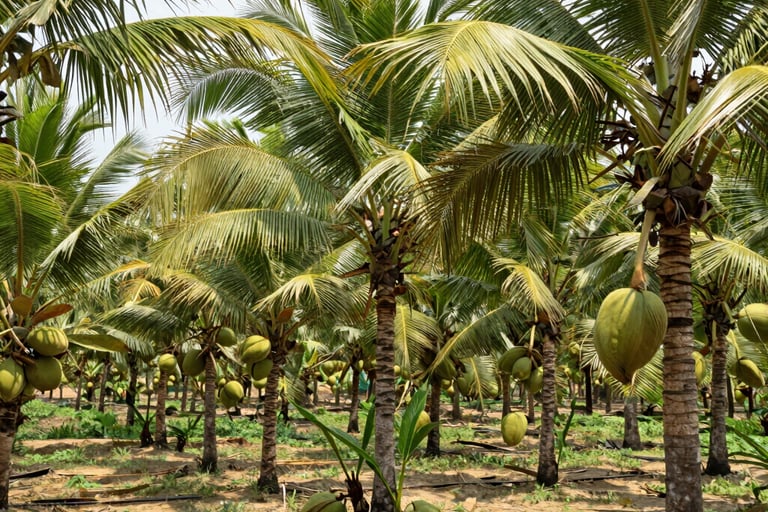
🥥 Coconut (Nariyal)
A major plantation crop grown in coastal regions, used for food, oil, and multiple industrial products.
तटीय क्षेत्रों में उगाई जाने वाली प्रमुख बागान फसल, जिसका उपयोग भोजन, तेल और विभिन्न उत्पादों में होता है।
🌦️ Climate
Grows best in warm and humid climate (20–32°C) with high rainfall.
यह गर्म और आर्द्र जलवायु (20–32°C) तथा अधिक वर्षा में अच्छी उगती है।
🌱 Soil
Prefers sandy, loamy, and coastal soils with good drainage.
रेतीली, दोमट और तटीय मिट्टी, जिसमें अच्छी जल निकासी हो, उपयुक्त होती है।
🌴 Varieties
Main types: Tall, Dwarf, and Hybrid coconuts.
मुख्य प्रकार: टॉल, ड्वार्फ और हाइब्रिड नारियल।
📅 Planting Time
Planted throughout the year (best during monsoon).
पूरे वर्ष रोपण संभव, लेकिन मानसून में सबसे अच्छा।
🥥 Harvesting
Starts yielding after 4–6 years; continues for decades.
4–6 वर्षों में उत्पादन शुरू होता है और कई वर्षों तक चलता है।
💧 Irrigation
Regular irrigation needed, especially in dry periods.
सूखे समय में नियमित सिंचाई आवश्यक।
🧪 Fertilizers
Use organic manure with NPK and micronutrients.
जैविक खाद के साथ एनपीके और सूक्ष्म पोषक तत्वों का उपयोग करें।
🐛 Pest & Disease Control
Common pests: Rhinoceros beetle, red palm weevil. Diseases: Root wilt.
मुख्य कीट: गैंडा भृंग, रेड पाम वीविल। रोग: रूट विल्ट।
Recommended pesticides:
Chlorpyrifos 20% EC – for beetles
Imidacloprid 17.8% SL – for sucking pests
Carbendazim 50% WP – for fungal diseases
उपयोगी दवाइयाँ:
क्लोरपाइरीफॉस – कीट नियंत्रण
इमिडाक्लोप्रिड – कीट नियंत्रण
कार्बेन्डाजिम – रोग नियंत्रण
💰 Investment
₹60,000–₹1,00,000 per acre (initial cost high).
₹60,000–₹1,00,000 प्रति एकड़ (शुरुआती लागत अधिक)।
📊 Yield
50–100 nuts per tree per year.
प्रति पेड़ 50–100 नारियल प्रति वर्ष।
💵 Profit
₹50,000–₹1,50,000 per acre (long-term income).
₹50,000–₹1,50,000 प्रति एकड़ (दीर्घकालीन आय)।
🏷️ Market
High demand for coconut, oil, and by-products.
नारियल, तेल और अन्य उत्पादों की मांग अधिक रहती है।
⚠️ Risks
Pests, cyclone damage, and water stress.
कीट, तूफान और पानी की कमी का खतरा।
🌍 Best Coconut Varieties by Region (India)
🌍 क्षेत्र के अनुसार नारियल की बेहतर किस्में
🟢 South India (Kerala, Tamil Nadu, Karnataka)
Main coconut growing region with ideal climate.
मुख्य उत्पादन क्षेत्र, जहां जलवायु सबसे अनुकूल है।
West Coast Tall ⭐
Chowghat Dwarf
Kerasree Hybrid
🟡 Coastal Regions (Goa, Andhra Coast, Odisha)
Best for coastal sandy soils.
तटीय रेतीली मिट्टी के लिए उपयुक्त।
East Coast Tall ⭐
Andaman Ordinary
Kalpa Raksha
🔵 High Yield Hybrid Varieties (All India)
Best for commercial farming and higher productivity.
व्यावसायिक खेती और अधिक उत्पादन के लिए उपयुक्त।
Chandra Laksha ⭐
Kalpa Sreshta
Kalpa Jyoti
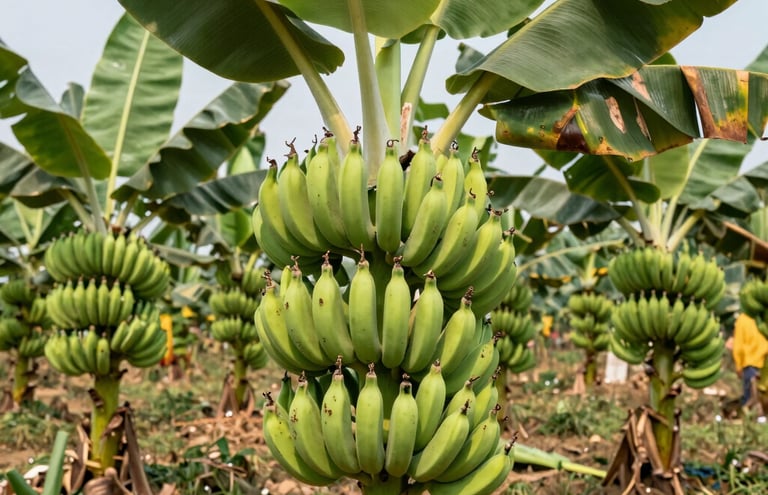
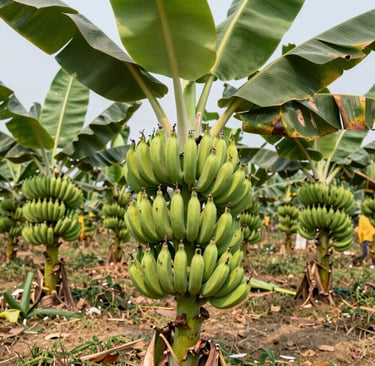
🍌 Banana (Kela)
A major fruit crop grown year-round, known for high yield and strong market demand.
सालभर उगाई जाने वाली प्रमुख फल फसल, जो अधिक उत्पादन और मजबूत बाजार मांग के लिए जानी जाती है।
🌦️ Climate
Grows best in warm climate (20–35°C) with high humidity.
यह गर्म जलवायु (20–35°C) और अधिक आर्द्रता में अच्छी उगती है।
🌱 Soil
Prefers well-drained fertile loamy soil rich in organic matter.
जैविक पदार्थ युक्त उपजाऊ और अच्छी जल निकासी वाली दोमट मिट्टी उपयुक्त होती है।
🌿 Varieties
Popular varieties include Grand Naine (G-9), Dwarf Cavendish, and Robusta.
लोकप्रिय किस्मों में ग्रैंड नैन (G-9), ड्वार्फ कैवेंडिश और रोबस्टा शामिल हैं।
📅 Planting Time
Can be planted throughout the year (best in monsoon).
पूरे वर्ष रोपण संभव, लेकिन मानसून में सबसे अच्छा।
🍌 Harvesting
Ready in 10–12 months after planting.
रोपण के 10–12 महीनों में तैयार होती है।
💧 Irrigation
High water requirement; drip irrigation is best.
पानी की अधिक आवश्यकता; ड्रिप सिंचाई सबसे उपयुक्त।
🧪 Fertilizers
Heavy use of NPK with organic manure and micronutrients.
एनपीके, जैविक खाद और सूक्ष्म पोषक तत्वों का अधिक उपयोग।
🐛 Pest & Disease Control
Common pests: Banana weevil, aphids. Diseases: Panama wilt, leaf spot.
मुख्य कीट: बनाना वीविल, माहू। रोग: पनामा विल्ट, लीफ स्पॉट।
Recommended pesticides:
Chlorpyrifos 20% EC – for weevil
Imidacloprid 17.8% SL – for aphids
Carbendazim 50% WP – for fungal diseases
उपयोगी दवाइयाँ:
क्लोरपाइरीफॉस – वीविल नियंत्रण
इमिडाक्लोप्रिड – माहू नियंत्रण
कार्बेन्डाजिम – फंगल रोग नियंत्रण
💰 Investment
₹60,000–₹1,20,000 per acre.
₹60,000–₹1,20,000 प्रति एकड़।
📊 Yield
20–40 tons per acre.
20–40 टन प्रति एकड़ उत्पादन।
💵 Profit
₹50,000–₹2,00,000 per acre.
₹50,000–₹2,00,000 प्रति एकड़ लाभ।
🏷️ Market
High demand in local and export markets.
स्थानीय और निर्यात बाजार में उच्च मांग।
⚠️ Risks
Diseases, water shortage, and storm damage.
रोग, पानी की कमी और तूफान का खतरा।
🌍 Best Banana Varieties by Region (India)
🌍 क्षेत्र के अनुसार केले की बेहतर किस्में
🟢 West India (Maharashtra, Gujarat)
Best for commercial farming and high yield.
व्यावसायिक खेती और अधिक उत्पादन के लिए उपयुक्त।
Grand Naine (G-9) ⭐
Basrai
Shrimanti
🟡 South India (Tamil Nadu, Karnataka, Kerala)
Suitable for diverse climate and traditional varieties.
विविध जलवायु और पारंपरिक किस्मों के लिए उपयुक्त।
Robusta ⭐
Poovan
Nendran
🔵 North India (UP, Bihar)
Suitable for irrigated conditions and moderate climate.
सिंचित क्षेत्रों और मध्यम जलवायु के लिए उपयुक्त।
Dwarf Cavendish ⭐
Malbhog
Champa
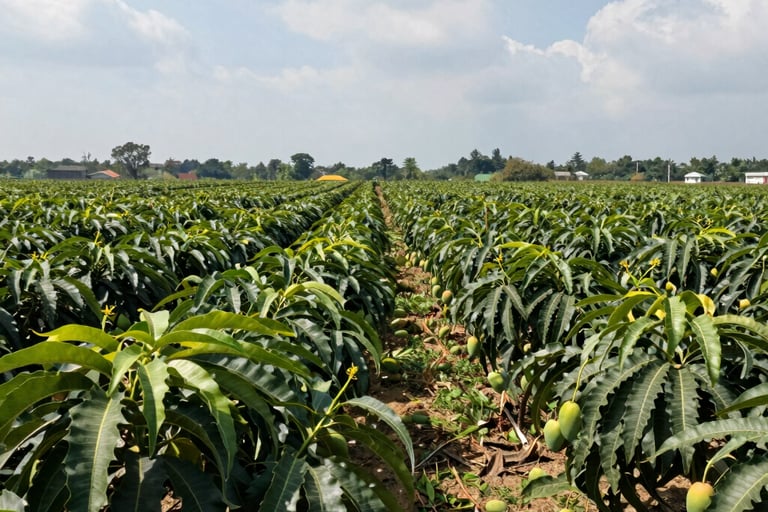
🥭 Mango (Aam)
The “King of Fruits,” widely grown for its taste, export value, and high market demand.
“फलों का राजा,” स्वाद, निर्यात और उच्च बाजार मांग के लिए प्रसिद्ध।
🌦️ Climate
Grows best in tropical to subtropical climate (24–30°C).
यह उष्णकटिबंधीय से उपोष्णकटिबंधीय जलवायु (24–30°C) में अच्छी उगती है।
🌱 Soil
Prefers deep, well-drained loamy soil.
गहरी, अच्छी जल निकासी वाली दोमट मिट्टी उपयुक्त होती है।
🌿 Varieties
Popular varieties include Alphonso, Kesar, Dashehari, and Langra.
लोकप्रिय किस्मों में अल्फांसो, केसर, दशहरी और लंगड़ा शामिल हैं।
📅 Planting Time
Planted during monsoon (June–August).
मानसून (जून–अगस्त) में रोपण किया जाता है।
🥭 Harvesting
Starts bearing fruit after 3–5 years; full yield after 8–10 years.
3–5 वर्षों में फल देना शुरू, 8–10 वर्षों में पूर्ण उत्पादन।
💧 Irrigation
Moderate water requirement; avoid excess water.
मध्यम पानी की जरूरत; अधिक पानी से बचें।
🧪 Fertilizers
Use organic manure with NPK and micronutrients.
जैविक खाद के साथ एनपीके और सूक्ष्म पोषक तत्वों का उपयोग करें।
🐛 Pest & Disease Control
Common pests: Mango hopper, fruit fly. Diseases: Powdery mildew, anthracnose.
मुख्य कीट: आम हॉप्पर, फल मक्खी। रोग: पाउडरी मिल्ड्यू, एन्थ्रेक्नोज।
Recommended pesticides:
Imidacloprid 17.8% SL – for hopper
Malathion 50% EC – for fruit fly
Carbendazim 50% WP – for fungal diseases
उपयोगी दवाइयाँ:
इमिडाक्लोप्रिड – हॉप्पर नियंत्रण
मेलाथियान – फल मक्खी नियंत्रण
कार्बेन्डाजिम – फंगल रोग नियंत्रण
💰 Investment
₹50,000–₹1,00,000 per acre (initial).
₹50,000–₹1,00,000 प्रति एकड़ (प्रारंभिक)।
📊 Yield
8–15 tons per acre (mature orchard).
8–15 टन प्रति एकड़ (परिपक्व बाग)।
💵 Profit
₹1,00,000–₹3,00,000 per acre (high value crop).
₹1,00,000–₹3,00,000 प्रति एकड़ (उच्च मूल्य फसल)।
🏷️ Market
High demand in domestic and export markets.
घरेलू और निर्यात बाजार में उच्च मांग।
⚠️ Risks
Pests, irregular flowering, and weather changes.
कीट, अनियमित फूल आना और मौसम परिवर्तन।
🌍 Best Mango Varieties by Region (India)
🌍 क्षेत्र के अनुसार आम की बेहतर किस्में
🟢 West India (Maharashtra, Gujarat)
Best for export-quality mangoes.
निर्यात गुणवत्ता वाले आम के लिए उपयुक्त।
Alphonso ⭐
Kesar
Rajapuri
🟡 North India (UP, Bihar)
Famous for traditional and sweet varieties.
पारंपरिक और मीठी किस्मों के लिए प्रसिद्ध।
Dashehari ⭐
Langra
Chausa
🔵 South India (Andhra, Tamil Nadu, Karnataka)
Suitable for large-scale and diverse cultivation.
बड़े पैमाने और विविध खेती के लिए उपयुक्त।
Banganapalli ⭐
Totapuri
Neelum
🥔 Potato (Aloo)
A major vegetable crop widely grown for food, processing, and high market demand.
भोजन, प्रोसेसिंग और उच्च बाजार मांग के लिए उगाई जाने वाली प्रमुख सब्जी फसल।
🌦️ Climate
Grows best in cool climate (15–25°C).
यह ठंडी जलवायु (15–25°C) में अच्छी उगती है।
🌱 Soil
Prefers well-drained sandy loam soil rich in organic matter.
जैविक पदार्थ युक्त और अच्छी जल निकासी वाली बलुई दोमट मिट्टी उपयुक्त होती है।
🌾 Varieties
Popular varieties include Kufri Jyoti, Kufri Bahar, and Kufri Pukhraj.
लोकप्रिय किस्मों में कुफरी ज्योति, कुफरी बहार और कुफरी पुखराज शामिल हैं।
📅 Sowing Time
Rabi: Oct–Nov | Some regions: Sept–Oct.
रबी: अक्टूबर–नवंबर | कुछ क्षेत्रों में: सितंबर–अक्टूबर।
🥔 Harvesting
Ready in 90–120 days after planting.
रोपण के 90–120 दिनों में तैयार होती है।
💧 Irrigation
Moderate water requirement; frequent irrigation needed.
मध्यम पानी की जरूरत; नियमित सिंचाई आवश्यक।
🧪 Fertilizers
High use of NPK with organic manure.
एनपीके और जैविक खाद का अधिक उपयोग।
🐛 Pest & Disease Control
Common pests: Aphids, potato tuber moth. Diseases: Late blight, early blight.
मुख्य कीट: माहू, ट्यूबर मॉथ। रोग: लेट ब्लाइट, अर्ली ब्लाइट।
Recommended pesticides:
Imidacloprid 17.8% SL – for aphids
Chlorpyrifos 20% EC – for soil pests
Mancozeb 75% WP – for fungal diseases
उपयोगी दवाइयाँ:
इमिडाक्लोप्रिड – माहू नियंत्रण
क्लोरपाइरीफॉस – मिट्टी के कीट नियंत्रण
मैनकोजेब – ब्लाइट रोग नियंत्रण
💰 Investment
₹30,000–₹60,000 per acre.
₹30,000–₹60,000 प्रति एकड़।
📊 Yield
80–120 quintals per acre.
80–120 क्विंटल प्रति एकड़।
💵 Profit
₹30,000–₹1,00,000 per acre.
₹30,000–₹1,00,000 प्रति एकड़ लाभ।
🏷️ Market
High demand for fresh consumption and processing industries.
ताजा उपयोग और प्रोसेसिंग उद्योग में उच्च मांग।
⚠️ Risks
Disease (blight), price fluctuation, and storage issues.
रोग (ब्लाइट), कीमत में उतार-चढ़ाव और भंडारण समस्या।
🌍 Best Potato Varieties by Region (India)
🌍 क्षेत्र के अनुसार आलू की बेहतर किस्में
🟢 North India (UP, Punjab, Haryana)
Main potato belt with highest production.
मुख्य उत्पादन क्षेत्र, जहां सबसे अधिक उत्पादन होता है।
Kufri Pukhraj ⭐
Kufri Bahar
Kufri Jyoti
🟡 Central India (MP, Maharashtra)
Suitable for moderate climate and early harvesting.
मध्यम जलवायु और जल्दी उत्पादन के लिए उपयुक्त।
Kufri Chipsona-1 ⭐
Kufri Chandramukhi
Kufri Ashoka
🔵 East India (Bihar, West Bengal)
Suitable for humid climate and good yield.
आर्द्र जलवायु और अच्छी उपज के लिए उपयुक्त।
Kufri Jyoti ⭐
Kufri Alankar
Kufri Surya
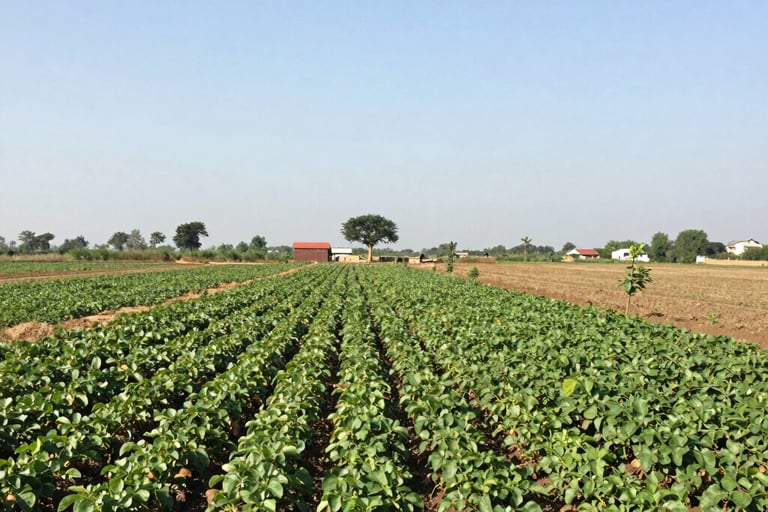
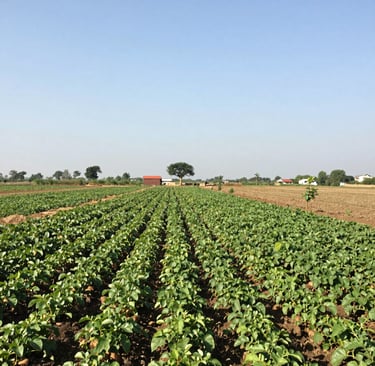
🍠 Sweet Potato (Shakarkand)
A nutritious root crop rich in carbohydrates, vitamins, and fiber, grown for food and processing.
कार्बोहाइड्रेट, विटामिन और फाइबर से भरपूर पौष्टिक कंद फसल, जिसे भोजन और प्रोसेसिंग के लिए उगाया जाता है।
🌦️ Climate
Grows best in warm climate (21–30°C) with moderate rainfall.
यह गर्म जलवायु (21–30°C) और मध्यम वर्षा में अच्छी उगती है।
🌱 Soil
Prefers sandy loam soil with good drainage.
अच्छी जल निकासी वाली बलुई दोमट मिट्टी उपयुक्त होती है।
🌾 Varieties
Popular varieties include Sree Bhadra, Sree Arun, and CO-3.
लोकप्रिय किस्मों में श्री भद्रा, श्री अरुण और CO-3 शामिल हैं।
📅 Planting Time
Kharif: June–July | Summer: Jan–Feb.
खरीफ: जून–जुलाई | ग्रीष्म: जनवरी–फरवरी।
🍠 Harvesting
Ready in 90–120 days after planting.
रोपण के 90–120 दिनों में तैयार होती है।
💧 Irrigation
Moderate water requirement; avoid waterlogging.
मध्यम पानी की जरूरत; जलभराव से बचें।
🧪 Fertilizers
Use organic manure with balanced NPK.
जैविक खाद और संतुलित एनपीके का उपयोग करें।
🐛 Pest & Disease Control
Common pests: Sweet potato weevil. Diseases: Stem rot.
मुख्य कीट: स्वीट पोटैटो वीविल। रोग: स्टेम रॉट।
Recommended pesticides:
Chlorpyrifos 20% EC – for weevil
Imidacloprid 17.8% SL – for sucking pests
Carbendazim 50% WP – for fungal diseases
उपयोगी दवाइयाँ:
क्लोरपाइरीफॉस – वीविल नियंत्रण
इमिडाक्लोप्रिड – कीट नियंत्रण
कार्बेन्डाजिम – फंगल रोग नियंत्रण
💰 Investment
₹15,000–₹30,000 per acre.
₹15,000–₹30,000 प्रति एकड़।
📊 Yield
50–100 quintals per acre.
50–100 क्विंटल प्रति एकड़।
💵 Profit
₹20,000–₹60,000 per acre.
₹20,000–₹60,000 प्रति एकड़ लाभ।
🏷️ Market
Good demand for fresh consumption and processing.
ताजा उपयोग और प्रोसेसिंग के लिए अच्छी मांग।
⚠️ Risks
Pest attack, storage issues, and excess moisture.
कीट आक्रमण, भंडारण समस्या और अधिक नमी का खतरा।
🌍 Best Sweet Potato Varieties by Region (India)
🌍 क्षेत्र के अनुसार शकरकंद की बेहतर किस्में
🟢 South India (Tamil Nadu, Kerala, Karnataka)
Main growing region with high productivity.
मुख्य उत्पादन क्षेत्र, जहां उपज अधिक होती है।
Sree Bhadra ⭐
Sree Arun
CO-3
🟡 Central India (MP, Maharashtra)
Suitable for moderate climate regions.
मध्यम जलवायु वाले क्षेत्रों के लिए उपयुक्त।
Rajendra Shakarkand ⭐
Sree Ratna
Sree Nandini
🔵 North India (UP, Bihar)
Suitable for irrigated and semi-arid conditions.
सिंचित और अर्ध-शुष्क क्षेत्रों के लिए उपयुक्त।
Kalyanpur Red ⭐
Sree Kanaka
Gouri
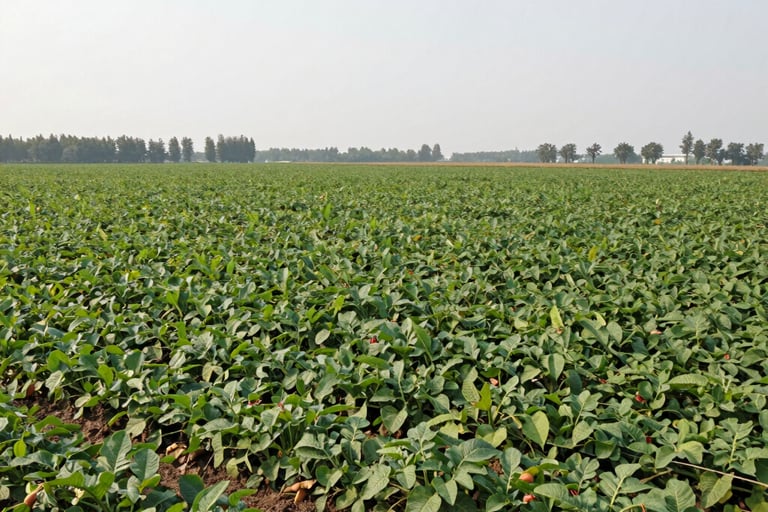
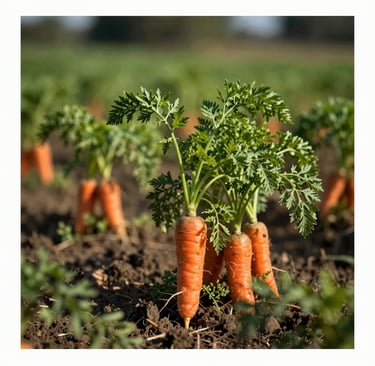
🥕 Carrot (Gajar)
A popular root vegetable rich in vitamins (especially Vitamin A), grown for fresh consumption and processing.
विटामिन (विशेषकर विटामिन A) से भरपूर लोकप्रिय जड़ वाली सब्जी, जिसे ताजा और प्रोसेसिंग दोनों के लिए उगाया जाता है।
🌦️ Climate
Grows best in cool climate (10–25°C).
यह ठंडी जलवायु (10–25°C) में अच्छी उगती है।
🌱 Soil
Prefers deep, loose, well-drained sandy loam soil.
गहरी, भुरभुरी और अच्छी जल निकासी वाली बलुई दोमट मिट्टी उपयुक्त होती है।
🌾 Varieties
Popular varieties include Pusa Kesar, Nantes, and Pusa Rudhira.
लोकप्रिय किस्मों में पूसा केसर, नैंट्स और पूसा रुधिरा शामिल हैं।
📅 Sowing Time
Rabi: Oct–Nov | Some regions: Aug–Sept.
रबी: अक्टूबर–नवंबर | कुछ क्षेत्रों में: अगस्त–सितंबर।
🥕 Harvesting
Ready in 80–100 days after sowing.
बुवाई के 80–100 दिनों में तैयार होती है।
💧 Irrigation
Moderate water requirement; avoid waterlogging.
मध्यम पानी की जरूरत; जलभराव से बचें।
🧪 Fertilizers
Use organic manure with balanced NPK.
जैविक खाद और संतुलित एनपीके का उपयोग करें।
🐛 Pest & Disease Control
Common pests: Aphids, root fly. Diseases: Leaf blight.
मुख्य कीट: माहू, रूट फ्लाई। रोग: लीफ ब्लाइट।
Recommended pesticides:
Imidacloprid 17.8% SL – for aphids
Chlorpyrifos 20% EC – for soil pests
Mancozeb 75% WP – for fungal diseases
उपयोगी दवाइयाँ:
इमिडाक्लोप्रिड – माहू नियंत्रण
क्लोरपाइरीफॉस – मिट्टी के कीट नियंत्रण
मैनकोजेब – फंगल रोग नियंत्रण
💰 Investment
₹15,000–₹30,000 per acre.
₹15,000–₹30,000 प्रति एकड़।
📊 Yield
80–120 quintals per acre.
80–120 क्विंटल प्रति एकड़।
💵 Profit
₹20,000–₹60,000 per acre.
₹20,000–₹60,000 प्रति एकड़ लाभ।
🏷️ Market
High demand for fresh consumption and juice processing.
ताजा उपयोग और जूस प्रोसेसिंग के लिए उच्च मांग।
⚠️ Risks
Pests, poor root development, and excess water.
कीट, जड़ विकास में कमी और अधिक पानी का खतरा।
🌍 Best Carrot Varieties by Region (India)
🌍 क्षेत्र के अनुसार गाजर की बेहतर किस्में
🟢 North India (Punjab, Haryana, UP)
Best for winter cultivation and high yield.
सर्दियों की खेती और अधिक उत्पादन के लिए उपयुक्त।
Pusa Kesar ⭐
Nantes
Pusa Rudhira
🟡 Central India (MP, Maharashtra)
Suitable for moderate climate and early crops.
मध्यम जलवायु और जल्दी उत्पादन के लिए उपयुक्त।
Nantes ⭐
Pusa Meghali
Hisar Gairic
🔵 South India (Karnataka, Tamil Nadu)
Suitable for hill regions and mild climate.
पहाड़ी क्षेत्रों और हल्की जलवायु के लिए उपयुक्त।
Ooty-1 ⭐
Kuroda
Pusa Yamdagni
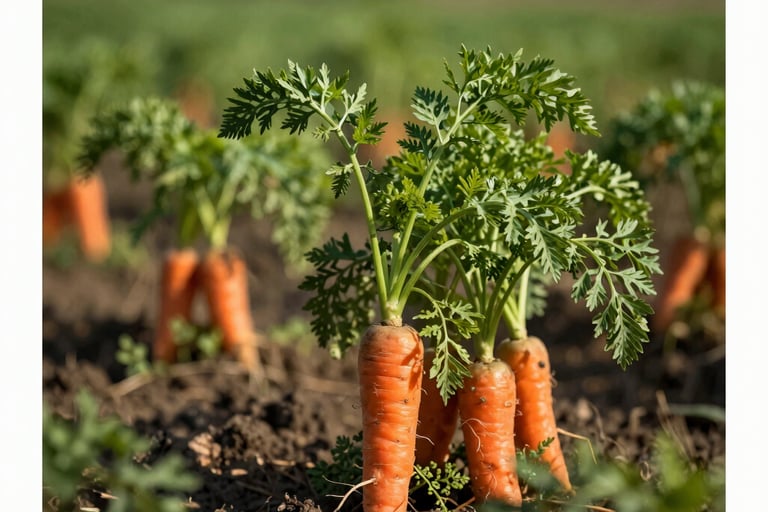
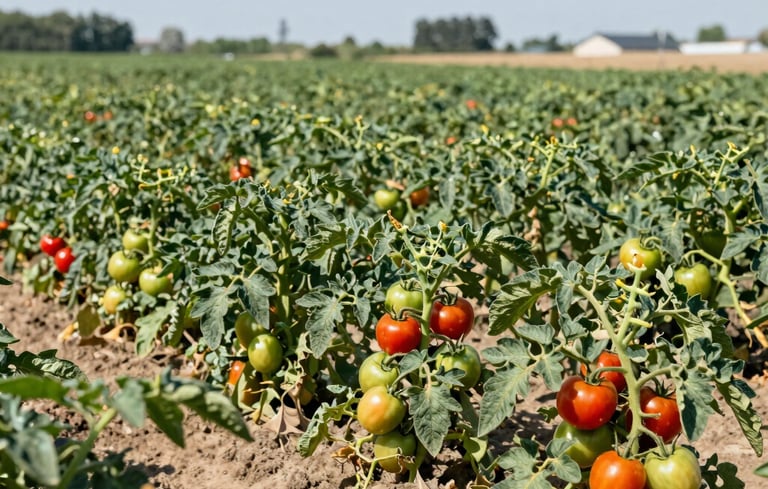
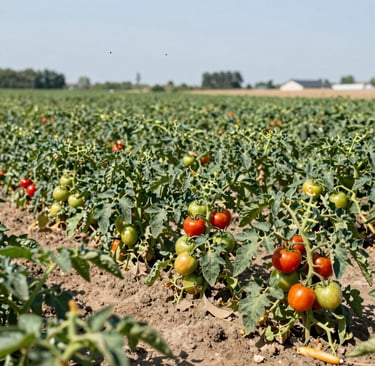
🍅 Tomato (Tamatar)
A major vegetable crop widely used in cooking, processing, and high market demand year-round.
खाना बनाने और प्रोसेसिंग में उपयोग होने वाली प्रमुख सब्जी फसल, जिसकी पूरे साल मांग रहती है।
🌦️ Climate
Grows best in warm climate (18–30°C).
यह गर्म जलवायु (18–30°C) में अच्छी उगती है।
🌱 Soil
Prefers well-drained loamy soil rich in organic matter.
जैविक पदार्थ युक्त और अच्छी जल निकासी वाली दोमट मिट्टी उपयुक्त होती है।
🌾 Varieties
Popular varieties include Pusa Ruby, Pusa Rohini, and Arka Rakshak.
लोकप्रिय किस्मों में पूसा रूबी, पूसा रोहिणी और अर्का रक्षक शामिल हैं।
📅 Sowing Time
Kharif: June–July | Rabi: Oct–Nov | Summer: Jan–Feb.
खरीफ: जून–जुलाई | रबी: अक्टूबर–नवंबर | ग्रीष्म: जनवरी–फरवरी।
🍅 Harvesting
Ready in 60–90 days after transplanting.
रोपाई के 60–90 दिनों में तैयार होती है।
💧 Irrigation
Moderate water requirement; drip irrigation is best.
मध्यम पानी की जरूरत; ड्रिप सिंचाई सबसे उपयुक्त।
🧪 Fertilizers
Use NPK with organic manure and micronutrients.
एनपीके, जैविक खाद और सूक्ष्म पोषक तत्वों का उपयोग करें।
🐛 Pest & Disease Control
Common pests: Whitefly, fruit borer. Diseases: Leaf curl, blight.
मुख्य कीट: व्हाइटफ्लाई, फल छेदक। रोग: लीफ कर्ल, ब्लाइट।
Recommended pesticides:
Imidacloprid 17.8% SL – for whitefly
Spinosad 45% SC – for fruit borer
Mancozeb 75% WP – for fungal diseases
उपयोगी दवाइयाँ:
इमिडाक्लोप्रिड – व्हाइटफ्लाई नियंत्रण
स्पिनोसैड – फल छेदक नियंत्रण
मैनकोजेब – फंगल रोग नियंत्रण
💰 Investment
₹25,000–₹60,000 per acre.
₹25,000–₹60,000 प्रति एकड़।
📊 Yield
150–300 quintals per acre.
150–300 क्विंटल प्रति एकड़।
💵 Profit
₹40,000–₹1,50,000 per acre (depends on market).
₹40,000–₹1,50,000 प्रति एकड़ लाभ (बाजार पर निर्भर)।
🏷️ Market
Very high demand but price fluctuates heavily.
बहुत अधिक मांग, लेकिन कीमत में उतार-चढ़ाव होता है।
⚠️ Risks
Price crash, pests, and disease.
कीमत गिरना, कीट और रोग का खतरा।
🌍 Best Tomato Varieties by Region (India)
🌍 क्षेत्र के अनुसार टमाटर की बेहतर किस्में
🟢 North India (Punjab, Haryana, UP)
Best for winter cultivation and high yield.
सर्दियों की खेती और अधिक उत्पादन के लिए उपयुक्त।
Pusa Ruby ⭐
Pusa Rohini
Hisar Arun
🟡 Central India (MP, Maharashtra)
Suitable for year-round cultivation.
सालभर खेती के लिए उपयुक्त।
Arka Rakshak ⭐
Arka Vikas
Pusa Sadabahar
🔵 South India (Karnataka, Tamil Nadu, AP)
Best for hybrid and disease-resistant varieties.
हाइब्रिड और रोग प्रतिरोधी किस्मों के लिए उपयुक्त।
Arka Rakshak ⭐
Arka Samrat
PKM-1
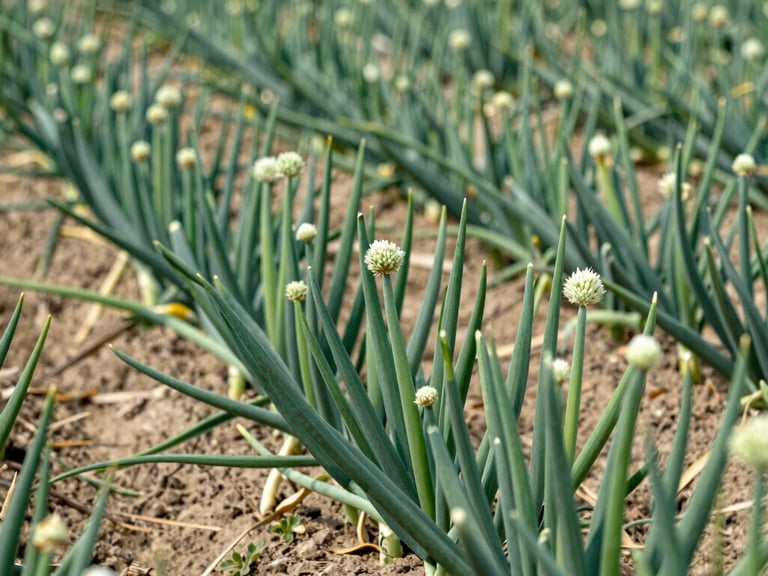
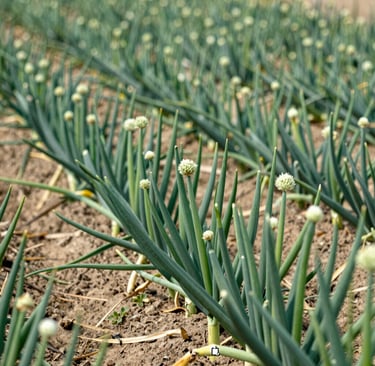
🧅 Onion (Pyaaz)
A major vegetable crop used daily in cooking, with high demand and strong market importance.
रोज़ाना उपयोग होने वाली प्रमुख सब्जी फसल, जिसकी बाजार में बहुत अधिक मांग और महत्व है।
🌦️ Climate
Grows best in mild climate (13–25°C).
यह हल्की जलवायु (13–25°C) में अच्छी उगती है।
🌱 Soil
Prefers well-drained sandy loam soil rich in organic matter.
जैविक पदार्थ युक्त और अच्छी जल निकासी वाली बलुई दोमट मिट्टी उपयुक्त होती है।
🌾 Varieties
Popular varieties include N-53, Pusa Red, and Bhima Super.
लोकप्रिय किस्मों में N-53, पूसा रेड और भीमा सुपर शामिल हैं।
📅 Sowing Time
Kharif: May–June | Rabi: Oct–Nov | Late Kharif: Aug–Sept.
खरीफ: मई–जून | रबी: अक्टूबर–नवंबर | लेट खरीफ: अगस्त–सितंबर।
🧅 Harvesting
Ready in 90–150 days after sowing (depending on season).
बुवाई के 90–150 दिनों में तैयार होती है (मौसम अनुसार)।
💧 Irrigation
Moderate water requirement; avoid excess water near harvest.
मध्यम पानी की जरूरत; कटाई के समय अधिक पानी से बचें।
🧪 Fertilizers
Use balanced NPK with sulfur for bulb development.
एनपीके के साथ सल्फर का उपयोग करें, जिससे कंद का विकास अच्छा होता है।
🐛 Pest & Disease Control
Common pests: Thrips, onion fly. Diseases: Purple blotch, downy mildew.
मुख्य कीट: थ्रिप्स, प्याज मक्खी। रोग: पर्पल ब्लॉच, डाउनy मिल्ड्यू।
Recommended pesticides:
Imidacloprid 17.8% SL – for thrips
Spinosad 45% SC – for insects
Mancozeb 75% WP – for fungal diseases
उपयोगी दवाइयाँ:
इमिडाक्लोप्रिड – थ्रिप्स नियंत्रण
स्पिनोसैड – कीट नियंत्रण
मैनकोजेब – फंगल रोग नियंत्रण
💰 Investment
₹25,000–₹50,000 per acre.
₹25,000–₹50,000 प्रति एकड़।
📊 Yield
100–200 quintals per acre.
100–200 क्विंटल प्रति एकड़।
💵 Profit
₹30,000–₹1,20,000 per acre (depends on market).
₹30,000–₹1,20,000 प्रति एकड़ लाभ (बाजार पर निर्भर)।
🏷️ Market
Very high demand but prices fluctuate significantly.
बहुत अधिक मांग, लेकिन कीमत में भारी उतार-चढ़ाव होता है।
⚠️ Risks
Price crash, storage loss, pests, and disease.
कीमत गिरना, भंडारण में नुकसान, कीट और रोग का खतरा।
🌍 Best Onion Varieties by Region (India)
🌍 क्षेत्र के अनुसार प्याज की बेहतर किस्में
🟢 West India (Maharashtra, Gujarat)
Main onion growing belt with storage varieties.
मुख्य उत्पादन क्षेत्र, जहां भंडारण वाली किस्में होती हैं।
Bhima Super ⭐
N-53
Baswant-780
🟡 North India (UP, Punjab, Haryana)
Suitable for rabi and high-yield cultivation.
रबी और अधिक उत्पादन के लिए उपयुक्त।
Pusa Red ⭐
Agrifound Light Red
Pusa Madhavi
🔵 South India (Karnataka, Tamil Nadu, AP)
Suitable for year-round cultivation.
सालभर खेती के लिए उपयुक्त।
Arka Kalyan ⭐
Arka Niketan
Bellary Red
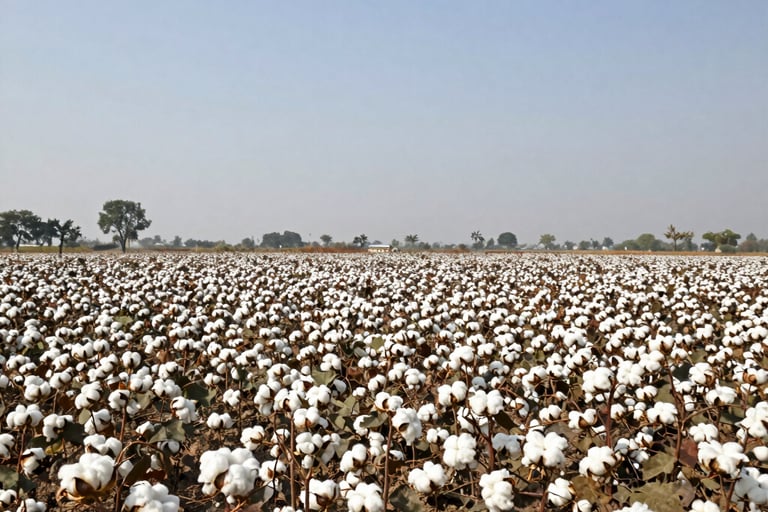
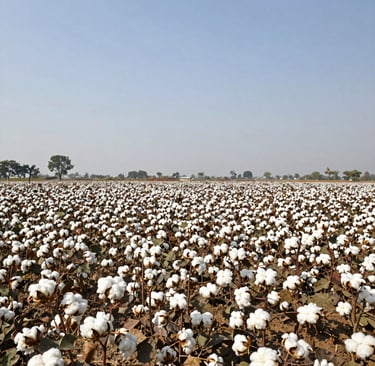
🌿 Cotton (Kapas)
A major cash crop grown for fiber used in the textile industry, with high economic importance.
टेक्सटाइल उद्योग के लिए रेशा प्रदान करने वाली प्रमुख नकदी फसल, जिसका आर्थिक महत्व बहुत अधिक है।
🌦️ Climate
Grows best in warm climate (21–30°C) with moderate rainfall.
यह गर्म जलवायु (21–30°C) और मध्यम वर्षा में अच्छी उगती है।
🌱 Soil
Prefers black cotton soil (regur soil) with good drainage.
काली कपास मिट्टी (रेगर) और अच्छी जल निकासी वाली मिट्टी उपयुक्त होती है।
🌾 Varieties
Popular varieties include Bt Cotton hybrids, RCH-2, and Bunny Bt.
लोकप्रिय किस्मों में Bt कपास हाइब्रिड, RCH-2 और बन्नी Bt शामिल हैं।
📅 Sowing Time
Kharif: May–June (before monsoon).
खरीफ: मई–जून (मानसून से पहले)।
🌿 Harvesting
Ready in 150–180 days after sowing.
बुवाई के 150–180 दिनों में तैयार होती है।
💧 Irrigation
Moderate water requirement; drip irrigation beneficial.
मध्यम पानी की जरूरत; ड्रिप सिंचाई लाभकारी।
🧪 Fertilizers
High use of nitrogen and balanced NPK with micronutrients.
नाइट्रोजन की अधिक मात्रा और संतुलित एनपीके का उपयोग करें।
🐛 Pest & Disease Control
Common pests: Bollworm, whitefly. Diseases: Wilt, leaf curl.
मुख्य कीट: बॉलवर्म, व्हाइटफ्लाई। रोग: विल्ट, लीफ कर्ल।
Recommended pesticides:
Emamectin Benzoate 5% SG – for bollworm
Imidacloprid 17.8% SL – for whitefly
Thiamethoxam 25% WG – for sucking pests
उपयोगी दवाइयाँ:
इमामेक्टिन बेंजोएट – बॉलवर्म नियंत्रण
इमिडाक्लोप्रिड – व्हाइटफ्लाई नियंत्रण
थायमेथोक्साम – कीट नियंत्रण
💰 Investment
₹30,000–₹60,000 per acre.
₹30,000–₹60,000 प्रति एकड़।
📊 Yield
8–15 quintals per acre (lint yield).
8–15 क्विंटल प्रति एकड़ (लिंट उत्पादन)।
💵 Profit
₹30,000–₹1,00,000 per acre.
₹30,000–₹1,00,000 प्रति एकड़ लाभ।
🏷️ Market
Strong demand in textile industry.
टेक्सटाइल उद्योग में मजबूत मांग।
⚠️ Risks
Pest attack (especially bollworm), weather changes, and price variation.
कीट आक्रमण (विशेषकर बॉलवर्म), मौसम परिवर्तन और कीमत में उतार-चढ़ाव।
🌍 Best Cotton Varieties by Region (India)
🌍 क्षेत्र के अनुसार कपास की बेहतर किस्में
🟢 Central India (MP, Maharashtra)
Main cotton belt with highest production.
मुख्य उत्पादन क्षेत्र, जहां सबसे अधिक उत्पादन होता है।
Bt Cotton Hybrid ⭐
RCH-2
Bunny Bt
🟡 North India (Punjab, Haryana, Rajasthan)
Suitable for irrigated farming and high yield.
सिंचित खेती और अधिक उत्पादन के लिए उपयुक्त।
RCH-2 ⭐
H-1098
F-1861
🔵 South India (Telangana, Andhra, Karnataka)
Best for hybrid cotton and long staple fiber.
हाइब्रिड कपास और लंबा रेशा के लिए उपयुक्त।
Bunny Bt ⭐
NCS-855
Mallika
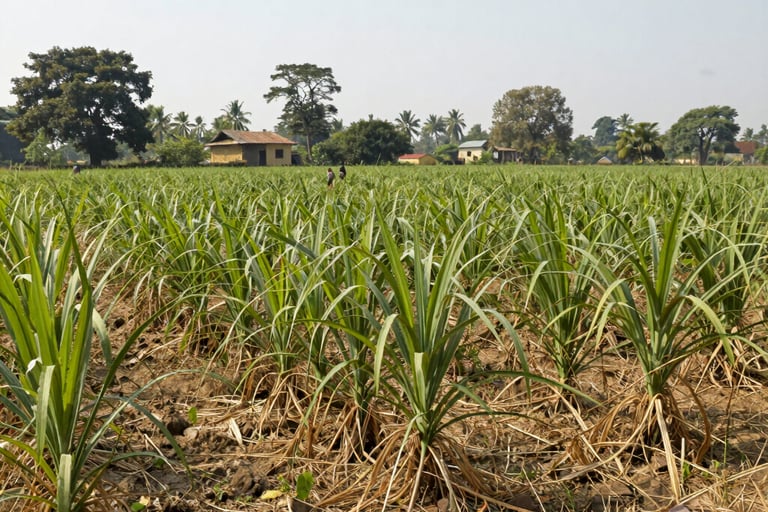
🌿 Jute (Patson / Patwa)
A major fiber crop known as the “Golden Fiber,” used for ropes, bags, carpets, and eco-friendly products.
“स्वर्ण रेशा” के नाम से प्रसिद्ध प्रमुख फाइबर फसल, जिसका उपयोग रस्सी, बैग, कालीन और पर्यावरण-अनुकूल उत्पादों में होता है।
🌦️ Climate
Grows best in warm and humid climate (24–35°C) with high rainfall.
यह गर्म और आर्द्र जलवायु (24–35°C) तथा अधिक वर्षा में अच्छी उगती है।
🌱 Soil
Prefers alluvial soil with good drainage and fertility.
उपजाऊ और अच्छी जल निकासी वाली जलोढ़ मिट्टी उपयुक्त होती है।
🌾 Varieties
Popular varieties include JRO-524, JRC-321, and JBO-2003.
लोकप्रिय किस्मों में JRO-524, JRC-321 और JBO-2003 शामिल हैं।
📅 Sowing Time
Kharif: March–May (before monsoon).
खरीफ: मार्च–मई (मानसून से पहले)।
🌿 Harvesting
Ready in 100–120 days after sowing.
बुवाई के 100–120 दिनों में तैयार होती है।
💧 Irrigation
High water requirement; also needs water for retting process.
अधिक पानी की आवश्यकता; रेटिंग प्रक्रिया के लिए भी पानी जरूरी।
🧪 Fertilizers
Use nitrogen-rich fertilizers with organic manure.
नाइट्रोजन युक्त उर्वरक और जैविक खाद का उपयोग करें।
🐛 Pest & Disease Control
Common pests: Stem weevil, semilooper. Diseases: Wilt, stem rot.
मुख्य कीट: स्टेम वीविल, सेमीलूपर। रोग: विल्ट, स्टेम रॉट।
Recommended pesticides:
Chlorpyrifos 20% EC – for soil pests
Imidacloprid 17.8% SL – for sucking pests
Carbendazim 50% WP – for fungal diseases
उपयोगी दवाइयाँ:
क्लोरपाइरीफॉस – मिट्टी के कीट नियंत्रण
इमिडाक्लोप्रिड – कीट नियंत्रण
कार्बेन्डाजिम – फंगल रोग नियंत्रण
💰 Investment
₹15,000–₹30,000 per acre.
₹15,000–₹30,000 प्रति एकड़।
📊 Yield
8–12 quintals fiber per acre.
8–12 क्विंटल रेशा प्रति एकड़।
💵 Profit
₹20,000–₹50,000 per acre.
₹20,000–₹50,000 प्रति एकड़ लाभ।
🏷️ Market
High demand for eco-friendly products and packaging.
पर्यावरण-अनुकूल उत्पाद और पैकेजिंग के लिए उच्च मांग।
⚠️ Risks
Floods, excessive rain, and retting issues.
बाढ़, अधिक वर्षा और रेटिंग की समस्या।
🌍 Best Jute Varieties by Region (India)
🌍 क्षेत्र के अनुसार जूट की बेहतर किस्में
🟢 East India (West Bengal, Bihar, Assam)
Main jute growing region with highest production.
मुख्य उत्पादन क्षेत्र, जहां सबसे अधिक उत्पादन होता है।
JRO-524 ⭐
JRC-321
JBO-2003
🟡 North-East India (Tripura, Meghalaya)
Suitable for high rainfall and humid regions.
अधिक वर्षा और आर्द्र क्षेत्रों के लिए उपयुक्त।
JRO-7835 ⭐
JRC-698
JBO-1
🔵 Other Suitable Areas (Odisha, UP East)
Moderate production zones.
मध्यम उत्पादन क्षेत्र।
JRO-632 ⭐
UPC-94
Bidhan Pat-1
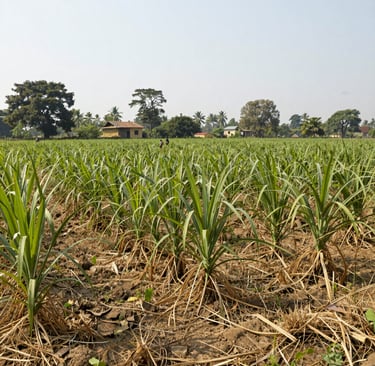
🌿 Hemp (Industrial Hemp)
A fiber and oilseed crop used for textiles, ropes, paper, and eco-friendly products.
रेशा और तेल के लिए उगाई जाने वाली फसल, जिसका उपयोग कपड़ा, रस्सी, कागज और पर्यावरण-अनुकूल उत्पादों में होता है।
🌦️ Climate
Grows best in moderate climate (15–27°C) with good sunlight.
यह मध्यम जलवायु (15–27°C) और पर्याप्त धूप में अच्छी उगती है।
🌱 Soil
Prefers well-drained loamy soil rich in organic matter.
जैविक पदार्थ युक्त और अच्छी जल निकासी वाली दोमट मिट्टी उपयुक्त होती है।
🌾 Varieties
Industrial hemp varieties (low THC) used for fiber and seeds.
कम THC वाली औद्योगिक किस्में रेशा और बीज के लिए उपयोग होती हैं।
📅 Sowing Time
Spring (Feb–April) depending on region.
क्षेत्र अनुसार फरवरी–अप्रैल में बुवाई।
🌿 Harvesting
Ready in 100–120 days for fiber; 120–150 days for seeds.
रेशा के लिए 100–120 दिन, बीज के लिए 120–150 दिन।
💧 Irrigation
Moderate water requirement; avoid waterlogging.
मध्यम पानी की जरूरत; जलभराव से बचें।
🧪 Fertilizers
Requires nitrogen-rich fertilizers with organic manure.
नाइट्रोजन युक्त उर्वरक और जैविक खाद का उपयोग करें।
🐛 Pest & Disease Control
Common pests: Aphids, caterpillars. Diseases: Mold, root rot.
मुख्य कीट: माहू, कैटरपिलर। रोग: फफूंद, जड़ सड़न।
Recommended pesticides:
Neem Oil Bio Pesticide – eco-friendly pest control
Imidacloprid 17.8% SL – for aphids
Carbendazim 50% WP – for fungal diseases
उपयोगी दवाइयाँ:
नीम ऑयल – जैविक कीट नियंत्रण
इमिडाक्लोप्रिड – माहू नियंत्रण
कार्बेन्डाजिम – फंगल रोग नियंत्रण
💰 Investment
₹20,000–₹40,000 per acre.
₹20,000–₹40,000 प्रति एकड़।
📊 Yield
8–12 quintals fiber per acre (varies).
8–12 क्विंटल रेशा प्रति एकड़।
💵 Profit
₹30,000–₹80,000 per acre (depends on legal market).
₹30,000–₹80,000 प्रति एकड़ लाभ (कानूनी बाजार पर निर्भर)।
🏷️ Market
Growing demand for sustainable textiles and eco-products.
सस्टेनेबल कपड़ा और पर्यावरण-अनुकूल उत्पादों की बढ़ती मांग।
⚠️ Risks
Legal restrictions, market access, and climate sensitivity.
कानूनी प्रतिबंध, बाजार उपलब्धता और जलवायु प्रभाव।
🌍 Best Hemp Varieties by Region (India - Restricted Use)
🌍 क्षेत्र के अनुसार भांग (औद्योगिक) की किस्में
🟢 North India (Uttarakhand, Himachal Pradesh)
Limited legal cultivation zones for industrial hemp.
सीमित कानूनी खेती क्षेत्र।
Approved Industrial Hemp Varieties ⭐
Local Low-THC Strains
🟡 Research/Trial Regions
Under government trials and regulation.
सरकारी परीक्षण और नियंत्रण में।
Certified Low-THC Varieties ⭐
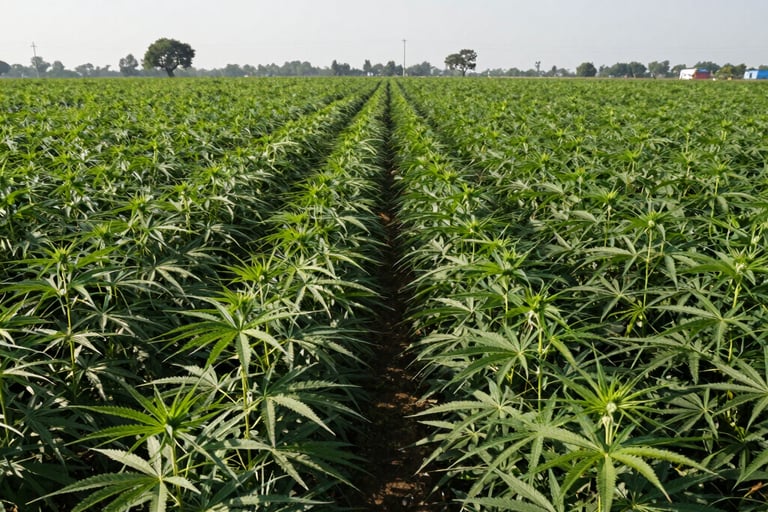
🥒 Cucumber (Kheera)
A fast-growing vegetable crop used for fresh consumption, salads, and hydration-rich food.
तेजी से बढ़ने वाली सब्जी फसल, जिसे ताजा खाने, सलाद और शरीर को ठंडक देने के लिए उपयोग किया जाता है।
🌦️ Climate
Grows best in warm climate (20–30°C).
यह गर्म जलवायु (20–30°C) में अच्छी उगती है।
🌱 Soil
Prefers well-drained sandy loam soil rich in organic matter.
जैविक पदार्थ युक्त और अच्छी जल निकासी वाली बलुई दोमट मिट्टी उपयुक्त होती है।
🌾 Varieties
Popular varieties include Pusa Uday, Pusa Barkha, and Japanese Long Green.
लोकप्रिय किस्मों में पूसा उदय, पूसा बरखा और जापानी लॉन्ग ग्रीन शामिल हैं।
📅 Sowing Time
Kharif: June–July | Summer: Jan–Feb.
खरीफ: जून–जुलाई | ग्रीष्म: जनवरी–फरवरी।
🥒 Harvesting
Ready in 40–60 days after sowing.
बुवाई के 40–60 दिनों में तैयार होती है।
💧 Irrigation
Moderate water requirement; frequent light irrigation needed.
मध्यम पानी की जरूरत; बार-बार हल्की सिंचाई आवश्यक।
🧪 Fertilizers
Use organic manure with balanced NPK.
जैविक खाद और संतुलित एनपीके का उपयोग करें।
🐛 Pest & Disease Control
Common pests: Aphids, fruit fly. Diseases: Powdery mildew, downy mildew.
मुख्य कीट: माहू, फल मक्खी। रोग: पाउडरी मिल्ड्यू, डाउनy मिल्ड्यू।
Recommended pesticides:
Imidacloprid 17.8% SL – for aphids
Spinosad 45% SC – for fruit fly
Mancozeb 75% WP – for fungal diseases
उपयोगी दवाइयाँ:
इमिडाक्लोप्रिड – माहू नियंत्रण
स्पिनोसैड – फल मक्खी नियंत्रण
मैनकोजेब – फंगल रोग नियंत्रण
💰 Investment
₹10,000–₹25,000 per acre.
₹10,000–₹25,000 प्रति एकड़।
📊 Yield
50–80 quintals per acre.
50–80 क्विंटल प्रति एकड़।
💵 Profit
₹20,000–₹60,000 per acre.
₹20,000–₹60,000 प्रति एकड़ लाभ।
🏷️ Market
High demand in summer season and local markets.
गर्मी के मौसम में और स्थानीय बाजार में उच्च मांग।
⚠️ Risks
Pests, diseases, and excess heat.
कीट, रोग और अधिक गर्मी का खतरा।
🌍 Best Cucumber Varieties by Region (India)
🌍 क्षेत्र के अनुसार खीरे की बेहतर किस्में
🟢 North India (UP, Punjab, Haryana)
Best for summer cultivation.
ग्रीष्मकालीन खेती के लिए उपयुक्त।
Pusa Uday ⭐
Pusa Barkha
Pant Khira-1
🟡 Central India (MP, Maharashtra)
Suitable for both kharif and summer seasons.
खरीफ और ग्रीष्म दोनों मौसम के लिए उपयुक्त।
Japanese Long Green ⭐
Pusa Sanyog
Swarna Sheetal
🔵 South India (Karnataka, Tamil Nadu, AP)
Best for hybrid and year-round cultivation.
हाइब्रिड और सालभर खेती के लिए उपयुक्त।
Malini ⭐
Green Long
Poona Khira
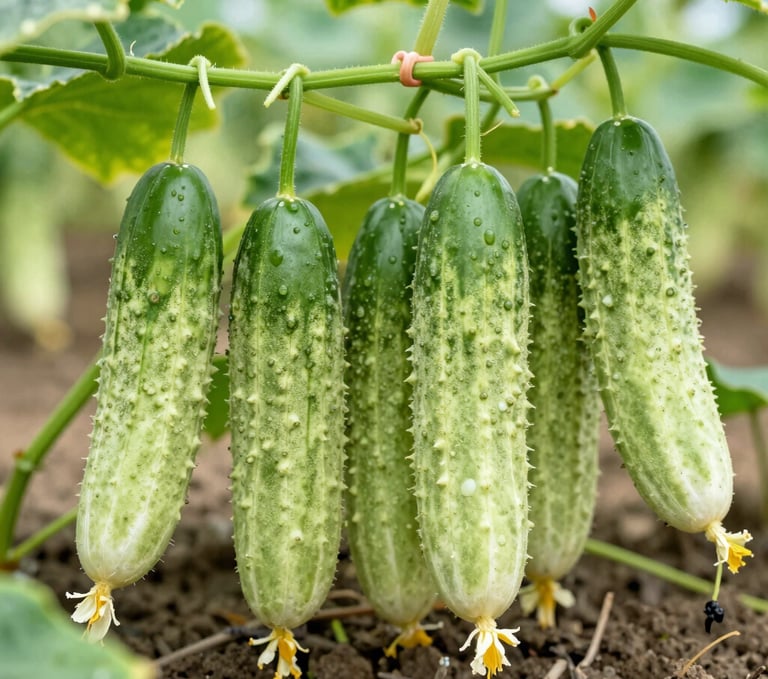
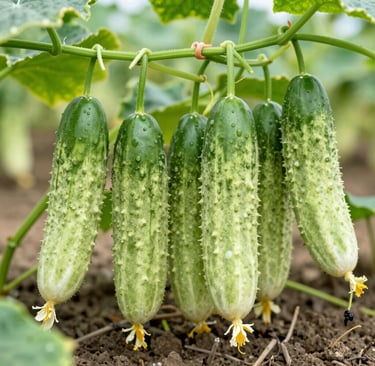
Bitter Gourd (Karela)
A nutritious vegetable crop known for medicinal value, especially for diabetes control.
औषधीय गुणों वाली सब्जी फसल, विशेष रूप से मधुमेह नियंत्रण के लिए उपयोगी।
🌦️ Climate
Grows best in warm and humid climate (25–30°C).
यह गर्म और आर्द्र जलवायु (25–30°C) में अच्छी उगती है।
🌱 Soil
Prefers well-drained sandy loam soil rich in organic matter.
जैविक पदार्थ युक्त और अच्छी जल निकासी वाली बलुई दोमट मिट्टी उपयुक्त होती है।
🌾 Varieties
Popular varieties include Pusa Do Mausami, Pusa Vishesh, and CO-1.
लोकप्रिय किस्मों में पूसा दो मौसमी, पूसा विशेष और CO-1 शामिल हैं।
📅 Sowing Time
Kharif: June–July | Summer: Jan–Feb.
खरीफ: जून–जुलाई | ग्रीष्म: जनवरी–फरवरी।
🥬 Harvesting
Ready in 55–70 days after sowing.
बुवाई के 55–70 दिनों में तैयार होती है।
💧 Irrigation
Moderate water requirement; regular irrigation needed.
मध्यम पानी की जरूरत; नियमित सिंचाई आवश्यक।
🧪 Fertilizers
Use organic manure with balanced NPK.
जैविक खाद और संतुलित एनपीके का उपयोग करें।
🐛 Pest & Disease Control
Common pests: Fruit fly, aphids. Diseases: Powdery mildew.
मुख्य कीट: फल मक्खी, माहू। रोग: पाउडरी मिल्ड्यू।
Recommended pesticides:
Spinosad 45% SC – for fruit fly
Imidacloprid 17.8% SL – for aphids
Mancozeb 75% WP – for fungal diseases
उपयोगी दवाइयाँ:
स्पिनोसैड – फल मक्खी नियंत्रण
इमिडाक्लोप्रिड – माहू नियंत्रण
मैनकोजेब – फंगल रोग नियंत्रण
💰 Investment
₹15,000–₹35,000 per acre.
₹15,000–₹35,000 प्रति एकड़।
📊 Yield
40–80 quintals per acre.
40–80 क्विंटल प्रति एकड़।
💵 Profit
₹25,000–₹80,000 per acre.
₹25,000–₹80,000 प्रति एकड़ लाभ।
🏷️ Market
Good demand due to health benefits.
स्वास्थ्य लाभ के कारण अच्छी मांग।
⚠️ Risks
Pest attack (fruit fly), diseases, and excess rain.
कीट आक्रमण (फल मक्खी), रोग और अधिक वर्षा का खतरा।
🌍 Best Bitter Gourd Varieties by Region (India)
🌍 क्षेत्र के अनुसार करेला की बेहतर किस्में
🟢 North India (UP, Punjab, Haryana)
Best for summer cultivation.
ग्रीष्मकालीन खेती के लिए उपयुक्त।
Pusa Do Mausami ⭐
Pusa Vishesh
Pant Karela-1
🟡 Central India (MP, Maharashtra)
Suitable for both kharif and summer seasons.
खरीफ और ग्रीष्म दोनों मौसम के लिए उपयुक्त।
Pusa Vishesh ⭐
CO-1
Arka Harit
🔵 South India (Karnataka, Tamil Nadu, AP)
Best for hybrid and high-yield cultivation.
हाइब्रिड और अधिक उत्पादन के लिए उपयुक्त।
CO-1 ⭐
Priya
MDU-1
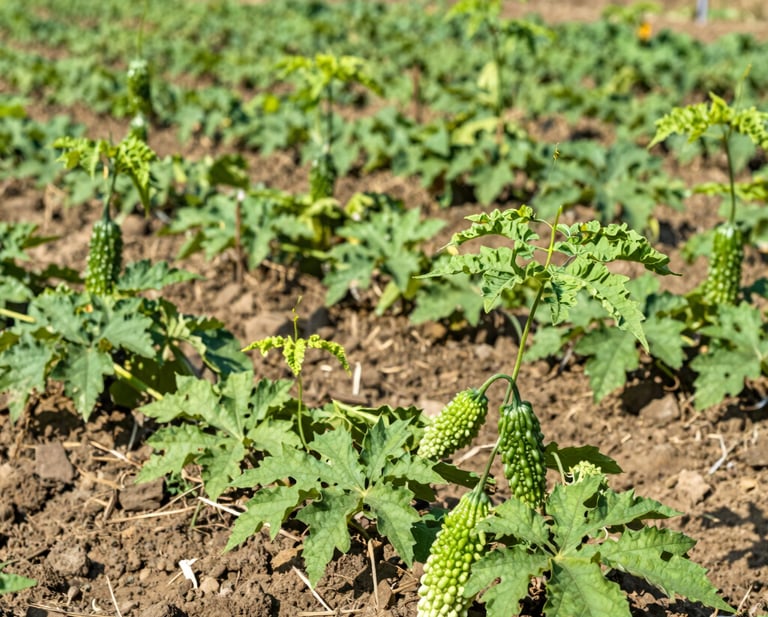
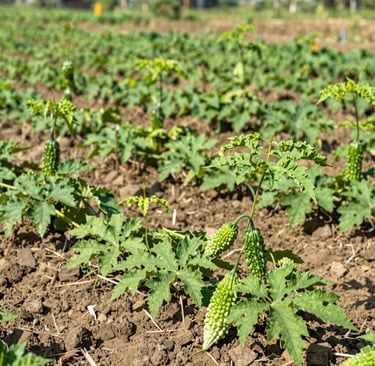
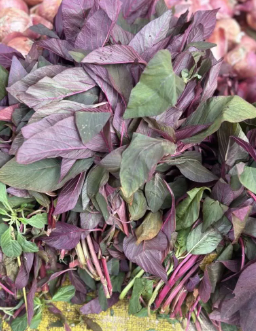
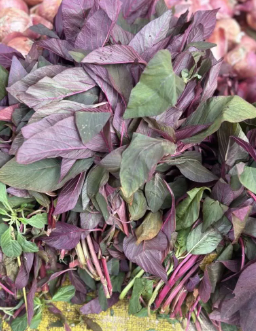
🌿 Lal Math (Red Amaranth / Chaulai)
A nutritious leafy vegetable rich in iron, calcium, and vitamins, grown for quick harvest and local markets.
आयरन, कैल्शियम और विटामिन से भरपूर पौष्टिक पत्तेदार सब्जी, जिसे जल्दी उत्पादन और स्थानीय बाजार के लिए उगाया जाता है।
🌦️ Climate
Grows best in warm climate (20–35°C).
यह गर्म जलवायु (20–35°C) में अच्छी उगती है।
🌱 Soil
Prefers well-drained fertile loamy soil.
उपजाऊ और अच्छी जल निकासी वाली दोमट मिट्टी उपयुक्त होती है।
🌾 Varieties
Popular varieties include Pusa Kiran, Arka Suguna, and CO-1.
लोकप्रिय किस्मों में पूसा किरण, अर्का सुगुना और CO-1 शामिल हैं।
📅 Sowing Time
Can be grown year-round (best in summer and monsoon).
सालभर उगाई जा सकती है (गर्मी और मानसून में सबसे अच्छी)।
🌿 Harvesting
Ready in 20–30 days after sowing (multiple cuttings possible).
बुवाई के 20–30 दिनों में तैयार; कई बार कटाई संभव।
💧 Irrigation
Light and frequent irrigation required.
हल्की और बार-बार सिंचाई आवश्यक।
🧪 Fertilizers
Use organic manure and light NPK for leafy growth.
जैविक खाद और हल्का एनपीके उपयोग करें।
🐛 Pest & Disease Control
Common pests: Leaf-eating caterpillars, aphids. Diseases: Leaf spot.
मुख्य कीट: पत्ती खाने वाले कीड़े, माहू। रोग: लीफ स्पॉट।
Recommended pesticides:
Neem Oil Bio Pesticide – eco-friendly control
Imidacloprid 17.8% SL – for aphids
Mancozeb 75% WP – for fungal diseases
उपयोगी दवाइयाँ:
नीम ऑयल – जैविक कीट नियंत्रण
इमिडाक्लोप्रिड – माहू नियंत्रण
मैनकोजेब – फंगल रोग नियंत्रण
💰 Investment
₹8,000–₹20,000 per acre.
₹8,000–₹20,000 प्रति एकड़।
📊 Yield
20–50 quintals per acre (multiple harvests).
20–50 क्विंटल प्रति एकड़ (कई कटाई)।
💵 Profit
₹15,000–₹50,000 per acre.
₹15,000–₹50,000 प्रति एकड़ लाभ।
🏷️ Market
High demand in local vegetable markets due to nutrition.
पोषण के कारण स्थानीय बाजार में उच्च मांग।
⚠️ Risks
Pests, excess rain, and quick spoilage after harvest.
कीट, अधिक वर्षा और जल्दी खराब होने का खतरा।
🌍 Best Lal Math Varieties by Region (India)
🌍 क्षेत्र के अनुसार लाल माठ की बेहतर किस्में
🟢 North India (UP, Bihar, Punjab)
Best for summer and rainy season.
गर्मी और बरसात के लिए उपयुक्त।
Pusa Kiran ⭐
Arka Suguna
Local Red Types
🟡 Central India (MP, Maharashtra)
Suitable for year-round cultivation.
सालभर खेती के लिए उपयुक्त।
Arka Suguna ⭐
CO-1
Local Varieties
🔵 South India (Karnataka, Tamil Nadu)
Best for continuous harvesting and leafy production.
लगातार कटाई और पत्तेदार उत्पादन के लिए उपयुक्त।
CO-1 ⭐
Arka Arunima
Sirukeerai Types
🌱 Methi (Fenugreek)
A popular leafy and seed spice crop used for vegetables, medicinal purposes, and spices.
पत्तेदार सब्जी और मसाले के रूप में उपयोग होने वाली महत्वपूर्ण फसल, जिसका औषधीय महत्व भी है।
🌦️ Climate
Grows best in cool to moderate climate (10–25°C).
यह ठंडी से मध्यम जलवायु (10–25°C) में अच्छी उगती है।
🌱 Soil
Prefers well-drained loamy soil with good organic content.
अच्छी जल निकासी वाली जैविक पदार्थ युक्त दोमट मिट्टी उपयुक्त होती है।
🌾 Varieties
Popular varieties include Pusa Early Bunching, Kasuri Methi, and RMT-1.
लोकप्रिय किस्मों में पूसा अर्ली बंचिंग, कसूरी मेथी और RMT-1 शामिल हैं।
📅 Sowing Time
Rabi: Oct–Nov | Some regions: Sept–Oct.
रबी: अक्टूबर–नवंबर | कुछ क्षेत्रों में: सितंबर–अक्टूबर।
🌿 Harvesting
Leaves: 25–30 days | Seeds: 90–110 days.
पत्ते: 25–30 दिन | बीज: 90–110 दिन।
💧 Irrigation
Low to moderate water requirement.
कम से मध्यम पानी की आवश्यकता।
🧪 Fertilizers
Use organic manure with light NPK.
जैविक खाद और हल्का एनपीके उपयोग करें।
🐛 Pest & Disease Control
Common pests: Aphids. Diseases: Powdery mildew, root rot.
मुख्य कीट: माहू। रोग: पाउडरी मिल्ड्यू, जड़ सड़न।
Recommended pesticides:
Neem Oil Bio Pesticide – eco-friendly control
Imidacloprid 17.8% SL – for aphids
Mancozeb 75% WP – for fungal diseases
उपयोगी दवाइयाँ:
नीम ऑयल – जैविक नियंत्रण
इमिडाक्लोप्रिड – माहू नियंत्रण
मैनकोजेब – फंगल रोग नियंत्रण
💰 Investment
₹8,000–₹20,000 per acre.
₹8,000–₹20,000 प्रति एकड़।
📊 Yield
Leaves: 20–40 quintals | Seeds: 5–8 quintals per acre.
पत्ते: 20–40 क्विंटल | बीज: 5–8 क्विंटल प्रति एकड़।
💵 Profit
₹15,000–₹50,000 per acre.
₹15,000–₹50,000 प्रति एकड़ लाभ।
🏷️ Market
High demand for both fresh leaves and dry seeds.
ताजा पत्ते और सूखे बीज दोनों की उच्च मांग।
⚠️ Risks
Fungal diseases and pest attack.
फंगल रोग और कीट का खतरा।
🌍 Best Methi Varieties by Region (India)
🌍 क्षेत्र के अनुसार मेथी की बेहतर किस्में
🟢 North India (UP, Punjab, Haryana)
Best for leafy vegetable production.
पत्तेदार उत्पादन के लिए उपयुक्त।
Pusa Early Bunching ⭐
Kasuri Methi
Pant Ragini
🟡 Central India (MP, Maharashtra)
Suitable for both leaves and seed production.
पत्ते और बीज दोनों के लिए उपयुक्त।
RMT-1 ⭐
Pusa Early Bunching
Local Varieties
🔵 West India (Rajasthan, Gujarat)
Main region for seed production.
बीज उत्पादन के लिए मुख्य क्षेत्र।
Kasuri Methi ⭐
RMT-305
RMT-361
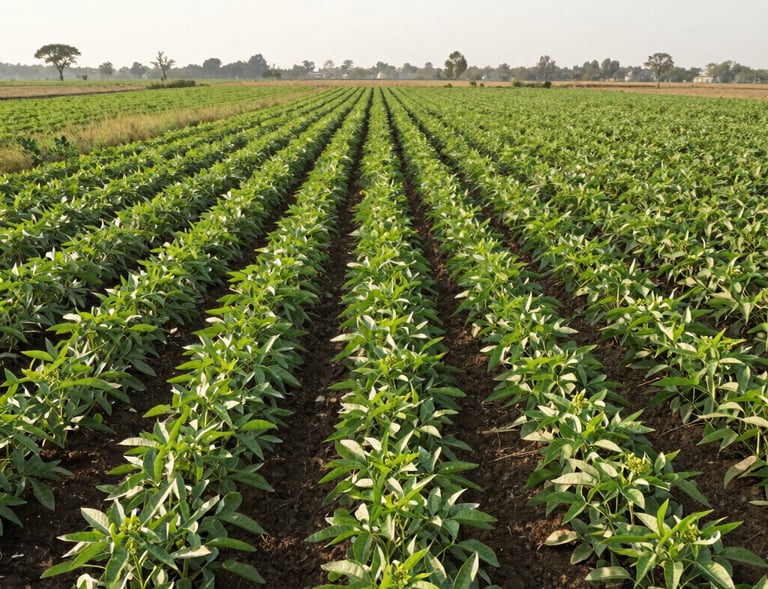
🌶️ Chilli (Mirchi)
An important spice and vegetable crop used for flavor, color, and high market value.
स्वाद, रंग और उच्च बाजार मूल्य के लिए उपयोग होने वाली महत्वपूर्ण मसाला और सब्जी फसल।
🌦️ Climate
Grows best in warm climate (20–30°C).
यह गर्म जलवायु (20–30°C) में अच्छी उगती है।
🌱 Soil
Prefers well-drained loamy soil rich in organic matter.
जैविक पदार्थ युक्त और अच्छी जल निकासी वाली दोमट मिट्टी उपयुक्त होती है।
🌾 Varieties
Popular varieties include G4, Pusa Jwala, and Byadgi.
लोकप्रिय किस्मों में G4, पूसा ज्वाला और ब्याडगी शामिल हैं।
📅 Sowing Time
Kharif: June–July | Rabi: Oct–Nov | Summer: Jan–Feb.
खरीफ: जून–जुलाई | रबी: अक्टूबर–नवंबर | ग्रीष्म: जनवरी–फरवरी।
🌶️ Harvesting
Ready in 70–120 days after transplanting.
रोपाई के 70–120 दिनों में तैयार होती है।
💧 Irrigation
Moderate water requirement; avoid waterlogging.
मध्यम पानी की जरूरत; जलभराव से बचें।
🧪 Fertilizers
Use balanced NPK with micronutrients.
संतुलित एनपीके और सूक्ष्म पोषक तत्वों का उपयोग करें।
🐛 Pest & Disease Control
Common pests: Thrips, mites, aphids. Diseases: Leaf curl, wilt.
मुख्य कीट: थ्रिप्स, माइट्स, माहू। रोग: लीफ कर्ल, विल्ट।
Recommended pesticides:
Imidacloprid 17.8% SL – for sucking pests
Spinosad 45% SC – for insects
Thiamethoxam 25% WG – for pests
उपयोगी दवाइयाँ:
इमिडाक्लोप्रिड – कीट नियंत्रण
स्पिनोसैड – कीट नियंत्रण
थायमेथोक्साम – कीट नियंत्रण
💰 Investment
₹30,000–₹70,000 per acre.
₹30,000–₹70,000 प्रति एकड़।
📊 Yield
30–80 quintals per acre.
30–80 क्विंटल प्रति एकड़।
💵 Profit
₹40,000–₹1,50,000 per acre.
₹40,000–₹1,50,000 प्रति एकड़ लाभ।
🏷️ Market
High demand for fresh and dry chilli (spice industry).
ताजा और सूखी मिर्च (मसाला उद्योग) की उच्च मांग।
⚠️ Risks
Pest attack (thrips), diseases, and price fluctuation.
कीट आक्रमण (थ्रिप्स), रोग और कीमत में उतार-चढ़ाव।
🌍 Best Chilli Varieties by Region (India)
🌍 क्षेत्र के अनुसार मिर्च की बेहतर किस्में
🟢 South India (Andhra Pradesh, Telangana, Karnataka)
Main chilli producing region (export quality).
मुख्य उत्पादन क्षेत्र (निर्यात गुणवत्ता)।
G4 ⭐
Byadgi
Teja
🟡 North India (UP, Punjab, Haryana)
Suitable for green chilli production.
हरी मिर्च उत्पादन के लिए उपयुक्त।
Pusa Jwala ⭐
Pant C-1
Punjab Lal
🔵 Central India (MP, Maharashtra)
Suitable for both green and dry chilli.
हरी और सूखी दोनों मिर्च के लिए उपयुक्त।
Pusa Jwala ⭐
Jawahar Mirch-283
Phule Jyoti
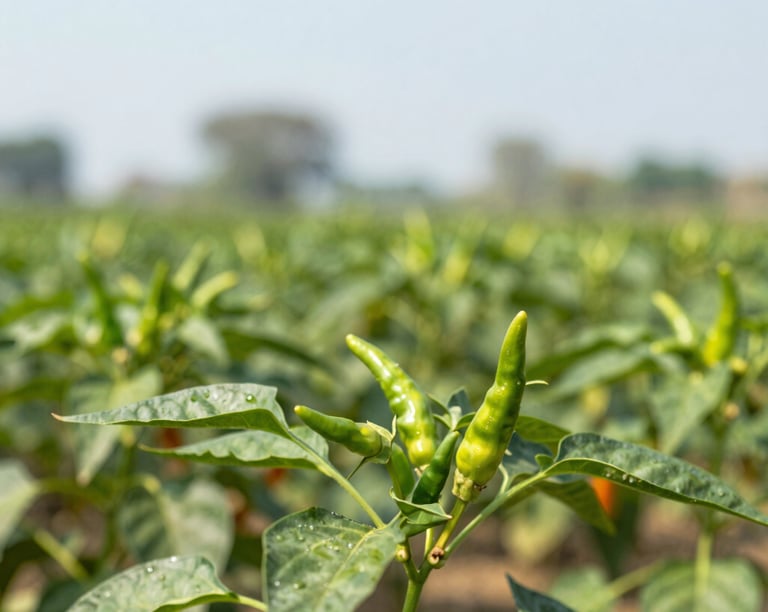
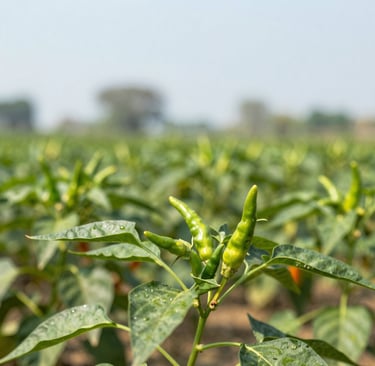
🍆 Brinjal (Baingan / Eggplant)
A widely grown vegetable crop used daily in cooking, known for high yield and multiple varieties.
रोज़ाना उपयोग होने वाली प्रमुख सब्जी फसल, जो अधिक उत्पादन और विविध किस्मों के लिए जानी जाती है।
🌦️ Climate
Grows best in warm climate (20–30°C).
यह गर्म जलवायु (20–30°C) में अच्छी उगती है।
🌱 Soil
Prefers well-drained fertile loamy soil rich in organic matter.
जैविक पदार्थ युक्त उपजाऊ और अच्छी जल निकासी वाली दोमट मिट्टी उपयुक्त होती है।
🌾 Varieties
Popular varieties include Pusa Purple Long, Arka Nidhi, and Bhagyamati.
लोकप्रिय किस्मों में पूसा पर्पल लॉन्ग, अर्का निधि और भाग्यमती शामिल हैं।
📅 Sowing Time
Kharif: June–July | Rabi: Oct–Nov | Summer: Jan–Feb.
खरीफ: जून–जुलाई | रबी: अक्टूबर–नवंबर | ग्रीष्म: जनवरी–फरवरी।
🍆 Harvesting
Ready in 70–120 days after transplanting.
रोपाई के 70–120 दिनों में तैयार होती है।
💧 Irrigation
Moderate water requirement; regular irrigation needed.
मध्यम पानी की जरूरत; नियमित सिंचाई आवश्यक।
🧪 Fertilizers
Use organic manure with balanced NPK.
जैविक खाद और संतुलित एनपीके का उपयोग करें।
🐛 Pest & Disease Control
Common pests: Shoot & fruit borer, aphids. Diseases: Wilt, leaf spot.
मुख्य कीट: शूट एवं फल छेदक, माहू। रोग: विल्ट, लीफ स्पॉट।
Recommended pesticides:
Emamectin Benzoate 5% SG – for fruit borer
Imidacloprid 17.8% SL – for aphids
Mancozeb 75% WP – for fungal diseases
उपयोगी दवाइयाँ:
इमामेक्टिन बेंजोएट – फल छेदक नियंत्रण
इमिडाक्लोप्रिड – माहू नियंत्रण
मैनकोजेब – फंगल रोग नियंत्रण
💰 Investment
₹25,000–₹60,000 per acre.
₹25,000–₹60,000 प्रति एकड़।
📊 Yield
100–250 quintals per acre.
100–250 क्विंटल प्रति एकड़।
💵 Profit
₹40,000–₹1,50,000 per acre.
₹40,000–₹1,50,000 प्रति एकड़ लाभ।
🏷️ Market
Consistent demand in local markets.
स्थानीय बाजार में लगातार मांग।
⚠️ Risks
Pest attack (borer), diseases, and price fluctuation.
कीट आक्रमण (छेदक), रोग और कीमत में उतार-चढ़ाव।
🌍 Best Brinjal Varieties by Region (India)
🌍 क्षेत्र के अनुसार बैंगन की बेहतर किस्में
🟢 North India (UP, Punjab, Haryana)
Best for high-yield cultivation.
अधिक उत्पादन के लिए उपयुक्त।
Pusa Purple Long ⭐
Pusa Kranti
Punjab Sadabahar
🟡 Central India (MP, Maharashtra)
Suitable for multiple seasons.
कई मौसमों के लिए उपयुक्त।
Arka Nidhi ⭐
Arka Navneet
Phule Purple
🔵 South India (Karnataka, Tamil Nadu, AP)
Best for hybrid and commercial farming.
हाइब्रिड और व्यावसायिक खेती के लिए उपयुक्त।
Bhagyamati ⭐
Arka Kusumakar
CO-2
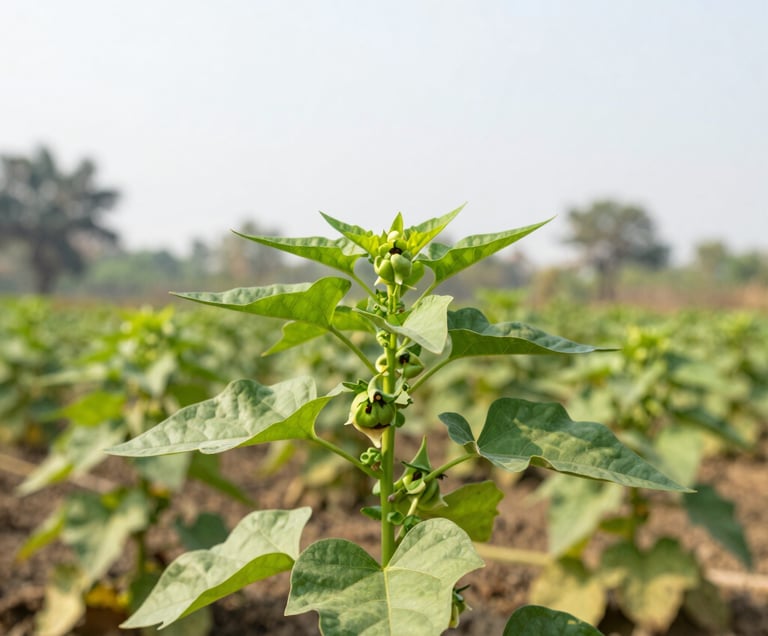
🥦 Gobhi (Cauliflower)
A popular winter vegetable crop grown for its white edible curd, widely used in cooking.
सर्दियों में उगाई जाने वाली लोकप्रिय सब्जी, जिसका सफेद फूल (कर्ड) खाने के लिए उपयोग होता है।
🌦️ Climate
Grows best in cool climate (15–25°C).
यह ठंडी जलवायु (15–25°C) में अच्छी उगती है।
🌱 Soil
Prefers well-drained fertile loamy soil rich in organic matter.
जैविक पदार्थ युक्त उपजाऊ और अच्छी जल निकासी वाली दोमट मिट्टी उपयुक्त होती है।
🌾 Varieties
Popular varieties include Pusa Snowball, Pusa Himjyoti, and Pusa Kartik Sankar.
लोकप्रिय किस्मों में पूसा स्नोबॉल, पूसा हिमज्योति और पूसा कार्तिक संकर शामिल हैं।
📅 Sowing Time
Early: May–June | Mid: July–Aug | Late: Sept–Oct.
अगेती: मई–जून | मध्यम: जुलाई–अगस्त | पछेती: सितंबर–अक्टूबर।
🥦 Harvesting
Ready in 80–120 days after transplanting.
रोपाई के 80–120 दिनों में तैयार होती है।
💧 Irrigation
Regular irrigation required; avoid water stress.
नियमित सिंचाई आवश्यक; पानी की कमी से बचें।
🧪 Fertilizers
High requirement of nitrogen with balanced NPK.
नाइट्रोजन की अधिक आवश्यकता; संतुलित एनपीके का उपयोग करें।
🐛 Pest & Disease Control
Common pests: Diamondback moth, aphids. Diseases: Black rot, downy mildew.
मुख्य कीट: डायमंडबैक मॉथ, माहू। रोग: ब्लैक रॉट, डाउनy मिल्ड्यू।
Recommended pesticides:
Emamectin Benzoate 5% SG – for caterpillars
Imidacloprid 17.8% SL – for aphids
Mancozeb 75% WP – for fungal diseases
उपयोगी दवाइयाँ:
इमामेक्टिन बेंजोएट – कीट नियंत्रण
इमिडाक्लोप्रिड – माहू नियंत्रण
मैनकोजेब – फंगल रोग नियंत्रण
💰 Investment
₹25,000–₹60,000 per acre.
₹25,000–₹60,000 प्रति एकड़।
📊 Yield
80–200 quintals per acre.
80–200 क्विंटल प्रति एकड़।
💵 Profit
₹30,000–₹1,20,000 per acre.
₹30,000–₹1,20,000 प्रति एकड़ लाभ।
🏷️ Market
High demand in winter season.
सर्दियों के मौसम में उच्च मांग।
⚠️ Risks
Pests (caterpillars), diseases, and temperature fluctuation.
कीट (इल्ली), रोग और तापमान में बदलाव का खतरा।
🌍 Best Cauliflower Varieties by Region (India)
🌍 क्षेत्र के अनुसार फूलगोभी की बेहतर किस्में
🟢 North India (UP, Punjab, Haryana)
Best for winter cultivation.
सर्दियों की खेती के लिए उपयुक्त।
Pusa Snowball ⭐
Pusa Himjyoti
Pant Shubhra
🟡 Central India (MP, Maharashtra)
Suitable for mid and late season.
मध्यम और पछेती फसल के लिए उपयुक्त।
Pusa Kartik Sankar ⭐
Pusa Early Synthetic
Indam-243
🔵 South India (Karnataka, Tamil Nadu)
Suitable for mild winter regions.
हल्की सर्दी वाले क्षेत्रों के लिए उपयुक्त।
Pusa Deepali ⭐
Early Kunwari
CO-1
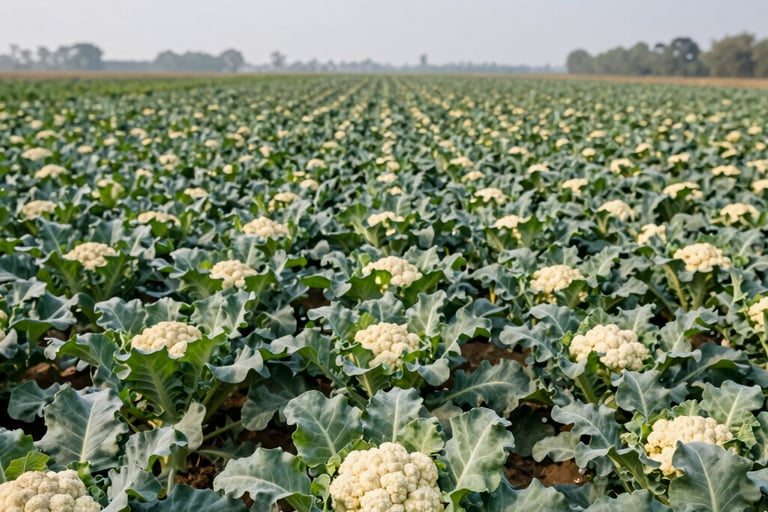
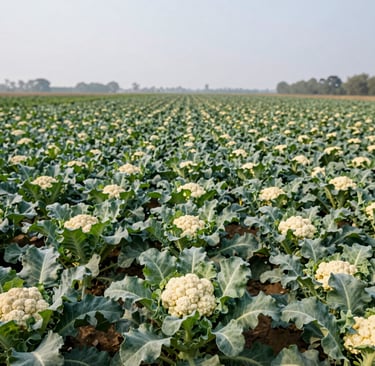
🥒 Lauki (Bottle Gourd)
A fast-growing vegetable crop widely used in daily cooking, known for high yield and health benefits.
तेजी से बढ़ने वाली सब्जी फसल, जो रोज़मर्रा के खाने में उपयोग होती है और स्वास्थ्य के लिए लाभदायक है।
🌦️ Climate
Grows best in warm climate (20–30°C).
यह गर्म जलवायु (20–30°C) में अच्छी उगती है।
🌱 Soil
Prefers well-drained sandy loam soil rich in organic matter.
जैविक पदार्थ युक्त और अच्छी जल निकासी वाली बलुई दोमट मिट्टी उपयुक्त होती है।
🌾 Varieties
Popular varieties include Pusa Naveen, Pusa Meghdoot, and Arka Bahar.
लोकप्रिय किस्मों में पूसा नवीन, पूसा मेघदूत और अर्का बहार शामिल हैं।
📅 Sowing Time
Kharif: June–July | Summer: Jan–Feb.
खरीफ: जून–जुलाई | ग्रीष्म: जनवरी–फरवरी।
🥒 Harvesting
Ready in 55–70 days after sowing.
बुवाई के 55–70 दिनों में तैयार होती है।
💧 Irrigation
Moderate water requirement; regular irrigation needed.
मध्यम पानी की जरूरत; नियमित सिंचाई आवश्यक।
🧪 Fertilizers
Use organic manure with balanced NPK.
जैविक खाद और संतुलित एनपीके का उपयोग करें।
🐛 Pest & Disease Control
Common pests: Fruit fly, aphids. Diseases: Powdery mildew.
मुख्य कीट: फल मक्खी, माहू। रोग: पाउडरी मिल्ड्यू।
Recommended pesticides:
Spinosad 45% SC – for fruit fly
Imidacloprid 17.8% SL – for aphids
Mancozeb 75% WP – for fungal diseases
उपयोगी दवाइयाँ:
स्पिनोसैड – फल मक्खी नियंत्रण
इमिडाक्लोप्रिड – माहू नियंत्रण
मैनकोजेब – फंगल रोग नियंत्रण
💰 Investment
₹15,000–₹35,000 per acre.
₹15,000–₹35,000 प्रति एकड़।
📊 Yield
80–150 quintals per acre.
80–150 क्विंटल प्रति एकड़।
💵 Profit
₹30,000–₹1,00,000 per acre.
₹30,000–₹1,00,000 प्रति एकड़ लाभ।
🏷️ Market
Good demand in local markets year-round.
स्थानीय बाजार में सालभर अच्छी मांग।
⚠️ Risks
Pest attack (fruit fly), diseases, and excess rain.
कीट आक्रमण (फल मक्खी), रोग और अधिक वर्षा का खतरा।
🌍 Best Lauki Varieties by Region (India)
🌍 क्षेत्र के अनुसार लौकी की बेहतर किस्में
🟢 North India (UP, Punjab, Haryana)
Best for summer cultivation.
ग्रीष्मकालीन खेती के लिए उपयुक्त।
Pusa Naveen ⭐
Pusa Meghdoot
Punjab Long
🟡 Central India (MP, Maharashtra)
Suitable for kharif and summer.
खरीफ और ग्रीष्म दोनों के लिए उपयुक्त।
Arka Bahar ⭐
Pusa Hybrid-3
Phule Harit
🔵 South India (Karnataka, Tamil Nadu, AP)
Best for hybrid and high yield cultivation.
हाइब्रिड और अधिक उत्पादन के लिए उपयुक्त।
Arka Bahar ⭐
CO-1
PKM-1
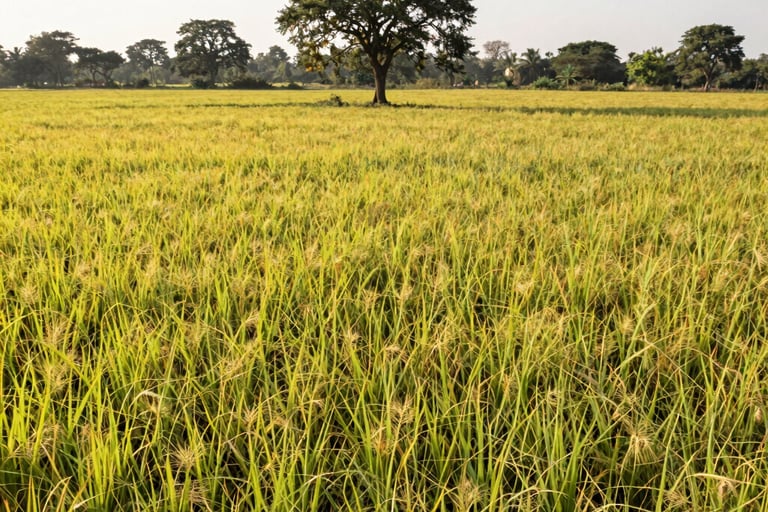
🫑 Capsicum (Shimla Mirch / Bell Pepper)
A high-value vegetable crop grown for fresh market and export, rich in vitamins A & C.
ताजा बाजार और निर्यात के लिए उगाई जाने वाली उच्च मूल्य वाली सब्जी, जो विटामिन A और C से भरपूर है।
🌦️ Climate
Grows best in moderate climate (20–30°C).
यह मध्यम जलवायु (20–30°C) में अच्छी उगती है।
🌱 Soil
Prefers well-drained fertile loamy soil rich in organic matter.
जैविक पदार्थ युक्त उपजाऊ और अच्छी जल निकासी वाली दोमट मिट्टी उपयुक्त होती है।
🌾 Varieties
Popular varieties include California Wonder, Pusa Shubhra, and Arka Lohit.
लोकप्रिय किस्मों में कैलिफ़ोर्निया वंडर, पूसा शुभ्रा और अर्का लोहित शामिल हैं।
📅 Sowing Time
Rabi: Oct–Nov | Summer: Jan–Feb.
रबी: अक्टूबर–नवंबर | ग्रीष्म: जनवरी–फरवरी।
🫑 Harvesting
Ready in 70–100 days after transplanting.
रोपाई के 70–100 दिनों में तैयार होती है।
💧 Irrigation
Moderate water requirement; avoid waterlogging.
मध्यम पानी की आवश्यकता; जलभराव से बचें।
🧪 Fertilizers
Use balanced NPK with micronutrients; extra potassium improves fruit quality.
संतुलित एनपीके और सूक्ष्म पोषक तत्वों का उपयोग करें; अतिरिक्त पोटेशियम से फल की गुणवत्ता बढ़ती है।
🐛 Pest & Disease Control
Common pests: Aphids, thrips, fruit borer. Diseases: Bacterial leaf spot, wilt.
मुख्य कीट: माहू, थ्रिप्स, फल छेदक। रोग: बैक्टीरियल लीफ स्पॉट, विल्ट।
Recommended pesticides:
Imidacloprid 17.8% SL – for aphids
Spinosad 45% SC – for insects
Copper Oxychloride 50% WP – for bacterial diseases
उपयोगी दवाइयाँ:
इमिडाक्लोप्रिड – माहू नियंत्रण
स्पिनोसैड – कीट नियंत्रण
कॉपर ऑक्सी क्लोराइड – बैक्टीरियल रोग नियंत्रण
💰 Investment
₹40,000–₹90,000 per acre.
₹40,000–₹90,000 प्रति एकड़।
📊 Yield
80–150 quintals per acre.
80–150 क्विंटल प्रति एकड़।
💵 Profit
₹50,000–₹1,50,000 per acre.
₹50,000–₹1,50,000 प्रति एकड़ लाभ।
🏷️ Market
High demand in fresh vegetable markets and export.
ताजा सब्जी बाजार और निर्यात में उच्च मांग।
⚠️ Risks
Pests (aphids, borer), bacterial and fungal diseases, and temperature fluctuation.
कीट (माहू, फल छेदक), बैक्टीरियल और फंगल रोग, तथा तापमान में उतार-चढ़ाव का खतरा।
🌍 Best Capsicum Varieties by Region (India)
🌍 क्षेत्र के अनुसार शिमला मिर्च की बेहतर किस्में
🟢 North India (UP, Punjab, Haryana)
Best for winter Rabi season cultivation.
रबी सर्दी के मौसम के लिए उपयुक्त।
Pusa Shubhra ⭐
California Wonder
Punjab Giant
🟡 Central India (MP, Maharashtra)
Suitable for summer and mid-season.
ग्रीष्म और मध्य मौसम के लिए उपयुक्त।
Arka Lohit ⭐
Arka Samrat
Phule Raj
🔵 South India (Karnataka, Tamil Nadu, AP)
Best for hybrid and high-quality fruits.
हाइब्रिड और उच्च गुणवत्ता वाले फलों के लिए उपयुक्त।
Arka Lohit ⭐
CO-1
Pusa Sadabahar
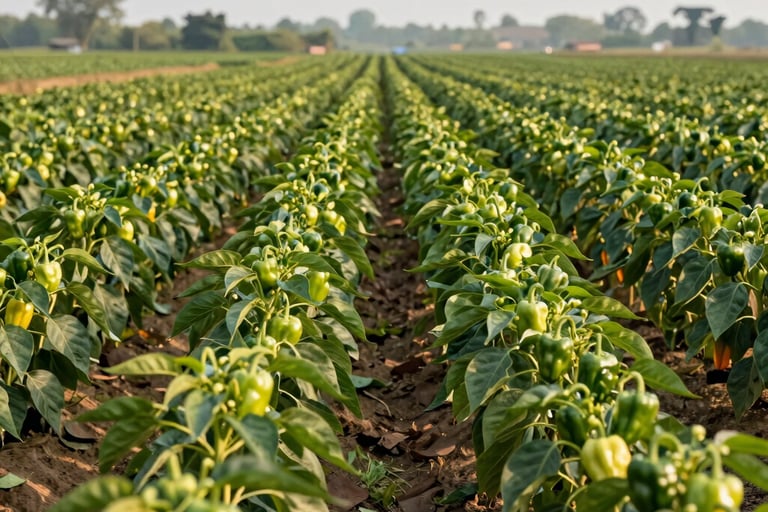
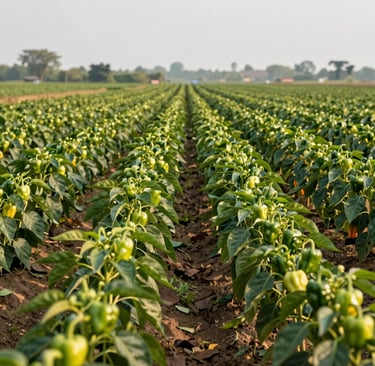
🍈 Tinda (Indian Round Gourd / Apple Gourd)
A fast-growing vegetable crop, popular in North India, used in daily cooking and known for its tender fruits.
तेजी से बढ़ने वाली सब्जी, उत्तर भारत में लोकप्रिय, रोज़ाना के खाने में उपयोग होती है और नरम फलों के लिए जानी जाती है।
🌦️ Climate
Grows best in warm climate (20–35°C).
यह गर्म जलवायु (20–35°C) में अच्छी उगती है।
🌱 Soil
Prefers well-drained sandy loam soil rich in organic matter.
जैविक पदार्थ युक्त और अच्छी जल निकासी वाली बलुई दोमट मिट्टी उपयुक्त होती है।
🌾 Varieties
Popular varieties include Pusa Tinda-1, Pusa Round, and Local Green Tinda.
लोकप्रिय किस्मों में पूसा टिंडा-1, पूसा राउंड और लोकल ग्रीन टिंडा शामिल हैं।
📅 Sowing Time
Kharif: June–July | Summer: Jan–Feb.
खरीफ: जून–जुलाई | ग्रीष्म: जनवरी–फरवरी।
🍈 Harvesting
Ready in 40–50 days after sowing; multiple pickings possible.
बुवाई के 40–50 दिनों में तैयार; कई बार फल तोड़ा जा सकता है।
💧 Irrigation
Moderate water requirement; regular irrigation needed.
मध्यम पानी की आवश्यकता; नियमित सिंचाई आवश्यक।
🧪 Fertilizers
Use organic manure with balanced NPK.
जैविक खाद और संतुलित एनपीके का उपयोग करें।
🐛 Pest & Disease Control
Common pests: Fruit fly, aphids. Diseases: Powdery mildew, mosaic virus.
मुख्य कीट: फल मक्खी, माहू। रोग: पाउडरी मिल्ड्यू, मोज़ेक वायरस।
Recommended pesticides:
Spinosad 45% SC – for fruit fly
Imidacloprid 17.8% SL – for aphids
Mancozeb 75% WP – for fungal diseases
उपयोगी दवाइयाँ:
स्पिनोसैड – फल मक्खी नियंत्रण
इमिडाक्लोप्रिड – माहू नियंत्रण
मैनकोजेब – फंगल रोग नियंत्रण
💰 Investment
₹15,000–₹30,000 per acre.
₹15,000–₹30,000 प्रति एकड़।
📊 Yield
80–120 quintals per acre.
80–120 क्विंटल प्रति एकड़।
💵 Profit
₹25,000–₹80,000 per acre.
₹25,000–₹80,000 प्रति एकड़ लाभ।
🏷️ Market
High demand in local markets for fresh tender fruits.
ताजा नरम फलों के लिए स्थानीय बाजार में उच्च मांग।
⚠️ Risks
Pest attack (fruit fly), viral diseases, and excessive rain.
कीट आक्रमण (फल मक्खी), वायरल रोग और अधिक वर्षा का खतरा।
🌍 Best Tinda Varieties by Region (India)
🌍 क्षेत्र के अनुसार टिंडा की बेहतर किस्में
🟢 North India (UP, Punjab, Haryana)
Main region for tinda cultivation.
टिंडा की मुख्य उत्पादन क्षेत्र।
Pusa Tinda-1 ⭐
Pusa Round
Local Green Tinda
🟡 Central India (MP, Maharashtra)
Suitable for summer and kharif cultivation.
ग्रीष्म और खरीफ दोनों के लिए उपयुक्त।
Pusa Tinda-1 ⭐
Arka Tinda
Local Varieties
🔵 South India (Karnataka, Tamil Nadu)
Suitable for warm-season cultivation.
गर्म मौसम वाली खेती के लिए उपयुक्त।
Arka Tinda ⭐
Local Hybrid
PKM-1
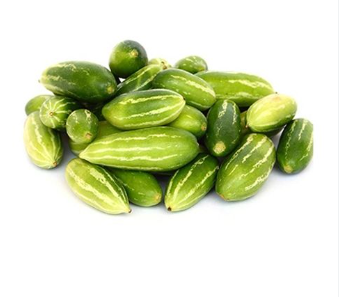
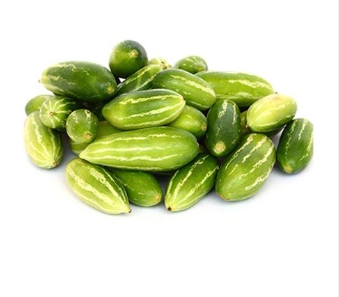
🥬 Patta Gobhi (Cabbage)
A popular leafy vegetable grown for its dense edible head, used widely in cooking and pickles.
घने खाने योग्य सिर के लिए उगाई जाने वाली लोकप्रिय पत्तेदार सब्जी, जो खाना और अचार बनाने में उपयोग होती है।
🌦️ Climate
Grows best in cool climate (15–25°C); sensitive to heat.
यह ठंडी जलवायु (15–25°C) में अच्छी उगती है; गर्मी के प्रति संवेदनशील।
🌱 Soil
Prefers well-drained fertile loamy soil rich in organic matter.
जैविक पदार्थ युक्त उपजाऊ और अच्छी जल निकासी वाली दोमट मिट्टी उपयुक्त होती है।
🌾 Varieties
Popular varieties include Pusa Early, Pusa Drumhead, and Golden Acre.
लोकप्रिय किस्मों में पूसा अर्ली, पूसा ड्रमहेड और गोल्डन एकर शामिल हैं।
📅 Sowing Time
Rabi: Oct–Feb | Summer: Mar–Apr.
रबी: अक्टूबर–फरवरी | ग्रीष्म: मार्च–अप्रैल।
🥬 Harvesting
Ready in 70–120 days after transplanting.
रोपाई के 70–120 दिनों में तैयार होती है।
💧 Irrigation
Regular irrigation required; avoid water stress.
नियमित सिंचाई आवश्यक; पानी की कमी से बचें।
🧪 Fertilizers
High nitrogen requirement with balanced NPK; use compost/organic manure.
उच्च नाइट्रोजन आवश्यकता; संतुलित एनपीके के साथ कम्पोस्ट/जैविक खाद का उपयोग करें।
🐛 Pest & Disease Control
Common pests: Aphids, caterpillars. Diseases: Black rot, downy mildew.
मुख्य कीट: माहू, कैटरपिलर। रोग: ब्लैक रॉट, डाउनy मिल्ड्यू।
Recommended pesticides:
Imidacloprid 17.8% SL – for aphids
Emamectin Benzoate 5% SG – for caterpillars
Mancozeb 75% WP – for fungal diseases
उपयोगी दवाइयाँ:
इमिडाक्लोप्रिड – माहू नियंत्रण
इमामेक्टिन बेंजोएट – कैटरपिलर नियंत्रण
मैनकोजेब – फंगल रोग नियंत्रण
💰 Investment
₹20,000–₹50,000 per acre.
₹20,000–₹50,000 प्रति एकड़।
📊 Yield
100–200 quintals per acre.
100–200 क्विंटल प्रति एकड़।
💵 Profit
₹30,000–₹1,00,000 per acre.
₹30,000–₹1,00,000 प्रति एकड़ लाभ।
🏷️ Market
High demand in winter season for fresh consumption and processing.
सर्दियों में ताजा उपयोग और प्रोसेसिंग के लिए उच्च मांग।
⚠️ Risks
Pests (aphids, caterpillars), fungal diseases, and temperature fluctuation.
कीट (माहू, कैटरपिलर), फंगल रोग और तापमान में उतार-चढ़ाव का खतरा।
🌍 Best Cabbage Varieties by Region (India)
🌍 क्षेत्र के अनुसार पत्ता गोभी की बेहतर किस्में
🟢 North India (UP, Punjab, Haryana)
Best for winter cultivation; multiple harvesting possible.
सर्दियों की खेती के लिए उपयुक्त; कई बार कटाई संभव।
Pusa Early ⭐
Pusa Drumhead
Golden Acre
🟡 Central India (MP, Maharashtra)
Suitable for Rabi and mild winter.
रबी और हल्की सर्दी के लिए उपयुक्त।
Pusa Drumhead ⭐
Indam-1
Local Varieties
🔵 South India (Karnataka, Tamil Nadu)
Suitable for mild winter and summer cultivation.
हल्की सर्दी और ग्रीष्मकालीन खेती के लिए उपयुक्त।
Pusa Early ⭐
CO-1
Local Hybrid
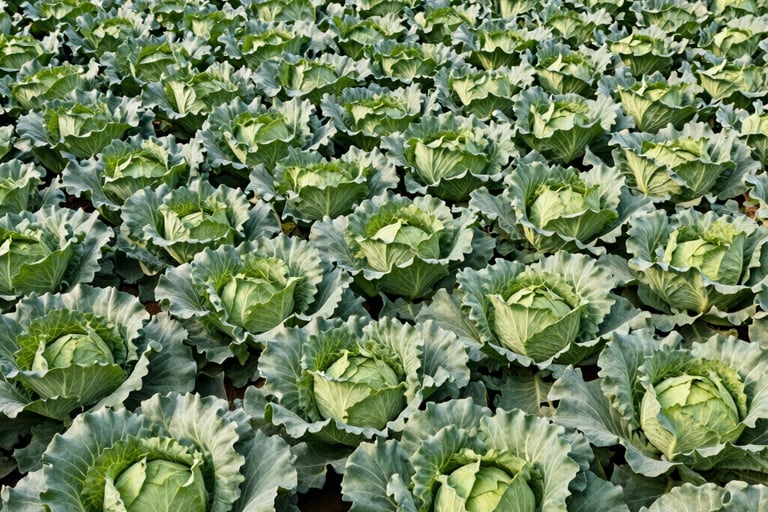
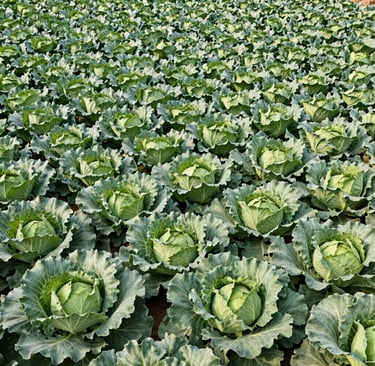
🌿 Spinach (Palak)
A fast-growing leafy vegetable, rich in iron and vitamins, popular in daily cooking.
तेजी से बढ़ने वाली पत्तेदार सब्जी, जो आयरन और विटामिन से भरपूर है और रोज़मर्रा के खाने में लोकप्रिय है।
🌦️ Climate
Grows best in cool climate (10–25°C); sensitive to heat.
यह ठंडी जलवायु (10–25°C) में अच्छी उगती है; गर्मी के प्रति संवेदनशील।
🌱 Soil
Prefers well-drained fertile loamy soil rich in organic matter.
जैविक पदार्थ युक्त उपजाऊ और अच्छी जल निकासी वाली दोमट मिट्टी उपयुक्त होती है।
🌾 Varieties
Popular varieties include Pusa All Green, Punjab Chhoti, and Local Palak.
लोकप्रिय किस्मों में पूसा ऑल ग्रीन, पंजाब छोटी और लोकल पालक शामिल हैं।
📅 Sowing Time
Rabi: Oct–Feb | Summer: Mar–Apr.
रबी: अक्टूबर–फरवरी | ग्रीष्म: मार्च–अप्रैल।
🌿 Harvesting
Ready in 25–40 days after sowing; cut multiple times.
बुवाई के 25–40 दिनों में तैयार; कई बार काटा जा सकता है।
💧 Irrigation
Regular irrigation required; avoid water stress.
नियमित सिंचाई आवश्यक; पानी की कमी से बचें।
🧪 Fertilizers
Use organic manure with light NPK; avoid excess nitrogen.
हल्का एनपीके और जैविक खाद का उपयोग करें; अधिक नाइट्रोजन से बचें।
🐛 Pest & Disease Control
Common pests: Aphids, leaf miners. Diseases: Downy mildew, leaf spot.
मुख्य कीट: माहू, लीफ माइनर। रोग: डाउनy मिल्ड्यू, लीफ स्पॉट।
Recommended pesticides:
Imidacloprid 17.8% SL – for aphids
Spinosad 45% SC – for leaf miners
Mancozeb 75% WP – for fungal diseases
उपयोगी दवाइयाँ:
इमिडाक्लोप्रिड – माहू नियंत्रण
स्पिनोसैड – लीफ माइनर नियंत्रण
मैनकोजेब – फंगल रोग नियंत्रण
💰 Investment
₹10,000–₹25,000 per acre.
₹10,000–₹25,000 प्रति एकड़।
📊 Yield
100–200 quintals per acre.
100–200 क्विंटल प्रति एकड़।
💵 Profit
₹20,000–₹80,000 per acre.
₹20,000–₹80,000 प्रति एकड़ लाभ।
🏷️ Market
High demand year-round in fresh leafy vegetable markets.
ताजा पत्तेदार सब्जी के बाजार में सालभर उच्च मांग।
⚠️ Risks
Pests (aphids, leaf miners), fungal diseases, and heat stress.
कीट (माहू, लीफ माइनर), फंगल रोग और गर्मी का खतरा।
🌍 Best Spinach Varieties by Region (India)
🌍 क्षेत्र के अनुसार पालक की बेहतर किस्में
🟢 North India (UP, Punjab, Haryana)
Best for Rabi season; multiple cuttings possible.
रबी मौसम के लिए उपयुक्त; कई बार कटाई संभव।
Pusa All Green ⭐
Punjab Chhoti
Local Varieties
🟡 Central India (MP, Maharashtra)
Suitable for Rabi and summer.
रबी और ग्रीष्म दोनों के लिए उपयुक्त।
Pusa All Green ⭐
Phule Palak
Local Hybrid
🔵 South India (Karnataka, Tamil Nadu)
Suitable for mild winter and summer cultivation.
हल्की सर्दी और ग्रीष्मकालीन खेती के लिए उपयुक्त।
Pusa All Green ⭐
Arka Harita
Local Varieties
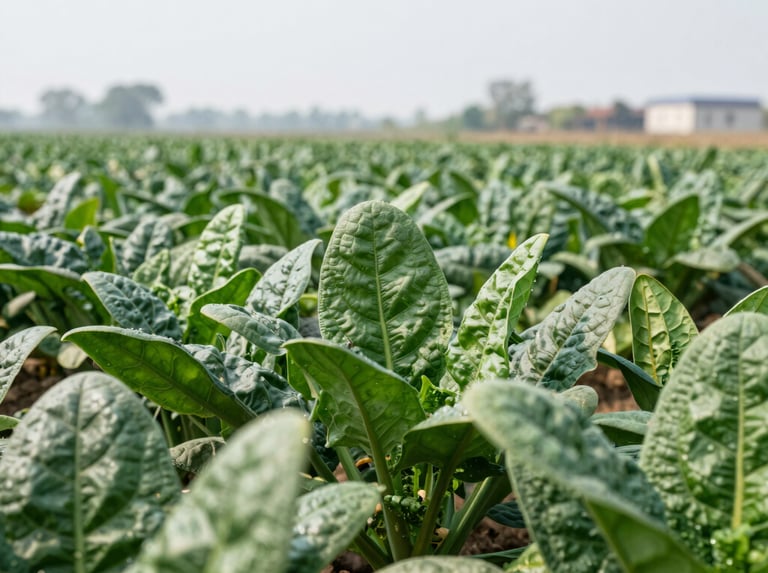
Pumpkin (Kaddu)
A popular winter vegetable crop grown for its edible fruits and seeds, used in cooking and sweets.
सर्दियों में उगाई जाने वाली लोकप्रिय सब्जी, जिसके फल और बीज खाने और मिठाई बनाने में उपयोग होते हैं।
🌦️ Climate
Grows best in warm climate (20–35°C); sensitive to frost.
यह गर्म जलवायु (20–35°C) में अच्छी उगती है; पाला पड़ने पर संवेदनशील।
🌱 Soil
Prefers well-drained fertile loamy soil rich in organic matter.
जैविक पदार्थ युक्त उपजाऊ और अच्छी जल निकासी वाली दोमट मिट्टी उपयुक्त होती है।
🌾 Varieties
Popular varieties include Arka Chandan, Pusa Hybrid-1, and Local Kaddu.
लोकप्रिय किस्मों में अर्का चंदन, पूसा हाइब्रिड-1 और लोकल कद्दू शामिल हैं।
📅 Sowing Time
Kharif: June–July | Rabi: Sept–Oct.
खरीफ: जून–जुलाई | रबी: सितंबर–अक्टूबर।
🎃 Harvesting
Ready in 90–120 days after sowing; keep for storage up to 3 months.
बुवाई के 90–120 दिनों में तैयार; भंडारण के लिए 3 महीने तक रखा जा सकता है।
💧 Irrigation
Moderate water requirement; avoid waterlogging.
मध्यम पानी की आवश्यकता; जलभराव से बचें।
🧪 Fertilizers
Use organic manure with balanced NPK; potassium improves fruit quality.
जैविक खाद और संतुलित एनपीके का उपयोग करें; पोटेशियम से फल की गुणवत्ता बढ़ती है।
🐛 Pest & Disease Control
Common pests: Fruit fly, aphids, red pumpkin beetle. Diseases: Powdery mildew, downy mildew.
मुख्य कीट: फल मक्खी, माहू, रेड पंपकिन बीटल। रोग: पाउडरी मिल्ड्यू, डाउनy मिल्ड्यू।
Recommended pesticides:
Spinosad 45% SC – for fruit fly
Imidacloprid 17.8% SL – for aphids
Mancozeb 75% WP – for fungal diseases
उपयोगी दवाइयाँ:
स्पिनोसैड – फल मक्खी नियंत्रण
इमिडाक्लोप्रिड – माहू नियंत्रण
मैनकोजेब – फंगल रोग नियंत्रण
💰 Investment
₹20,000–₹50,000 per acre.
₹20,000–₹50,000 प्रति एकड़।
📊 Yield
60–120 quintals per acre.
60–120 क्विंटल प्रति एकड़।
💵 Profit
₹25,000–₹90,000 per acre.
₹25,000–₹90,000 प्रति एकड़ लाभ।
🏷️ Market
Good demand in winter season for fresh consumption and sweets.
सर्दियों में ताजा उपयोग और मिठाई बनाने के लिए अच्छी मांग।
⚠️ Risks
Pests (fruit fly, beetle), fungal diseases, and frost.
कीट (फल मक्खी, बीटल), फंगल रोग और पाले का खतरा।
🌍 Best Pumpkin Varieties by Region (India)
🌍 क्षेत्र के अनुसार कद्दू की बेहतर किस्में
🟢 North India (UP, Punjab, Haryana)
Best for winter cultivation; good storage.
सर्दियों की खेती और भंडारण के लिए उपयुक्त।
Arka Chandan ⭐
Pusa Hybrid-1
Local Kaddu
🟡 Central India (MP, Maharashtra)
Suitable for Kharif season; high yield varieties.
खरीफ मौसम के लिए उपयुक्त; अधिक उत्पादन वाली किस्में।
Arka Chandan ⭐
Phule Kaddu
Local Varieties
🔵 South India (Karnataka, Tamil Nadu)
Best for warm-season cultivation.
गर्म मौसम वाली खेती के लिए उपयुक्त।
Arka Chandan ⭐
CO-1
Local Hybrid
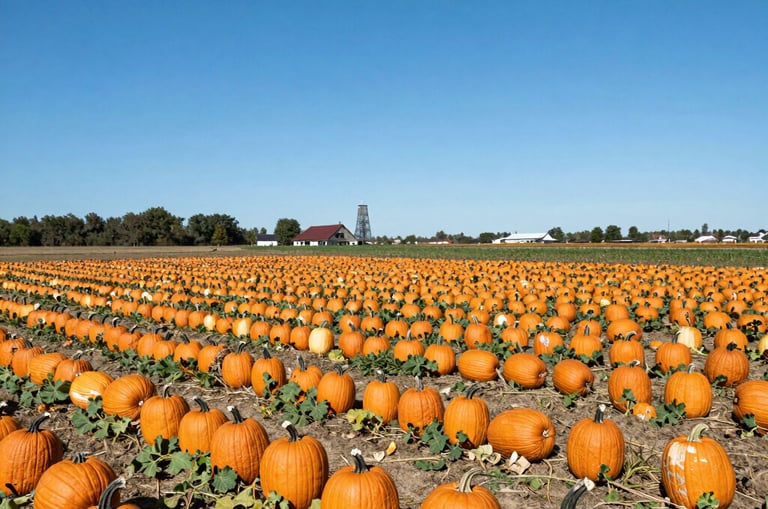
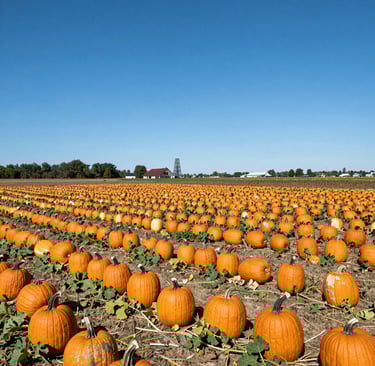
🌳 Rubber (Natural Rubber)
A plantation crop grown for latex production, widely used in tyres, industries, and manufacturing.
लेटेक्स उत्पादन के लिए उगाई जाने वाली प्लांटेशन फसल, जिसका उपयोग टायर, उद्योग और निर्माण में होता है।
🌦️ Climate
Grows best in hot and humid climate (25–35°C) with high rainfall (2000mm+).
यह गर्म और आर्द्र जलवायु (25–35°C) और अधिक वर्षा (2000 मिमी+) में अच्छी उगती है।
🌱 Soil
Prefers deep, well-drained laterite or loamy soil rich in organic matter.
गहरी, अच्छी जल निकासी वाली लेटराइट या दोमट मिट्टी उपयुक्त होती है।
🌾 Varieties
Popular clones include RRII 105, RRII 414, and GT 1.
लोकप्रिय किस्मों (क्लोन) में RRII 105, RRII 414 और GT 1 शामिल हैं।
📅 Planting Time
Best planted during monsoon (June–July).
रोपण का सर्वोत्तम समय मानसून (जून–जुलाई) है।
🌳 Harvesting (Tapping)
Latex tapping starts after 6–7 years of planting and continues for 25–30 years.
रोपण के 6–7 साल बाद लेटेक्स टैपिंग शुरू होती है और 25–30 साल तक चलती है।
💧 Irrigation
Mostly rainfed; irrigation needed in dry periods.
अधिकतर वर्षा पर निर्भर; सूखे में सिंचाई आवश्यक।
🧪 Fertilizers
Use organic manure with NPK and magnesium for growth.
जैविक खाद, एनपीके और मैग्नीशियम का उपयोग करें।
🐛 Pest & Disease Control
Common diseases: Leaf fall, powdery mildew. Pests: Termites, scale insects.
मुख्य रोग: लीफ फॉल, पाउडरी मिल्ड्यू। कीट: दीमक, स्केल कीट।
Recommended pesticides:
Chlorpyrifos 20% EC – for termites
Copper Oxychloride 50% WP – for fungal diseases
Neem Oil Bio Pesticide – eco-friendly control
उपयोगी दवाइयाँ:
क्लोरपाइरीफॉस – दीमक नियंत्रण
कॉपर ऑक्सी क्लोराइड – फंगल रोग नियंत्रण
नीम ऑयल – जैविक नियंत्रण
💰 Investment
₹1,50,000–₹3,00,000 per hectare (initial plantation).
₹1,50,000–₹3,00,000 प्रति हेक्टेयर (प्रारंभिक निवेश)।
📊 Yield
1500–2500 kg latex per hectare per year (after maturity).
परिपक्व होने के बाद 1500–2500 किग्रा लेटेक्स प्रति हेक्टेयर प्रति वर्ष।
💵 Profit
₹80,000–₹2,00,000 per hectare annually (after tapping starts).
टैपिंग शुरू होने के बाद ₹80,000–₹2,00,000 प्रति हेक्टेयर वार्षिक लाभ।
🏷️ Market
High demand in tyre, automobile, and manufacturing industries.
टायर, ऑटोमोबाइल और उद्योगों में उच्च मांग।
⚠️ Risks
Long gestation period, climate dependency, and disease outbreaks.
लंबा इंतजार (6–7 साल), जलवायु पर निर्भरता और रोग का खतरा।
🌍 Best Rubber Growing Regions in India
🌍 भारत में रबर के प्रमुख क्षेत्र
🔵 South India (Kerala, Karnataka, Tamil Nadu)
Main rubber producing region due to high rainfall.
अधिक वर्षा के कारण मुख्य उत्पादन क्षेत्र।
RRII 105 ⭐
RRII 414
GT 1
🟡 North-East India (Assam, Tripura)
Emerging rubber cultivation region.
उभरता हुआ रबर उत्पादन क्षेत्र।
RRII 105 ⭐
RRIM 600
GT 1
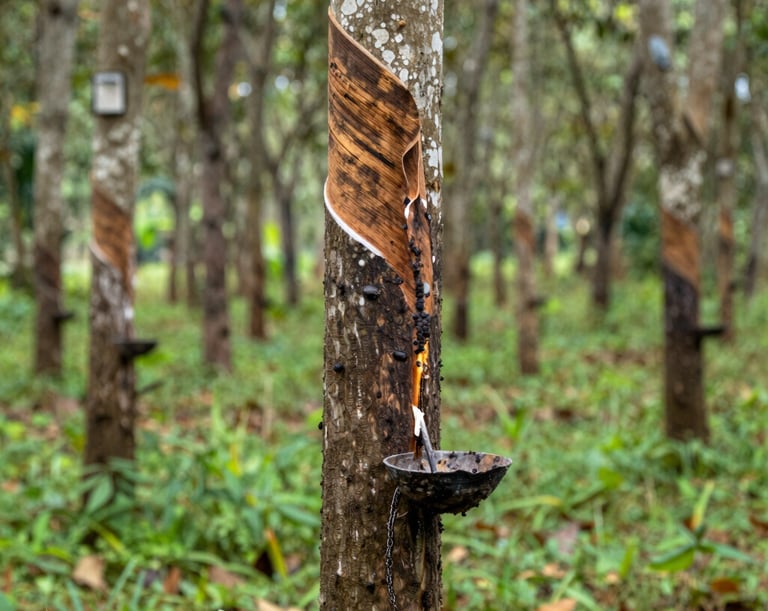
🍇 Grapes (Angoor)
A high-value fruit crop grown for fresh consumption, raisins, and wine production.
उच्च मूल्य वाली फल फसल, जिसे ताजा खाने, किशमिश और वाइन बनाने के लिए उगाया जाता है।
🌦️ Climate
Grows best in warm, dry climate (15–35°C); low rainfall during fruiting is ideal.
यह गर्म और शुष्क जलवायु (15–35°C) में अच्छी उगती है; फल बनने के समय कम वर्षा उपयुक्त होती है।
🌱 Soil
Prefers well-drained sandy loam soil with good fertility and pH 6.5–7.5.
अच्छी जल निकासी वाली उपजाऊ बलुई दोमट मिट्टी (pH 6.5–7.5) उपयुक्त होती है।
🌾 Varieties
Popular varieties include Thompson Seedless, Sonaka, and Bangalore Blue.
लोकप्रिय किस्मों में थॉम्पसन सीडलेस, सोनाका और बैंगलोर ब्लू शामिल हैं।
📅 Planting Time
Dec–Jan (North India) | June–July (South India).
दिसंबर–जनवरी (उत्तर भारत) | जून–जुलाई (दक्षिण भारत)।
🍇 Harvesting
Starts after 2–3 years; full yield after 4–5 years.
2–3 साल बाद उत्पादन शुरू; 4–5 साल में पूरा उत्पादन।
💧 Irrigation
Moderate water requirement; drip irrigation is best.
मध्यम पानी की आवश्यकता; ड्रिप सिंचाई सबसे बेहतर।
🧪 Fertilizers
Use organic manure with balanced NPK and micronutrients like zinc and boron.
जैविक खाद, संतुलित एनपीके और जिंक-बोरॉन जैसे सूक्ष्म पोषक तत्वों का उपयोग करें।
🐛 Pest & Disease Control
Common pests: Thrips, mealybugs. Diseases: Powdery mildew, downy mildew.
मुख्य कीट: थ्रिप्स, मिलीबग। रोग: पाउडरी मिल्ड्यू, डाउनy मिल्ड्यू।
Recommended pesticides:
Imidacloprid 17.8% SL – for mealybugs
Spinosad 45% SC – for thrips
Mancozeb 75% WP – for fungal diseases
उपयोगी दवाइयाँ:
इमिडाक्लोप्रिड – मिलीबग नियंत्रण
स्पिनोसैड – थ्रिप्स नियंत्रण
मैनकोजेब – फंगल रोग नियंत्रण
💰 Investment
₹1,50,000–₹3,00,000 per acre (initial setup with trellis system).
₹1,50,000–₹3,00,000 प्रति एकड़ (ट्रेलिस सिस्टम सहित प्रारंभिक निवेश)।
📊 Yield
8–15 tons per acre.
8–15 टन प्रति एकड़।
💵 Profit
₹1,00,000–₹4,00,000 per acre.
₹1,00,000–₹4,00,000 प्रति एकड़ लाभ।
🏷️ Market
High demand in fresh fruit market, export, and processing (raisins/wine).
ताजा बाजार, निर्यात और प्रोसेसिंग (किशमिश/वाइन) में उच्च मांग।
⚠️ Risks
High initial cost, diseases, and rain during fruiting stage.
उच्च प्रारंभिक लागत, रोग और फल बनने के समय बारिश का खतरा।
🌍 Best Grape Varieties by Region (India)
🌍 क्षेत्र के अनुसार अंगूर की बेहतर किस्में
🟡 Central & West India (Maharashtra, Karnataka)
Main grape producing region (export quality).
मुख्य उत्पादन क्षेत्र (निर्यात गुणवत्ता)।
Thompson Seedless ⭐
Sonaka
Sharad Seedless
🟢 North India (Punjab, Haryana)
Suitable for table grapes.
टेबल ग्रेप्स के लिए उपयुक्त।
Perlette ⭐
Beauty Seedless
Flame Seedless
🔵 South India (Tamil Nadu, AP)
Suitable for local and wine production.
स्थानीय और वाइन उत्पादन के लिए उपयुक्त।
Bangalore Blue ⭐
Muscat
Anab-e-Shahi
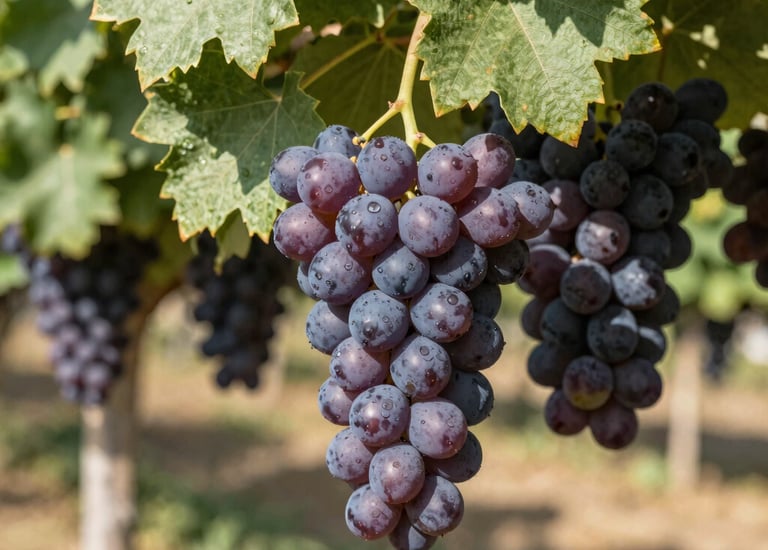
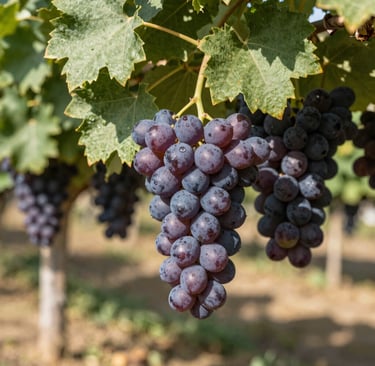
🍎 Apple (Seb)
A high-value temperate fruit crop grown in hilly regions, widely consumed fresh and used in processing.
ठंडे पहाड़ी क्षेत्रों में उगाई जाने वाली उच्च मूल्य की फल फसल, जिसे ताजा और प्रोसेसिंग दोनों के लिए उपयोग किया जाता है।
🌦️ Climate
Grows best in cool climate (7–24°C); requires chilling hours (1000–1500 hrs).
यह ठंडी जलवायु (7–24°C) में अच्छी उगती है; इसे ठंडे घंटे (1000–1500 घंटे) की आवश्यकता होती है।
🌱 Soil
Prefers well-drained loamy soil with pH 6.0–7.0.
अच्छी जल निकासी वाली दोमट मिट्टी (pH 6.0–7.0) उपयुक्त होती है।
🌾 Varieties
Popular varieties include Red Delicious, Golden Delicious, and Granny Smith.
लोकप्रिय किस्मों में रेड डिलीशियस, गोल्डन डिलीशियस और ग्रैनी स्मिथ शामिल हैं।
📅 Planting Time
Dec–Feb (dormant season).
दिसंबर–फरवरी (निष्क्रिय अवस्था में रोपण)।
🍎 Harvesting
Starts after 3–4 years; full production after 6–8 years.
3–4 साल बाद उत्पादन शुरू; 6–8 साल में पूरा उत्पादन।
💧 Irrigation
Moderate irrigation; drip irrigation preferred.
मध्यम सिंचाई; ड्रिप सिंचाई बेहतर।
🧪 Fertilizers
Use organic manure with NPK and micronutrients like boron and calcium.
जैविक खाद, एनपीके और बोरॉन- कैल्शियम जैसे सूक्ष्म पोषक तत्वों का उपयोग करें।
🐛 Pest & Disease Control
Common pests: Aphids, codling moth. Diseases: Apple scab, powdery mildew.
मुख्य कीट: माहू, कोडलिंग मॉथ। रोग: एप्पल स्कैब, पाउडरी मिल्ड्यू।
Recommended pesticides:
Imidacloprid 17.8% SL – for aphids
Chlorpyrifos 20% EC – for insects
Mancozeb 75% WP – for fungal diseases
उपयोगी दवाइयाँ:
इमिडाक्लोप्रिड – माहू नियंत्रण
क्लोरपाइरीफॉस – कीट नियंत्रण
मैनकोजेब – फंगल रोग नियंत्रण
💰 Investment
₹2,00,000–₹5,00,000 per hectare (initial plantation).
₹2,00,000–₹5,00,000 प्रति हेक्टेयर (प्रारंभिक निवेश)।
📊 Yield
10–20 tons per hectare.
10–20 टन प्रति हेक्टेयर।
💵 Profit
₹1,00,000–₹5,00,000 per hectare annually.
₹1,00,000–₹5,00,000 प्रति हेक्टेयर वार्षिक लाभ।
🏷️ Market
High demand in fresh fruit markets and processing industries.
ताजा बाजार और प्रोसेसिंग उद्योग में उच्च मांग।
⚠️ Risks
Climate dependency (chilling hours), pests, and diseases.
जलवायु (ठंडे घंटे), कीट और रोग पर निर्भरता।
🌍 Best Apple Growing Regions in India
🌍 भारत में सेब के प्रमुख क्षेत्र
🟢 North India (Himachal Pradesh, Jammu & Kashmir, Uttarakhand)
Main apple producing regions due to cold climate.
ठंडी जलवायु के कारण मुख्य उत्पादन क्षेत्र।
Red Delicious ⭐
Golden Delicious
Royal Delicious
🟡 Hilly Areas (North-East India)
Emerging apple cultivation region (low-chill varieties).
उभरता हुआ क्षेत्र (कम ठंड वाली किस्में)।
Anna ⭐
Dorset Golden
HRMN-99
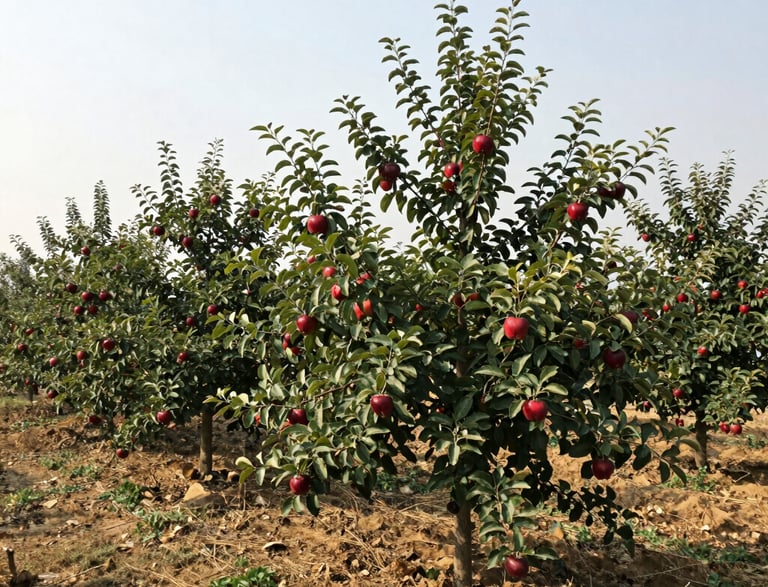
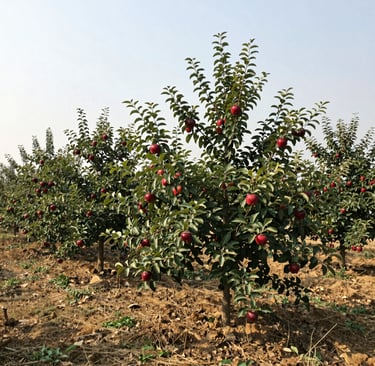
🌿 Lady Finger (Okra / Bhindi)
A widely grown vegetable crop known for its tender green pods, used daily in cooking and high market demand.
नरम हरी फलियों वाली लोकप्रिय सब्जी फसल, जो रोज़ाना के खाने में उपयोग होती है और बाजार में इसकी उच्च मांग है।
🌦️ Climate
Grows best in warm climate (20–35°C); sensitive to frost.
यह गर्म जलवायु (20–35°C) में अच्छी उगती है; पाले के प्रति संवेदनशील।
🌱 Soil
Prefers well-drained fertile loamy soil rich in organic matter.
जैविक पदार्थ युक्त उपजाऊ और अच्छी जल निकासी वाली दोमट मिट्टी उपयुक्त होती है।
🌾 Varieties
Popular varieties include Pusa Sawani, Arka Anamika, and Parbhani Kranti.
लोकप्रिय किस्मों में पूसा सावनी, अर्का अनामिका और परभणी क्रांति शामिल हैं।
📅 Sowing Time
Kharif: June–July | Summer: Jan–Feb.
खरीफ: जून–जुलाई | ग्रीष्म: जनवरी–फरवरी।
🌿 Harvesting
Ready in 45–60 days after sowing; frequent picking needed.
बुवाई के 45–60 दिनों में तैयार; नियमित तुड़ाई आवश्यक।
💧 Irrigation
Moderate water requirement; regular irrigation needed.
मध्यम पानी की आवश्यकता; नियमित सिंचाई आवश्यक।
🧪 Fertilizers
Use organic manure with balanced NPK.
जैविक खाद और संतुलित एनपीके का उपयोग करें।
🐛 Pest & Disease Control
Common pests: Aphids, fruit borer, jassids. Diseases: Yellow vein mosaic virus, powdery mildew.
मुख्य कीट: माहू, फल छेदक, जैसिड। रोग: येलो वेन मोज़ेक वायरस, पाउडरी मिल्ड्यू।
Recommended pesticides:
Imidacloprid 17.8% SL – for sucking pests
Emamectin Benzoate 5% SG – for fruit borer
Mancozeb 75% WP – for fungal diseases
उपयोगी दवाइयाँ:
इमिडाक्लोप्रिड – माहू/जैसिड नियंत्रण
इमामेक्टिन बेंजोएट – फल छेदक नियंत्रण
मैनकोजेब – फंगल रोग नियंत्रण
💰 Investment
₹15,000–₹35,000 per acre.
₹15,000–₹35,000 प्रति एकड़।
📊 Yield
50–100 quintals per acre.
50–100 क्विंटल प्रति एकड़।
💵 Profit
₹30,000–₹1,00,000 per acre.
₹30,000–₹1,00,000 प्रति एकड़ लाभ।
🏷️ Market
High demand in local markets year-round.
स्थानीय बाजार में सालभर उच्च मांग।
⚠️ Risks
Viral diseases (mosaic), pest attack, and heavy rain.
वायरल रोग (मोज़ेक), कीट आक्रमण और अधिक वर्षा का खतरा।
🌍 Best Okra Varieties by Region (India)
🌍 क्षेत्र के अनुसार भिंडी की बेहतर किस्में
🟢 North India (UP, Punjab, Haryana)
Best for summer and kharif cultivation.
ग्रीष्म और खरीफ के लिए उपयुक्त।
Pusa Sawani ⭐
Parbhani Kranti
Punjab-7
🟡 Central India (MP, Maharashtra)
Suitable for high yield and disease resistance.
उच्च उत्पादन और रोग प्रतिरोध के लिए उपयुक्त।
Arka Anamika ⭐
Phule Utkarsha
Parbhani Kranti
🔵 South India (Karnataka, Tamil Nadu)
Best for hybrid and year-round cultivation.
हाइब्रिड और सालभर खेती के लिए उपयुक्त।
Arka Anamika ⭐
CO-1
Varsha Uphar
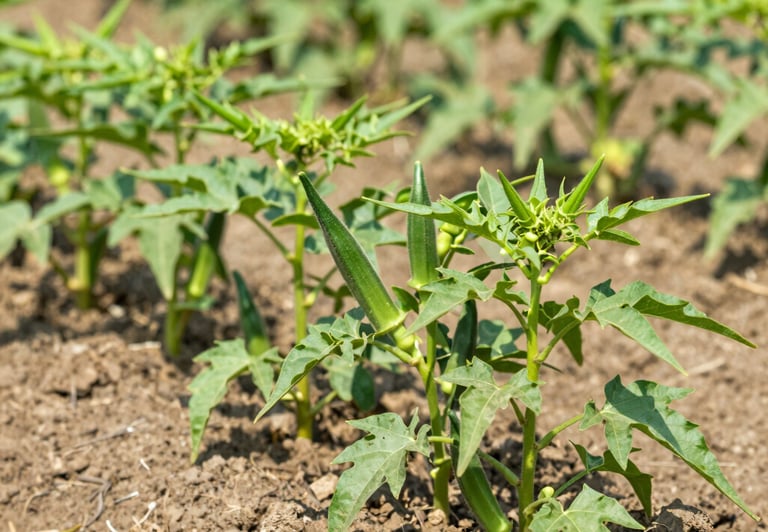
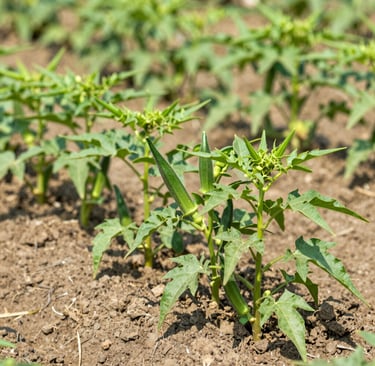
🌱 Pea (Matar)
A popular winter vegetable and pulse crop grown for green pods and dry seeds, rich in protein.
हरी फली और सूखे दाने के लिए उगाई जाने वाली लोकप्रिय सर्दी की फसल, जो प्रोटीन से भरपूर होती है।
🌦️ Climate
Grows best in cool climate (10–25°C).
यह ठंडी जलवायु (10–25°C) में अच्छी उगती है।
🌱 Soil
Prefers well-drained fertile loamy soil with good organic content.
अच्छी जल निकासी वाली जैविक पदार्थ युक्त उपजाऊ दोमट मिट्टी उपयुक्त होती है।
🌾 Varieties
Popular varieties include Arkel, Bonneville, and Pusa Pragati.
लोकप्रिय किस्मों में अर्केल, बोनविल और पूसा प्रगति शामिल हैं।
📅 Sowing Time
Rabi: Oct–Nov.
रबी: अक्टूबर–नवंबर।
🌿 Harvesting
Ready in 60–90 days after sowing.
बुवाई के 60–90 दिनों में तैयार होती है।
💧 Irrigation
Low to moderate water requirement; avoid waterlogging.
कम से मध्यम पानी की आवश्यकता; जलभराव से बचें।
🧪 Fertilizers
Use organic manure with phosphorus-rich fertilizers.
जैविक खाद और फास्फोरस युक्त उर्वरकों का उपयोग करें।
🐛 Pest & Disease Control
Common pests: Aphids, pod borer. Diseases: Powdery mildew, rust.
मुख्य कीट: माहू, फली छेदक। रोग: पाउडरी मिल्ड्यू, रस्ट।
Recommended pesticides:
Imidacloprid 17.8% SL – for aphids
Emamectin Benzoate 5% SG – for pod borer
Mancozeb 75% WP – for fungal diseases
उपयोगी दवाइयाँ:
इमिडाक्लोप्रिड – माहू नियंत्रण
इमामेक्टिन बेंजोएट – फली छेदक नियंत्रण
मैनकोजेब – फंगल रोग नियंत्रण
💰 Investment
₹10,000–₹25,000 per acre.
₹10,000–₹25,000 प्रति एकड़।
📊 Yield
40–80 quintals per acre (green pods).
40–80 क्विंटल प्रति एकड़ (हरी फली)।
💵 Profit
₹20,000–₹80,000 per acre.
₹20,000–₹80,000 प्रति एकड़ लाभ।
🏷️ Market
High demand in winter for fresh vegetables and processing.
सर्दियों में ताजा सब्जी और प्रोसेसिंग के लिए उच्च मांग।
⚠️ Risks
Fungal diseases, pest attack, and excess moisture.
फंगल रोग, कीट आक्रमण और अधिक नमी का खतरा।
🌍 Best Pea Varieties by Region (India)
🌍 क्षेत्र के अनुसार मटर की बेहतर किस्में
🟢 North India (UP, Punjab, Haryana)
Best for winter cultivation; high yield.
सर्दियों की खेती के लिए उपयुक्त; अधिक उत्पादन।
Arkel ⭐
Pusa Pragati
Azad P-1
🟡 Central India (MP, Maharashtra)
Suitable for early and mid-season crops.
अगेती और मध्यम फसल के लिए उपयुक्त।
Pusa Pragati ⭐
Bonneville
Jawahar Matar
🔵 South India (Karnataka, Tamil Nadu)
Suitable for cooler regions and winter season.
ठंडे क्षेत्रों और सर्दियों के लिए उपयुक्त।
Arkel ⭐
Bonneville
Local Varieties
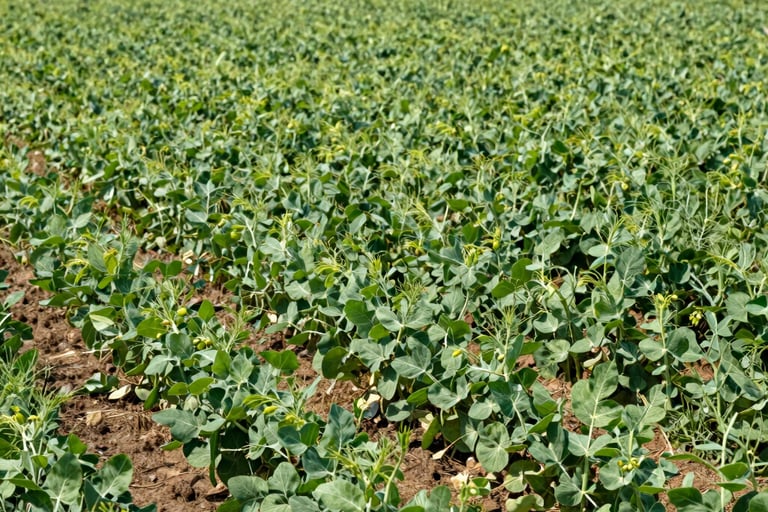
🍓 Strawberry
A high-value fruit crop grown for fresh consumption, desserts, and processing, known for its sweet taste and export demand.
मीठे स्वाद और निर्यात मांग के लिए जानी जाने वाली उच्च मूल्य की फल फसल, जिसे ताजा, डेज़र्ट और प्रोसेसिंग में उपयोग किया जाता है।
🌦️ Climate
Grows best in cool to moderate climate (15–25°C).
यह ठंडी से मध्यम जलवायु (15–25°C) में अच्छी उगती है।
🌱 Soil
Prefers well-drained sandy loam soil with high organic matter and pH 5.5–6.5.
अच्छी जल निकासी वाली जैविक पदार्थ युक्त बलुई दोमट मिट्टी (pH 5.5–6.5) उपयुक्त होती है।
🌾 Varieties
Popular varieties include Chandler, Sweet Charlie, and Festival.
लोकप्रिय किस्मों में चैंडलर, स्वीट चार्ली और फेस्टिवल शामिल हैं।
📅 Planting Time
Sept–Oct (best for winter crop).
सितंबर–अक्टूबर (सर्दी की फसल के लिए सर्वोत्तम)।
🍓 Harvesting
Ready in 60–90 days after planting; multiple pickings.
रोपण के 60–90 दिनों में तैयार; कई बार तुड़ाई।
💧 Irrigation
Frequent light irrigation; drip irrigation recommended.
बार-बार हल्की सिंचाई; ड्रिप सिंचाई उपयुक्त।
🧪 Fertilizers
Use organic manure with balanced NPK and micronutrients like calcium and boron.
जैविक खाद, संतुलित एनपीके और कैल्शियम-बोरॉन जैसे सूक्ष्म पोषक तत्वों का उपयोग करें।
🐛 Pest & Disease Control
Common pests: Aphids, mites. Diseases: Grey mold, powdery mildew.
मुख्य कीट: माहू, माइट्स। रोग: ग्रे मोल्ड, पाउडरी मिल्ड्यू।
Recommended pesticides:
Imidacloprid 17.8% SL – for aphids
Spiromesifen 22.9% SC – for mites
Mancozeb 75% WP – for fungal diseases
उपयोगी दवाइयाँ:
इमिडाक्लोप्रिड – माहू नियंत्रण
स्पायरोमेसिफेन – माइट नियंत्रण
मैनकोजेब – फंगल रोग नियंत्रण
💰 Investment
₹2,00,000–₹4,00,000 per acre (mulching + drip).
₹2,00,000–₹4,00,000 प्रति एकड़ (मल्चिंग + ड्रिप सहित)।
📊 Yield
80–120 quintals per acre.
80–120 क्विंटल प्रति एकड़।
💵 Profit
₹1,00,000–₹5,00,000 per acre.
₹1,00,000–₹5,00,000 प्रति एकड़ लाभ।
🏷️ Market
High demand in urban markets, hotels, and export.
शहरी बाजार, होटल और निर्यात में उच्च मांग।
⚠️ Risks
High investment, temperature sensitivity, and fungal diseases.
उच्च निवेश, तापमान संवेदनशीलता और फंगल रोग का खतरा।
🌍 Best Strawberry Varieties by Region (India)
🌍 क्षेत्र के अनुसार स्ट्रॉबेरी की बेहतर किस्में
🟡 West & Central India (Maharashtra, MP)
Main commercial production region (Mahabaleshwar belt).
मुख्य उत्पादन क्षेत्र (महाबलेश्वर क्षेत्र)।
Chandler ⭐
Sweet Charlie
Festival
🟢 North India (Punjab, Haryana, UP)
Suitable for winter cultivation.
सर्दियों की खेती के लिए उपयुक्त।
Sweet Charlie ⭐
Chandler
Winter Dawn
🔵 South India (Karnataka, Tamil Nadu)
Suitable for moderate climate and protected farming.
मध्यम जलवायु और संरक्षित खेती के लिए उपयुक्त।
Festival ⭐
Camarosa
Chandler
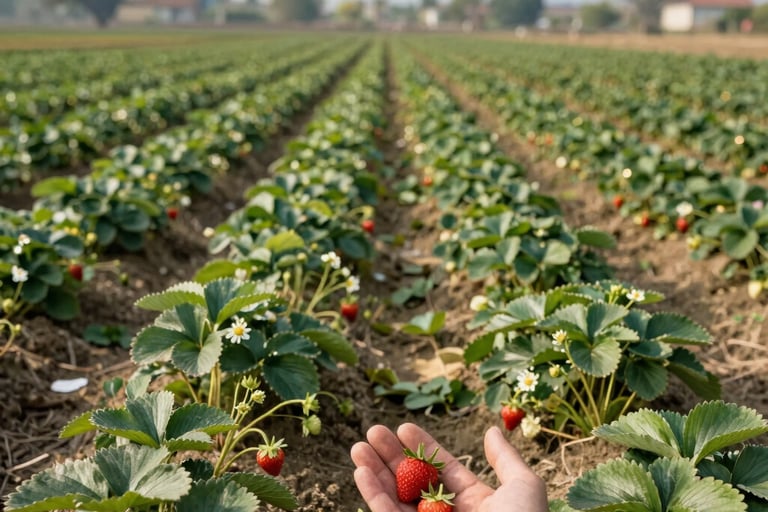
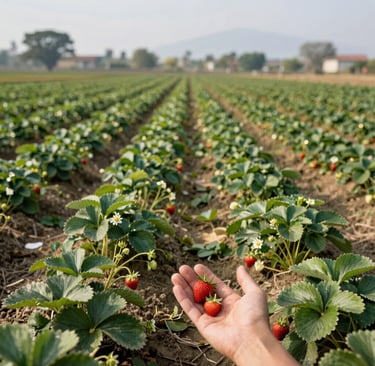
🧄 Garlic (Lehsun)
An important spice crop used in cooking and medicine, known for its strong flavor and health benefits.
खाने और औषधि में उपयोग होने वाली महत्वपूर्ण मसाला फसल, जो अपने तीखे स्वाद और स्वास्थ्य लाभ के लिए जानी जाती है।
🌦️ Climate
Grows best in cool and dry climate (12–25°C).
यह ठंडी और शुष्क जलवायु (12–25°C) में अच्छी उगती है।
🌱 Soil
Prefers well-drained sandy loam soil with good fertility and pH 6–7.5.
अच्छी जल निकासी वाली उपजाऊ बलुई दोमट मिट्टी (pH 6–7.5) उपयुक्त होती है।
🌾 Varieties
Popular varieties include Yamuna Safed, Agrifound White, and G-282.
लोकप्रिय किस्मों में यमुना सफेद, एग्रीफाउंड व्हाइट और G-282 शामिल हैं।
📅 Sowing Time
Rabi: Oct–Nov.
रबी: अक्टूबर–नवंबर।
🧄 Harvesting
Ready in 120–150 days after planting.
रोपण के 120–150 दिनों में तैयार होती है।
💧 Irrigation
Moderate water requirement; avoid waterlogging.
मध्यम पानी की आवश्यकता; जलभराव से बचें।
🧪 Fertilizers
Use organic manure with phosphorus and potassium-rich fertilizers.
जैविक खाद और फास्फोरस व पोटाश युक्त उर्वरकों का उपयोग करें।
🐛 Pest & Disease Control
Common pests: Thrips. Diseases: Purple blotch, bulb rot.
मुख्य कीट: थ्रिप्स। रोग: पर्पल ब्लॉच, बल्ब रॉट।
Recommended pesticides:
Imidacloprid 17.8% SL – for thrips
Mancozeb 75% WP – for fungal diseases
Copper Oxychloride 50% WP – for rot control
उपयोगी दवाइयाँ:
इमिडाक्लोप्रिड – थ्रिप्स नियंत्रण
मैनकोजेब – फंगल रोग नियंत्रण
कॉपर ऑक्सी क्लोराइड – सड़न नियंत्रण
💰 Investment
₹25,000–₹60,000 per acre.
₹25,000–₹60,000 प्रति एकड़।
📊 Yield
50–80 quintals per acre.
50–80 क्विंटल प्रति एकड़।
💵 Profit
₹40,000–₹1,20,000 per acre.
₹40,000–₹1,20,000 प्रति एकड़ लाभ।
🏷️ Market
High demand in spice markets and export.
मसाला बाजार और निर्यात में उच्च मांग।
⚠️ Risks
Fungal diseases, pest attack, and storage issues.
फंगल रोग, कीट आक्रमण और भंडारण की समस्या।
🌍 Best Garlic Varieties by Region (India)
🌍 क्षेत्र के अनुसार लहसुन की बेहतर किस्में
🟢 North India (UP, Punjab, Haryana)
Best for Rabi season cultivation.
रबी मौसम के लिए उपयुक्त।
Yamuna Safed ⭐
Agrifound White
G-50
🟡 Central India (MP, Maharashtra)
Main garlic producing region.
मुख्य उत्पादन क्षेत्र।
G-282 ⭐
Yamuna Safed
Agrifound White
🔵 South India (Karnataka, Tamil Nadu)
Suitable for mild winter cultivation.
हल्की सर्दी के लिए उपयुक्त।
Yamuna Safed ⭐
Ooty Garlic
Local Varieties
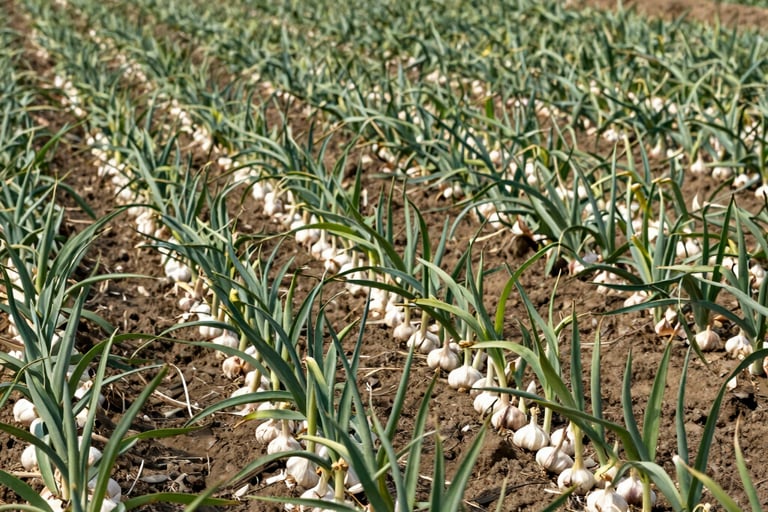
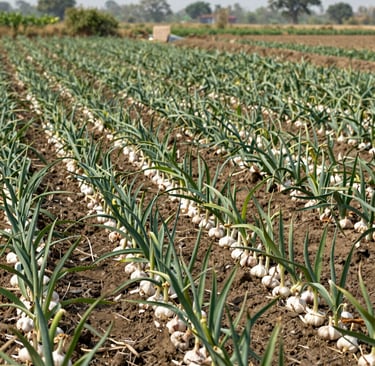
🌾 Turmeric (Haldi)
An important spice and medicinal crop grown for its rhizomes, widely used in cooking, medicine, and cosmetics.
मसाला और औषधि के रूप में उपयोग होने वाली महत्वपूर्ण फसल, जिसकी गांठ (राइजोम) का उपयोग खाना, दवा और कॉस्मेटिक में होता है।
🌦️ Climate
Grows best in warm and humid climate (20–35°C) with good rainfall.
यह गर्म और आर्द्र जलवायु (20–35°C) और अच्छी वर्षा में अच्छी उगती है।
🌱 Soil
Prefers well-drained sandy loam or loamy soil rich in organic matter.
जैविक पदार्थ युक्त और अच्छी जल निकासी वाली बलुई दोमट या दोमट मिट्टी उपयुक्त होती है।
🌾 Varieties
Popular varieties include Lakadong, Rajendra Sonia, and Prabha.
लोकप्रिय किस्मों में लाकाडोंग, राजेंद्र सोनिया और प्रभा शामिल हैं।
📅 Sowing Time
Kharif: May–June (before monsoon).
खरीफ: मई–जून (मानसून से पहले)।
🌾 Harvesting
Ready in 7–9 months after planting.
रोपण के 7–9 महीनों में तैयार होती है।
💧 Irrigation
Requires regular moisture; avoid waterlogging.
नियमित नमी आवश्यक; जलभराव से बचें।
🧪 Fertilizers
Use heavy organic manure with balanced NPK; turmeric responds well to compost.
जैविक खाद की अधिक मात्रा और संतुलित एनपीके का उपयोग करें; कम्पोस्ट से अच्छा उत्पादन मिलता है।
🐛 Pest & Disease Control
Common pests: Shoot borer, rhizome fly. Diseases: Leaf spot, rhizome rot.
मुख्य कीट: शूट बोरर, राइजोम फ्लाई। रोग: लीफ स्पॉट, राइजोम रॉट।
Recommended pesticides:
Chlorpyrifos 20% EC – for soil pests
Imidacloprid 17.8% SL – for insects
Mancozeb 75% WP – for fungal diseases
उपयोगी दवाइयाँ:
क्लोरपाइरीफॉस – मिट्टी के कीट नियंत्रण
इमिडाक्लोप्रिड – कीट नियंत्रण
मैनकोजेब – फंगल रोग नियंत्रण
💰 Investment
₹40,000–₹1,00,000 per acre.
₹40,000–₹1,00,000 प्रति एकड़।
📊 Yield
80–120 quintals per acre (fresh rhizomes).
80–120 क्विंटल प्रति एकड़ (ताजी गांठ)।
💵 Profit
₹50,000–₹2,00,000 per acre.
₹50,000–₹2,00,000 प्रति एकड़ लाभ।
🏷️ Market
High demand in spice markets, Ayurveda, and export.
मसाला बाजार, आयुर्वेद और निर्यात में उच्च मांग।
⚠️ Risks
Rhizome rot, pest attack, and excessive rainfall.
राइजोम रॉट, कीट आक्रमण और अधिक वर्षा का खतरा।
🌍 Best Turmeric Varieties by Region (India)
🌍 क्षेत्र के अनुसार हल्दी की बेहतर किस्में
🟡 Central India (MP, Maharashtra)
Suitable for high yield and commercial farming.
व्यावसायिक खेती के लिए उपयुक्त।
Rajendra Sonia ⭐
Prabha
Roma
🔵 South India (Telangana, Andhra Pradesh, Tamil Nadu)
Main turmeric producing region.
मुख्य उत्पादन क्षेत्र।
Prabha ⭐
Suguna
Sudarshan
🟢 North-East India (Meghalaya, Assam)
Famous for high curcumin content turmeric.
उच्च करक्यूमिन वाली हल्दी के लिए प्रसिद्ध।
Lakadong ⭐
Megha Turmeric
Local Varieties
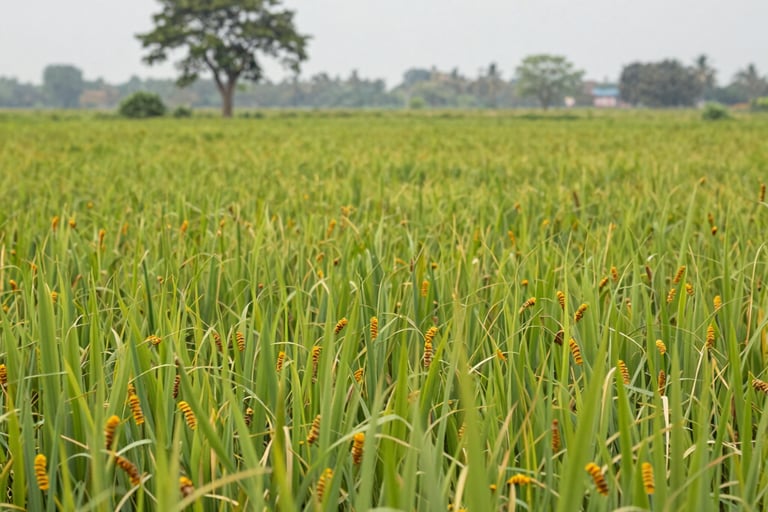
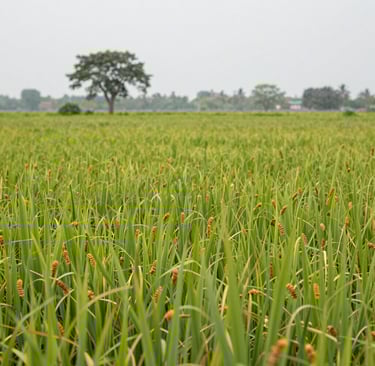
🌿 Ginger (Adrak)
An important spice and medicinal crop grown for its rhizomes, widely used in cooking, tea, and Ayurveda.
मसाला और औषधि के रूप में उपयोग होने वाली महत्वपूर्ण फसल, जिसकी गांठ (राइजोम) का उपयोग खाना, चाय और आयुर्वेद में होता है।
🌦️ Climate
Grows best in warm and humid climate (20–30°C) with moderate rainfall.
यह गर्म और आर्द्र जलवायु (20–30°C) और मध्यम वर्षा में अच्छी उगती है।
🌱 Soil
Prefers well-drained sandy loam soil rich in organic matter.
जैविक पदार्थ युक्त और अच्छी जल निकासी वाली बलुई दोमट मिट्टी उपयुक्त होती है।
🌾 Varieties
Popular varieties include Nadia, Maran, and Rio-de-Janeiro.
लोकप्रिय किस्मों में नादिया, मारन और रियो-डी-जेनेरो शामिल हैं।
📅 Sowing Time
Kharif: May–June (before monsoon).
खरीफ: मई–जून (मानसून से पहले)।
🌿 Harvesting
Ready in 6–8 months after planting.
रोपण के 6–8 महीनों में तैयार होती है।
💧 Irrigation
Requires regular moisture; avoid waterlogging.
नियमित नमी आवश्यक; जलभराव से बचें।
🧪 Fertilizers
Heavy organic manure with balanced NPK; compost improves yield.
जैविक खाद की अधिक मात्रा और संतुलित एनपीके का उपयोग करें; कम्पोस्ट से उत्पादन बढ़ता है।
🐛 Pest & Disease Control
Common pests: Shoot borer. Diseases: Rhizome rot, leaf spot.
मुख्य कीट: शूट बोरर। रोग: राइजोम रॉट, लीफ स्पॉट।
Recommended pesticides:
Chlorpyrifos 20% EC – for soil pests
Mancozeb 75% WP – for fungal diseases
Trichoderma Bio Fungicide – for root disease control
उपयोगी दवाइयाँ:
क्लोरपाइरीफॉस – मिट्टी के कीट नियंत्रण
मैनकोजेब – फंगल रोग नियंत्रण
ट्राइकोडर्मा – जड़ रोग नियंत्रण
💰 Investment
₹50,000–₹1,20,000 per acre.
₹50,000–₹1,20,000 प्रति एकड़।
📊 Yield
60–100 quintals per acre.
60–100 क्विंटल प्रति एकड़।
💵 Profit
₹60,000–₹2,50,000 per acre.
₹60,000–₹2,50,000 प्रति एकड़ लाभ।
🏷️ Market
High demand in spice markets, tea industry, and export.
मसाला बाजार, चाय उद्योग और निर्यात में उच्च मांग।
⚠️ Risks
Rhizome rot, excessive rain, and pest attack.
राइजोम रॉट, अधिक वर्षा और कीट आक्रमण का खतरा।
🌍 Best Ginger Varieties by Region (India)
🌍 क्षेत्र के अनुसार अदरक की बेहतर किस्में
🟡 Central India (MP, Maharashtra)
Suitable for commercial farming.
व्यावसायिक खेती के लिए उपयुक्त।
Nadia ⭐
Rio-de-Janeiro
Local Varieties
🔵 South India (Kerala, Karnataka, AP)
Main ginger producing region.
मुख्य उत्पादन क्षेत्र।
Maran ⭐
Rio-de-Janeiro
Varada
🟢 North-East India (Assam, Meghalaya)
Known for high-quality ginger.
उच्च गुणवत्ता वाले अदरक के लिए प्रसिद्ध।
Nadia ⭐
Local Varieties
Thingpui
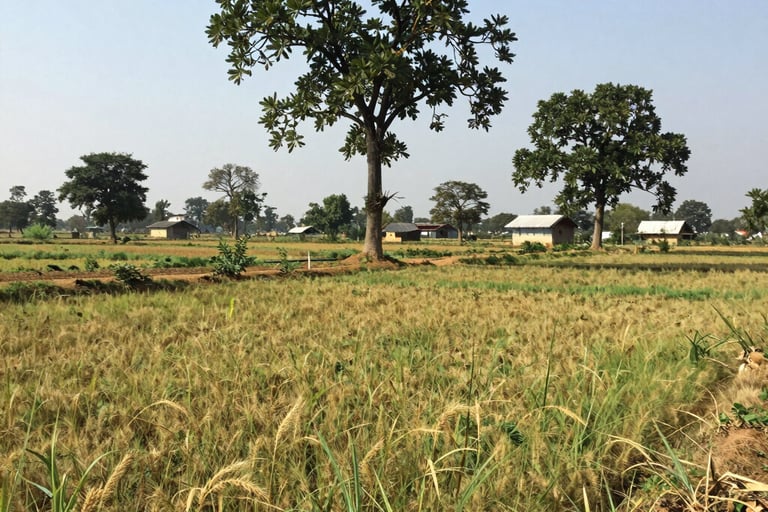
🌿Cardamom (Elaichi)
A high-value spice crop known as the “Queen of Spices,” used in food, beverages, and medicines.
“मसालों की रानी” के रूप में जानी जाने वाली उच्च मूल्य की मसाला फसल, जिसका उपयोग भोजन, पेय और औषधि में होता है।
🌦️ Climate
Grows best in cool, humid climate (10–30°C) with high rainfall and shade.
यह ठंडी और आर्द्र जलवायु (10–30°C), अधिक वर्षा और छाया में अच्छी उगती है।
🌱 Soil
Prefers rich, well-drained loamy soil with high organic matter.
जैविक पदार्थ से भरपूर और अच्छी जल निकासी वाली दोमट मिट्टी उपयुक्त होती है।
🌾 Varieties
Popular varieties include Malabar, Mysore, and Vazhukka.
लोकप्रिय किस्मों में मालाबार, मैसूर और वाझुक्का शामिल हैं।
📅 Planting Time
June–July (monsoon season).
जून–जुलाई (मानसून के समय)।
🌿 Harvesting
Starts after 2–3 years; full yield after 4–5 years.
2–3 साल बाद उत्पादन शुरू; 4–5 साल में पूरा उत्पादन।
💧 Irrigation
Requires regular moisture; mostly rainfed with shade management.
नियमित नमी आवश्यक; अधिकतर वर्षा पर निर्भर और छाया प्रबंधन जरूरी।
🧪 Fertilizers
Heavy organic manure with NPK and micronutrients like magnesium.
जैविक खाद की अधिक मात्रा, एनपीके और मैग्नीशियम जैसे पोषक तत्वों का उपयोग करें।
🐛 Pest & Disease Control
Common pests: Thrips, shoot borer. Diseases: Capsule rot, leaf spot.
मुख्य कीट: थ्रिप्स, शूट बोरर। रोग: कैप्सूल रॉट, लीफ स्पॉट।
Recommended pesticides:
Imidacloprid 17.8% SL – for thrips
Chlorpyrifos 20% EC – for borers
Mancozeb 75% WP – for fungal diseases
उपयोगी दवाइयाँ:
इमिडाक्लोप्रिड – थ्रिप्स नियंत्रण
क्लोरपाइरीफॉस – शूट बोरर नियंत्रण
मैनकोजेब – फंगल रोग नियंत्रण
💰 Investment
₹2,00,000–₹5,00,000 per hectare.
₹2,00,000–₹5,00,000 प्रति हेक्टेयर।
📊 Yield
150–300 kg dried capsules per hectare.
150–300 किग्रा सूखी इलायची प्रति हेक्टेयर।
💵 Profit
₹1,00,000–₹4,00,000 per hectare annually.
₹1,00,000–₹4,00,000 प्रति हेक्टेयर वार्षिक लाभ।
🏷️ Market
Very high demand in spice markets, export, and premium products.
मसाला बाजार, निर्यात और प्रीमियम उत्पादों में बहुत अधिक मांग।
⚠️ Risks
High investment, disease outbreaks, and climate dependency.
उच्च निवेश, रोग और जलवायु पर निर्भरता का खतरा।
🌍 Best Cardamom Growing Regions in India
🌍 भारत में इलायची के प्रमुख क्षेत्र
🔵 South India (Kerala, Karnataka, Tamil Nadu)
Main cardamom producing region (Western Ghats).
मुख्य उत्पादन क्षेत्र (पश्चिमी घाट)।
Malabar ⭐
Mysore
Vazhukka
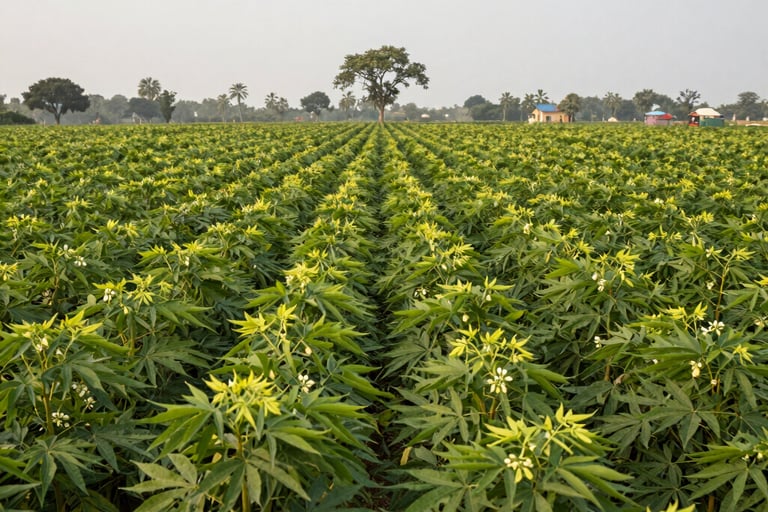
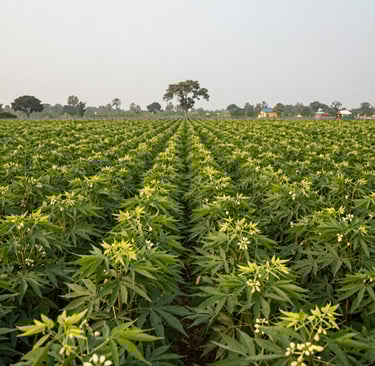
🌶️ Black Pepper (Kali Mirch)
A high-value spice crop known as the “King of Spices,” widely used in food, medicine, and export.
“मसालों का राजा” के रूप में जानी जाने वाली उच्च मूल्य की मसाला फसल, जिसका उपयोग भोजन, औषधि और निर्यात में होता है।
🌦️ Climate
Grows best in warm, humid climate (20–35°C) with good rainfall and partial shade.
यह गर्म और आर्द्र जलवायु (20–35°C), अच्छी वर्षा और आंशिक छाया में अच्छी उगती है।
🌱 Soil
Prefers well-drained fertile loamy soil rich in organic matter.
जैविक पदार्थ युक्त उपजाऊ और अच्छी जल निकासी वाली दोमट मिट्टी उपयुक्त होती है।
🌾 Varieties
Popular varieties include Panniyur-1, Karimunda, and Kottanadan.
लोकप्रिय किस्मों में पनियूर-1, करिमुंडा और कोट्टनादन शामिल हैं।
📅 Planting Time
June–July (monsoon season).
जून–जुलाई (मानसून के समय)।
🌿 Harvesting
Starts after 3–4 years; full yield after 6–7 years.
3–4 साल बाद उत्पादन शुरू; 6–7 साल में पूरा उत्पादन।
💧 Irrigation
Requires regular moisture; mostly rainfed with shade support.
नियमित नमी आवश्यक; अधिकतर वर्षा पर निर्भर और छाया जरूरी।
🧪 Fertilizers
Use organic manure with NPK and micronutrients like magnesium.
जैविक खाद, एनपीके और मैग्नीशियम जैसे पोषक तत्वों का उपयोग करें।
🐛 Pest & Disease Control
Common pests: Pollu beetle, scale insects. Diseases: Quick wilt, foot rot.
मुख्य कीट: पोल्लू बीटल, स्केल कीट। रोग: क्विक विल्ट, फुट रॉट।
Recommended pesticides:
Chlorpyrifos 20% EC – for soil pests
Imidacloprid 17.8% SL – for insects
Copper Oxychloride 50% WP – for fungal diseases
उपयोगी दवाइयाँ:
क्लोरपाइरीफॉस – मिट्टी के कीट नियंत्रण
इमिडाक्लोप्रिड – कीट नियंत्रण
कॉपर ऑक्सी क्लोराइड – फंगल रोग नियंत्रण
💰 Investment
₹1,50,000–₹3,50,000 per hectare.
₹1,50,000–₹3,50,000 प्रति हेक्टेयर।
📊 Yield
200–500 kg dried pepper per hectare.
200–500 किग्रा सूखी काली मिर्च प्रति हेक्टेयर।
💵 Profit
₹1,00,000–₹4,00,000 per hectare annually.
₹1,00,000–₹4,00,000 प्रति हेक्टेयर वार्षिक लाभ।
🏷️ Market
Very high demand in spice markets, export, and food industry.
मसाला बाजार, निर्यात और खाद्य उद्योग में बहुत अधिक मांग।
⚠️ Risks
Disease (quick wilt), climate dependency, and long maturity period.
रोग (क्विक विल्ट), जलवायु पर निर्भरता और लंबा समय लगना।
🌍 Best Black Pepper Growing Regions in India
🌍 भारत में काली मिर्च के प्रमुख क्षेत्र
🔵 South India (Kerala, Karnataka, Tamil Nadu)
Main production region (Western Ghats).
मुख्य उत्पादन क्षेत्र (पश्चिमी घाट)।
Panniyur-1 ⭐
Karimunda
Kottanadan
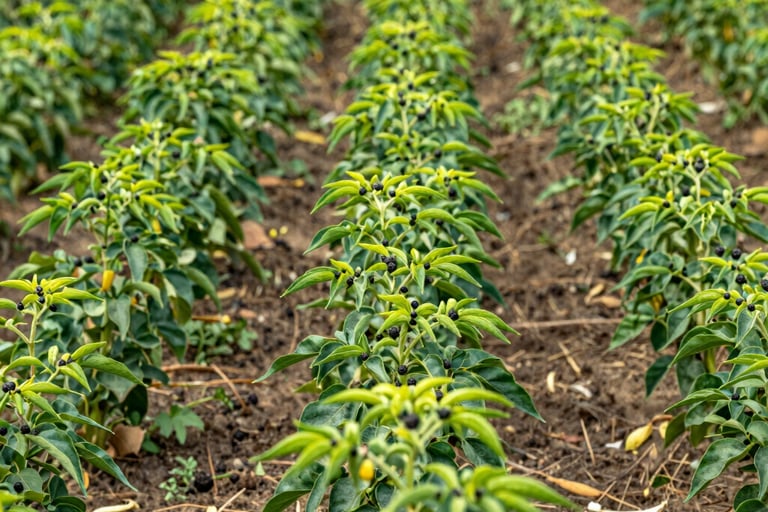
🌸 Clove (Laung)
A high-value spice crop grown for its aromatic flower buds, widely used in cooking, medicine, and essential oils.
सुगंधित फूल की कलियों के लिए उगाई जाने वाली उच्च मूल्य की मसाला फसल, जिसका उपयोग खाना, औषधि और तेल बनाने में होता है।
🌦️ Climate
Grows best in warm, humid tropical climate (20–30°C) with high rainfall and partial shade.
यह गर्म और आर्द्र उष्णकटिबंधीय जलवायु (20–30°C), अधिक वर्षा और आंशिक छाया में अच्छी उगती है।
🌱 Soil
Prefers deep, fertile, well-drained loamy soil rich in organic matter.
गहरी, उपजाऊ और अच्छी जल निकासी वाली जैविक पदार्थ युक्त दोमट मिट्टी उपयुक्त होती है।
🌾 Varieties
Popular types include Zanzibar, Sri Lankan, and Local Clove.
लोकप्रिय प्रकारों में ज़ांज़ीबार, श्रीलंकाई और लोकल लौंग शामिल हैं।
📅 Planting Time
June–July (monsoon season).
जून–जुलाई (मानसून के समय)।
🌸 Harvesting
Starts after 6–8 years; full yield after 10–12 years.
6–8 साल बाद उत्पादन शुरू; 10–12 साल में पूरा उत्पादन।
💧 Irrigation
Requires regular moisture; mostly rainfed with shade management.
नियमित नमी आवश्यक; अधिकतर वर्षा पर निर्भर और छाया प्रबंधन जरूरी।
🧪 Fertilizers
Heavy organic manure with balanced NPK and micronutrients.
जैविक खाद की अधिक मात्रा, संतुलित एनपीके और सूक्ष्म पोषक तत्वों का उपयोग करें।
🐛 Pest & Disease Control
Common pests: Stem borer, scale insects. Diseases: Leaf rot, dieback.
मुख्य कीट: स्टेम बोरर, स्केल कीट। रोग: लीफ रॉट, डाइबैक।
Recommended pesticides:
Chlorpyrifos 20% EC – for borers
Imidacloprid 17.8% SL – for insects
Copper Oxychloride 50% WP – for fungal diseases
उपयोगी दवाइयाँ:
क्लोरपाइरीफॉस – स्टेम बोरर नियंत्रण
इमिडाक्लोप्रिड – कीट नियंत्रण
कॉपर ऑक्सी क्लोराइड – फंगल रोग नियंत्रण
💰 Investment
₹2,00,000–₹6,00,000 per hectare.
₹2,00,000–₹6,00,000 प्रति हेक्टेयर।
📊 Yield
100–300 kg dried cloves per hectare.
100–300 किग्रा सूखी लौंग प्रति हेक्टेयर।
💵 Profit
₹1,00,000–₹5,00,000 per hectare annually (after maturity).
परिपक्व होने के बाद ₹1,00,000–₹5,00,000 प्रति हेक्टेयर वार्षिक लाभ।
🏷️ Market
Very high demand in spice markets, export, and essential oil industry.
मसाला बाजार, निर्यात और तेल उद्योग में बहुत अधिक मांग।
⚠️ Risks
Long gestation period, climate dependency, and disease outbreaks.
लंबा समय लगना, जलवायु पर निर्भरता और रोग का खतरा।
🌍 Best Clove Growing Regions in India
🌍 भारत में लौंग के प्रमुख क्षेत्र
🔵 South India (Kerala, Karnataka, Tamil Nadu)
Main clove producing region (tropical climate).
मुख्य उत्पादन क्षेत्र (उष्णकटिबंधीय जलवायु)।
Zanzibar ⭐
Sri Lankan
Local Clove
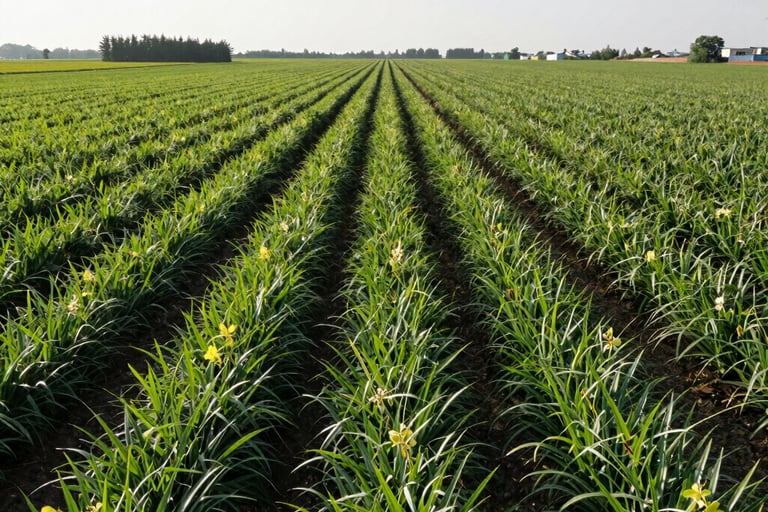
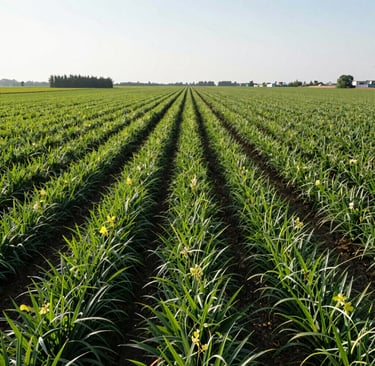
🌸 Saffron (Kesar)
The world’s most expensive spice, grown for its red stigmas, used in food, medicine, and luxury products.
दुनिया का सबसे महंगा मसाला, जिसे इसके लाल धागों (स्टिग्मा) के लिए उगाया जाता है और खाना, दवा व लक्ज़री उत्पादों में उपयोग होता है।
🌦️ Climate
Grows best in cool and dry climate (10–25°C) with cold winters and dry summers.
यह ठंडी और शुष्क जलवायु (10–25°C), ठंडी सर्दी और सूखी गर्मी में अच्छी उगती है।
🌱 Soil
Prefers well-drained sandy or loamy soil with pH 6–8.
अच्छी जल निकासी वाली बलुई या दोमट मिट्टी (pH 6–8) उपयुक्त होती है।
🌾 Varieties
Main type: Kashmiri Saffron (high quality, deep color, strong aroma).
मुख्य प्रकार: कश्मीरी केसर (उच्च गुणवत्ता, गहरा रंग और तेज सुगंध)।
📅 Planting Time
July–August (corm planting).
जुलाई–अगस्त (कॉर्म रोपण)।
🌸 Harvesting
Flowers appear in Oct–Nov; stigmas are hand-picked.
अक्टूबर–नवंबर में फूल आते हैं; धागों को हाथ से तोड़ा जाता है।
💧 Irrigation
Low water requirement; avoid excess moisture.
कम पानी की आवश्यकता; अधिक नमी से बचें।
🧪 Fertilizers
Use organic manure; avoid heavy chemical fertilizers.
जैविक खाद का उपयोग करें; रासायनिक उर्वरकों से बचें।
🐛 Pest & Disease Control
Common pests: Rodents, mites. Diseases: Corm rot.
मुख्य कीट: चूहे, माइट्स। रोग: कॉर्म रॉट।
Recommended pesticides:
Chlorpyrifos 20% EC – for soil pests
Carbendazim 50% WP – for rot control
Neem Oil Bio Pesticide – eco-friendly option
उपयोगी दवाइयाँ:
क्लोरपाइरीफॉस – मिट्टी के कीट नियंत्रण
कार्बेन्डाजिम – सड़न नियंत्रण
नीम ऑयल – जैविक नियंत्रण
💰 Investment
₹3,00,000–₹8,00,000 per hectare.
₹3,00,000–₹8,00,000 प्रति हेक्टेयर।
📊 Yield
2–5 kg saffron per hectare.
2–5 किग्रा केसर प्रति हेक्टेयर।
💵 Profit
₹3,00,000–₹10,00,000 per hectare.
₹3,00,000–₹10,00,000 प्रति हेक्टेयर लाभ।
🏷️ Market
Extremely high demand in luxury food, medicine, and export markets.
लक्ज़री फूड, औषधि और निर्यात बाजार में अत्यधिक मांग।
⚠️ Risks
Very high investment, climate sensitivity, and low yield quantity.
बहुत अधिक निवेश, जलवायु पर निर्भरता और कम उत्पादन का जोखिम।
🌍 Best Saffron Growing Regions in India
🌍 भारत में केसर के प्रमुख क्षेत्र
🟢 North India (Jammu & Kashmir – Pampore region)
World-famous saffron producing area.
विश्व प्रसिद्ध केसर उत्पादन क्षेत्र।
Kashmiri Saffron ⭐
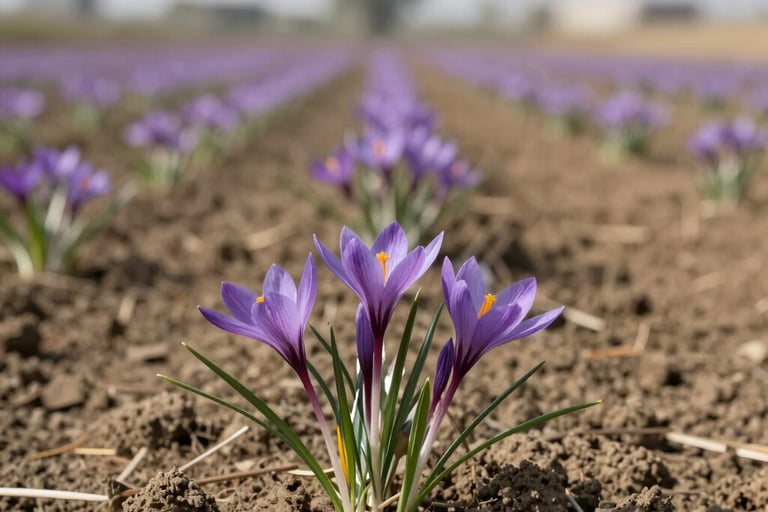
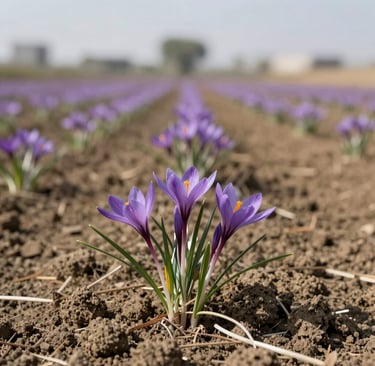
🌾 Arhar (Pigeon Pea / Tur)
A major pulse crop grown for its protein-rich grains, widely used as dal in Indian diets.
प्रोटीन से भरपूर दाल के लिए उगाई जाने वाली प्रमुख दलहनी फसल, जो भारतीय भोजन का मुख्य हिस्सा है।
🌦️ Climate
Grows best in warm climate (20–35°C); drought-tolerant crop.
यह गर्म जलवायु (20–35°C) में अच्छी उगती है; सूखा सहन करने वाली फसल है।
🌱 Soil
Prefers well-drained loamy or sandy loam soil; tolerates poor soils.
अच्छी जल निकासी वाली दोमट या बलुई दोमट मिट्टी उपयुक्त; कम उपजाऊ मिट्टी में भी उग सकती है।
🌾 Varieties
Popular varieties include ICPL 87119 (Asha), UPAS 120, and Maruti.
लोकप्रिय किस्मों में ICPL 87119 (आशा), उपास 120 और मारुति शामिल हैं।
📅 Sowing Time
Kharif: June–July (with monsoon).
खरीफ: जून–जुलाई (मानसून के साथ)।
🌾 Harvesting
Ready in 150–240 days depending on variety.
किस्म के अनुसार 150–240 दिनों में तैयार होती है।
💧 Irrigation
Low water requirement; mostly rainfed crop.
कम पानी की आवश्यकता; अधिकतर वर्षा पर निर्भर।
🧪 Fertilizers
Low fertilizer requirement; use phosphorus-rich fertilizers and organic manure.
कम उर्वरक की आवश्यकता; फास्फोरस युक्त उर्वरक और जैविक खाद का उपयोग करें।
🐛 Pest & Disease Control
Common pests: Pod borer, aphids. Diseases: Wilt, sterility mosaic.
मुख्य कीट: फली छेदक, माहू। रोग: विल्ट, स्टेरिलिटी मोज़ेक।
Recommended pesticides:
Emamectin Benzoate 5% SG – for pod borer
Imidacloprid 17.8% SL – for aphids
Carbendazim 50% WP – for wilt
उपयोगी दवाइयाँ:
इमामेक्टिन बेंजोएट – फली छेदक नियंत्रण
इमिडाक्लोप्रिड – माहू नियंत्रण
कार्बेन्डाजिम – विल्ट नियंत्रण
💰 Investment
₹10,000–₹25,000 per acre.
₹10,000–₹25,000 प्रति एकड़।
📊 Yield
8–15 quintals per acre.
8–15 क्विंटल प्रति एकड़।
💵 Profit
₹20,000–₹60,000 per acre.
₹20,000–₹60,000 प्रति एकड़ लाभ।
🏷️ Market
High demand as dal across India; MSP support available.
पूरे भारत में दाल के रूप में उच्च मांग; MSP का समर्थन उपलब्ध।
⚠️ Risks
Pest attack (pod borer), long duration, and irregular rainfall.
कीट आक्रमण (फली छेदक), लंबी अवधि और अनियमित वर्षा का खतरा।
🌍 Best Arhar Varieties by Region (India)
🌍 क्षेत्र के अनुसार अरहर की बेहतर किस्में
🟢 North India (UP, Bihar)
Best for medium and long-duration crops.
मध्यम और लंबी अवधि की फसल के लिए उपयुक्त।
UPAS 120 ⭐
Pusa 992
Asha (ICPL 87119)
🟡 Central India (MP, Maharashtra)
Main production region.
मुख्य उत्पादन क्षेत्र।
Asha (ICPL 87119) ⭐
Maruti
BDN-711
🔵 South India (Karnataka, Telangana)
Suitable for drought-prone areas.
सूखा प्रभावित क्षेत्रों के लिए उपयुक्त।
Maruti ⭐
ICPL 87119
TS-3R
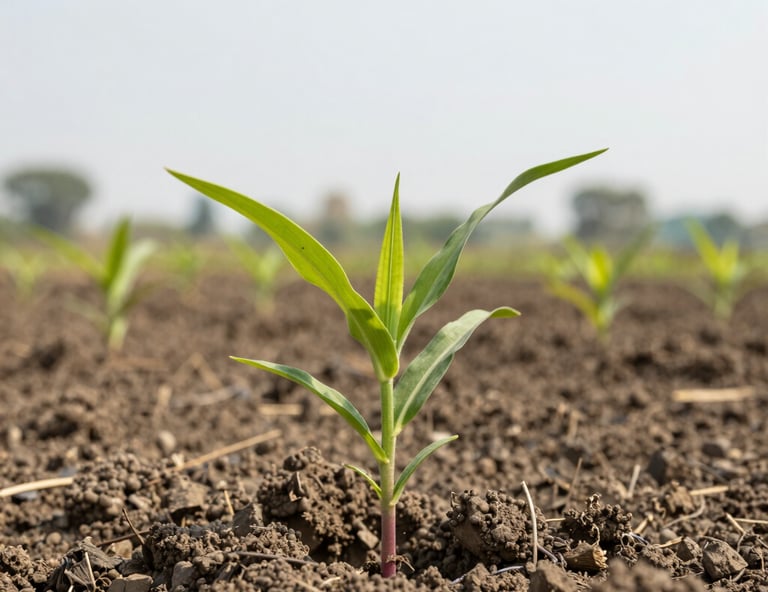
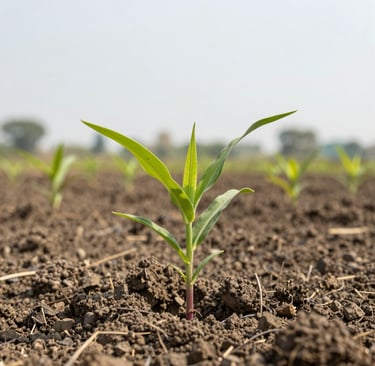
🌱 Moong (Green Gram / Mung Bean)
A short-duration pulse crop rich in protein, widely used as dal and sprouts.
कम अवधि में तैयार होने वाली प्रोटीन युक्त दलहनी फसल, जिसे दाल और अंकुरित रूप में उपयोग किया जाता है।
🌦️ Climate
Grows best in warm climate (25–35°C); drought-tolerant.
यह गर्म जलवायु (25–35°C) में अच्छी उगती है; सूखा सहनशील है।
🌱 Soil
Prefers well-drained sandy loam soil; can grow in light soils.
अच्छी जल निकासी वाली बलुई दोमट मिट्टी उपयुक्त; हल्की मिट्टी में भी उग सकती है।
🌾 Varieties
Popular varieties include Pusa Vishal, SML 668, and Samrat.
लोकप्रिय किस्मों में पूसा विशाल, SML 668 और सम्राट शामिल हैं।
📅 Sowing Time
Kharif: June–July | Summer: March–April.
खरीफ: जून–जुलाई | ग्रीष्म: मार्च–अप्रैल।
🌱 Harvesting
Ready in 60–75 days after sowing.
बुवाई के 60–75 दिनों में तैयार होती है।
💧 Irrigation
Low water requirement; avoid waterlogging.
कम पानी की आवश्यकता; जलभराव से बचें।
🧪 Fertilizers
Low fertilizer requirement; use phosphorus and organic manure.
कम उर्वरक की आवश्यकता; फास्फोरस और जैविक खाद का उपयोग करें।
🐛 Pest & Disease Control
Common pests: Whitefly, aphids. Diseases: Yellow mosaic virus, powdery mildew.
मुख्य कीट: सफेद मक्खी, माहू। रोग: येलो मोज़ेक वायरस, पाउडरी मिल्ड्यू।
Recommended pesticides:
Imidacloprid 17.8% SL – for whitefly
Thiamethoxam 25% WG – for sucking pests
Mancozeb 75% WP – for fungal diseases
उपयोगी दवाइयाँ:
इमिडाक्लोप्रिड – सफेद मक्खी नियंत्रण
थायमेथोक्साम – चूसक कीट नियंत्रण
मैनकोजेब – फंगल रोग नियंत्रण
💰 Investment
₹8,000–₹20,000 per acre.
₹8,000–₹20,000 प्रति एकड़।
📊 Yield
5–10 quintals per acre.
5–10 क्विंटल प्रति एकड़।
💵 Profit
₹15,000–₹50,000 per acre.
₹15,000–₹50,000 प्रति एकड़ लाभ।
🏷️ Market
High demand for dal and sprouts; MSP support available.
दाल और अंकुरित रूप में उच्च मांग; MSP का समर्थन उपलब्ध।
⚠️ Risks
Viral diseases (YMV), pest attack, and heavy rainfall.
वायरल रोग (YMV), कीट आक्रमण और अधिक वर्षा का खतरा।
🌍 Best Moong Varieties by Region (India)
🌍 क्षेत्र के अनुसार मूंग की बेहतर किस्में
🟢 North India (UP, Punjab, Haryana)
Best for summer and kharif cropping.
ग्रीष्म और खरीफ दोनों के लिए उपयुक्त।
Pusa Vishal ⭐
SML 668
Pant Moong-5
🟡 Central India (MP, Maharashtra)
Main production region; suitable for short-duration crops.
मुख्य उत्पादन क्षेत्र; कम अवधि वाली फसल के लिए उपयुक्त।
Samrat ⭐
Pusa Vishal
Kopergaon
🔵 South India (Karnataka, AP, Tamil Nadu)
Suitable for multiple seasons.
कई मौसमों के लिए उपयुक्त।
SML 668 ⭐
TMV-1
CO-4
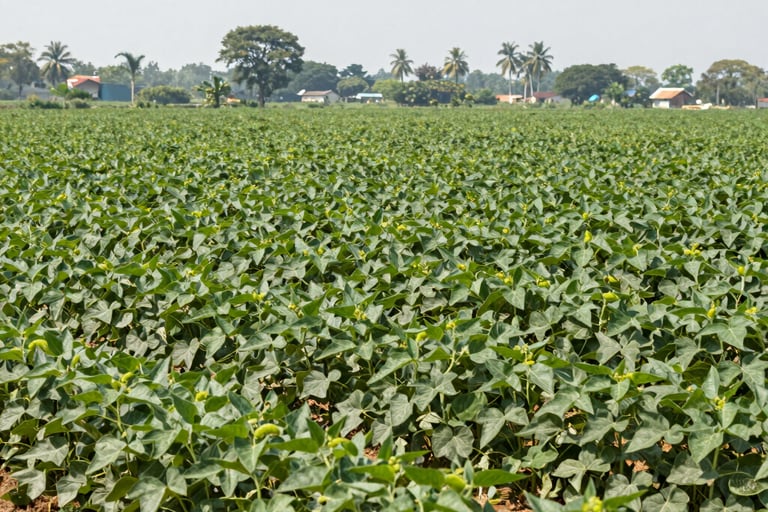
🌾 Urad (Black Gram)
An important pulse crop rich in protein, widely used in dal, dosa, and idli preparation.
प्रोटीन से भरपूर महत्वपूर्ण दलहनी फसल, जिसका उपयोग दाल, डोसा और इडली बनाने में होता है।
🌦️ Climate
Grows best in warm climate (25–35°C); drought-tolerant.
यह गर्म जलवायु (25–35°C) में अच्छी उगती है; सूखा सहनशील है।
🌱 Soil
Prefers well-drained loamy soil; tolerates poor soils.
अच्छी जल निकासी वाली दोमट मिट्टी उपयुक्त; कम उपजाऊ मिट्टी में भी उग सकती है।
🌾 Varieties
Popular varieties include T-9, PU-31, and Pant U-30.
लोकप्रिय किस्मों में T-9, PU-31 और पंत U-30 शामिल हैं।
📅 Sowing Time
Kharif: June–July | Summer: March–April.
खरीफ: जून–जुलाई | ग्रीष्म: मार्च–अप्रैल।
🌾 Harvesting
Ready in 70–90 days after sowing.
बुवाई के 70–90 दिनों में तैयार होती है।
💧 Irrigation
Low water requirement; avoid waterlogging.
कम पानी की आवश्यकता; जलभराव से बचें।
🧪 Fertilizers
Low fertilizer need; use phosphorus and organic manure.
कम उर्वरक आवश्यकता; फास्फोरस और जैविक खाद का उपयोग करें।
🐛 Pest & Disease Control
Common pests: Whitefly, aphids. Diseases: Yellow mosaic virus, leaf spot.
मुख्य कीट: सफेद मक्खी, माहू। रोग: येलो मोज़ेक वायरस, लीफ स्पॉट।
Recommended pesticides:
Imidacloprid 17.8% SL – for whitefly
Thiamethoxam 25% WG – for sucking pests
Mancozeb 75% WP – for fungal diseases
उपयोगी दवाइयाँ:
इमिडाक्लोप्रिड – सफेद मक्खी नियंत्रण
थायमेथोक्साम – चूसक कीट नियंत्रण
मैनकोजेब – फंगल रोग नियंत्रण
💰 Investment
₹8,000–₹20,000 per acre.
₹8,000–₹20,000 प्रति एकड़।
📊 Yield
5–12 quintals per acre.
5–12 क्विंटल प्रति एकड़।
💵 Profit
₹15,000–₹60,000 per acre.
₹15,000–₹60,000 प्रति एकड़ लाभ।
🏷️ Market
High demand in food industry and household consumption.
खाद्य उद्योग और घरेलू उपयोग में उच्च मांग।
⚠️ Risks
Viral diseases (YMV), pest attack, and excess rain.
वायरल रोग (YMV), कीट आक्रमण और अधिक वर्षा का खतरा।
🌍 Best Urad Varieties by Region (India)
🌍 क्षेत्र के अनुसार उड़द की बेहतर किस्में
🟢 North India (UP, Punjab, Haryana)
Best for kharif and summer cropping.
खरीफ और ग्रीष्म दोनों के लिए उपयुक्त।
T-9 ⭐
Pant U-30
PU-31
🟡 Central India (MP, Maharashtra)
Main production region.
मुख्य उत्पादन क्षेत्र।
PU-31 ⭐
T-9
LBG-20
🔵 South India (Karnataka, AP, Tamil Nadu)
Suitable for multiple seasons.
कई मौसमों के लिए उपयुक्त।
LBG-20 ⭐
PU-31
CO-5
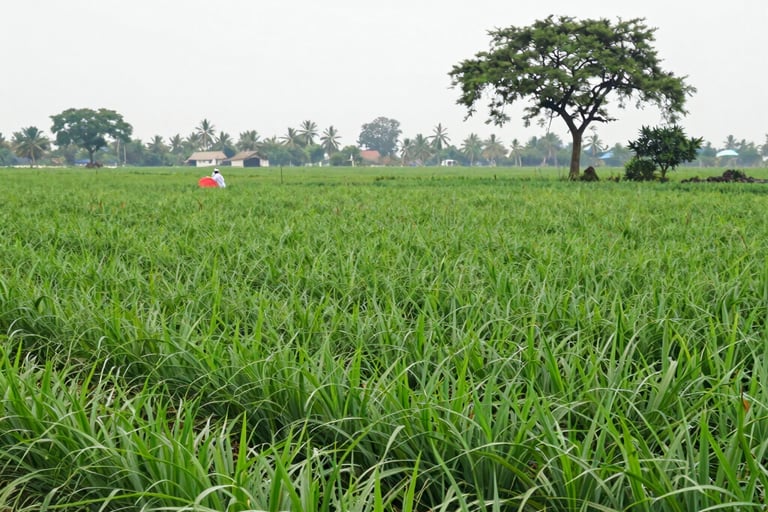
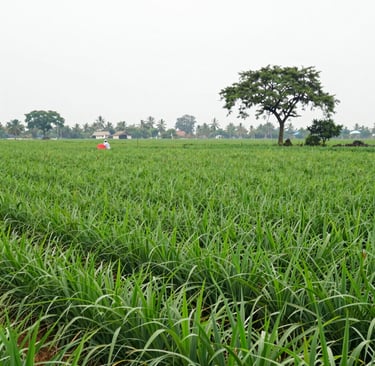
🌱 Rajma (Kidney Bean)
A nutritious pulse crop known for its protein-rich seeds, widely used in dishes like rajma-chawal.
प्रोटीन से भरपूर बीजों वाली पौष्टिक दलहनी फसल, जिसका उपयोग राजमा-चावल जैसे व्यंजनों में किया जाता है।
🌦️ Climate
Grows best in cool to moderate climate (15–25°C).
यह ठंडी से मध्यम जलवायु (15–25°C) में अच्छी उगती है।
🌱 Soil
Prefers well-drained loamy soil rich in organic matter.
जैविक पदार्थ युक्त और अच्छी जल निकासी वाली दोमट मिट्टी उपयुक्त होती है।
🌾 Varieties
Popular varieties include Pusa Parvati, HUR-15, and Arka Komal.
लोकप्रिय किस्मों में पूसा पार्वती, HUR-15 और अर्का कोमल शामिल हैं।
📅 Sowing Time
Rabi (North): Oct–Nov | Kharif (Hills): May–June.
रबी (उत्तर): अक्टूबर–नवंबर | खरीफ (पहाड़ी क्षेत्र): मई–जून।
🌾 Harvesting
Ready in 90–120 days after sowing.
बुवाई के 90–120 दिनों में तैयार होती है।
💧 Irrigation
Moderate water requirement; avoid excess moisture.
मध्यम पानी की आवश्यकता; अधिक नमी से बचें।
🧪 Fertilizers
Use organic manure with phosphorus-rich fertilizers.
जैविक खाद और फास्फोरस युक्त उर्वरकों का उपयोग करें।
🐛 Pest & Disease Control
Common pests: Aphids, pod borer. Diseases: Rust, anthracnose.
मुख्य कीट: माहू, फली छेदक। रोग: रस्ट, एन्थ्रेक्नोज।
Recommended pesticides:
Imidacloprid 17.8% SL – for aphids
Emamectin Benzoate 5% SG – for pod borer
Mancozeb 75% WP – for fungal diseases
उपयोगी दवाइयाँ:
इमिडाक्लोप्रिड – माहू नियंत्रण
इमामेक्टिन बेंजोएट – फली छेदक नियंत्रण
मैनकोजेब – फंगल रोग नियंत्रण
💰 Investment
₹15,000–₹40,000 per acre.
₹15,000–₹40,000 प्रति एकड़।
📊 Yield
8–15 quintals per acre.
8–15 क्विंटल प्रति एकड़।
💵 Profit
₹30,000–₹1,00,000 per acre.
₹30,000–₹1,00,000 प्रति एकड़ लाभ।
🏷️ Market
High demand in domestic consumption and restaurants.
घरेलू उपयोग और रेस्तरां में उच्च मांग।
⚠️ Risks
Fungal diseases, pest attack, and temperature sensitivity.
फंगल रोग, कीट आक्रमण और तापमान पर निर्भरता।
🌍 Best Rajma Varieties by Region (India)
🌍 क्षेत्र के अनुसार राजमा की बेहतर किस्में
🟢 North India (Himachal, J&K, Uttarakhand)
Famous for high-quality rajma production.
उच्च गुणवत्ता वाले राजमा के लिए प्रसिद्ध।
Pusa Parvati ⭐
HUR-15
Local Hill Rajma
🟡 Central India (MP, Maharashtra)
Suitable for moderate climate cultivation.
मध्यम जलवायु के लिए उपयुक्त।
Arka Komal ⭐
Pusa Parvati
Local Varieties
🔵 South India (Karnataka, Tamil Nadu)
Grown in cooler regions and hills.
ठंडे और पहाड़ी क्षेत्रों में उगाया जाता है।
Arka Komal ⭐
Local Varieties
HUR-15
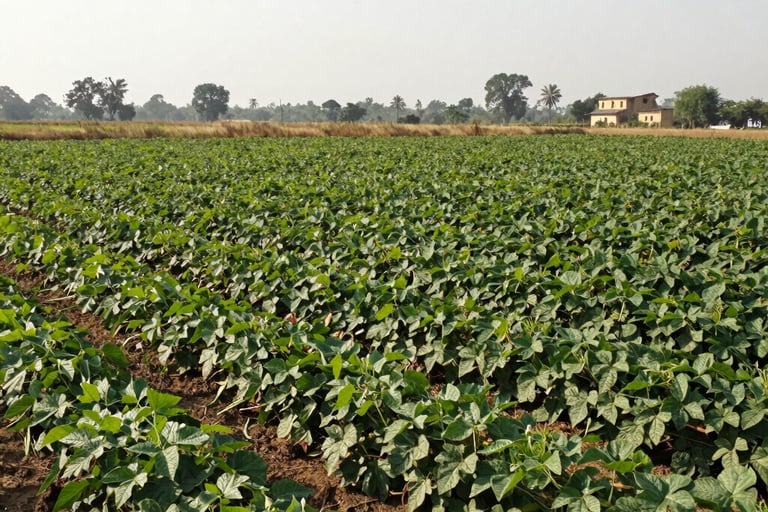
🌾 Chana (Gram / Chickpea)
One of the most important pulse crops, rich in protein, widely used as dal, flour (besan), and snacks.
प्रोटीन से भरपूर प्रमुख दलहनी फसल, जिसका उपयोग दाल, बेसन और स्नैक्स में किया जाता है।
🌦️ Climate
Grows best in cool and dry climate (15–25°C).
यह ठंडी और शुष्क जलवायु (15–25°C) में अच्छी उगती है।
🌱 Soil
Prefers well-drained loamy or sandy loam soil; tolerates slightly saline soils.
अच्छी जल निकासी वाली दोमट या बलुई दोमट मिट्टी उपयुक्त; हल्की लवणीय मिट्टी में भी उग सकती है।
🌾 Varieties
Popular varieties include JG-11, Pusa 362, and Vijay.
लोकप्रिय किस्मों में JG-11, पूसा 362 और विजय शामिल हैं।
📅 Sowing Time
Rabi: Oct–Nov.
रबी: अक्टूबर–नवंबर।
🌾 Harvesting
Ready in 90–120 days after sowing.
बुवाई के 90–120 दिनों में तैयार होती है।
💧 Irrigation
Low water requirement; mostly rainfed.
कम पानी की आवश्यकता; अधिकतर वर्षा पर निर्भर।
🧪 Fertilizers
Low fertilizer need; use phosphorus and organic manure.
कम उर्वरक आवश्यकता; फास्फोरस और जैविक खाद का उपयोग करें।
🐛 Pest & Disease Control
Common pests: Pod borer. Diseases: Wilt, blight.
मुख्य कीट: फली छेदक। रोग: विल्ट, ब्लाइट।
Recommended pesticides:
Emamectin Benzoate 5% SG – for pod borer
Chlorpyrifos 20% EC – for soil pests
Carbendazim 50% WP – for fungal diseases
उपयोगी दवाइयाँ:
इमामेक्टिन बेंजोएट – फली छेदक नियंत्रण
क्लोरपाइरीफॉस – मिट्टी के कीट नियंत्रण
कार्बेन्डाजिम – फंगल रोग नियंत्रण
💰 Investment
₹10,000–₹25,000 per acre.
₹10,000–₹25,000 प्रति एकड़।
📊 Yield
8–15 quintals per acre.
8–15 क्विंटल प्रति एकड़।
💵 Profit
₹20,000–₹80,000 per acre.
₹20,000–₹80,000 प्रति एकड़ लाभ।
🏷️ Market
Very high demand for dal, besan, and processed foods; MSP available.
दाल, बेसन और प्रोसेस्ड फूड में बहुत अधिक मांग; MSP उपलब्ध।
⚠️ Risks
Pod borer attack, fungal diseases, and unseasonal rain.
फली छेदक का आक्रमण, फंगल रोग और असमय वर्षा का खतरा।
🌍 Best Chana Varieties by Region (India)
🌍 क्षेत्र के अनुसार चना की बेहतर किस्में
🟡 Central India (MP, Maharashtra)
Largest chana producing region.
सबसे बड़ा उत्पादन क्षेत्र।
JG-11 ⭐
Vijay
JAKI-9218
🟢 North India (UP, Rajasthan, Haryana)
Suitable for rabi cultivation.
रबी मौसम के लिए उपयुक्त।
Pusa 362 ⭐
BG-256
HC-5
🔵 South India (Karnataka, AP, Telangana)
Suitable for dryland farming.
सूखा क्षेत्र की खेती के लिए उपयुक्त।
JG-11 ⭐
Annigeri
KAK-2
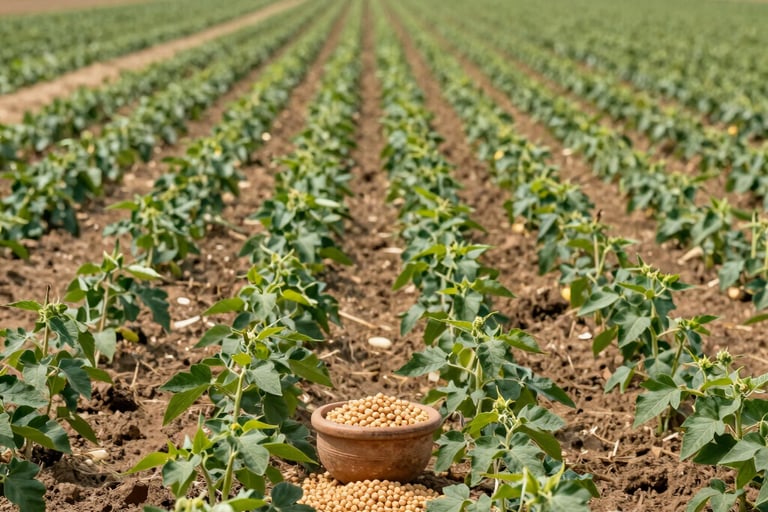
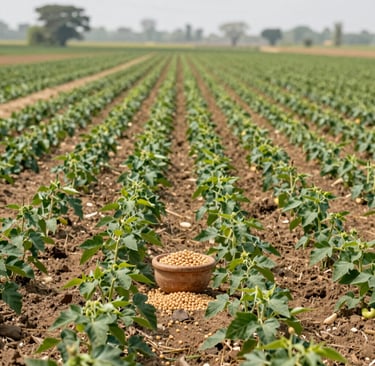
🌾 Masoor (Lentil)
A major rabi pulse crop rich in protein, widely used as dal in Indian households.
प्रोटीन से भरपूर प्रमुख रबी दलहनी फसल, जिसका उपयोग दाल के रूप में किया जाता है।
🌦️ Climate
Grows best in cool and dry climate (15–25°C).
यह ठंडी और शुष्क जलवायु (15–25°C) में अच्छी उगती है।
🌱 Soil
Prefers well-drained loamy or sandy loam soil; tolerates low fertility soils.
अच्छी जल निकासी वाली दोमट या बलुई दोमट मिट्टी उपयुक्त; कम उपजाऊ मिट्टी में भी उग सकती है।
🌾 Varieties
Popular varieties include Pusa Masoor-5, KLS-218, and PL-406.
लोकप्रिय किस्मों में पूसा मसूर-5, KLS-218 और PL-406 शामिल हैं।
📅 Sowing Time
Rabi: Oct–Nov.
रबी: अक्टूबर–नवंबर।
🌾 Harvesting
Ready in 100–120 days after sowing.
बुवाई के 100–120 दिनों में तैयार होती है।
💧 Irrigation
Low water requirement; mostly rainfed.
कम पानी की आवश्यकता; अधिकतर वर्षा पर निर्भर।
🧪 Fertilizers
Low fertilizer need; use phosphorus and organic manure.
कम उर्वरक आवश्यकता; फास्फोरस और जैविक खाद का उपयोग करें।
🐛 Pest & Disease Control
Common pests: Aphids. Diseases: Rust, wilt.
मुख्य कीट: माहू। रोग: रस्ट, विल्ट।
Recommended pesticides:
Imidacloprid 17.8% SL – for aphids
Mancozeb 75% WP – for fungal diseases
Carbendazim 50% WP – for wilt
उपयोगी दवाइयाँ:
इमिडाक्लोप्रिड – माहू नियंत्रण
मैनकोजेब – फंगल रोग नियंत्रण
कार्बेन्डाजिम – विल्ट नियंत्रण
💰 Investment
₹8,000–₹20,000 per acre.
₹8,000–₹20,000 प्रति एकड़।
📊 Yield
6–12 quintals per acre.
6–12 क्विंटल प्रति एकड़।
💵 Profit
₹15,000–₹60,000 per acre.
₹15,000–₹60,000 प्रति एकड़ लाभ।
🏷️ Market
High demand as dal across India; MSP available.
पूरे भारत में दाल के रूप में उच्च मांग; MSP उपलब्ध।
⚠️ Risks
Fungal diseases, pest attack, and unseasonal rain.
फंगल रोग, कीट आक्रमण और असमय वर्षा का खतरा।
🌍 Best Masoor Varieties by Region (India)
🌍 क्षेत्र के अनुसार मसूर की बेहतर किस्में
🟢 North India (UP, Bihar, Punjab)
Best for rabi cultivation.
रबी मौसम के लिए उपयुक्त।
Pusa Masoor-5 ⭐
PL-406
L-4076
🟡 Central India (MP, Maharashtra)
Main production region.
मुख्य उत्पादन क्षेत्र।
KLS-218 ⭐
Pusa Masoor-5
JL-3
🔵 East India (West Bengal, Odisha)
Suitable for moderate climate.
मध्यम जलवायु के लिए उपयुक्त।
PL-406 ⭐
WBL-77
Local Varieties
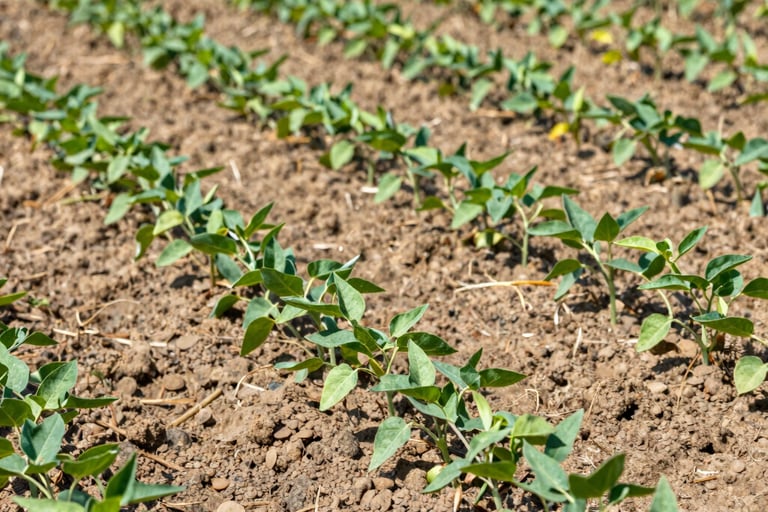
❤️ Beetroot (Chukandar)
A nutritious root vegetable rich in iron and vitamins, widely used in salads, juices, and cooking.
आयरन और विटामिन से भरपूर पौष्टिक जड़ वाली सब्जी, जिसका उपयोग सलाद, जूस और खाना बनाने में होता है।
🌦️ Climate
Grows best in cool climate (10–25°C).
यह ठंडी जलवायु (10–25°C) में अच्छी उगती है।
🌱 Soil
Prefers well-drained sandy loam soil with pH 6–7.5.
अच्छी जल निकासी वाली बलुई दोमट मिट्टी (pH 6–7.5) उपयुक्त होती है।
🌾 Varieties
Popular varieties include Detroit Dark Red, Crimson Globe, and Pusa Chetki.
लोकप्रिय किस्मों में डेट्रॉइट डार्क रेड, क्रिमसन ग्लोब और पूसा चेतकी शामिल हैं।
📅 Sowing Time
Rabi: Oct–Nov | Summer: Feb–March.
रबी: अक्टूबर–नवंबर | ग्रीष्म: फरवरी–मार्च।
❤️ Harvesting
Ready in 60–80 days after sowing.
बुवाई के 60–80 दिनों में तैयार होती है।
💧 Irrigation
Moderate irrigation; maintain soil moisture.
मध्यम सिंचाई; मिट्टी में नमी बनाए रखें।
🧪 Fertilizers
Use organic manure with balanced NPK.
जैविक खाद और संतुलित एनपीके का उपयोग करें।
🐛 Pest & Disease Control
Common pests: Leaf miners, aphids. Diseases: Leaf spot, root rot.
मुख्य कीट: लीफ माइनर, माहू। रोग: लीफ स्पॉट, रूट रॉट।
Recommended pesticides:
Imidacloprid 17.8% SL – for aphids
Spinosad 45% SC – for leaf miners
Mancozeb 75% WP – for fungal diseases
उपयोगी दवाइयाँ:
इमिडाक्लोप्रिड – माहू नियंत्रण
स्पिनोसैड – लीफ माइनर नियंत्रण
मैनकोजेब – फंगल रोग नियंत्रण
💰 Investment
₹15,000–₹35,000 per acre.
₹15,000–₹35,000 प्रति एकड़।
📊 Yield
80–120 quintals per acre.
80–120 क्विंटल प्रति एकड़।
💵 Profit
₹40,000–₹1,20,000 per acre.
₹40,000–₹1,20,000 प्रति एकड़ लाभ।
🏷️ Market
High demand in vegetable markets, juice industry, and health products.
सब्जी बाजार, जूस उद्योग और हेल्थ प्रोडक्ट्स में उच्च मांग।
⚠️ Risks
Pest attack, improper irrigation, and soil issues.
कीट आक्रमण, गलत सिंचाई और मिट्टी संबंधी समस्याएं।
🌍 Best Beetroot Varieties by Region (India)
🌍 क्षेत्र के अनुसार चुकंदर की बेहतर किस्में
🟢 North India (UP, Punjab, Haryana)
Best for winter cultivation.
सर्दियों की खेती के लिए उपयुक्त।
Detroit Dark Red ⭐
Pusa Chetki
Crimson Globe
🟡 Central India (MP, Maharashtra)
Suitable for both rabi and summer crops.
रबी और ग्रीष्म दोनों के लिए उपयुक्त।
Crimson Globe ⭐
Detroit Dark Red
Local Varieties
🔵 South India (Karnataka, Tamil Nadu)
Suitable for year-round cultivation.
सालभर खेती के लिए उपयुक्त।
Pusa Chetki ⭐
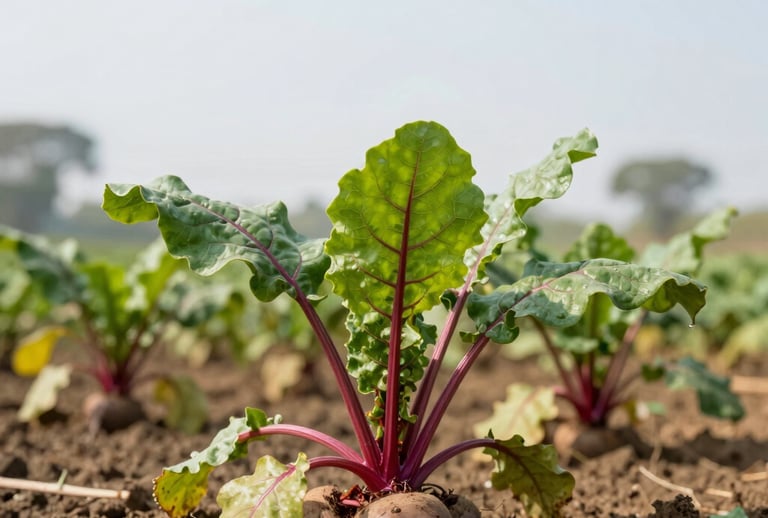
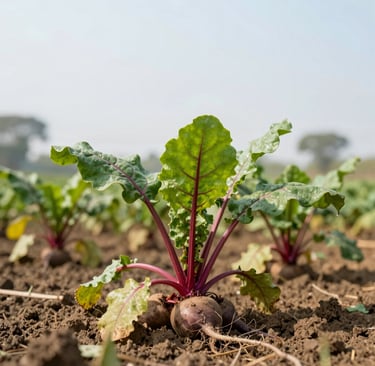
🌿 Pudina (Mint)
A fast-growing aromatic herb used in food, beverages, medicines, and essential oil production.
तेजी से बढ़ने वाली सुगंधित जड़ी-बूटी, जिसका उपयोग खाना, पेय, दवा और तेल बनाने में होता है।
🌦️ Climate
Grows best in warm to moderate climate (15–30°C).
यह गर्म से मध्यम जलवायु (15–30°C) में अच्छी उगती है।
🌱 Soil
Prefers well-drained fertile loamy soil rich in organic matter.
जैविक पदार्थ युक्त उपजाऊ और अच्छी जल निकासी वाली दोमट मिट्टी उपयुक्त होती है।
🌾 Varieties
Popular varieties include Kosi, Gomti, and Shivalik.
लोकप्रिय किस्मों में कोसी, गोमती और शिवालिक शामिल हैं।
📅 Planting Time
Feb–March (best season).
फरवरी–मार्च (सबसे उपयुक्त समय)।
🌿 Harvesting
Ready in 90–120 days; multiple harvests possible.
90–120 दिनों में तैयार; कई बार कटाई संभव।
💧 Irrigation
Requires regular irrigation; high moisture needed.
नियमित सिंचाई आवश्यक; अधिक नमी की जरूरत।
🧪 Fertilizers
Use organic manure with nitrogen-rich fertilizers.
जैविक खाद और नाइट्रोजन युक्त उर्वरकों का उपयोग करें।
🐛 Pest & Disease Control
Common pests: Aphids, mites. Diseases: Leaf spot, rust.
मुख्य कीट: माहू, माइट्स। रोग: लीफ स्पॉट, रस्ट।
Recommended pesticides:
Imidacloprid 17.8% SL – for aphids
Spiromesifen 22.9% SC – for mites
Mancozeb 75% WP – for fungal diseases
उपयोगी दवाइयाँ:
इमिडाक्लोप्रिड – माहू नियंत्रण
स्पायरोमेसिफेन – माइट नियंत्रण
मैनकोजेब – फंगल रोग नियंत्रण
💰 Investment
₹20,000–₹50,000 per acre.
₹20,000–₹50,000 प्रति एकड़।
📊 Yield
100–150 quintals per acre (green leaves).
100–150 क्विंटल प्रति एकड़ (हरी पत्तियां)।
💵 Profit
₹50,000–₹2,00,000 per acre (with oil extraction higher profit).
₹50,000–₹2,00,000 प्रति एकड़ (तेल निकालने पर अधिक लाभ)।
🏷️ Market
High demand in food industry, herbal products, and essential oil market.
खाद्य उद्योग, हर्बल उत्पाद और तेल बाजार में उच्च मांग।
⚠️ Risks
Pest attack, excessive moisture, and disease spread.
कीट आक्रमण, अधिक नमी और रोग फैलने का खतरा।
🌍 Best Pudina Varieties by Region (India)
🌍 क्षेत्र के अनुसार पुदीना की बेहतर किस्में
🟢 North India (UP, Punjab, Haryana)
Main mint oil producing region.
मुख्य पुदीना तेल उत्पादन क्षेत्र।
Kosi ⭐
Gomti
Shivalik
🟡 Central India (MP, Maharashtra)
Suitable for commercial cultivation.
व्यावसायिक खेती के लिए उपयुक्त।
Gomti ⭐
Kosi
Local Varieties
🔵 South India (Karnataka, Tamil Nadu)
Suitable for moderate climate farming.
मध्यम जलवायु के लिए उपयुक्त।
Shivalik ⭐
Local Varieties
Gomti
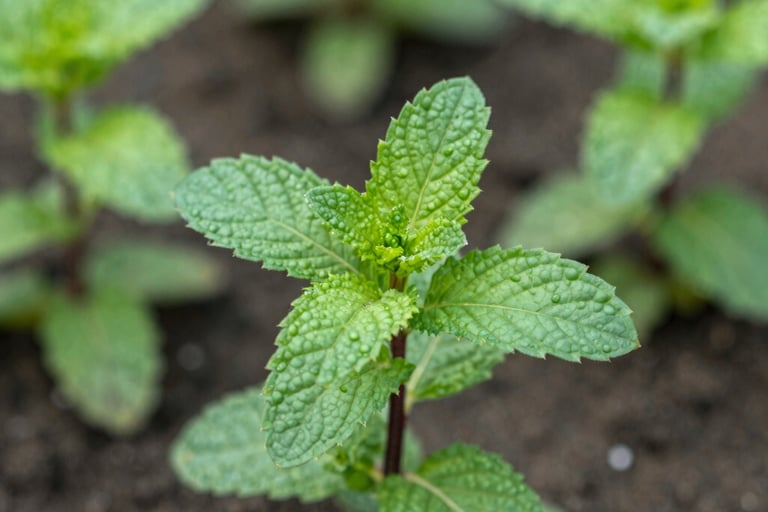
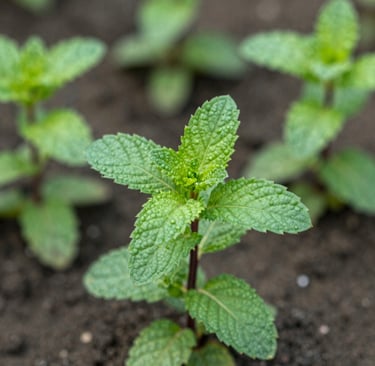
Apricot (Khubani)
A nutritious temperate fruit crop known for its sweet taste, grown for fresh consumption and dried products.
मीठे स्वाद वाली पौष्टिक समशीतोष्ण फल फसल, जिसे ताजा और सूखे रूप में उपयोग किया जाता है।
🌦️ Climate
Grows best in cool temperate climate (10–25°C); requires chilling hours.
यह ठंडी समशीतोष्ण जलवायु (10–25°C) में अच्छी उगती है; ठंडे घंटे आवश्यक होते हैं।
🌱 Soil
Prefers well-drained sandy loam soil with good fertility.
अच्छी जल निकासी वाली उपजाऊ बलुई दोमट मिट्टी उपयुक्त होती है।
🌾 Varieties
Popular varieties include Moorpark, New Castle, and Kaisha.
लोकप्रिय किस्मों में मूरपार्क, न्यू कैसल और कैशा शामिल हैं।
📅 Planting Time
Dec–Feb (dormant season).
दिसंबर–फरवरी (निष्क्रिय अवस्था में रोपण)।
🍑 Harvesting
Starts after 3–4 years; full production after 5–6 years.
3–4 साल बाद उत्पादन शुरू; 5–6 साल में पूरा उत्पादन।
💧 Irrigation
Moderate irrigation; avoid waterlogging.
मध्यम सिंचाई; जलभराव से बचें।
🧪 Fertilizers
Use organic manure with NPK and micronutrients.
जैविक खाद, एनपीके और सूक्ष्म पोषक तत्वों का उपयोग करें।
🐛 Pest & Disease Control
Common pests: Aphids, fruit flies. Diseases: Brown rot, leaf curl.
मुख्य कीट: माहू, फल मक्खी। रोग: ब्राउन रॉट, लीफ कर्ल।
Recommended pesticides:
Imidacloprid 17.8% SL – for aphids
Spinosad 45% SC – for fruit flies
Mancozeb 75% WP – for fungal diseases
उपयोगी दवाइयाँ:
इमिडाक्लोप्रिड – माहू नियंत्रण
स्पिनोसैड – फल मक्खी नियंत्रण
मैनकोजेब – फंगल रोग नियंत्रण
💰 Investment
₹1,50,000–₹3,50,000 per hectare.
₹1,50,000–₹3,50,000 प्रति हेक्टेयर।
📊 Yield
5–10 tons per hectare.
5–10 टन प्रति हेक्टेयर।
💵 Profit
₹1,00,000–₹3,00,000 per hectare annually.
₹1,00,000–₹3,00,000 प्रति हेक्टेयर वार्षिक लाभ।
🏷️ Market
High demand for fresh fruit and dried apricot (export potential).
ताजा फल और सूखे खुबानी के लिए उच्च मांग (निर्यात संभावना)।
⚠️ Risks
Climate dependency, frost damage, and pest attacks.
जलवायु पर निर्भरता, पाले से नुकसान और कीट आक्रमण का खतरा।
🌍 Best Apricot Growing Regions in India
🌍 भारत में खुबानी के प्रमुख क्षेत्र
🟢 North India (J&K, Himachal Pradesh, Uttarakhand)
Main apricot producing regions due to cool climate.
ठंडी जलवायु के कारण मुख्य उत्पादन क्षेत्र।
Moorpark ⭐
Kaisha
New Castle
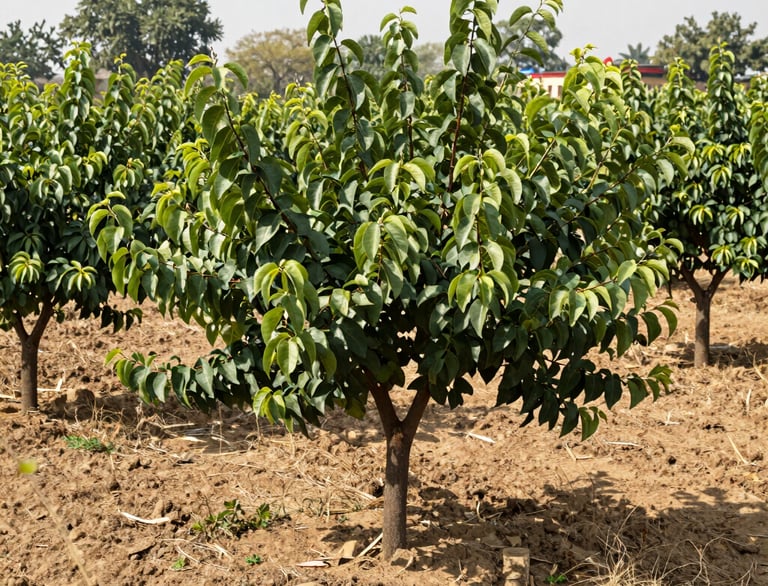
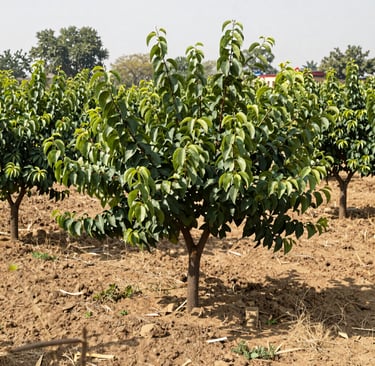
🍑 Peach (Aadu)
A juicy temperate fruit crop known for its sweet taste, grown for fresh consumption and processing.
मीठे और रसदार स्वाद वाला समशीतोष्ण फल, जिसे ताजा और प्रोसेसिंग के लिए उगाया जाता है।
🌦️ Climate
Grows best in cool temperate climate (10–25°C); requires chilling hours.
यह ठंडी समशीतोष्ण जलवायु (10–25°C) में अच्छी उगती है; ठंडे घंटे आवश्यक होते हैं।
🌱 Soil
Prefers well-drained sandy loam soil with good fertility.
अच्छी जल निकासी वाली उपजाऊ बलुई दोमट मिट्टी उपयुक्त होती है।
🌾 Varieties
Popular varieties include Flordasun, Shan-e-Punjab, and Prabhat.
लोकप्रिय किस्मों में फ्लोरडासुन, शान-ए-पंजाब और प्रभात शामिल हैं।
📅 Planting Time
Dec–Feb (dormant season).
दिसंबर–फरवरी (निष्क्रिय अवस्था में रोपण)।
🍑 Harvesting
Starts after 2–3 years; full production after 4–5 years.
2–3 साल बाद उत्पादन शुरू; 4–5 साल में पूरा उत्पादन।
💧 Irrigation
Moderate irrigation; avoid waterlogging.
मध्यम सिंचाई; जलभराव से बचें।
🧪 Fertilizers
Use organic manure with balanced NPK and micronutrients.
जैविक खाद, संतुलित एनपीके और सूक्ष्म पोषक तत्वों का उपयोग करें।
🐛 Pest & Disease Control
Common pests: Aphids, fruit flies. Diseases: Leaf curl, brown rot.
मुख्य कीट: माहू, फल मक्खी। रोग: लीफ कर्ल, ब्राउन रॉट।
Recommended pesticides:
Imidacloprid 17.8% SL – for aphids
Spinosad 45% SC – for fruit flies
Mancozeb 75% WP – for fungal diseases
उपयोगी दवाइयाँ:
इमिडाक्लोप्रिड – माहू नियंत्रण
स्पिनोसैड – फल मक्खी नियंत्रण
मैनकोजेब – फंगल रोग नियंत्रण
💰 Investment
₹1,50,000–₹3,00,000 per hectare.
₹1,50,000–₹3,00,000 प्रति हेक्टेयर।
📊 Yield
8–15 tons per hectare.
8–15 टन प्रति हेक्टेयर।
💵 Profit
₹1,50,000–₹4,00,000 per hectare annually.
₹1,50,000–₹4,00,000 प्रति हेक्टेयर वार्षिक लाभ।
🏷️ Market
High demand in fresh fruit markets and processing industries.
ताजा फल बाजार और प्रोसेसिंग उद्योग में उच्च मांग।
⚠️ Risks
Frost damage, pest attack, and climate sensitivity.
पाला नुकसान, कीट आक्रमण और जलवायु पर निर्भरता।
🌍 Best Peach Growing Regions in India
🌍 भारत में आड़ू के प्रमुख क्षेत्र
🟢 North India (Himachal Pradesh, J&K, Uttarakhand, Punjab)
Main peach producing regions.
मुख्य उत्पादन क्षेत्र।
Shan-e-Punjab ⭐
Flordasun
Prabhat
🟡 Subtropical Regions (UP, Bihar)
Low chilling varieties suitable.
कम ठंड वाली किस्में उपयुक्त।
Flordasun ⭐
Sharbati
Early Grande
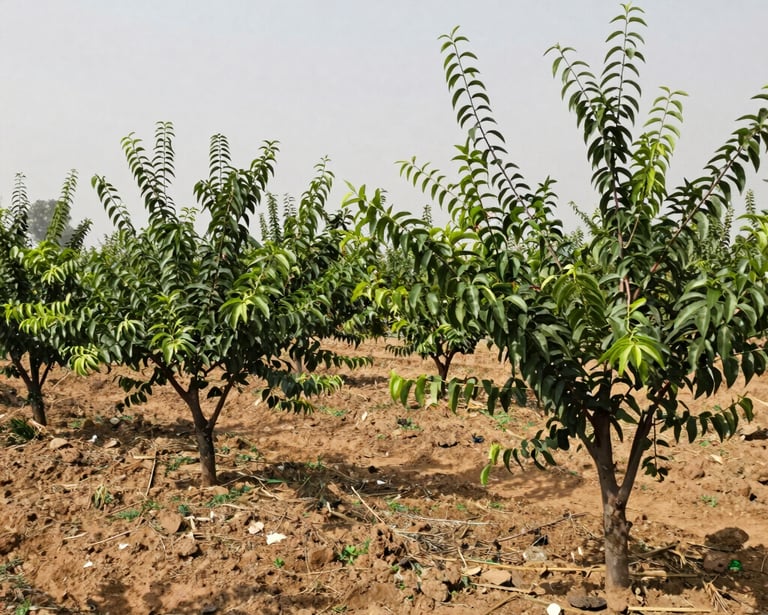
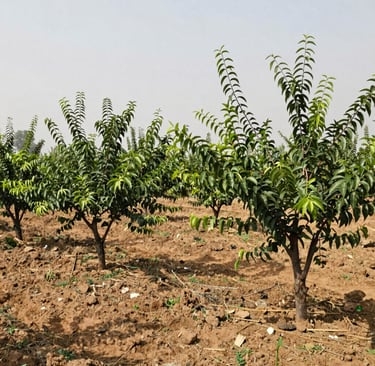
🍐 Pear (Nashpati)
A sweet and juicy temperate fruit crop grown for fresh consumption and processing.
मीठा और रसदार समशीतोष्ण फल, जिसे ताजा और प्रोसेसिंग के लिए उगाया जाता है।
🌦️ Climate
Grows best in cool temperate climate (10–25°C); requires chilling hours.
यह ठंडी समशीतोष्ण जलवायु (10–25°C) में अच्छी उगती है; ठंडे घंटे आवश्यक होते हैं।
🌱 Soil
Prefers deep, well-drained loamy soil rich in organic matter.
गहरी, उपजाऊ और अच्छी जल निकासी वाली दोमट मिट्टी उपयुक्त होती है।
🌾 Varieties
Popular varieties include Bartlett, Patharnakh, and Le Conte.
लोकप्रिय किस्मों में बार्टलेट, पथरनाख और ले कॉन्टे शामिल हैं।
📅 Planting Time
Dec–Feb (dormant season).
दिसंबर–फरवरी (निष्क्रिय अवस्था में रोपण)।
🍐 Harvesting
Starts after 3–4 years; full production after 6–7 years.
3–4 साल बाद उत्पादन शुरू; 6–7 साल में पूरा उत्पादन।
💧 Irrigation
Moderate irrigation; avoid waterlogging.
मध्यम सिंचाई; जलभराव से बचें।
🧪 Fertilizers
Use organic manure with balanced NPK and micronutrients.
जैविक खाद, संतुलित एनपीके और सूक्ष्म पोषक तत्वों का उपयोग करें।
🐛 Pest & Disease Control
Common pests: Aphids, pear psylla. Diseases: Fire blight, leaf spot.
मुख्य कीट: माहू, पियर सिल्ला। रोग: फायर ब्लाइट, लीफ स्पॉट।
Recommended pesticides:
Imidacloprid 17.8% SL – for aphids
Thiamethoxam 25% WG – for psylla
Mancozeb 75% WP – for fungal diseases
उपयोगी दवाइयाँ:
इमिडाक्लोप्रिड – माहू नियंत्रण
थायमेथोक्साम – सिल्ला नियंत्रण
मैनकोजेब – फंगल रोग नियंत्रण
💰 Investment
₹1,50,000–₹3,50,000 per hectare.
₹1,50,000–₹3,50,000 प्रति हेक्टेयर।
📊 Yield
10–20 tons per hectare.
10–20 टन प्रति हेक्टेयर।
💵 Profit
₹2,00,000–₹5,00,000 per hectare annually.
₹2,00,000–₹5,00,000 प्रति हेक्टेयर वार्षिक लाभ।
🏷️ Market
High demand in fresh fruit markets and juice industry.
ताजा फल बाजार और जूस उद्योग में उच्च मांग।
⚠️ Risks
Disease (fire blight), frost damage, and pest attack.
रोग (फायर ब्लाइट), पाला नुकसान और कीट आक्रमण का खतरा।
🌍 Best Pear Growing Regions in India
🌍 भारत में नाशपाती के प्रमुख क्षेत्र
🟢 North India (Himachal Pradesh, J&K, Uttarakhand)
Best for high-quality pears.
उच्च गुणवत्ता वाली नाशपाती के लिए उपयुक्त।
Bartlett ⭐
Patharnakh
Le Conte
🟡 Subtropical Regions (Punjab, Haryana, UP)
Suitable for low chilling varieties.
कम ठंड वाली किस्मों के लिए उपयुक्त।
Patharnakh ⭐
Le Conte
Punjab Beauty